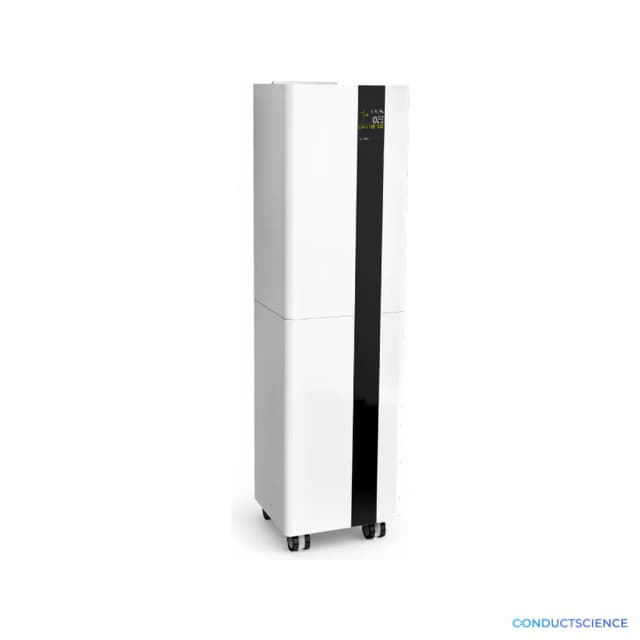
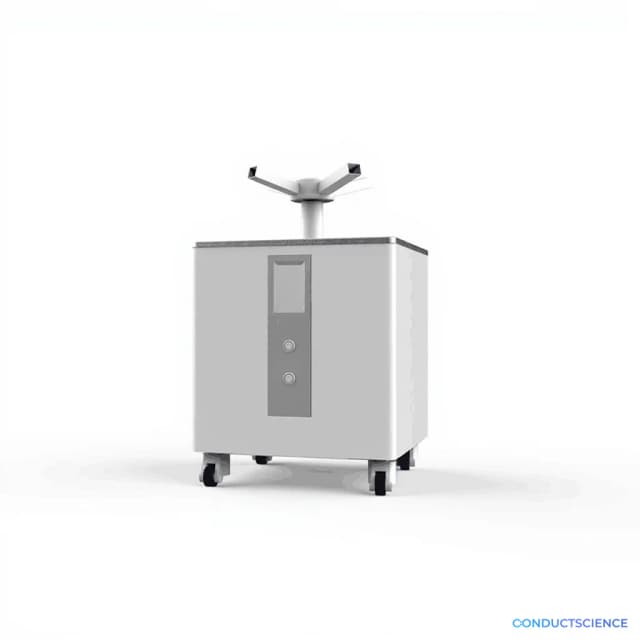
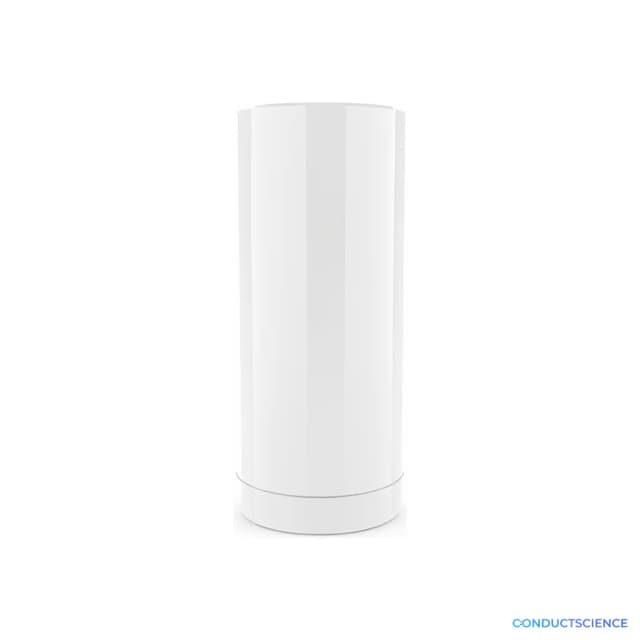
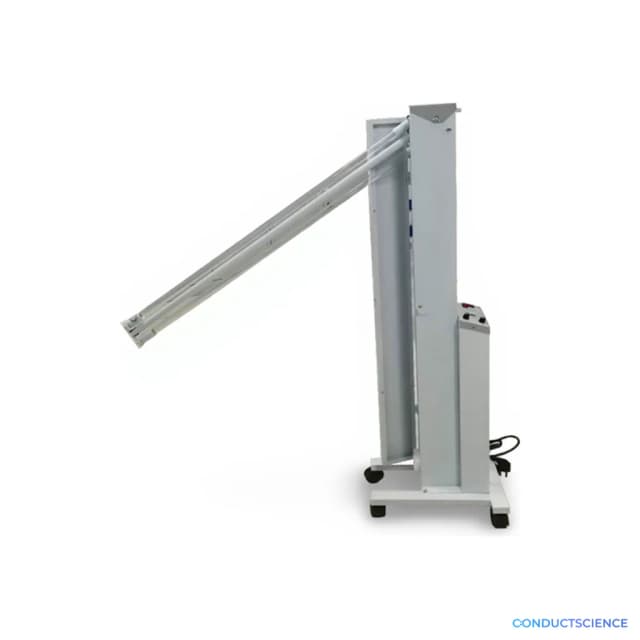
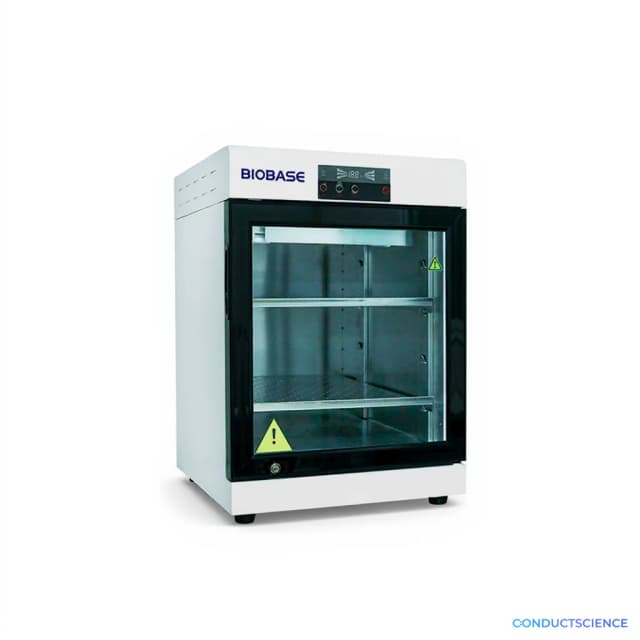
Plasma Air Sterilizer(Wall Mounted)
Wall-mounted plasma air sterilizer that continuously disinfects laboratory air through reactive oxygen species generation, suitable for research facilities requiring airborne contamination control.

Louise Corscadden, PhD
Director of Science · ConductScience
Ask Louise about Plasma Air Sterilizer(Wall Mounted) fit, setup, configuration, or quote prep.
Already working with us? Sign in to connect this with My Scientist.
Key Specifications
Full details →- Model fit
- Configured during quote
- SKU family
- BIO-0170
- Shipping box
- 17.0 x 111.0 x 42.0 cm
- Ordering
- Online checkout and quote request available
- Category
- Sterilizers
- Build notes
- Confirm accessories, station layout, and support needs before purchase
The Plasma Air Sterilizer (Wall Mounted) provides continuous air disinfection through plasma-based oxidation technology for laboratory and clinical environments. This compact wall-mounted unit generates reactive oxygen species that neutralize airborne pathogens including bacteria, viruses, and fungi without producing harmful byproducts or requiring consumable filters.
The device operates continuously during normal room occupancy, making it suitable for maintaining air quality in research facilities, cell culture rooms, and other controlled environments where airborne contamination control is critical. The wall-mounted design maximizes floor space utilization while providing effective air treatment coverage.
How It Works
Plasma air sterilization utilizes non-thermal atmospheric pressure plasma to generate reactive oxygen species (ROS) including hydroxyl radicals, atomic oxygen, and ozone at low concentrations. When ambient air passes through or near the plasma field, these reactive species interact with the cellular components of microorganisms, disrupting cell membranes, proteins, and nucleic acids through oxidative processes.
The plasma generation typically occurs through dielectric barrier discharge or similar methods that create ionized gas at room temperature. Unlike thermal sterilization methods, this process operates at ambient temperature and pressure, allowing continuous operation in occupied spaces. The reactive species have short half-lives, breaking down into harmless compounds like water vapor and oxygen after completing their disinfection action.
The wall-mounted configuration provides directed airflow treatment while minimizing space requirements. Air circulation patterns in the room help distribute the treated air, extending the effective disinfection zone beyond the immediate device vicinity.
Features & Benefits
Automation Level
- semi-automated
Research Domain
- Cell Biology
- Clinical Diagnostics
- Environmental Monitoring
- Immunology
- Microbiology
- Pharmaceutical QC
Shipping weight
- 24.5 lb
Shipping box
- L: 17.0 cm
- W: 111.0 cm
- H: 42.0 cm
| Feature | This Product | Typical Alternative | Advantage |
|---|---|---|---|
| Installation Type | Wall-mounted design with compact 111cm x 42cm footprint | Portable units or larger floor-standing models requiring dedicated floor space | Maximizes laboratory floor space while providing fixed-position air treatment coverage |
| Operating Method | Continuous plasma-based disinfection during room occupancy | UV-C systems requiring evacuation or batch-mode ozone treatment | Maintains consistent air quality without disrupting laboratory workflow or requiring evacuation |
| Maintenance Requirements | No consumable filters or lamp replacements required | Regular HEPA filter changes or UV lamp replacement every 6-12 months | Reduces ongoing operational costs and maintenance scheduling requirements |
| Antimicrobial Mechanism | Reactive oxygen species generation through plasma discharge | Physical filtration or single-wavelength UV irradiation | Provides oxidative destruction of microorganisms rather than just capture or single-mode inactivation |
This wall-mounted plasma air sterilizer offers space-efficient installation with continuous operation capability and minimal maintenance requirements. The reactive oxygen species approach provides broad-spectrum antimicrobial activity suitable for occupied laboratory environments.
Practical Tips
Install the unit where natural air circulation patterns will help distribute treated air throughout the room.
Why: Proper positioning maximizes the effective treatment zone beyond the immediate device vicinity.
Clean air intake surfaces monthly to prevent dust accumulation that could reduce plasma generation efficiency.
Why: Dust buildup on electrodes or air passages can interfere with plasma formation and reduce treatment effectiveness.
Allow the unit to operate continuously rather than cycling on and off frequently.
Why: Continuous operation maintains stable reactive species levels and provides more consistent air quality control.
Monitor operational indicators regularly to confirm plasma generation is occurring properly.
Why: Visual or audible indicators help verify that the reactive species generation system is functioning correctly.
Ensure adequate ventilation in the treatment area to prevent accumulation of ozone or other reaction products.
Why: Good air circulation helps maintain safe levels of reactive species and prevents buildup of oxidation byproducts.
Consider periodic microbial air sampling to verify disinfection effectiveness in your specific environment.
Why: Quantitative verification helps confirm that the device is achieving desired microbial reduction in your application.
If effectiveness appears reduced, check for sources of high organic load that could consume reactive species.
Why: High concentrations of organic materials can deplete available reactive oxygen species before they reach target microorganisms.
Setup Guide
What’s in the Box
- Plasma air sterilizer main unit
- Wall mounting brackets and hardware (typical)
- Power cable (typical)
- User manual and installation guide (typical)
- Warranty documentation (typical)
Warranty
ConductScience provides a standard one-year manufacturer warranty covering defects in materials and workmanship, with technical support available for installation guidance and operational questions.
Compliance
What is the effective treatment area for this wall-mounted unit?
Treatment area depends on room size, air circulation, and contamination load. Consult product datasheet for specific coverage recommendations based on your laboratory dimensions and airflow patterns.
Can this device operate continuously in occupied laboratories?
Yes, the non-thermal plasma technology is designed for continuous operation during normal room occupancy, generating reactive species at safe levels for human exposure.
What maintenance is required for plasma air sterilizers?
Maintenance typically involves periodic cleaning of air intake surfaces and electrode inspection. No filter replacements are required, reducing ongoing operational costs.
How does this compare to HEPA filtration for air quality control?
Plasma sterilization actively destroys microorganisms through oxidative processes, while HEPA filters physically capture particles. This device complements filtration by addressing airborne pathogens that pass through or are not captured.
What power requirements are needed for installation?
Electrical specifications including voltage, current, and grounding requirements should be confirmed from the product datasheet to ensure compatibility with your facility's electrical infrastructure.
Is the device compatible with existing HVAC systems?
The wall-mounted design works independently of HVAC systems but benefits from good room air circulation. Coordination with existing air handling may optimize effectiveness.
What monitoring is available to verify sterilization effectiveness?
Operational indicators confirm plasma generation, but microbial air sampling or surface monitoring may be needed to verify disinfection effectiveness in your specific application.
Have a question about this product?
Have a question? Just ask.
Send it over and we'll email you a personalized answer — no call, no scheduling.
Prefer to talk it through?
Accessories
Enhance your setup with compatible accessories