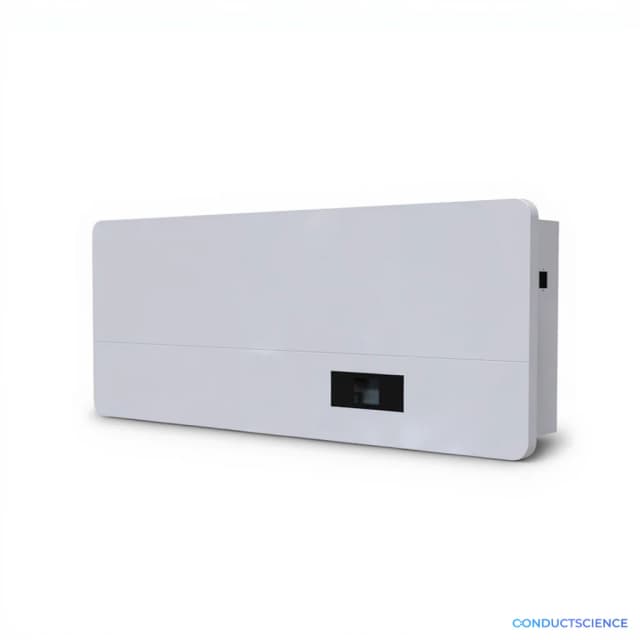
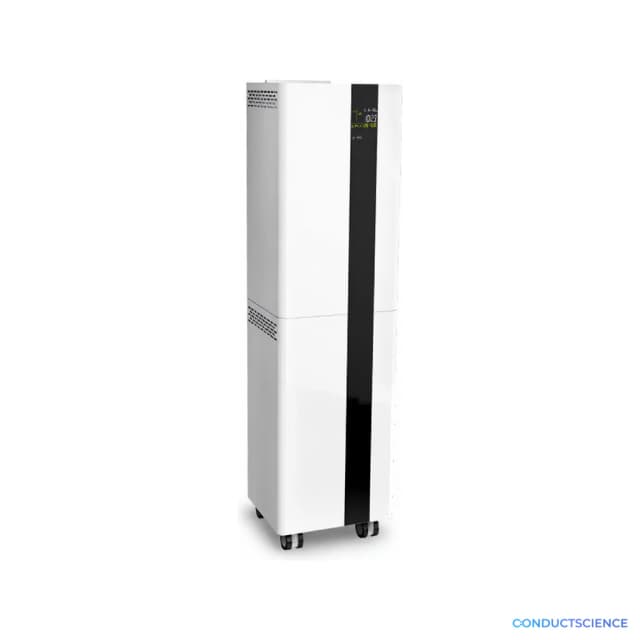
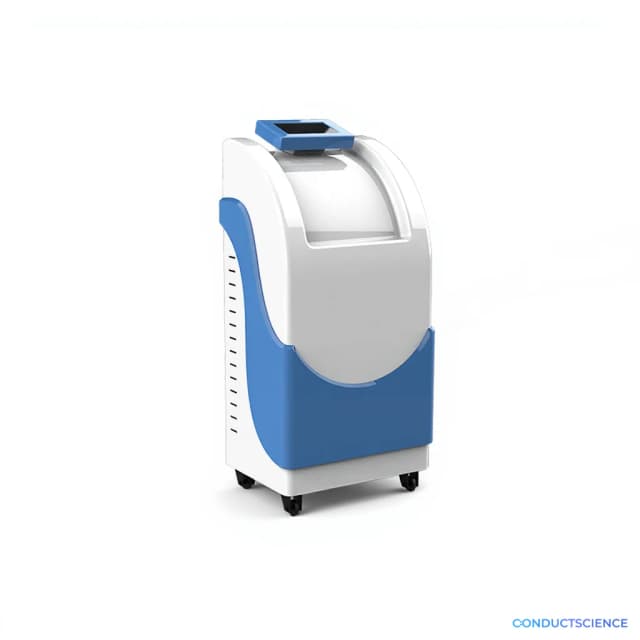
Floor Type Plasma Air Sterilizer
Floor-standing plasma air sterilizer utilizing plasma generation and electrostatic adsorption for continuous air treatment in laboratory and cleanroom environments, with ≥8000-hour plasma generator life and ≤55dB(A) operation.

Louise Corscadden, PhD
Director of Science · ConductScience
Ask Louise about Floor Type Plasma Air Sterilizer fit, setup, configuration, or quote prep.
Already working with us? Sign in to connect this with My Scientist.
Key Specifications
Full details →- Model fit
- Configured during quote
- SKU family
- BIO-0168
- Shipping box
- 36.0 x 134.0 x 37.0 cm
- Ordering
- Online checkout and quote request available
- Category
- Sterilizers
- Build notes
- Confirm accessories, station layout, and support needs before purchase
The Floor Type Plasma Air Sterilizer is a stationary air purification system designed for laboratory and cleanroom environments requiring continuous air treatment. The system employs plasma generation and electrostatic adsorption technology to neutralize airborne contaminants including bacteria, viruses, and particulate matter. With a low-profile floor-standing design measuring 1340×370×360mm, the unit integrates into existing laboratory infrastructure while providing sustained air treatment capacity.
The system operates through plasma field generation with an extended service life of ≥8000 hours, combined with electrostatic capture mechanisms for comprehensive contaminant removal. Operating parameters include power consumption ≤200W, noise levels ≤55dB(A), and ozone emission levels maintained at ≤0.01mg/m³ to ensure safe operation in occupied spaces. The 40kg unit connects to standard AC220V±22V power supply and provides continuous air treatment for laboratory environments where ambient air quality control is essential.
How It Works
The Floor Type Plasma Air Sterilizer operates through a dual-mechanism approach combining plasma generation with electrostatic adsorption. The plasma generation system creates ionized gas fields containing reactive species including hydroxyl radicals, superoxide ions, and other oxidative compounds. These plasma-generated species interact with airborne microorganisms and organic contaminants, disrupting cellular membranes and molecular structures through oxidative processes.
The electrostatic adsorption component creates charged fields that attract and capture particulate matter, including bacterial and viral particles, dust, and other airborne debris. The combined plasma and electrostatic mechanisms provide comprehensive air treatment, addressing both chemical and biological contaminants as well as physical particulates.
Air circulation through the system exposes contaminants to both treatment mechanisms simultaneously, with the plasma generator designed for extended operation (≥8000 hours) to provide sustained treatment capacity. The system maintains low ozone emission levels (≤0.01mg/m³) through controlled plasma generation parameters, ensuring safe operation in occupied laboratory spaces.
Features & Benefits
Automation Level
- semi-automated
Sterilize Type
- Plasma and electrostatic adsorption
Plasma Generator Life
- ≥8000h
Ozone Leakage
- ≤0.01mg/m³
Noise
- ≤55dB(A)
Weight
- 45.5kg
External Size(L*W*H)
- 1340*370*360mm
Package Size(L*W*H)
- 1420*440*430mm
Brand
- ConductScience
Research Domain
- Analytical Chemistry
- Cell Biology
- Clinical Diagnostics
- Environmental Monitoring
- Microbiology
- Pharmaceutical QC
Power/Voltage
- ≤200W
Shipping weight
- 40.0 lb
Shipping box
- L: 36.0 cm
- W: 134.0 cm
- H: 37.0 cm
| Feature | This Product | Typical Alternative | Advantage |
|---|---|---|---|
| Plasma Generator Life | ≥8000 hours continuous operation | Many systems require maintenance or replacement every 2000-4000 hours | Extended service intervals reduce maintenance costs and minimize laboratory downtime for system servicing. |
| Ozone Emission Control | ≤0.01mg/m³ ozone leakage | Some plasma systems have higher ozone output requiring ventilation management | Safe operation in occupied spaces without requiring special ventilation or personnel protection measures. |
| Noise Level | ≤55dB(A) operation | Many air treatment systems operate at 60-70dB(A) levels | Quiet operation allows continuous use without disrupting laboratory activities or sensitive instrumentation. |
| Power Consumption | ≤200W power draw | Comparable systems often require 300-500W for similar capacity | Energy-efficient operation reduces operational costs for continuous air treatment applications. |
| Dual Treatment Mechanism | Combined plasma generation and electrostatic adsorption | Many systems use single-mechanism approaches like UV-only or filtration-only | Addresses both biological and particulate contaminants through complementary treatment methods. |
| Floor Installation | Compact floor-standing design (1340×370×360mm) | Some systems require wall mounting or ceiling installation | Easy installation without structural modifications or specialized mounting requirements. |
This plasma air sterilizer offers extended plasma generator life (≥8000 hours), low ozone emissions (≤0.01mg/m³), and quiet operation (≤55dB(A)) in a dual-mechanism system combining plasma generation with electrostatic adsorption. The unit provides energy-efficient operation (≤200W) in a compact floor-standing design suitable for continuous laboratory use.
Practical Tips
Monitor ozone emission levels periodically using appropriate detection equipment to verify continued compliance with the ≤0.01mg/m³ specification.
Why: Ensures safe operation parameters are maintained throughout the plasma generator service life.
Track plasma generator operating hours to schedule replacement before the 8000-hour service life to prevent performance degradation.
Why: Prevents unexpected system downtime and maintains consistent air treatment effectiveness.
Position the unit with adequate clearance around air intake and exhaust ports to ensure proper airflow circulation and treatment efficiency.
Why: Optimal airflow patterns maximize contact between contaminants and the treatment mechanisms.
Ensure room ventilation systems are operating normally when using the sterilizer, even though ozone emissions are within safe limits.
Why: Maintains good laboratory air quality practices and provides additional safety margin during operation.
If noise levels exceed 55dB(A), check for proper unit leveling and verify no obstructions are interfering with internal components.
Why: Excessive noise often indicates mechanical issues that could affect performance and component longevity.
Document operating hours, maintenance activities, and any performance observations to track system effectiveness over time.
Why: Systematic record-keeping helps optimize maintenance schedules and identify performance trends.
Allow 10-15 minutes after startup for plasma field stabilization before expecting full treatment capacity.
Why: Plasma generation systems require time to reach optimal operating conditions for maximum effectiveness.
Keep the area around the unit clean and free of dust accumulation that could interfere with electrostatic components.
Why: Dust buildup on electrostatic components reduces capture efficiency and may require more frequent cleaning cycles.
Setup Guide
What’s in the Box
- Floor Type Plasma Air Sterilizer main unit (typical)
- Power cable (typical)
- User manual and operation instructions (typical)
- Control interface documentation (typical)
- Warranty documentation (typical)
Warranty
ConductScience provides standard manufacturer warranty coverage including technical support for operational issues and component defects. Warranty terms cover normal laboratory use conditions with proper installation and maintenance procedures.
Compliance
What is the effective treatment volume for this air sterilizer?
The effective treatment volume depends on room size, air circulation patterns, and contamination load. Consult product datasheet for specific coverage area recommendations based on your laboratory configuration and air quality requirements.
How long does the plasma generator require for replacement or maintenance?
The plasma generator is rated for ≥8000 hours of operation, which translates to approximately 11 months of continuous use or longer with intermittent operation. Actual service intervals depend on operating conditions and contamination load.
Can this unit operate continuously during laboratory work?
Yes, the unit is designed for continuous operation with noise levels ≤55dB(A) and ozone emissions ≤0.01mg/m³, making it suitable for use during normal laboratory activities without safety concerns or excessive noise interference.
What types of contaminants does the dual-mechanism system address?
The combined plasma and electrostatic system targets airborne bacteria, viruses, mold spores, and particulate matter. Plasma generates reactive species for biological inactivation while electrostatic capture addresses physical particles.
How does this compare to HEPA filtration systems?
Unlike HEPA filtration which captures particles, this system uses plasma for microbial inactivation and electrostatic capture. It does not require filter replacement but has different effectiveness profiles for various contaminant types.
What maintenance procedures are required for continued operation?
Consult product datasheet for specific maintenance schedules. Typical requirements include periodic cleaning of electrostatic components and monitoring of plasma generator performance indicators.
Is special ventilation required for installation?
With ozone emissions ≤0.01mg/m³, the unit operates safely in standard laboratory environments. However, adequate room ventilation should be maintained as part of normal laboratory safety practices.
Can the unit be integrated with building management systems?
Integration capabilities depend on available control interfaces. Consult product datasheet for information about remote monitoring, control connections, or building automation system compatibility.
Have a question about this product?
Have a question? Just ask.
Send it over and we'll email you a personalized answer — no call, no scheduling.
Prefer to talk it through?