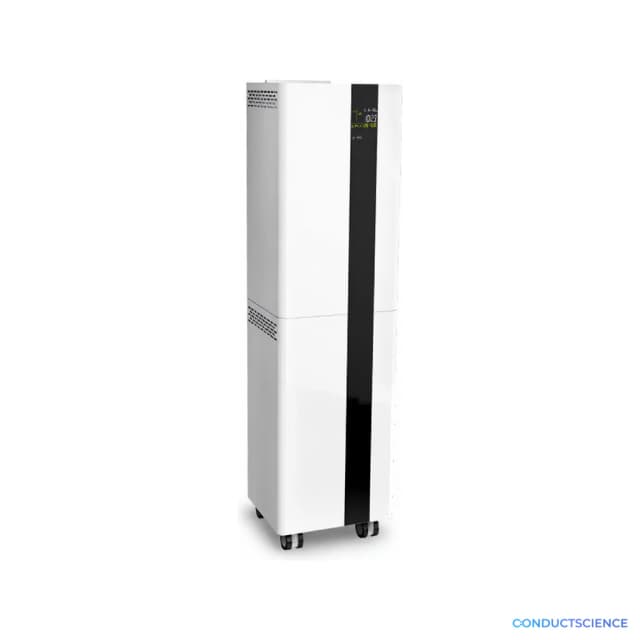
UV Sterilization Cabinet
200L capacity UV sterilization cabinet with dual-spectrum UV-C (253.7/184.9nm) and ozone generation, delivering measured exposure doses for comprehensive microbial decontamination of laboratory equipment.

Louise Corscadden, PhD
Director of Science · ConductScience
Ask Louise about UV Sterilization Cabinet fit, setup, configuration, or quote prep.
Already working with us? Sign in to connect this with My Scientist.
Key Specifications
Full details →- Model fit
- Exposure Dose
- SKU family
- BIO-0164
- Shipping box
- 120.0 x 75.0 x 66.3 cm
- Ordering
- Online checkout and quote request available
- Category
- Sterilizers
- Build notes
- Quartz glass
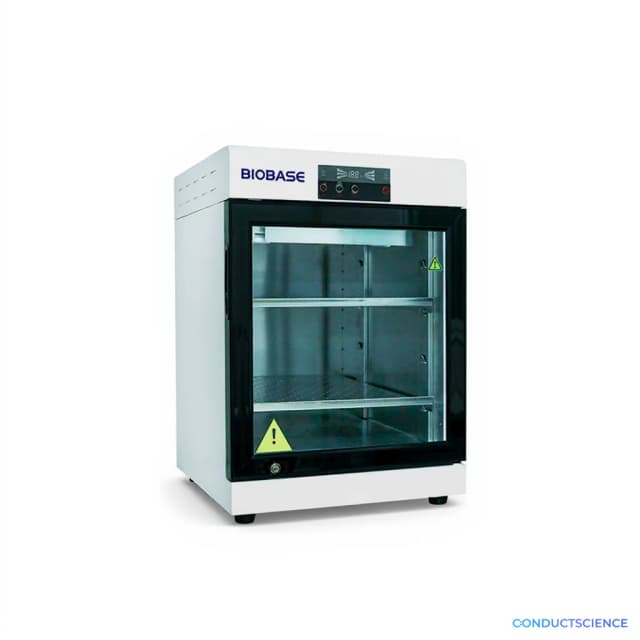
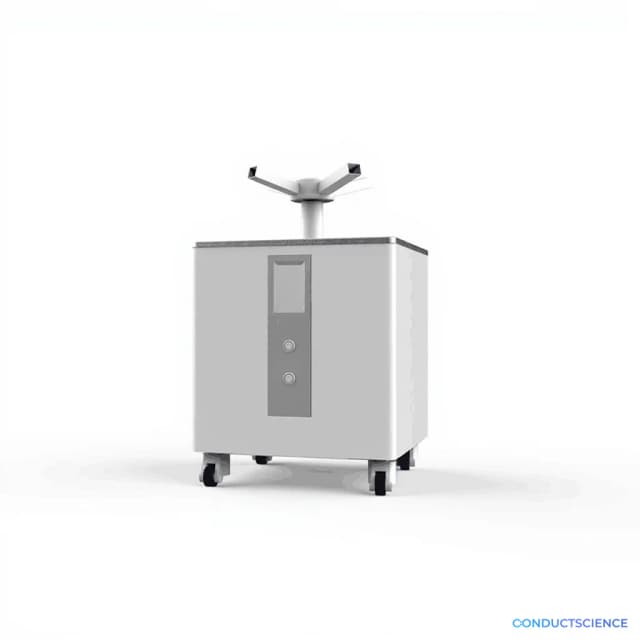
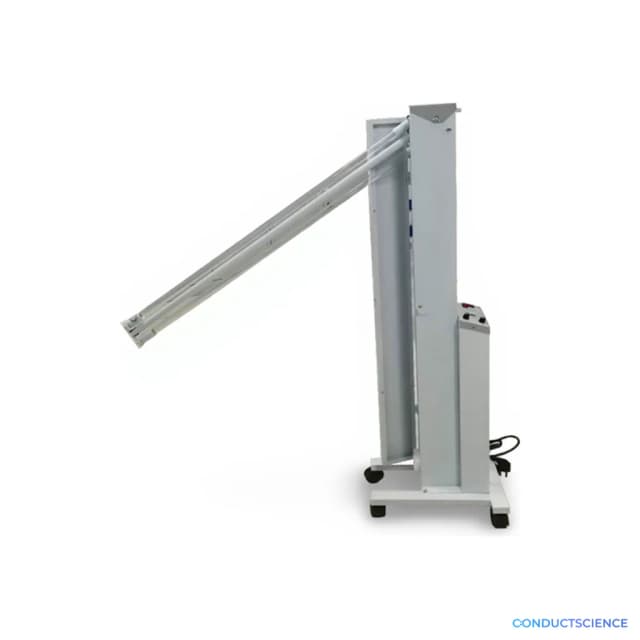
The UV Sterilization Cabinet (BIO-0164) provides dual-spectrum ultraviolet sterilization using both germicidal UV-C radiation and ozone generation for comprehensive microbial decontamination. This 200L capacity unit employs quartz glass UV lamps emitting at 253.7nm and 184.9nm wavelengths, combining direct UV irradiation from two sides with ozone generation from a dedicated third lamp system.
The cabinet delivers measured exposure doses of ≥10,000 μW·s/cm² for bacterial propagules and ≥100,000 μW·s/cm² for bacterial spores, providing quantifiable sterilization performance for laboratory equipment, glassware, and non-heat-sensitive materials. The dual-shelf configuration with adjustable 500×520mm platforms accommodates various item sizes while ensuring uniform exposure coverage throughout the sterilization chamber.
How It Works
UV sterilization operates through DNA photodamage mechanisms at specific germicidal wavelengths. The 253.7nm UV-C radiation causes direct DNA damage by inducing thymine dimer formation, while the 184.9nm wavelength generates ozone through oxygen photolysis (O₂ + hv → O + O, followed by O + O₂ + M → O₃ + M). This dual-action approach targets microorganisms through both direct UV irradiation and oxidative damage from ozone exposure.
The quartz glass lamp construction ensures consistent UV transmission without the solarization effects seen in standard glass, maintaining stable output over extended operation periods. The three-sided exposure configuration (two UV-C sides plus ozone generation) provides comprehensive coverage while the measured exposure doses ensure reproducible sterilization outcomes across different microbial species and resistance levels.
Features & Benefits
Automation Level
- semi-automated
Type
- With ozone
UV Ray Wavelength
- 253.7/184.9nm
Sterilization Way
- 2 sides of UV ray+1 side of ozone
UV Lamp Material
- Quartz glass
Altitude
- <2000m
Shelf
- 500*520mm, standard 2pcs, can be optional
Standard Accessories
- Shelf*2,doorknob*1, UV lamp*4,Ozone UV lamp*2
External Size(W*D*H)
- 750*663*1200mm
Package Size(W*D*H)
- 875*788*1365mm
Microorganism Species
- Exposure Dose
Bacterial Propagules
- ≥10000μW.s/cm2
Bacterial Spores
- ≥100000μW.s/cm2
Brand
- ConductScience
Research Domain
- Cell Biology
- Clinical Diagnostics
- Environmental Monitoring
- Food Science
- Microbiology
- Pharmaceutical QC
Capacity
- 200L
Weight
- 100kg
Shipping weight
- 100.0 lb
Shipping box
- L: 120.0 cm
- W: 75.0 cm
- H: 66.3 cm
| Feature | This Product | Typical Alternative | Advantage |
|---|---|---|---|
| UV Wavelength Range | Dual wavelengths at 253.7nm and 184.9nm | Single 253.7nm wavelength systems are common | Dual wavelengths provide both direct germicidal action and ozone generation for enhanced microbial kill. |
| Chamber Capacity | 200L sterilization volume | Entry-level units often offer 50-100L capacity | Larger capacity allows simultaneous sterilization of multiple items, improving laboratory workflow efficiency. |
| Exposure Configuration | Three-sided exposure (2 UV + 1 ozone) | Many units provide single-sided or dual-sided UV exposure | Multi-directional exposure eliminates shadowing effects that can compromise sterilization uniformity. |
| Lamp Material | Quartz glass construction | Standard glass lamps are used in basic models | Quartz glass maintains consistent UV transmission without solarization effects over extended operation. |
| Quantified Exposure Doses | Specified doses for bacterial propagules (≥10,000 μW·s/cm²) and spores (≥100,000 μW·s/cm²) | Basic models may not specify validated exposure doses | Measurable parameters enable validation protocols and reproducible sterilization outcomes. |
| Shelf System | Two adjustable 500×520mm platforms | Fixed shelf configurations are typical in basic units | Adjustable shelving accommodates various item sizes while maintaining optimal exposure geometry. |
This cabinet provides comprehensive UV sterilization through dual-wavelength operation and multi-directional exposure in a substantial 200L capacity chamber. The combination of quartz glass lamp construction and specified exposure doses supports validated sterilization protocols for diverse laboratory applications.
Practical Tips
Measure UV intensity at multiple chamber locations using a calibrated UV meter to verify uniform exposure distribution.
Why: Ensures all items receive adequate doses regardless of position within the chamber.
Track cumulative lamp hours and replace UV lamps when output drops below 80% of rated intensity.
Why: Maintains consistent sterilization efficacy as lamp output naturally decreases over time.
Arrange items with adequate spacing and avoid stacking to prevent shadowing that blocks UV exposure.
Why: UV radiation requires direct line-of-sight contact for effective sterilization of all surfaces.
Allow adequate time for ozone dissipation before opening the chamber after sterilization cycles.
Why: Protects laboratory personnel from ozone exposure and ensures safe handling of sterilized items.
Use biological indicators placed at various chamber locations to validate sterilization effectiveness.
Why: Provides quantitative verification of microbial kill rates and identifies any areas of inadequate exposure.
If sterilization efficacy appears reduced, check lamp connections and clean quartz surfaces of accumulated deposits.
Why: Dust or deposits on lamp surfaces can significantly reduce UV output and compromise sterilization performance.
Pre-clean items to remove organic soil that can shield microorganisms from UV exposure.
Why: Organic matter can absorb UV radiation and protect underlying microorganisms from effective sterilization.
Regularly clean interior surfaces with appropriate disinfectants to prevent buildup that reduces UV reflection.
Why: Clean reflective surfaces help maintain uniform UV distribution throughout the sterilization chamber.
Setup Guide
What’s in the Box
- UV Sterilization Cabinet main unit
- Adjustable shelves (2 pieces, 500×520mm)
- Door handle assembly
- UV lamps (4 pieces)
- Ozone UV lamps (2 pieces)
- User manual and operation instructions
- Power cord
Warranty
ConductScience provides a standard one-year manufacturer warranty covering defects in materials and workmanship, with technical support available for installation guidance and operational troubleshooting.
Compliance
What exposure times are required for different types of microorganisms?
Exposure time depends on the target organism and required log reduction. Consult the provided exposure dose specifications (≥10,000 μW·s/cm² for bacterial propagules, ≥100,000 μW·s/cm² for spores) and calculate based on measured UV intensity at item locations.
Can this unit handle heat-sensitive plastics and electronics?
Yes, UV sterilization operates at ambient temperature, making it suitable for heat-sensitive materials like plastic labware and electronic components that cannot withstand autoclave temperatures.
How do I verify sterilization efficacy?
Use biological indicators appropriate for UV sterilization (such as Bacillus subtilis spores) placed at various locations within the chamber to validate exposure uniformity and microbial kill rates.
What maintenance is required for the UV lamps?
UV lamp output decreases over time. Monitor lamp hours and measure UV intensity periodically with a calibrated UV meter to determine when lamp replacement is needed to maintain specified exposure doses.
Is the ozone generated during operation hazardous?
Ozone concentrations should be monitored in the laboratory environment. Ensure adequate ventilation and allow ozone to dissipate before opening the chamber after sterilization cycles.
Can I modify the shelf positions for larger items?
Yes, the shelf system is adjustable to accommodate various item heights. Ensure adequate clearance for UV penetration and avoid creating shadowed areas that reduce exposure effectiveness.
How does this compare to autoclave sterilization?
UV sterilization works at ambient temperature and is faster for surface sterilization, but requires direct line-of-sight exposure. Autoclaving provides deeper penetration but is limited to heat-stable materials.
Have a question about this product?
Have a question? Just ask.
Send it over and we'll email you a personalized answer — no call, no scheduling.
Prefer to talk it through?
Frequently Bought Together