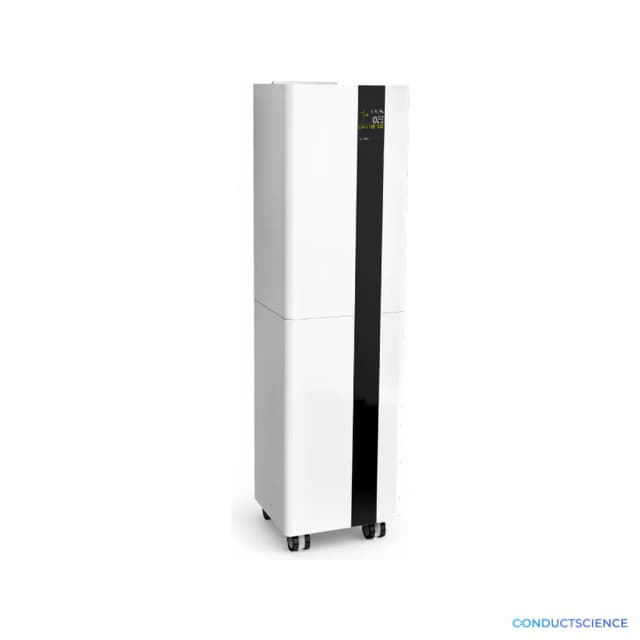
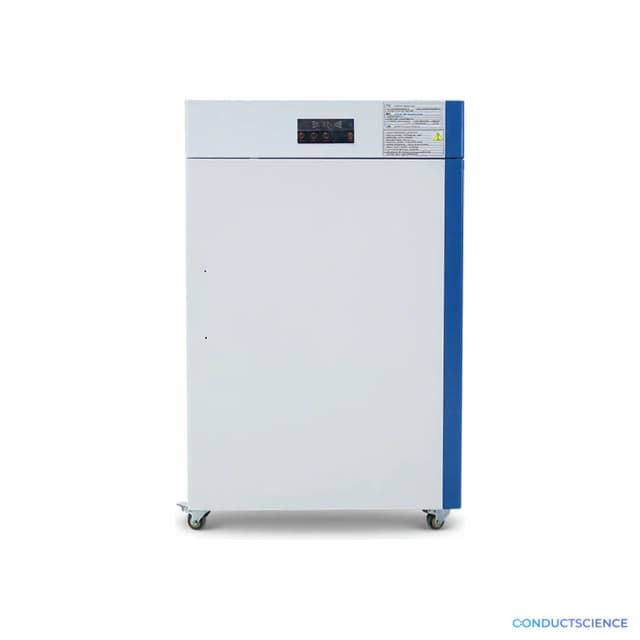
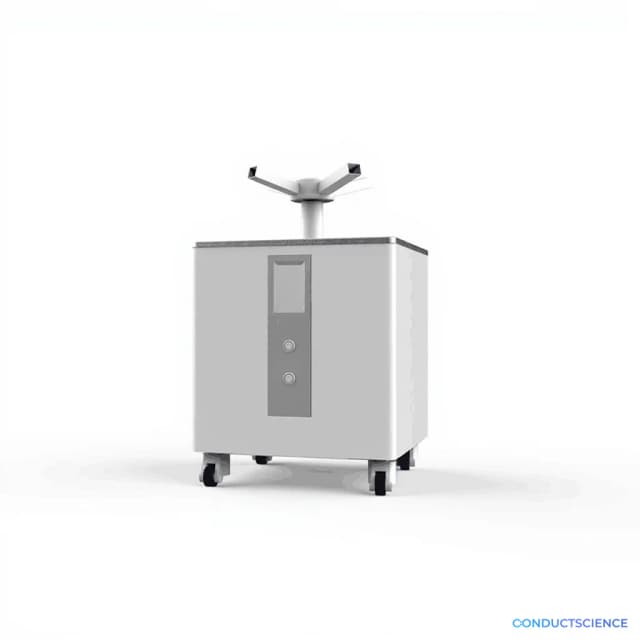
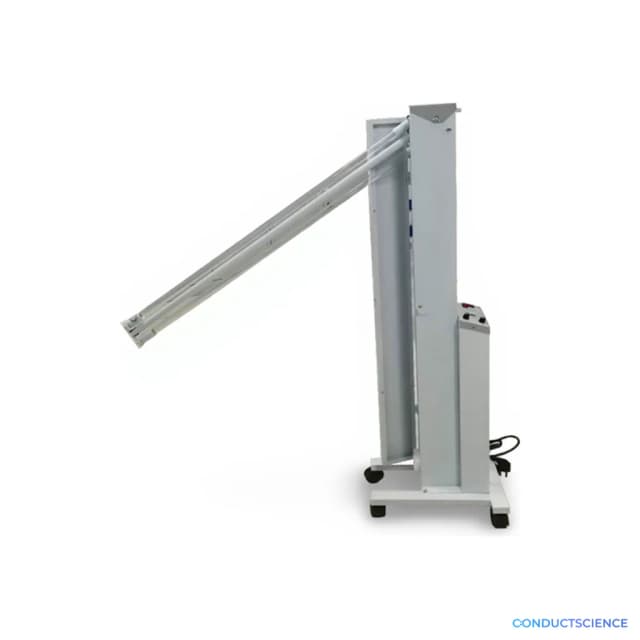
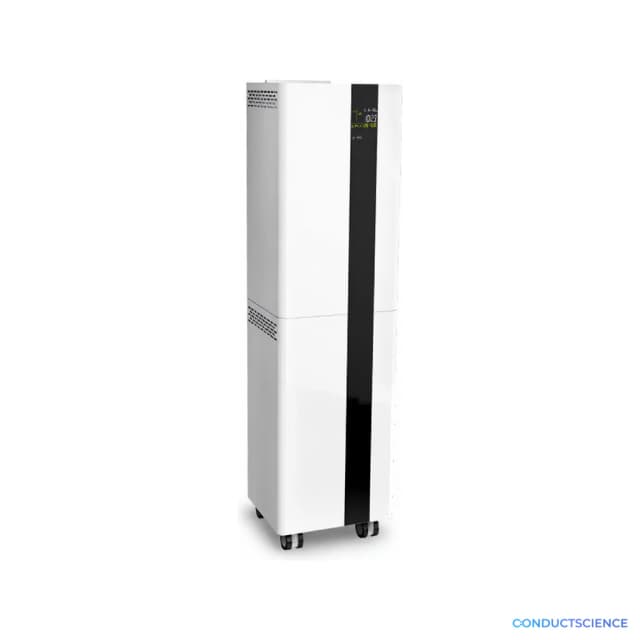
Ozone UV Sterilization Cabinet
Dual-action ozone and UV sterilization cabinet with 70-liter capacity and PID control system for laboratory equipment decontamination.

Louise Corscadden, PhD
Director of Science · ConductScience
Ask Louise about Ozone UV Sterilization Cabinet fit, setup, configuration, or quote prep.
Already working with us? Sign in to connect this with My Scientist.
Key Specifications
Full details →- Model fit
- Configured during quote
- SKU family
- BIO-0167
- Shipping box
- 45.2 x 39.8 x 39.8 cm
- Ordering
- Online checkout and quote request available
- Category
- Sterilizers
- Build notes
- Confirm accessories, station layout, and support needs before purchase
The Ozone UV Sterilization Cabinet provides dual-action sterilization combining ozone generation and UV irradiation for laboratory equipment and materials. The 70-liter chamber accommodates standard laboratory items with two adjustable shelves (386×394mm each), utilizing PID control system for precise operation parameters.
The cabinet achieves log kill values >3.00 against indicator bacteria including Staphylococcus aureus, Candida albicans, Pseudomonas aeruginosa, and natural bacterial populations. With 8W power consumption and compact footprint (398×398×452mm internal dimensions), the unit provides efficient sterilization for routine laboratory decontamination workflows while maintaining low operational costs.
How It Works
The sterilization process employs two complementary antimicrobial mechanisms. UV irradiation at germicidal wavelengths damages microbial DNA and RNA through direct photochemical reactions, disrupting cellular replication and causing cell death. The UV lamp provides consistent irradiation throughout the chamber volume.
Simultaneously, ozone generation creates a powerful oxidizing environment. Ozone molecules penetrate microbial cell walls and oxidize essential cellular components including proteins, lipids, and nucleic acids. This dual-action approach targets microorganisms through multiple pathways, enhancing sterilization efficacy against vegetative bacteria, fungi, and viruses.
The PID control system maintains optimal operating conditions by continuously monitoring and adjusting process parameters. Temperature, ozone concentration, and UV exposure time are regulated to achieve consistent log kill values >3.00 against indicator organisms while preventing damage to heat-sensitive materials.
Features & Benefits
Automation Level
- semi-automated
Weight
- 50kg
Indicator Bacteria
- Staphylococcus aureus, candida albicans, pseudomonas aeruginosa, natural bacteria
Index
- Each point of the log kill value should be>3.00
Control System
- PID
Altitude
- <2000m
Shelf(W*L)
- 386*394mm, standard 2pcs, can be optional
Standard Accessories
- Shelf*2, UV lamp*1
Consumption
- 8W
Internal Size(W*D*H)
- 398*398*452mm
External Size(W*D*H)
- 495*501*760mm
Package Size(W*D*H)
- 620*620*860mm
Brand
- ConductScience
Research Domain
- Cell Biology
- Clinical Diagnostics
- Environmental Monitoring
- Food Science
- Microbiology
- Pharmaceutical QC
Capacity
- 70L
Power/Voltage
- AC220V, 50/60Hz(Standard); AC110V, 50/60Hz(Optional)
Shipping weight
- 35.0 lb
Shipping box
- L: 45.2 cm
- W: 39.8 cm
- H: 39.8 cm
| Feature | This Product | Typical Alternative | Advantage |
|---|---|---|---|
| Sterilization Method | Dual ozone and UV irradiation | Single-method systems use either UV-only or ozone-only sterilization | Complementary mechanisms improve efficacy against resistant microorganisms and reduce treatment variability. |
| Chamber Capacity | 70-liter internal volume | Benchtop units often range from 30-100 liters | Sufficient capacity for multiple items while maintaining compact laboratory footprint. |
| Control System | PID control with process parameter regulation | Basic timers or simple on/off controls are common | Precise parameter control ensures consistent sterilization performance and process reproducibility. |
| Power Requirements | 8W consumption with dual voltage options | Higher power consumption typical for combination systems | Low operational costs make routine sterilization economically feasible for high-throughput laboratories. |
| Efficacy Documentation | Log kill values >3.00 against four indicator organisms | Varies by model and manufacturer validation protocols | Documented performance against clinically relevant pathogens provides confidence in sterilization outcomes. |
The cabinet offers dual-mechanism sterilization with PID control in a 70-liter capacity suitable for routine laboratory use. The 8W power consumption and documented log kill performance provide efficient operation with validated antimicrobial efficacy.
Practical Tips
Verify ozone generation and UV output regularly using appropriate measurement devices to ensure consistent sterilization performance.
Why: Process parameters can drift over time, affecting sterilization efficacy and validation compliance.
Clean the chamber surfaces weekly with appropriate disinfectants and inspect UV lamp for visible damage or reduced output.
Why: Residue buildup can interfere with UV transmission and ozone circulation, reducing sterilization effectiveness.
Arrange items with adequate spacing to allow UV penetration and ozone circulation around all surfaces.
Why: Shadowing and poor gas circulation create sterilization dead zones that may harbor viable microorganisms.
Ensure adequate room ventilation when operating the ozone system and allow proper degassing time before opening the chamber.
Why: Ozone exposure can cause respiratory irritation and proper ventilation prevents accumulation in the work area.
Document cycle parameters and biological indicator results to maintain validation records for regulatory compliance.
Why: Process validation documentation is essential for quality system requirements and regulatory inspections.
If sterilization efficacy decreases, check UV lamp output first as this is the most common cause of performance degradation.
Why: UV lamps lose output over time and reduced irradiation directly impacts the dual-mechanism sterilization process.
Pre-clean items to remove organic debris before sterilization as soil load can interfere with both UV and ozone penetration.
Why: Organic materials can shield microorganisms and consume ozone, reducing the sterilizing agent concentration.
Setup Guide
What’s in the Box
- Ozone UV Sterilization Cabinet main unit
- Adjustable shelves (2 pieces, 386×394mm)
- UV lamp (1 piece)
- Power cable
- User manual
- Installation guide (typical)
- Calibration certificate (typical)
Warranty
ConductScience provides a standard 1-year manufacturer warranty covering parts and labor, with technical support available for installation guidance and operational troubleshooting.
Compliance
What is the sterilization cycle time for typical laboratory items?
Cycle time depends on item type and bioburden level. Consult product datasheet for specific timing recommendations based on your sterilization validation requirements.
Can this cabinet sterilize heat-sensitive plastics and electronics?
The low-temperature ozone and UV process is suitable for heat-sensitive materials, but compatibility should be verified for specific polymers and electronic components.
How is ozone concentration monitored and controlled?
The PID control system regulates ozone generation parameters. Specific concentration monitoring methods and calibration procedures are detailed in the technical manual.
What validation data is required for regulatory compliance?
Log kill validation against indicator organisms is included. Additional biological indicator testing may be required depending on your facility's quality system requirements.
How often does the UV lamp need replacement?
UV lamp lifespan varies with usage intensity. Monitor UV output regularly and replace according to manufacturer specifications to maintain sterilization efficacy.
Can the shelf configuration be modified for larger items?
The two standard 386×394mm shelves can be repositioned or removed entirely to accommodate larger items within the 398×398×452mm internal chamber.
What maintenance is required for the ozone generation system?
Regular maintenance includes ozone generator cleaning and performance verification. Detailed maintenance schedules and procedures are provided in the user manual.
Have a question about this product?
Have a question? Just ask.
Send it over and we'll email you a personalized answer — no call, no scheduling.
Prefer to talk it through?