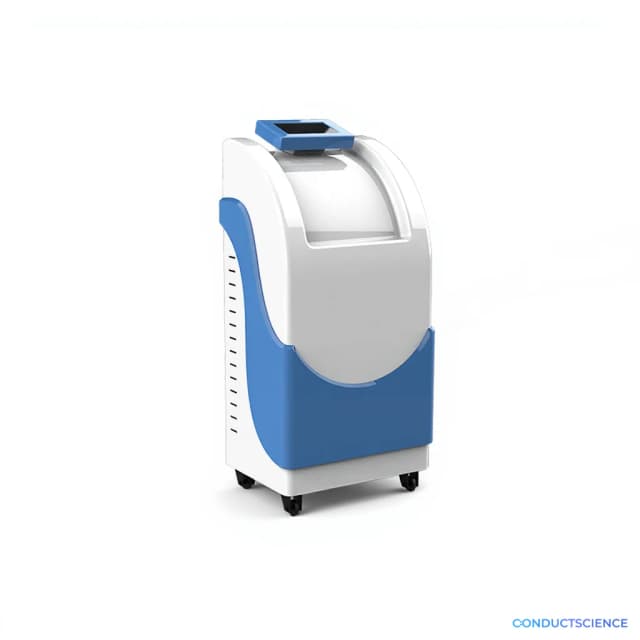
Compact UV-C Air Sterilizer
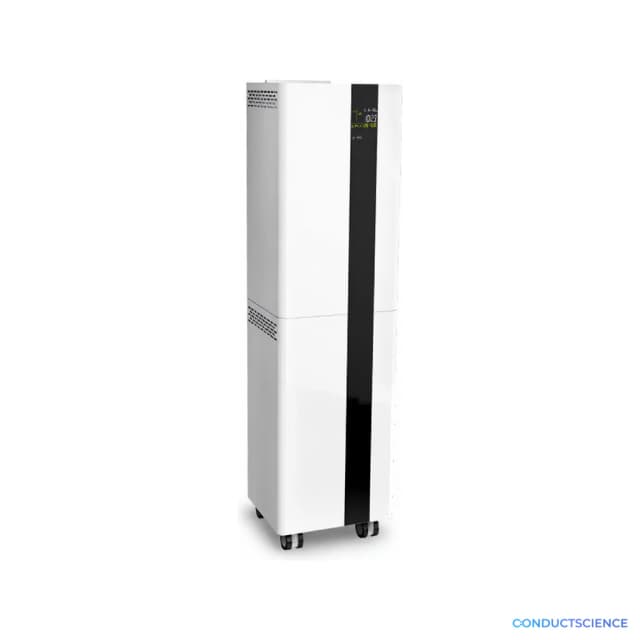
Compact UV-C air sterilizer with activated carbon filtration, achieving >99.9% sterilization rate against Staphylococcus albus for laboratory air quality control.

Louise Corscadden, PhD
Director of Science · ConductScience
Ask Louise about Compact UV-C Air Sterilizer fit, setup, configuration, or quote prep.
Already working with us? Sign in to connect this with My Scientist.
Key Specifications
Full details →- Model fit
- Configured during quote
- SKU family
- BIO-0159
- Shipping box
- 64.0 x 26.5 x 26.5 cm
- Ordering
- Online checkout and quote request available
- Category
- Sterilizers
- Build notes
- Confirm accessories, station layout, and support needs before purchase
The Household UV Air Sterilizer (BIO-0159) provides laboratory-grade air purification through UV-C germicidal irradiation combined with activated carbon filtration. This compact benchtop unit delivers 85 µW/cm² ultraviolet radiation intensity at 1 meter vertical center, achieving >99.9% sterilization rate against Staphylococcus albus and >90% natural bacteria extinction rate. The dual-stage purification system incorporates a composite activated carbon filter for chemical vapor removal and UV-C irradiation for microbial inactivation.
Operating at <55 dB(A) noise level with <100W power consumption, this 4.35 kg unit measures 265×265×640mm and features UV leakage containment to ≤1 µW/cm². The UV lamp provides ≥5000 hours operational life, making it suitable for continuous operation in small laboratory spaces, cleanrooms, and research facilities requiring localized air quality control. The system provides real-time air treatment without requiring ducted ventilation systems.
How It Works
The UV Air Sterilizer employs dual-stage air purification combining physical and photochemical decontamination mechanisms. Air enters the system and first passes through a composite activated carbon filter that adsorbs volatile organic compounds and odorous molecules through van der Waals forces and pore entrapment. The activated carbon's high surface area provides extensive contact time for chemical vapor removal.
Following filtration, air flows through the UV-C irradiation chamber containing germicidal lamps that emit 254 nm ultraviolet radiation at 85 µW/cm² intensity. This wavelength targets the DNA and RNA of microorganisms, causing thymine dimer formation and disrupting cellular replication mechanisms. The exposure time within the irradiation chamber provides sufficient UV dose to achieve >99.9% kill rates for vegetative bacteria.
The system maintains UV leakage below 1 µW/cm² through engineered light containment, ensuring safe operation in occupied laboratory spaces. Internal airflow patterns maximize residence time within the UV exposure zone while the quiet operation (<55 dB(A)) permits continuous use without disrupting laboratory activities.
Features & Benefits
Automation Level
- manual
Filter
- Composite activated carbon filter
UV Lamp Life
- ≥5000h
UV Leakage
- ≤1μW/cm²
Natural Bacteria Extinction Rate
- ≥90%
Sterilization Rate of Staphylococcus Albus
- ≥99.9%
Ultraviolet Radiation Intensity(Inner)
- Average: 85μW/cm²(At 1 meter vertical center)
Noise
- ≤55dB(A)
Consumption
- ≤100W
External Size(W*D*H)
- 265*265*640mm
Package Size(W*D*H)
- 320*320*700mm
Brand
- ConductScience
Research Domain
- Cell Biology
- Clinical Diagnostics
- Environmental Monitoring
- Food Science
- Microbiology
- Pharmaceutical QC
Weight
- 5.73kg
Shipping weight
- 4.35 lb
Shipping box
- L: 64.0 cm
- W: 26.5 cm
- H: 26.5 cm
| Feature | This Product | Typical Alternative | Advantage |
|---|---|---|---|
| UV Irradiation Intensity | 85 µW/cm² at 1 meter vertical center | Entry-level models often provide lower intensity output | Higher intensity provides more reliable germicidal effectiveness and shorter treatment times for equivalent kill rates. |
| Sterilization Efficacy | >99.9% against Staphylococcus albus | Basic units may offer lower documented kill rates | Documented high efficacy provides confidence in microbial control for critical laboratory applications. |
| UV Lamp Lifespan | ≥5000 hours operational life | Standard UV lamps often require more frequent replacement | Extended lamp life reduces maintenance frequency and operational interruptions in continuous-use environments. |
| Safety Features | UV leakage ≤1 µW/cm² | Some units may have higher leakage or require shielding | Low leakage design enables safe operation in occupied laboratory spaces without additional protective measures. |
| Noise Level | ≤55 dB(A) operation | Many air treatment systems operate at higher noise levels | Quiet operation permits use in sound-sensitive laboratory environments without disrupting work activities. |
| Filtration System | Composite activated carbon filter | UV-only systems without chemical vapor removal | Dual-stage treatment addresses both microbial and chemical contaminants for comprehensive air quality control. |
This UV air sterilizer combines high-intensity UV-C irradiation with activated carbon filtration in a compact, quiet design. The documented >99.9% sterilization efficacy against Staphylococcus albus and extended lamp life provide reliable microbial control with minimal maintenance requirements. Low UV leakage and quiet operation enable safe continuous use in occupied laboratory spaces.
Practical Tips
Monitor UV lamp intensity output quarterly using a calibrated UV radiometer to verify maintained germicidal effectiveness.
Why: UV output degrades over time and intensity verification ensures continued sterilization performance.
Clean UV lamp surfaces monthly with appropriate solvents to remove dust accumulation that reduces UV transmission.
Why: Surface contamination can significantly reduce germicidal effectiveness even with functional lamps.
Position the unit to maximize air circulation through the treatment chamber while avoiding direct interference with laboratory airflow patterns.
Why: Optimal positioning ensures effective air treatment while maintaining laboratory ventilation system performance.
Replace activated carbon filters when pressure drop increases significantly or chemical breakthrough is detected through odor monitoring.
Why: Saturated carbon loses adsorption capacity and may release previously captured contaminants.
Verify UV lamp containment integrity regularly and immediately address any visible UV leakage or unusual lamp exposure.
Why: UV-C radiation can cause skin and eye damage if containment systems fail.
If sterilization performance decreases, check both UV lamp function and filter condition before assuming equipment failure.
Why: Performance issues often result from consumable component degradation rather than system malfunction.
Maintain records of lamp hours, filter replacement dates, and UV intensity measurements to track performance trends.
Why: Historical data helps predict maintenance needs and provides documentation for validation requirements.
Allow 5-10 minutes for thermal stabilization after startup before relying on full germicidal performance.
Why: UV lamps require warm-up time to reach optimal output intensity for maximum sterilization effectiveness.
Setup Guide
What’s in the Box
- UV Air Sterilizer main unit
- Composite activated carbon filter (typical)
- Power cord (typical)
- User manual and operating instructions (typical)
- UV lamp safety information (typical)
Warranty
ConductScience provides a standard 1-year manufacturer warranty covering defects in materials and workmanship, with technical support for operational guidance and troubleshooting assistance.
Compliance
What is the effective coverage area for the UV irradiation?
The unit provides 85 µW/cm² intensity at 1 meter vertical center. Effective germicidal coverage depends on airflow patterns and residence time within the irradiation chamber. Consult product datasheet for specific volumetric treatment capacity.
How often does the activated carbon filter require replacement?
Filter replacement frequency depends on environmental contamination levels and usage patterns. Monitor performance indicators and replace when chemical breakthrough or pressure drop increases significantly. Typical laboratory use requires quarterly evaluation.
Can this unit handle volatile chemical vapors from laboratory processes?
The composite activated carbon filter removes many organic vapors and odors, but specific chemical compatibility should be verified. High concentrations of solvents or corrosive chemicals may require specialized filtration media.
What maintenance is required for the UV lamp system?
UV lamps provide ≥5000 hours operational life. Monitor UV intensity output and replace lamps when output falls below specified levels. Clean lamp surfaces periodically to remove dust accumulation that reduces UV transmission.
Is this suitable for biosafety cabinet integration?
The compact 265×265×640mm size allows placement within larger biosafety cabinets, but ensure adequate airflow clearance and that UV operation does not interfere with cabinet airflow patterns. Verify compatibility with specific cabinet models.
How does this compare to HEPA filtration for microbial control?
UV irradiation inactivates microorganisms rather than physically removing them like HEPA filters. UV provides germicidal action against captured organisms while HEPA provides physical particle removal. Consider using both technologies for comprehensive air quality control.
What verification methods confirm sterilization performance?
The unit achieves documented >99.9% sterilization against Staphylococcus albus. Regular performance verification may include microbiological challenge tests or UV intensity measurements. Consult manufacturer protocols for validation procedures.
Can this operate continuously in occupied laboratory spaces?
Yes, UV leakage is maintained at ≤1 µW/cm² and noise levels are ≤55 dB(A), making it suitable for continuous operation in occupied areas without special precautions. The contained UV design prevents direct exposure.
Have a question about this product?
Have a question? Just ask.
Send it over and we'll email you a personalized answer — no call, no scheduling.
Prefer to talk it through?
Accessories
Enhance your setup with compatible accessories