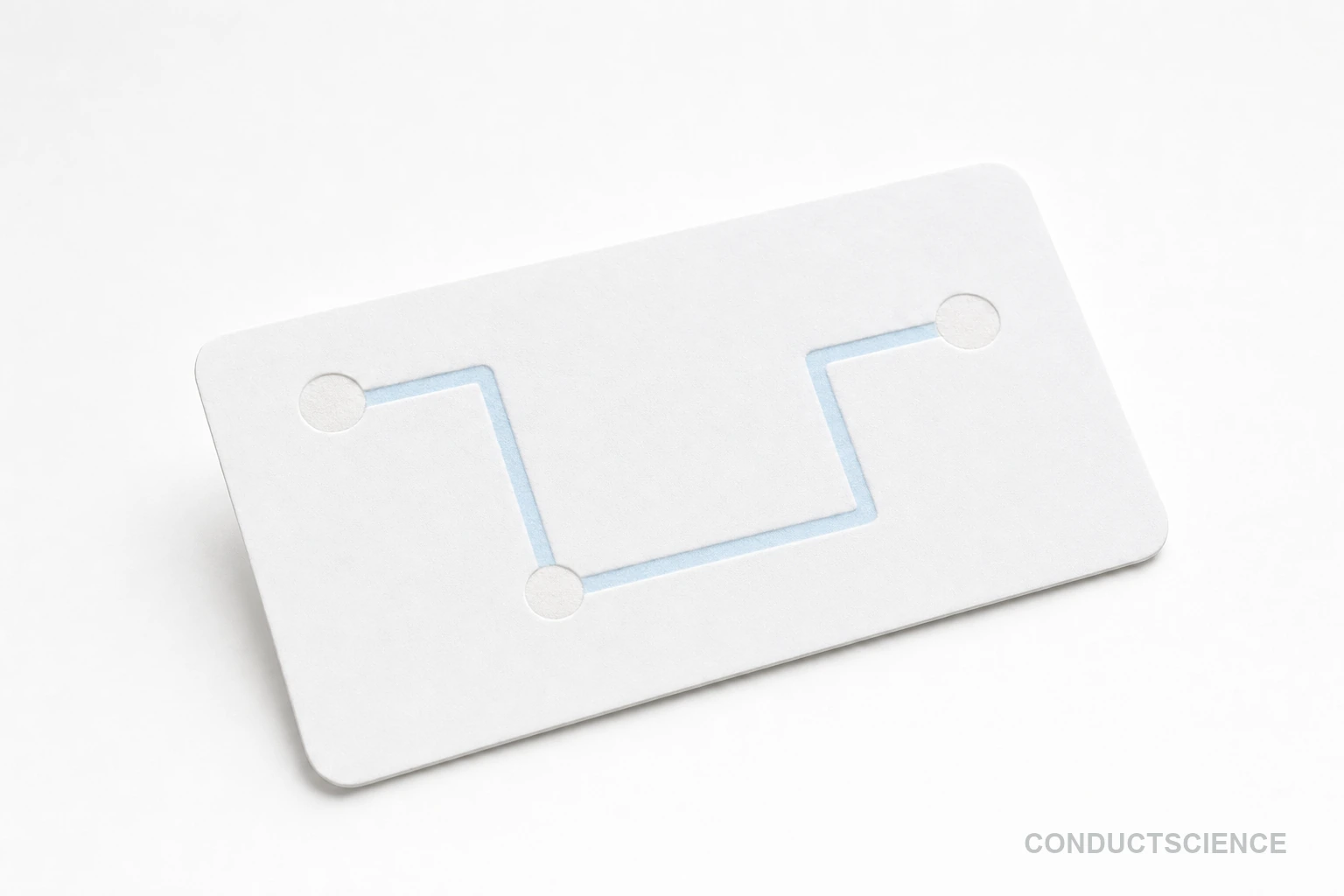
Custom Paper Microfluidic Chip
Custom-designed paper microfluidic chips utilizing selected cellulose substrates for disposable diagnostic applications and food safety testing with tailored channel patterns.
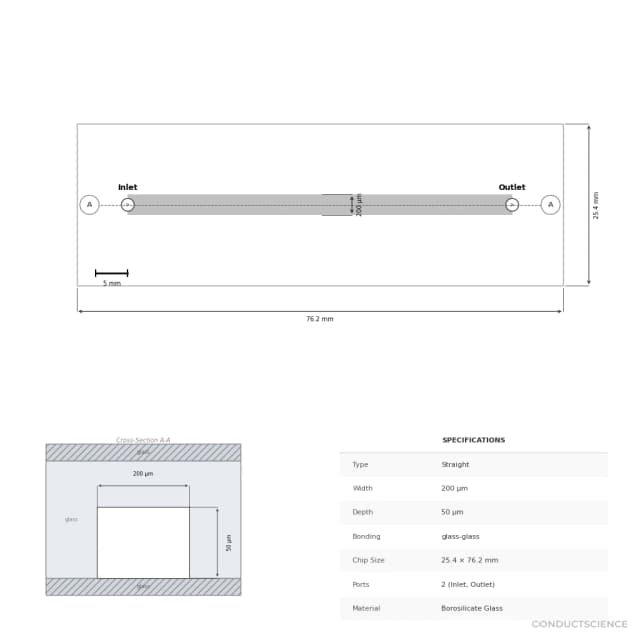
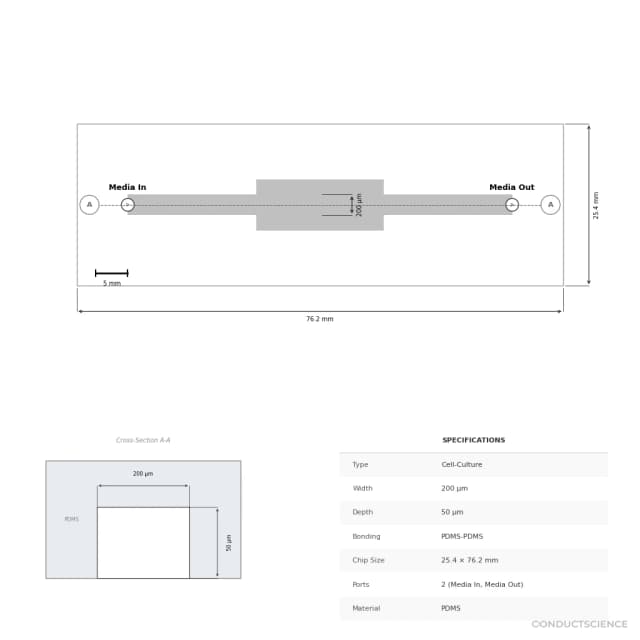
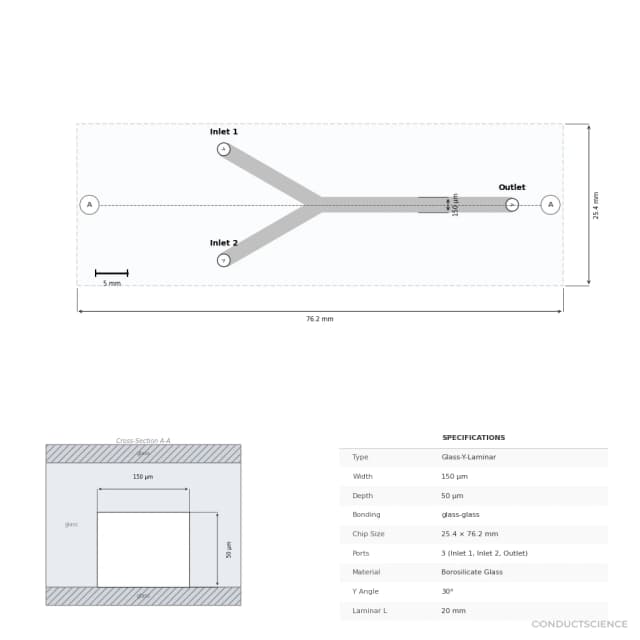
Reusable chip — designed for multiple experimental runs. Compatible with standard microfluidic tubing: steel pins (0.7 mm ID / 1.0 mm OD) and silicone tubing (0.8 mm ID / 1.9 mm OD). Available in bulk packs (5‑, 10‑, and 25‑unit) for lab-scale and consumable workflows.

Louise Corscadden, PhD
Director of Science · ConductScience
Ask Louise about Custom Paper Microfluidic Chip fit, setup, configuration, or quote prep.
Already working with us? Sign in to connect this with My Scientist.
Key Specifications
Full details →- Model fit
- 2 selectable configurations
- SKU family
- WHM-0126
- Shipping box
- 181.8 x 136.3 x 90.9 cm
- Ordering
- Online checkout and quote request available
- Category
- Microfluidic Chips
- Build notes
- Confirm accessories, station layout, and support needs before purchase
The Custom Paper Microfluidic Chip (WHM-0126) is a specialized paper-based analytical device designed for custom diagnostic applications and food safety testing. This microfluidic platform utilizes custom-selected paper substrates to create defined channel patterns for fluid handling and sample processing in a disposable format. The device leverages the natural wicking properties of cellulose fibers to transport samples through designed pathways, enabling colorimetric detection and analysis without external pumps or complex instrumentation.
Paper microfluidics offers significant advantages for field-deployable diagnostics, providing low-cost alternatives to conventional glass or polymer microfluidic systems. The custom design capability allows for application-specific channel geometries, detection zones, and reagent integration to meet unique analytical requirements. With a minimum order of 50 units, this platform supports both research prototyping and small-scale deployment scenarios where cost-effective, disposable analytical devices are required.
How It Works
Paper microfluidic chips operate through passive fluid transport driven by capillary action within the cellulose fiber network. The selected paper substrate provides controlled porosity and surface chemistry that determines flow rates and retention characteristics. Custom channel patterns are typically created through hydrophobic barrier formation using wax printing, photolithography, or other patterning techniques that define fluid pathways while maintaining the paper's wicking properties.
Sample introduction occurs at designated input zones, with fluid transport proceeding through defined channels to reaction or detection areas. The cellulose matrix can be pre-loaded with dried reagents that rehydrate upon sample contact, enabling on-chip chemical reactions. Detection is commonly achieved through colorimetric changes visible to the naked eye or quantifiable using optical readers. The paper substrate serves both as the fluidic platform and the solid support for immobilized detection reagents.
Custom paper selection allows optimization of flow characteristics, chemical compatibility, and detection sensitivity for specific applications. Different cellulose grades, surface treatments, or composite papers can be specified to achieve desired performance parameters including flow rate, retention volume, and chemical stability.
Features & Benefits
Shipping weight
- 3.3 lb
Shipping box
- L: 181.8 cm
- W: 136.3 cm
- H: 90.9 cm
| Feature | This Product | Typical Alternative | Advantage |
|---|---|---|---|
| Substrate Material | Custom-selected paper substrates optimized for specific applications | Standard polymer or glass substrates with fixed properties | Allows optimization of flow characteristics and chemical compatibility for unique assay requirements. |
| Manufacturing Cost | Low-cost paper-based fabrication suitable for disposable use | Higher cost polymer/glass devices typically requiring reuse | Enables economical high-volume testing and eliminates cleaning protocols between samples. |
| Customization Level | Fully customizable channel patterns and substrate selection | Fixed channel designs with limited modification options | Provides application-specific optimization for unique analytical workflows and detection requirements. |
| Field Deployment | No external pumping or complex instrumentation required | Often requires pumps, controllers, or specialized equipment | Simplifies on-site testing in resource-limited environments without laboratory infrastructure. |
| Minimum Order Quantity | 50 units minimum for custom designs | Higher minimum orders or off-the-shelf limitations | Supports both research prototyping and small-scale deployment with reasonable order quantities. |
The Custom Paper Microfluidic Chip provides application-specific optimization through custom substrate selection and channel design, offering significant cost advantages for disposable diagnostic applications. The platform combines the natural fluid handling properties of cellulose substrates with customizable analytical formats suitable for field deployment and resource-limited settings.
| Model | SKU | Listed price | Status | Shipping box |
|---|---|---|---|---|
| 25-Pack | WHM-0126-25PK | Quote | Available | 181.8 x 136.3 x 90.9 cm |
| 10-Pack | WHM-0126-10PK | $1,490.00 | Available | 181.8 x 136.3 x 90.9 cm |
Practical Tips
Validate flow timing and detection sensitivity with your specific sample matrix during initial testing, as complex samples may affect wicking behavior.
Why: Sample composition can alter paper substrate interaction and potentially affect assay performance.
Apply samples slowly and consistently to the input zone to ensure uniform wicking across all channel pathways.
Why: Rapid sample application can cause uneven flow distribution and affect detection zone performance.
Store unused chips in sealed containers with desiccant to prevent moisture absorption that could affect substrate properties.
Why: Paper substrates are hygroscopic and can change flow characteristics when exposed to high humidity.
Include positive and negative controls with each batch of testing to verify device performance and detection sensitivity.
Why: Paper-based devices can show batch-to-batch variation that affects analytical reliability.
If flow stops or becomes irregular, check for air bubbles in sample application or blocked channels due to particulates in the sample.
Why: Particulates or improper sample loading can disrupt capillary flow in the cellulose matrix.
Handle devices with clean gloves to prevent contamination and follow appropriate disposal protocols based on sample type.
Why: Paper substrates can absorb contaminants and require proper handling for both analytical integrity and safety.
Establish baseline performance with known standards before processing unknown samples to verify detection system function.
Why: Paper-based detection can be affected by environmental conditions and requires performance verification.
Document environmental conditions during testing including temperature and humidity, as these can affect paper substrate behavior.
Why: Environmental factors influence both flow rates and detection chemistry performance in paper-based systems.
Setup Guide
What’s in the Box
- Custom paper microfluidic chips (50 unit minimum)
- Design specification documentation (typical)
- Handling instructions (typical)
- Storage guidelines (typical)
Warranty
ConductScience provides standard warranty coverage for manufacturing defects and adherence to custom design specifications. Technical support is available for device optimization and application development.
Compliance
What paper substrates are available for custom selection?
Custom paper selection includes various cellulose grades, treated papers, and composite materials optimized for specific flow rates, chemical compatibility, and detection requirements. Substrate selection is determined during the design consultation process based on application needs.
How are custom channel patterns created in the paper substrate?
Channel patterns are typically formed using hydrophobic barrier techniques such as wax printing, photolithography, or screen printing to define fluid pathways while preserving the natural wicking properties of the cellulose substrate.
What sample volumes can be processed with these devices?
Sample volumes depend on custom channel design and paper substrate selection. Typical ranges vary from microliters to several hundred microliters, with specific volumes determined during the design optimization process.
Can reagents be pre-loaded onto the paper chips?
Yes, detection reagents, buffers, and other assay components can be dried onto specific zones of the paper substrate during manufacturing, allowing for single-step sample-to-result operation.
What detection methods are compatible with paper microfluidic chips?
Common detection methods include colorimetric assays, fluorescence, electrochemical detection, and immunoassays. The paper substrate can accommodate various detection chemistries and immobilized capture reagents.
How should the chips be stored before use?
Storage conditions depend on whether reagents are pre-loaded onto the chips. Generally, devices should be stored in dry conditions away from light and temperature extremes to maintain substrate integrity and reagent stability.
What is the typical turnaround time for custom chip production?
Production time varies based on design complexity and substrate requirements. Consult with ConductScience during the design consultation to establish realistic timelines for your specific application.
Can the chips be validated for specific regulatory requirements?
Validation protocols can be developed as part of the custom design process, with testing parameters and acceptance criteria established based on intended use and regulatory pathway requirements.
Have a question about this product?
Have a question? Just ask.
Send it over and we'll email you a personalized answer — no call, no scheduling.
Prefer to talk it through?