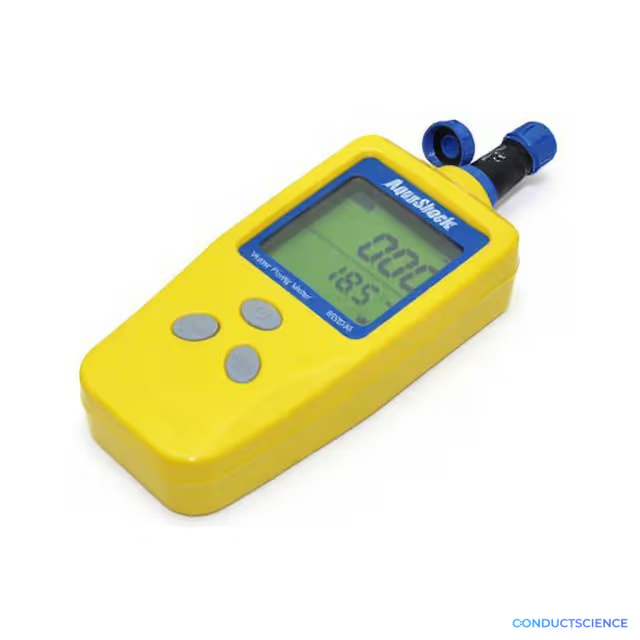
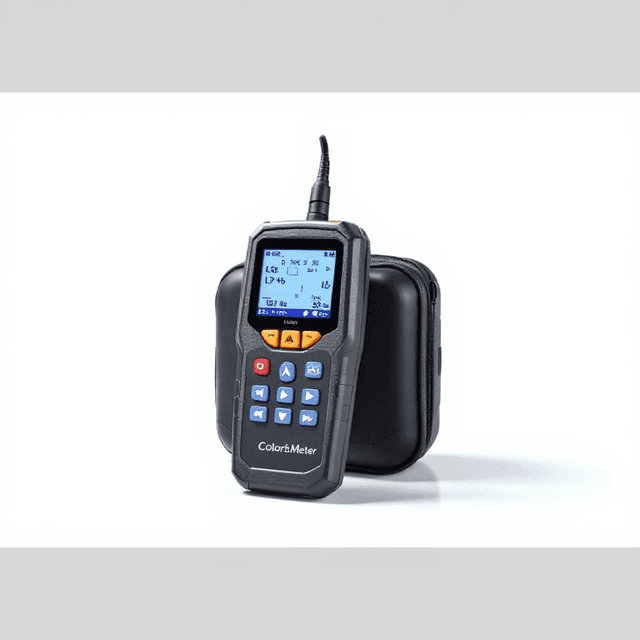
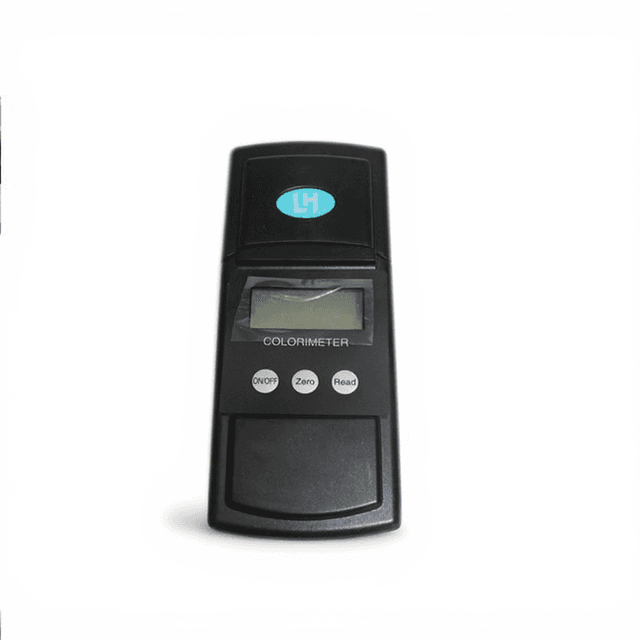
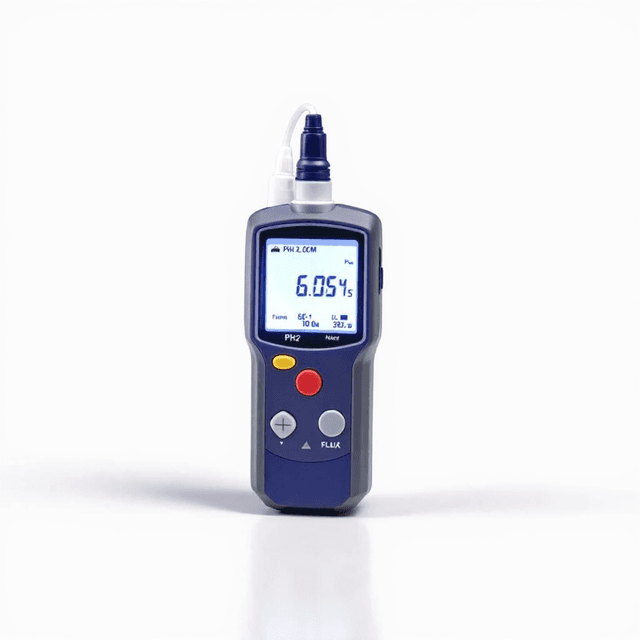
Digital Conductivity Testing Meter
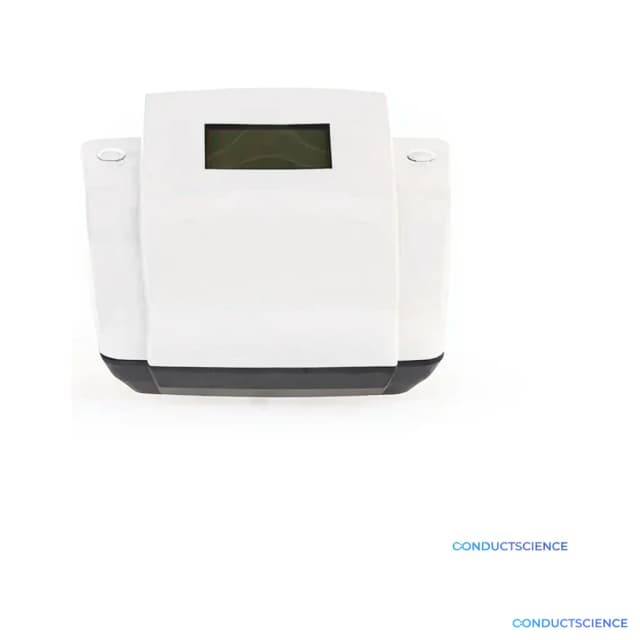
Microprocessor-based conductivity meter with four measurement ranges (0-199.9 mS/cm) and manual temperature compensation for water quality and environmental monitoring applications.

Louise Corscadden, PhD
Director of Science · ConductScience
Ask Louise about Digital Conductivity Testing Meter fit, setup, configuration, or quote prep.
Already working with us? Sign in to connect this with My Scientist.
Key Specifications
Full details →- Model fit
- Configured during quote
- SKU family
- CS-LH-EC015
- Shipping box
- 20.0 x 10.0 x 5.0 cm
- Ordering
- Online checkout and quote request available
- Category
- Portable Analyzers
- Build notes
- Confirm accessories, station layout, and support needs before purchase
The Digital Conductivity Testing Meter (CS-LH-EC015) is a microprocessor-based instrument designed for accurate conductivity measurements across four measurement ranges, from 0-199.9 µS/cm to 20.0-199.9 mS/cm. The meter incorporates manual temperature compensation across 0-50°C with a 2.0%/°C temperature coefficient to ensure measurement accuracy in varying environmental conditions.
Built around high-speed microprocessor technology, the instrument offers resolution from 0.1 µS/cm in low-conductivity ranges to 0.1 mS/cm in high-conductivity ranges. The system includes a 1408 µS/cm conductivity standard calibration plug for convenient single-point calibration, making it suitable for routine water quality assessment and process monitoring applications where conductivity serves as a key indicator of ionic content.
How It Works
Conductivity measurement operates on the principle that dissolved ions in solution facilitate electrical current flow between two electrodes. The meter applies an alternating voltage across electrodes with known geometry (cell constant) and measures the resulting current. Conductivity is calculated using Ohm's law, where conductance equals current divided by voltage, then normalized by the electrode cell constant to yield specific conductivity.
The microprocessor-based design employs digital signal processing to minimize polarization effects and electrode fouling artifacts. Temperature compensation adjusts readings based on the 2.0%/°C coefficient, accounting for increased ionic mobility at elevated temperatures. The four-range design automatically selects appropriate measurement sensitivity, with resolution optimized for each conductivity range to maintain measurement precision across the full operating spectrum.
Features & Benefits
Test range:conductivity
- (0~199.9)μs/cm ;(200~1999)μs/cm ;(2.00~19.99)ms/cm ;(20.0~199.9)ms/cm ;
Temperature compensation range
- 0~50°C (manual temperature compensation)
Temperature coefficient
- 2.0%/°C
Optional electrode specifications constant
- 0.1,1,10
Automation Level
- manual
Brand
- ConductScience
Accuracy
- electrode meter:±1.0%FS;complete:±1.5%FS
Research Domain
- Analytical Chemistry
- Environmental Monitoring
- Food Science
- Industrial Hygiene
- Microbiology
- Pharmaceutical QC
Shipping weight
- 0.26 lb
Shipping box
- L: 20.0 cm
- W: 10.0 cm
- H: 5.0 cm
| Feature | This Product | Typical Alternative | Advantage |
|---|---|---|---|
| Measurement Range Span | Four decades from 0-199.9 µS/cm to 20.0-199.9 mS/cm | Entry-level models often provide 1-2 measurement ranges | Eliminates need for multiple instruments when working with samples of varying ionic strength. |
| Calibration System | Integrated 1408 µS/cm calibration plug with single-point calibration | Basic models require separate calibration solutions | Reduces calibration setup time and eliminates need for preparing reference standards. |
| Temperature Compensation | Manual compensation across 0-50°C with 2.0%/°C coefficient | Budget instruments often lack temperature compensation | Maintains measurement accuracy when working with samples at varying temperatures. |
| Measurement Accuracy | ±1.0% FS (electrode/meter), ±1.5% FS complete system | Economy models typically offer ±2-3% accuracy | Provides laboratory-grade precision suitable for quality control applications. |
| Electrode Compatibility | Supports cell constants of 0.1, 1, and 10 cm⁻¹ | Fixed cell constant limits measurement optimization | Allows electrode selection based on sample characteristics for optimal performance. |
| Display Resolution | Variable from 0.1 µS/cm to 0.1 mS/cm depending on range | Fixed resolution may be inadequate at low conductivities | Optimizes measurement precision across all conductivity ranges. |
This microprocessor-based meter combines wide measurement range coverage with temperature compensation and flexible electrode compatibility. The integrated calibration system and variable resolution design address key limitations found in basic conductivity meters used for routine measurements.
Practical Tips
Verify calibration with the 1408 µS/cm plug before each measurement session and record calibration readings in a logbook.
Why: Systematic calibration tracking identifies electrode drift or meter malfunction before it affects sample measurements.
Store electrode in appropriate storage solution between uses and rinse with distilled water before and after each sample.
Why: Proper electrode storage prevents surface contamination and maintains stable measurement response.
Allow samples to reach stable temperature before measurement and record both conductivity and temperature values.
Why: Temperature variations significantly affect conductivity readings, and complete documentation enables data interpretation.
If readings drift or become unstable, check electrode for air bubbles, contamination, or damage to the sensing surfaces.
Why: Physical electrode problems are the most common cause of measurement errors in conductivity testing.
Make measurements in triplicate for critical samples and calculate standard deviation to assess measurement precision.
Why: Replicate measurements identify sample heterogeneity or measurement inconsistencies that could affect data quality.
Avoid measuring conductivity in solutions containing strong acids or bases without appropriate electrode protection.
Why: Aggressive chemical environments can damage electrode materials and compromise measurement accuracy.
Select appropriate electrode cell constant before calibration to match expected sample conductivity range.
Why: Proper cell constant selection optimizes measurement accuracy and response time for specific sample types.
Maintain consistent electrode immersion depth and avoid touching sensing surfaces during measurement.
Why: Standardized measurement technique minimizes variability and prevents contamination of electrode surfaces.
Setup Guide
What’s in the Box
- Digital conductivity meter (typical)
- Conductivity electrode with cable (typical)
- 1408 µS/cm calibration plug
- Electrode storage solution (typical)
- Battery set (typical)
- Carrying case (typical)
- User manual and quick reference guide (typical)
- Calibration certificate (typical)
Warranty
ConductScience provides a standard one-year manufacturer warranty covering defects in materials and workmanship, with technical support available for calibration procedures and measurement troubleshooting.
Compliance
What electrode cell constant should I select for different conductivity ranges?
Use 0.1 cm⁻¹ for high-conductivity samples (>10 mS/cm), 1 cm⁻¹ for moderate conductivity (100 µS/cm to 10 mS/cm), and 10 cm⁻¹ for low-conductivity samples (<100 µS/cm) to optimize measurement accuracy and response time.
How frequently should I calibrate the meter?
Perform single-point calibration with the 1408 µS/cm plug at the start of each measurement session or when switching electrode constants. For critical applications, verify calibration after every 10-20 measurements.
Can this meter handle high-temperature samples?
Manual temperature compensation operates to 50°C, but electrode specifications may limit maximum sample temperature. Consult electrode datasheet for temperature limitations and allow hot samples to cool for accurate measurement.
What is the measurement response time?
Response time varies with electrode cell constant and sample conductivity, typically 15-30 seconds for stable readings. Lower cell constants respond faster in high-conductivity samples.
How do I maintain measurement accuracy over time?
Store electrodes in appropriate storage solution, rinse between samples, and perform regular calibration verification. Replace electrodes when drift exceeds ±2% or response becomes sluggish.
Does the meter store measurement data?
Consult product datasheet for data logging capabilities. Manual recording of readings with sample identification and temperature is recommended for quality control documentation.
What maintenance is required?
Clean electrode with distilled water between samples, store in electrode storage solution, and replace batteries when low-battery indicator appears. Periodic calibration verification ensures continued accuracy.
Have a question about this product?
Have a question? Just ask.
Send it over and we'll email you a personalized answer — no call, no scheduling.
Prefer to talk it through?
Accessories
Enhance your setup with compatible accessories