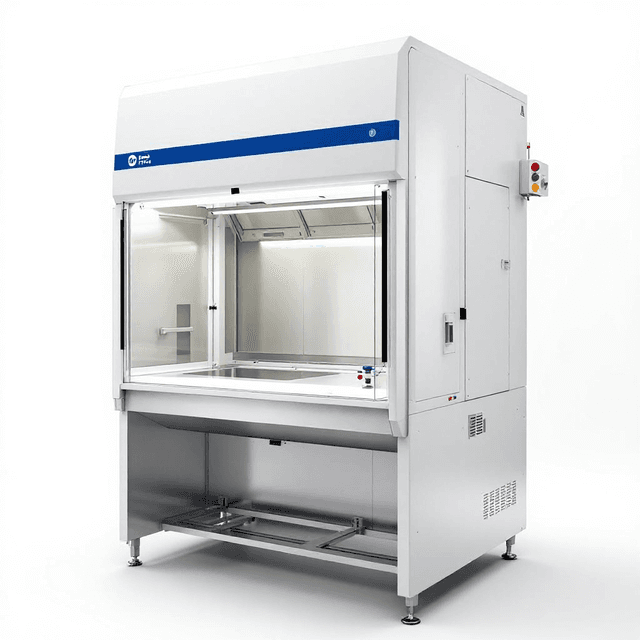
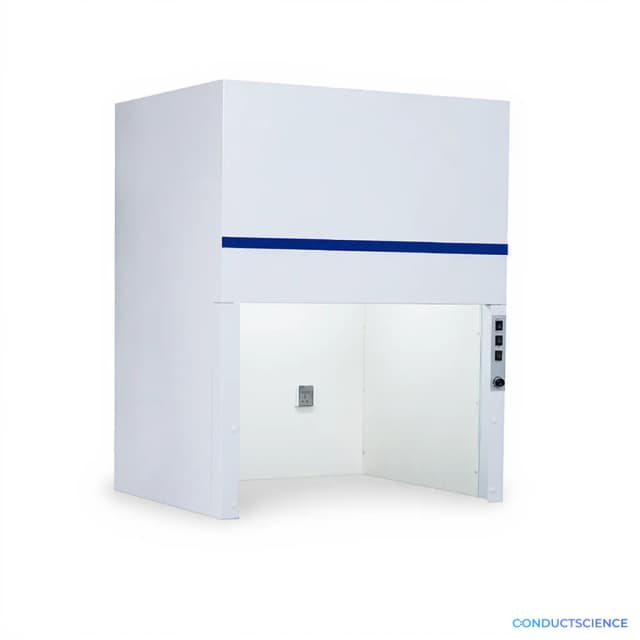
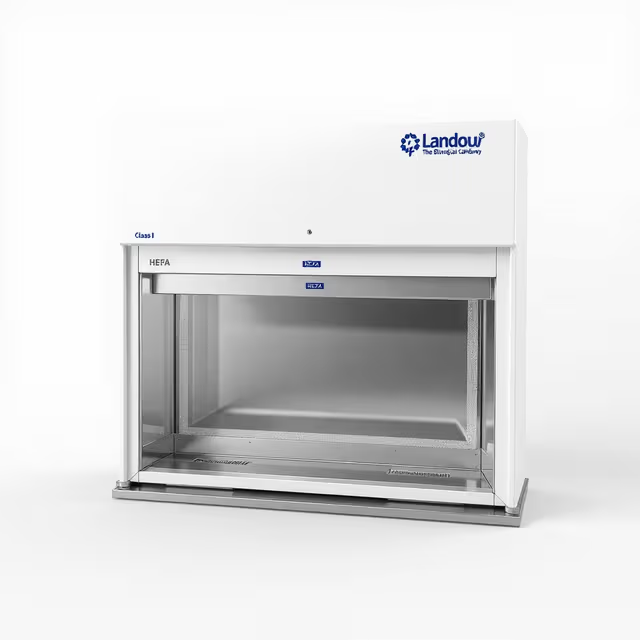
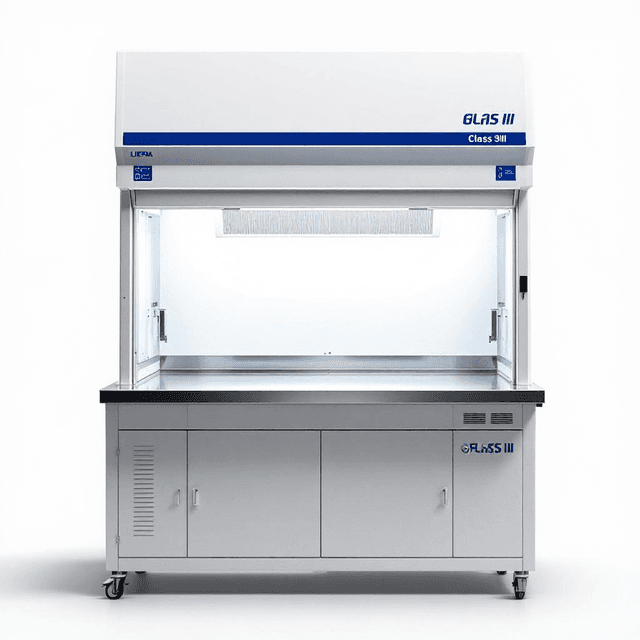
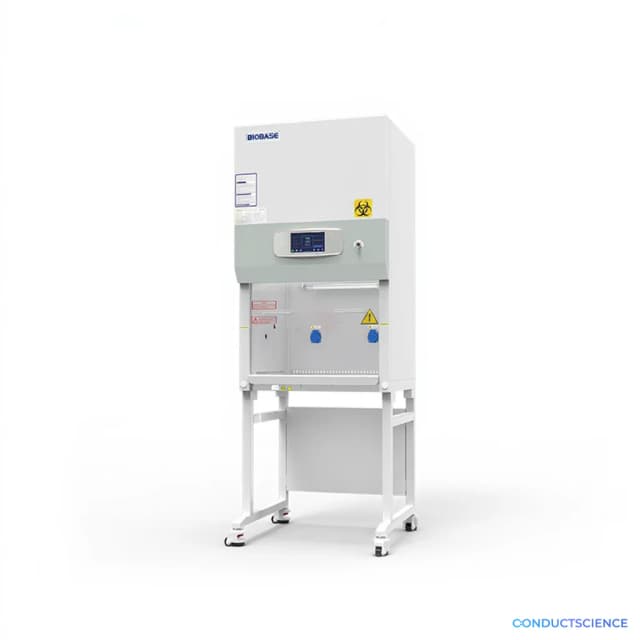
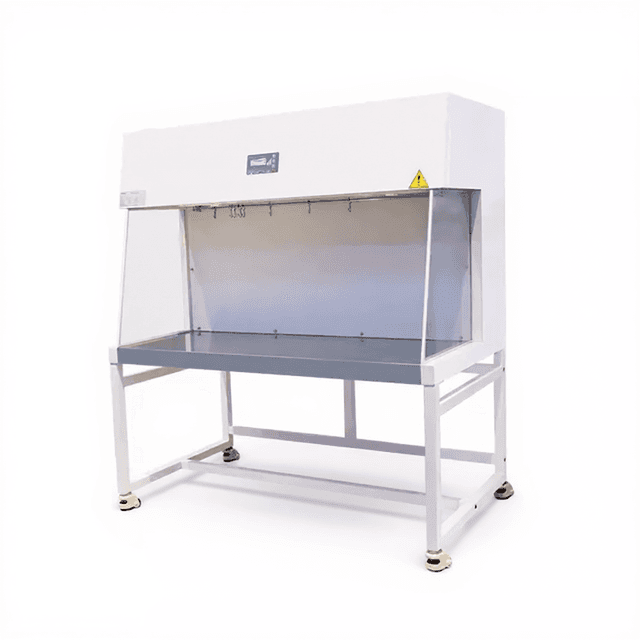
Dispensing Booth / Sampling Booth
Negative pressure dispensing booth with HEPA-filtered vertical laminar airflow for safe powder weighing, dispensing, and sampling operations with dual operator and product protection.
| Automation Level | manual |

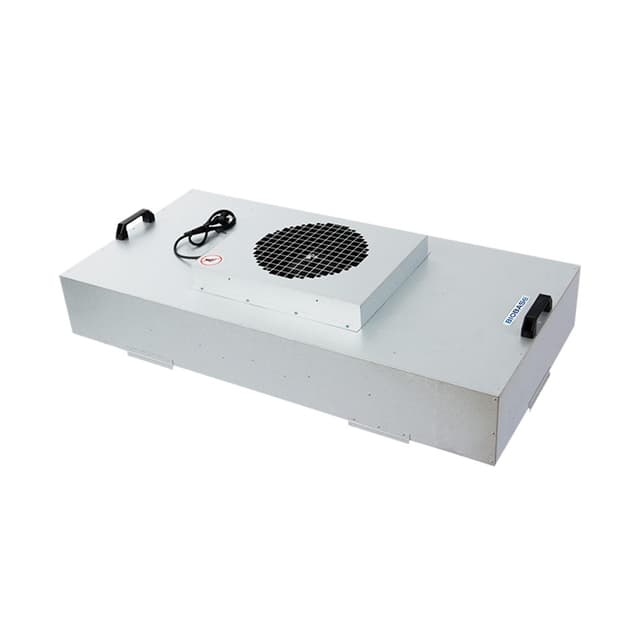
The Dispensing Booth / Sampling Booth is a negative pressure containment system designed for safe handling of powders and particulates in laboratory and pharmaceutical environments. The system combines HEPA-filtered vertical laminar airflow with negative pressure containment to provide dual protection - preventing operator exposure to hazardous materials while maintaining product integrity during weighing, dispensing, and sampling operations.
Featuring 99.99% efficient HEPA filtration at 0.3 micrometers, the booth creates a controlled environment with vertical laminar airflow patterns that sweep contaminants away from the operator breathing zone. The stainless steel interior construction provides chemical resistance and easy decontamination, while integrated lighting ensures adequate visibility for precise analytical procedures. This containment system is essential for pharmaceutical powder processing, analytical weighing of hazardous substances, and sampling operations requiring both personnel protection and cross-contamination prevention.
How It Works
The dispensing booth operates on the principle of negative pressure containment combined with vertical laminar airflow filtration. An internal fan system draws air downward through a HEPA filter at the top of the unit, creating a uniform vertical airflow pattern across the work surface. This downward airflow captures airborne particles generated during powder handling and directs them away from the operator's breathing zone toward the exhaust system.
Simultaneously, the booth maintains negative pressure relative to the surrounding laboratory environment, ensuring that any airborne contaminants remain contained within the unit rather than escaping into the room. The HEPA filter removes 99.99% of particles 0.3 micrometers and larger from the recirculating air stream, maintaining clean conditions within the work zone. The combination of directional airflow and negative pressure containment provides dual-barrier protection - preventing operator exposure while maintaining sample integrity.
The stainless steel interior construction facilitates easy cleaning and decontamination between different materials, while the integrated lighting system provides uniform illumination across the work surface for precise analytical procedures requiring visual confirmation of powder transfer and weighing operations.
Features & Benefits
Automation Level
- manual
Research Domain
- Analytical Chemistry
- Environmental Monitoring
- Food Science
- Industrial Hygiene
- Materials Science
- Pharmaceutical QC
Weight
- 420.0 kg
Dimensions
- L: 42.0 mm
- W: 43.6 mm
- H: 38.0 mm
Comparison Guide
| Feature | This Product | Typical Alternative | Advantage |
|---|---|---|---|
| Airflow Pattern | Vertical laminar airflow with downward air movement | Horizontal laminar flow or simple exhaust ventilation | Vertical flow more effectively captures particles generated during powder handling and directs them away from operator breathing zone. |
| Containment Design | Negative pressure containment with HEPA filtration | Basic exhaust ventilation without filtration | Dual-barrier protection prevents both operator exposure and environmental contamination of samples. |
| Interior Construction | Stainless steel interior surfaces | Powder-coated steel or plastic construction | Stainless steel provides superior chemical resistance and enables thorough decontamination between different materials. |
| Filtration Efficiency | HEPA filtration at 99.99% efficiency for 0.3μm particles | Lower efficiency filters or no filtration | HEPA filtration ensures effective removal of submicron contaminants that could compromise analytical results. |
| Work Surface Visibility | Integrated lighting system | Relies on ambient laboratory lighting | Dedicated lighting provides consistent illumination for precise visual confirmation of powder transfers and measurements. |
This dispensing booth combines vertical laminar airflow, negative pressure containment, and HEPA filtration in a stainless steel construction designed specifically for safe powder handling. The integrated lighting and dual-protection design address both operator safety and sample integrity requirements common in pharmaceutical and analytical laboratories.
Practical Tips
Verify airflow velocity and pressure differential measurements monthly using calibrated instruments to ensure containment performance remains within specifications.
Why: Regular calibration confirms that both negative pressure containment and laminar airflow are functioning properly for operator protection.
Monitor HEPA filter pressure differential indicators weekly and document readings to track filter loading and predict replacement timing.
Why: Proactive filter monitoring prevents system performance degradation and ensures consistent particle removal efficiency.
Allow the system to operate for 15-20 minutes before handling materials to establish stable airflow patterns and temperature equilibration.
Why: Stabilized conditions ensure optimal containment performance and prevent air turbulence that could compromise powder handling precision.
Keep hands and materials at least 6 inches from the front opening to maintain proper airflow patterns and containment effectiveness.
Why: Proper positioning prevents disruption of laminar airflow and maintains the protective air barrier between operator and materials.
Use anti-static measures such as grounding straps or ionizing equipment when handling fine powders to prevent electrostatic particle adhesion.
Why: Static control ensures accurate powder transfers and prevents material loss due to electrostatic attraction to surfaces.
Clean stainless steel surfaces immediately after each use session, especially when switching between different powder materials.
Why: Prompt cleaning prevents cross-contamination and maintains the smooth surface finish required for effective decontamination.
If airflow seems reduced, check for obstructions around air intake areas and verify that the work surface is not overloaded with equipment.
Why: Maintaining clear airflow paths ensures consistent performance and prevents containment failures due to air pattern disruption.
Position analytical balances and dispensing equipment toward the center of the work surface rather than near the front opening.
Why: Central positioning optimizes protection from both vertical airflow and negative pressure containment systems.
Setup Guide
What’s in the Box
- Dispensing booth main unit (typical)
- HEPA filter assembly (typical)
- Integrated lighting system (typical)
- Power cord and electrical connections (typical)
- User manual and operation guide (typical)
- Installation hardware (typical)
Compliance
Warranty & ConductCare
ConductScience provides a standard one-year manufacturer warranty covering defects in materials and workmanship, with technical support for installation guidance and operational troubleshooting.
What particle size range does the HEPA filtration effectively capture?
The HEPA filter provides 99.99% efficiency at 0.3 micrometers and larger particles. This includes most pharmaceutical powders, environmental particulates, and biological aerosols encountered in laboratory applications.
How do I verify that negative pressure containment is functioning properly?
Use a manometer or differential pressure gauge to measure pressure difference between the booth interior and surrounding room. Negative pressure should be maintained during operation, with specific values provided in the product datasheet.
What cleaning protocols are recommended for the stainless steel interior?
The stainless steel surfaces can be cleaned with isopropanol, mild detergents, or other laboratory-appropriate solvents. Avoid abrasive cleaners that could damage the smooth surface finish required for effective decontamination.
Can this booth handle both organic and inorganic powder materials?
Yes, the stainless steel construction and HEPA filtration system can accommodate various powder types. However, ensure proper cleaning protocols between different material types to prevent cross-contamination.
What are the electrical requirements for installation?
Consult the product datasheet for specific voltage, amperage, and frequency requirements. Installation should include appropriate grounding and may require dedicated electrical circuits depending on power consumption.
How frequently should the HEPA filter be replaced?
Filter replacement frequency depends on usage intensity and material types handled. Monitor pressure differential indicators and filter condition regularly, with replacement typically required annually or when efficiency degrades.
Is this suitable for handling cytotoxic or highly potent compounds?
While the booth provides negative pressure containment and HEPA filtration, consult safety data sheets for specific compounds and institutional safety protocols to determine if additional containment measures are required.
Have a question about this product?
Accessories
Enhance your setup with compatible accessories
Frequently Bought Together