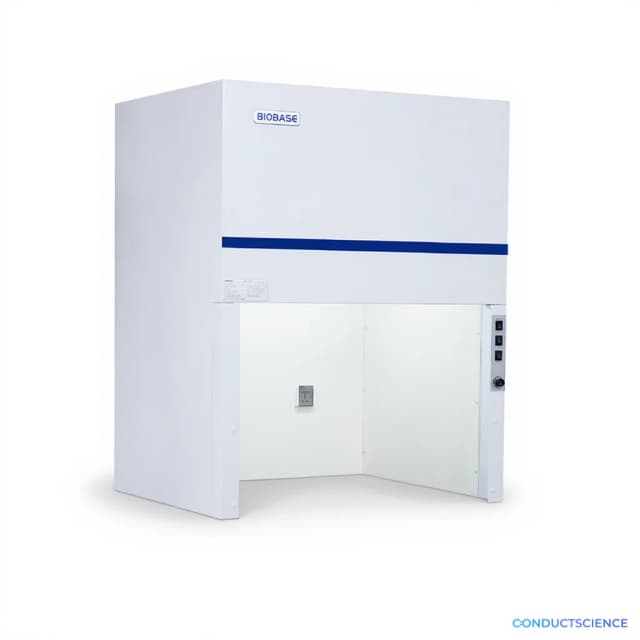
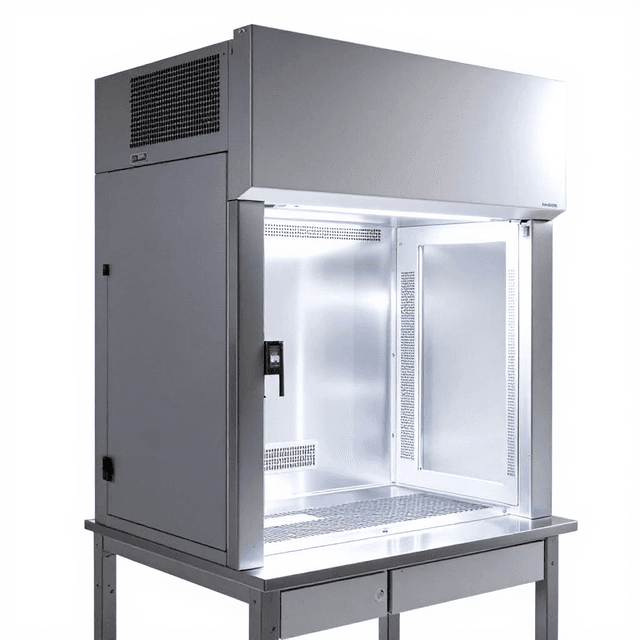
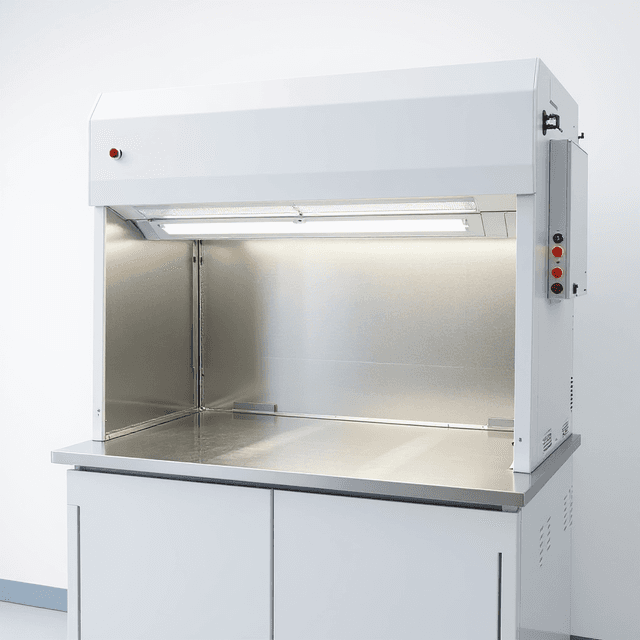
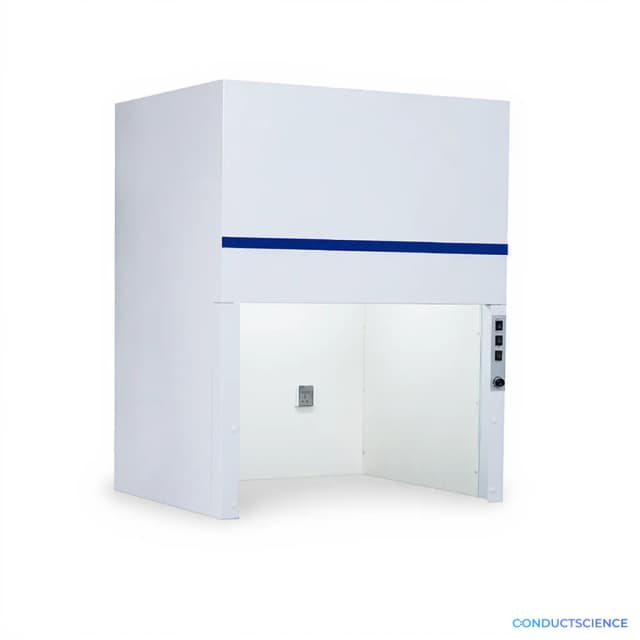
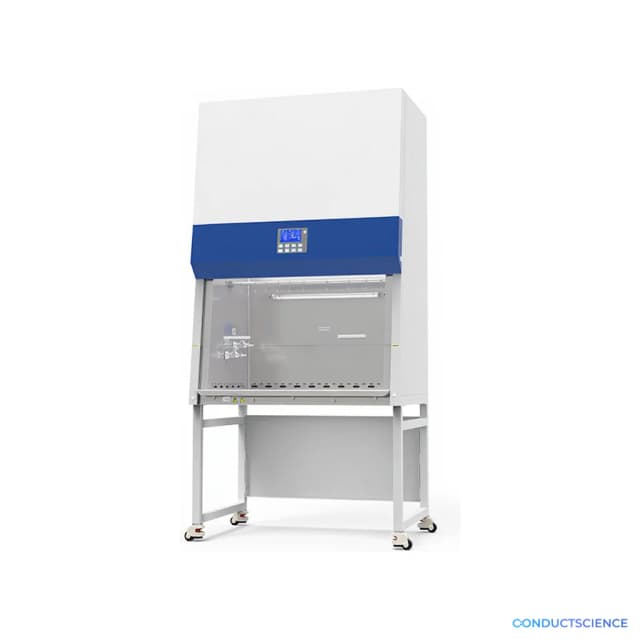
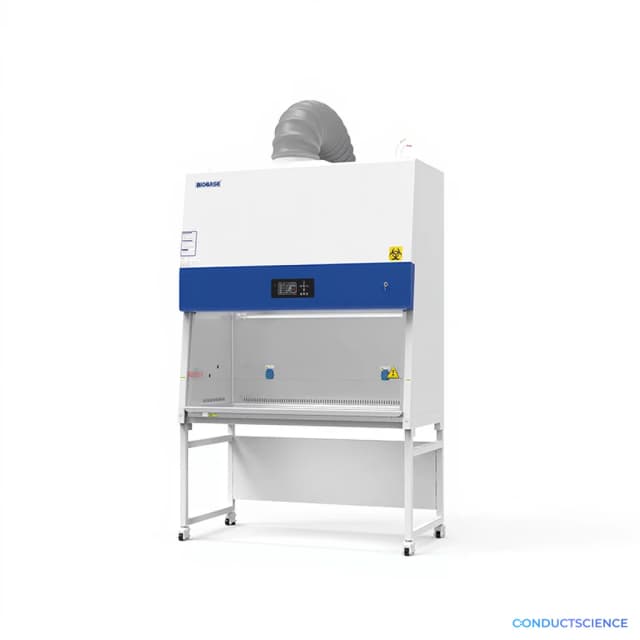
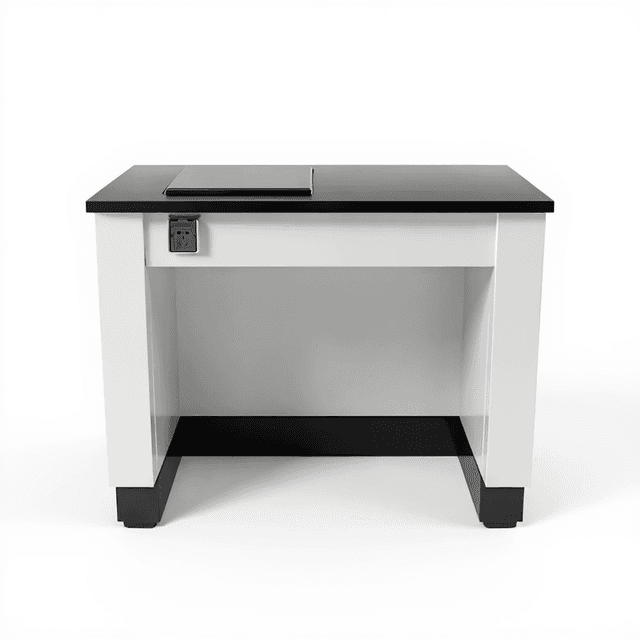
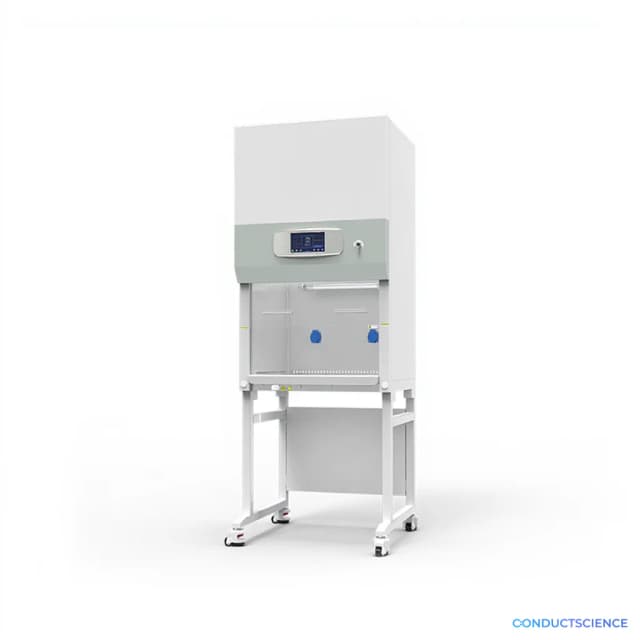
Fume Hood FH1000(E) FH1200(E) FH1500(E) FH1800(E)
Variable-width chemical fume hoods with ducted exhaust system providing controlled air velocity (0.3-0.8 m/s) for laboratory containment of hazardous vapors and chemicals.

Louise Corscadden, PhD
Director of Science · ConductScience
Ask Louise about Fume Hood FH1000(E) FH1200(E) FH1500(E) FH1800(E) fit, setup, configuration, or quote prep.
Already working with us? Sign in to connect this with My Scientist.
Key Specifications
Full details →- Model fit
- Configured during quote
- SKU family
- BIO-0065
- Shipping box
- 251.5 x 100.0 x 80.0 cm
- Ordering
- Online checkout and quote request available
- Category
- Clean Benches & Fume Hoods
- Build notes
- Confirm accessories, station layout, and support needs before purchase
Fume Hood FH-E Series
Professional laboratory fume hood designed for safe work with hazardous chemicals and vapors. Features vertical laminar airflow with HEPA filtration and comprehensive operator protection in compliance with laboratory safety standards.
Key Features:
- Vertical laminar airflow design
- HEPA filtration system
- Multiple size configurations
- Durable construction materials
- Safety monitoring systems
- Operator-friendly controls
How It Works
Chemical fume hoods operate on the principle of controlled airflow to capture and exhaust contaminated air from the work surface. Air enters the hood through the front opening and flows over the work surface at a controlled face velocity, carrying vapors and particles toward the rear baffle system. The exhaust system maintains negative pressure within the hood chamber relative to the laboratory environment, preventing contaminant escape.
The ducted exhaust configuration uses mechanical ventilation to transport contaminated air through PVC ductwork to external discharge points. Air velocity control between 0.3-0.8 m/s ensures adequate capture while minimizing turbulence that could disrupt containment performance. The rear baffle design promotes uniform airflow distribution across the work surface, preventing dead zones where contaminants might accumulate.
Face velocity is determined by the ratio of exhaust volume to the open sash area. As the sash opening changes, the face velocity varies inversely, requiring proper sash positioning to maintain optimal containment. The 750mm maximum opening allows full access while maintaining manageable exhaust requirements for the specified volumetric flow rates.
Features & Benefits
Shipping weight
- 270.0 lb
Shipping box
- L: 251.5 cm
- W: 100.0 cm
- H: 80.0 cm
| Feature | This Product | Typical Alternative | Advantage |
|---|---|---|---|
| Width Options | Four width configurations: 1000, 1200, 1500, 1800mm | Many manufacturers offer only 2-3 standard widths | Allows precise matching to laboratory layout and equipment requirements without oversizing or compromising workspace. |
| Face Velocity Range | Variable control from 0.3 to 0.8 m/s | Fixed velocity systems often operate at single setpoint | Enables optimization for different chemical types and experimental conditions while maintaining energy efficiency. |
| Exhaust Volume Scaling | Proportional exhaust volumes from 570 to 1550 m³/h based on width | Some units use oversized exhaust systems regardless of hood size | Right-sized ventilation reduces energy costs while maintaining proper containment performance. |
| Noise Level | ≤68dB operation | Entry-level units may exceed 70dB | Maintains comfortable laboratory environment for extended work sessions and sensitive measurements. |
| Maximum Sash Opening | 750mm opening height | Basic models often limit opening to 600-650mm | Provides better access for equipment setup and maintenance while maintaining containment when properly operated. |
| Ductwork Included | 5-meter PVC duct system with mounting hardware | Many units require separate ductwork purchase | Complete installation package reduces procurement complexity and ensures compatible components. |
This fume hood series provides comprehensive width options with proportionally scaled exhaust systems, offering laboratories the flexibility to match containment capacity to actual workspace requirements. The variable face velocity control and complete ductwork package provide installation advantages over basic fixed-velocity units.
Practical Tips
Verify face velocity measurements quarterly using a calibrated anemometer at 6 points across the sash opening (2 high, 2 middle, 2 low positions).
Why: Face velocity varies across the opening due to edge effects and ensures all areas meet containment requirements.
Clean the work surface and interior walls monthly with laboratory detergent, avoiding abrasive cleaners that could damage surfaces or create contamination retention sites.
Why: Chemical residue buildup can interfere with airflow patterns and create secondary contamination sources.
Keep the sash at the lowest practical position (typically 300-400mm) during chemical work rather than using the full 750mm opening.
Why: Lower sash positions increase face velocity and improve containment while reducing exhaust air volume requirements.
If airflow appears reduced, first check for obstructions in the exhaust ductwork and verify the exhaust fan is operating at proper speed before adjusting controls.
Why: Mechanical blockages are more common causes of airflow problems than control system failures.
Document face velocity measurements and containment test results in a maintenance log to track performance trends over time.
Why: Gradual performance degradation may not be immediately apparent but can compromise safety if undetected.
Never use the hood as general storage space or allow equipment to block the rear baffle slots where contaminated air enters the exhaust system.
Why: Airflow obstruction creates dead zones where contaminants can accumulate and potentially escape containment.
Allow the exhaust system to run for 5 minutes after completing chemical work to clear any residual vapors from the ductwork.
Why: Residual vapors in the exhaust system can create odors or contamination issues when the system is restarted.
Inspect the PVC exhaust ductwork annually for chemical attack, especially joints and connections where stress concentrations occur.
Why: Chemical exposure can cause gradual deterioration of ductwork materials, leading to leaks and reduced performance.
Setup Guide
What’s in the Box
- Fume hood main unit
- PVC exhaust ductwork (5 meters, φ300mm)
- Pipe straps (2 pieces)
- LED lamp assembly (20W)
- Installation hardware
- User manual and safety guidelines (typical)
Warranty
ConductScience provides a standard 1-year manufacturer warranty covering defects in materials and workmanship, with technical support available for installation guidance and operational questions.
Compliance
References
Background reading relevant to this product:
What face velocity should I maintain for different types of chemical work?
For most laboratory chemicals, maintain 0.5-0.7 m/s face velocity. Use lower velocities (0.3-0.5 m/s) for light powders that might be disturbed by higher airflow, and higher velocities (0.6-0.8 m/s) for highly volatile or toxic compounds.
How do I verify the hood is providing adequate containment?
Perform quarterly containment testing using tracer gas (sulfur hexafluoride) or smoke tubes at the sash opening while operating typical procedures. Face velocity measurements should be taken at multiple points across the sash opening.
Can the exhaust ductwork be extended beyond the standard 5 meters?
Yes, but longer ductwork runs may require increased exhaust fan capacity to maintain specified face velocities. Consult with ventilation engineers to ensure proper static pressure calculations for extended runs.
What maintenance schedule is recommended for optimal performance?
Monthly visual inspection of airflow using smoke tubes, quarterly face velocity measurements, semi-annual exhaust fan inspection, and annual comprehensive performance testing including containment verification.
How does sash position affect containment performance?
Lower sash positions (200-400mm) typically provide better containment due to higher face velocities. The 750mm maximum opening should only be used for equipment setup, with normal operation at 300-500mm sash height.
What chemicals should not be used in this fume hood?
Avoid perchloric acid (requires specialized wash-down systems), hydrofluoric acid above trace concentrations (requires specialized materials), and radioactive materials (requires specialized exhaust filtration).
How do I select the appropriate width for my laboratory?
Choose width based on equipment footprint and workflow requirements. The 1200mm width accommodates most standard analytical equipment, while 1500-1800mm widths are suitable for larger instruments or multi-user applications.
Can multiple hoods share the same exhaust system?
Multiple hoods can connect to a common exhaust system if properly designed with appropriate fan sizing and individual volume control. Each hood should have independent airflow measurement capability.
Have a question about this product?
Have a question? Just ask.
Send it over and we'll email you a personalized answer — no call, no scheduling.
Prefer to talk it through?
Frequently Bought Together