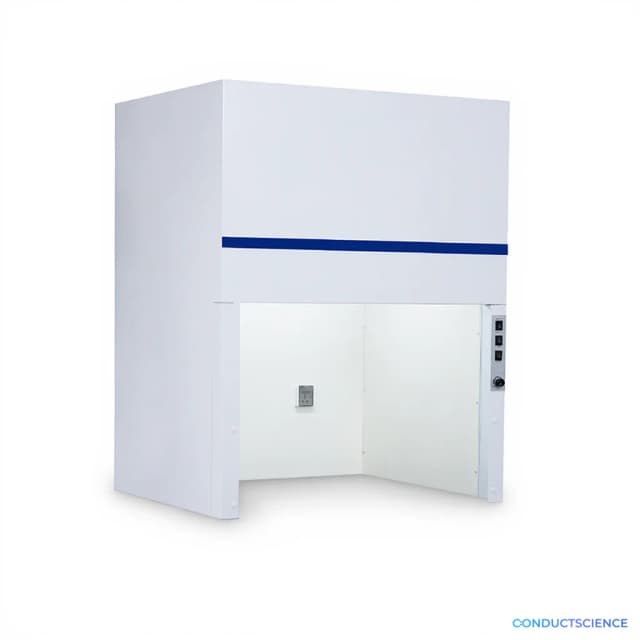
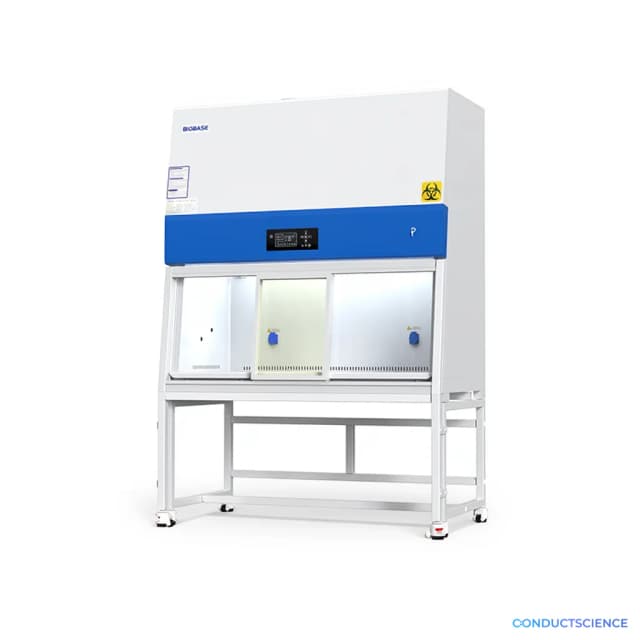
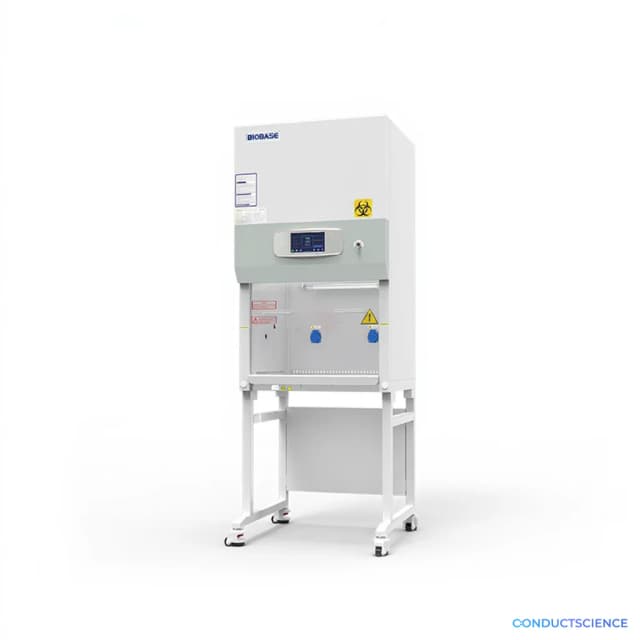
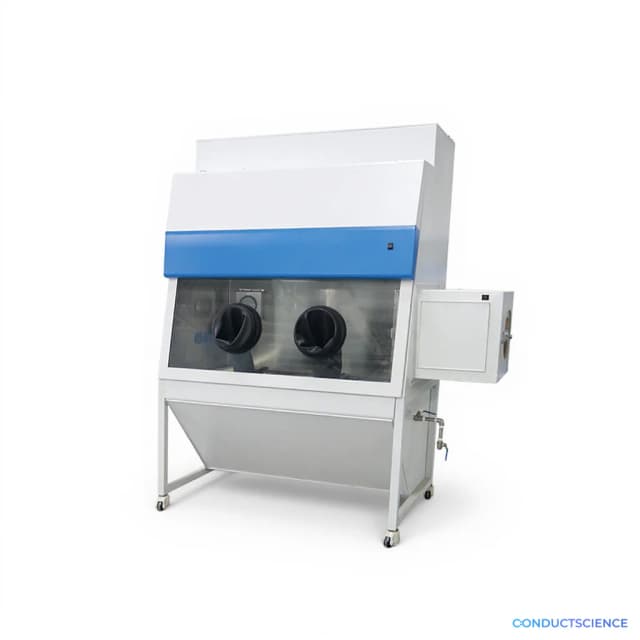
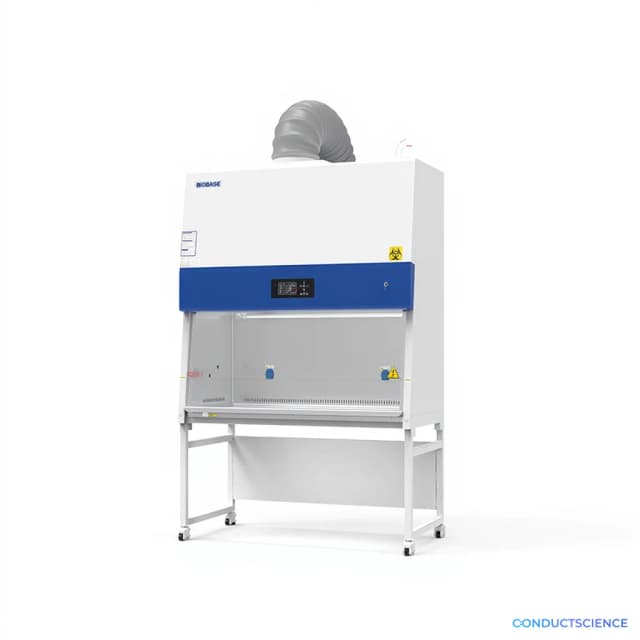
Fume Hood FH700
Benchtop laboratory fume hood providing localized exhaust ventilation for safe handling of chemicals and volatile compounds in research environments.

Louise Corscadden, PhD
Director of Science · ConductScience
Ask Louise about Fume Hood FH700 fit, setup, configuration, or quote prep.
Already working with us? Sign in to connect this with My Scientist.
Key Specifications
Full details →- Model fit
- Configured during quote
- SKU family
- BIO-0066
- Shipping box
- 115.0 x 70.0 x 62.0 cm
- Ordering
- Online checkout and quote request available
- Category
- Clean Benches & Fume Hoods
- Build notes
- Confirm accessories, station layout, and support needs before purchase
Fume Hood FH700
Professional laboratory fume hood designed for safe work with hazardous chemicals and vapors. Features vertical laminar airflow with HEPA filtration and comprehensive operator protection in compliance with laboratory safety standards.
Key Features:
- Vertical laminar airflow design
- HEPA filtration system
- Multiple size configurations
- Durable construction materials
- Safety monitoring systems
- Operator-friendly controls
How It Works
The FH700 operates on the principle of localized exhaust ventilation, creating a controlled airflow pattern that captures contaminated air at the source and directs it away from the operator. Air is drawn into the hood through the front opening, flows over the work surface, and exits through an exhaust system connected to the rear of the unit.
The containment effectiveness depends on maintaining adequate face velocity - the speed at which air enters the hood opening. This airflow creates a protective barrier that prevents hazardous vapors from escaping into the laboratory environment. The captured air containing chemical contaminants is then directed to appropriate treatment or exhaust systems.
Proper operation requires consideration of factors including sash height, placement of equipment within the hood, and prevention of cross-drafts that could disrupt the protective airflow pattern.
Features & Benefits
Automation Level
- manual
Research Domain
- Analytical Chemistry
- Environmental Monitoring
- Food Science
- Industrial Hygiene
- Materials Science
- Pharmaceutical QC
Shipping weight
- 100.0 lb
Shipping box
- L: 115.0 cm
- W: 70.0 cm
- H: 62.0 cm
| Feature | This Product | Typical Alternative | Advantage |
|---|---|---|---|
| Working Width | 115 cm working width | Entry-level models often provide 60-90 cm widths | Accommodates larger experimental setups and multiple pieces of analytical equipment simultaneously |
| Work Surface Depth | 70 cm depth | Basic units commonly offer 40-60 cm depth | Provides adequate space for proper equipment placement away from the front opening to maintain containment |
| Construction Weight | 100 kg robust construction | Lighter models may sacrifice durability | Indicates substantial build quality for continuous laboratory use and chemical resistance |
| Overall Height | 62 cm height | Varies by model configuration | Optimized for benchtop installation while providing adequate containment volume |
The FH700 offers substantial working dimensions with 115 cm width and 70 cm depth, supporting diverse analytical workflows. The 100 kg construction weight indicates robust materials suitable for continuous chemical exposure, while the benchtop configuration provides installation flexibility in existing laboratory spaces.
Practical Tips
Position the hood away from high-traffic areas and air supply vents to minimize cross-drafts that could disrupt protective airflow patterns.
Why: Cross-drafts can significantly reduce containment effectiveness and allow hazardous vapors to escape into the laboratory environment.
Test face velocity monthly using a calibrated anemometer at multiple points across the hood opening, documenting results for compliance records.
Why: Regular monitoring ensures the exhaust system maintains adequate airflow for proper chemical containment.
Clean the work surface with appropriate solvents after each use and inspect for chemical damage or buildup that could affect airflow.
Why: Chemical residues can create contamination sources and surface deterioration can compromise the structural integrity of the hood.
Keep the sash at the lowest practical position during operations and never place your head inside the hood opening.
Why: Lower sash positions improve containment effectiveness and reduce the risk of exposure to chemical vapors.
If containment appears compromised, immediately check for blocked exhaust connections, damaged sash mechanisms, or changes in building ventilation.
Why: Rapid identification and correction of airflow problems prevents exposure incidents and maintains laboratory safety.
Document all hood performance tests including face velocity measurements, containment verification results, and maintenance activities.
Why: Comprehensive records demonstrate due diligence in safety management and support regulatory compliance documentation.
Elevate large equipment on stands within the hood to allow airflow underneath and prevent dead air zones.
Why: Proper airflow circulation around equipment ensures consistent capture of vapors and maintains containment effectiveness throughout the work area.
Setup Guide
What’s in the Box
- FH700 fume hood main unit
- Installation hardware (typical)
- User manual and safety instructions (typical)
- Exhaust connection components (typical)
- Airflow indicator device (typical)
Warranty
ConductScience provides a standard one-year manufacturer warranty covering defects in materials and workmanship, with technical support for installation and operational guidance.
Compliance
References
Background reading relevant to this product:
What face velocity should be maintained for proper containment?
Typical face velocity requirements range from 0.4-0.6 m/s (80-120 feet per minute) depending on the application and chemicals used. Consult product datasheet for specific airflow requirements and conduct regular testing with calibrated instruments.
How do I verify the hood is providing adequate protection?
Perform containment testing using tracer gases, smoke visualization, or other approved methods. Regular face velocity measurements and annual containment testing by qualified personnel are recommended to ensure continued protection.
What types of chemicals can be safely used in this hood?
The hood is suitable for most common laboratory chemicals including organic solvents, acids, and bases. Avoid highly toxic substances, radioactive materials, or chemicals requiring specialized treatment unless specifically validated for such use.
How should equipment be positioned within the hood?
Place equipment at least 15 cm back from the front edge and avoid blocking airflow patterns. Large equipment should be elevated on stands to allow airflow underneath, and heating devices should be positioned to minimize thermal disruption of containment.
What exhaust system requirements are needed?
The exhaust system must provide adequate airflow to maintain proper face velocity and handle the air volume processed by the hood. Consult with HVAC professionals to ensure compatibility with existing building ventilation systems.
How often does the hood require maintenance?
Monthly visual inspections, quarterly airflow testing, and annual comprehensive performance evaluations are recommended. Clean work surfaces regularly and inspect for chemical damage or wear that could affect performance.
Can multiple users work at this hood simultaneously?
The 115 cm width can accommodate multiple users, but proper work practices should be maintained to avoid disrupting airflow patterns. Coordinate activities to prevent interference and maintain safe chemical handling procedures.
What are the electrical requirements for installation?
Electrical requirements depend on any integrated lighting or monitoring systems. Consult product datasheet for specific voltage and amperage requirements, and ensure installation meets local electrical codes.
Have a question about this product?
Have a question? Just ask.
Send it over and we'll email you a personalized answer — no call, no scheduling.
Prefer to talk it through?
Frequently Bought Together
Upgrade Options