Dog Canine Radial Arm Maze
Specialized radial arm maze system for assessing spatial learning and memory capabilities in canine subjects through controlled behavioral testing protocols.

Louise Corscadden, PhD
Director of Science · ConductScience
Ask Louise about Dog Canine Radial Arm Maze fit, setup, configuration, or quote prep.
Already working with us? Sign in to connect this with My Scientist.
Key Specifications
Full details →- Model fit
- Dog
- SKU family
- CS-958188
- Shipping box
- 65.0 x 36.0 x 27.0 cm
- Ordering
- Online checkout and quote request available
- Category
- Behavioral Mazes
- Build notes
- Confirm accessories, station layout, and support needs before purchase
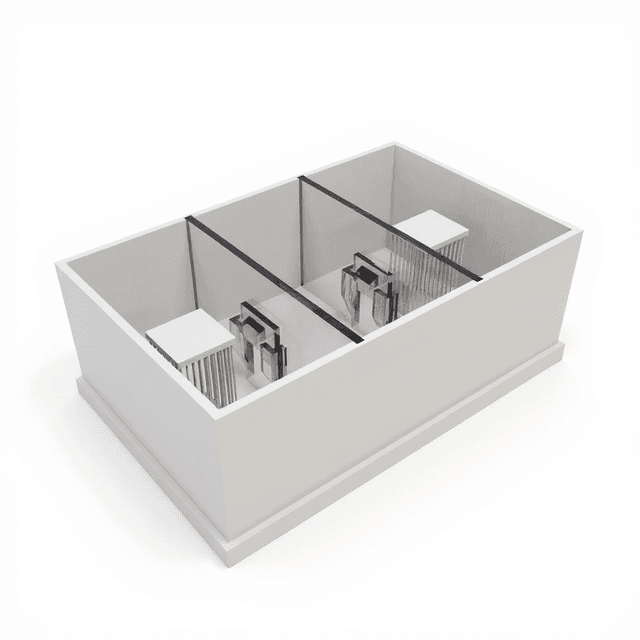
The Dog Canine Radial Arm Maze is a specialized behavioral testing apparatus designed for spatial learning and memory assessment in canine subjects. This multi-arm maze configuration enables researchers to evaluate working memory, reference memory, and spatial navigation capabilities in dogs through systematic baiting and testing protocols. The radial design provides multiple choice points that challenge the subject's ability to remember visited locations and optimize foraging strategies.
Unlike traditional rodent maze systems, this apparatus accommodates the larger scale and behavioral patterns of canine subjects while maintaining the fundamental radial arm maze methodology established in cognitive neuroscience research. The maze supports both reference memory tasks (consistent baiting patterns) and working memory tasks (trial-specific baiting patterns) to dissociate different aspects of spatial memory function.
How It Works
The radial arm maze operates on the principle that spatial memory can be quantified through choice behavior in a multi-arm apparatus. The maze typically consists of a central platform with multiple arms extending radially outward, each potentially containing food rewards. Subjects must learn and remember which arms have been visited (working memory) and which arms are consistently baited (reference memory).
During testing, the dog is placed in the central area and allowed to explore the arms to locate food rewards. Working memory is assessed by measuring the animal's ability to avoid re-entering arms already visited within a single trial, while reference memory is evaluated by the animal's ability to learn which arms are consistently baited across multiple sessions. Performance metrics include arm entry errors, latency to complete trials, and strategy development over time.
The spatial nature of the task engages hippocampal memory circuits, making it particularly valuable for detecting subtle cognitive impairments that might not be apparent in simpler behavioral tests. The maze design can be adapted for different experimental protocols by varying the number of baited arms, inter-trial intervals, and environmental cues.
Features & Benefits
Add-ons and modifications
| Add-on | Price | Details |
|---|---|---|
| Canine RAM | $24,000 | Central Arena: 152cm diameter Arm Length: 167 cm Arm Width: 58 cm Arm Height: 75 cm |
Add any of these to your quote request.
Behavioral Construct
- Spatial Memory
- Working Memory
- Reference Memory
- Spatial Learning
- Navigation
- Foraging Behavior
Automation Level
- manual
Research Domain
- Aging Research
- Behavioral Pharmacology
- Learning and Memory
- Neurodegeneration
- Neuroscience
Species
- Dog
Compatible Tracking Software
- ConductVision
Shipping weight
- 6.06 lb
Shipping box
- L: 65.0 cm
- W: 36.0 cm
- H: 27.0 cm
| Feature | This Product | Typical Alternative | Advantage |
|---|---|---|---|
| Subject Scale | Designed specifically for canine dimensions and movement patterns | Most radial arm mazes are designed for rodent subjects with much smaller dimensions | Enables ecologically valid testing in dogs without the spatial constraints that could confound results in rodent-scaled apparatus |
| Arm Configuration | Consult product datasheet for specific arm number and arrangement | Standard configurations typically offer 8 arms in rodent systems | Allows assessment of spatial memory capacity appropriate for canine cognitive abilities and attention spans |
| Construction Materials | Built to withstand larger animal interaction and repeated use | Rodent mazes often use lighter materials unsuitable for dog testing | Ensures durability and safety when used with larger, more active subjects over extended testing periods |
| Platform Design | Central platform sized for canine subjects | Smaller central areas designed for rodent body dimensions | Provides adequate space for natural turning and arm selection behavior without spatial restriction artifacts |
This apparatus adapts the established radial arm maze methodology for use with canine subjects, providing researchers with a validated spatial memory assessment tool scaled appropriately for larger mammals. The design maintains the fundamental testing principles while accommodating the behavioral requirements of dog subjects.
Practical Tips
Conduct testing sessions at consistent times of day when subjects are moderately hungry but not overly food-motivated.
Why: Maintains consistent motivation levels across sessions while preventing food-seeking behavior from overwhelming spatial memory strategies.
Establish individual baseline performance levels before beginning experimental treatments or interventions.
Why: Accounts for natural variation in spatial ability between subjects and provides within-subject controls for detecting treatment effects.
Clean all arm surfaces and reward areas thoroughly between subjects to eliminate olfactory cues.
Why: Prevents scent-based navigation strategies that could confound spatial memory assessment and mask true cognitive performance.
Record detailed behavioral observations including hesitation patterns and exploration strategies in addition to choice accuracy.
Why: Provides insight into cognitive strategies and can reveal subtle changes in spatial processing that choice accuracy alone might miss.
If subjects show position bias, rotate the maze orientation between sessions or adjust environmental cue positioning.
Why: Eliminates non-spatial strategies that could lead to apparent learning without actual spatial memory engagement.
Inspect all structural connections and arm stability before each testing session with active subjects.
Why: Ensures subject safety and prevents apparatus damage from larger animal interactions that could compromise data collection.
Setup Guide
What’s in the Box
- Central platform assembly (typical)
- Radial arm sections (typical)
- Connecting hardware and fasteners (typical)
- Food reward cups (typical)
- Assembly instructions and user manual (typical)
Warranty
ConductScience provides a standard one-year manufacturer warranty covering structural defects and normal wear, with technical support available for setup and protocol optimization.
Compliance
References
Background reading relevant to this product:
Protocol and background
Introduction
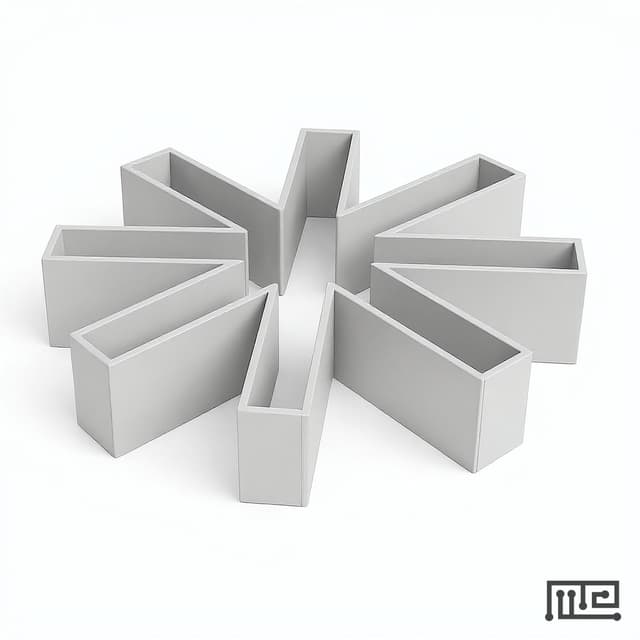
The Dogs 8 Arm Radial Maze apparatus consists of eight equal-length and equidistant arms radiating out from the central arena. The subject is allowed to choose among the arms baited with invisible food rewards at the end of the arm. The task utilizes food deprivation as a stimulus to encourage the exploratory behavior. The behavior of the animals is scored for the arm choices made in the search for the reward, and working and reference memory errors made because of re-entry in the previously visited arm. The apparatus can also be adapted for free- and forced- choice trials to evaluate choice mechanisms and serial memory in subjects.
The eight-arm radial maze is constructed on a central aluminum platform from which eight L-shaped, equidistant arms protrude to make a star-shaped apparatus. The maze alleys are bolted with the help of hinged doors which are opened and closed as per the experimental needs. Other apparatuses used to evaluate spatial learning and memory include the Y-maze, Hairpin maze, Morris water star maze, and the Radial arm water maze.
Apparatus & Equipment
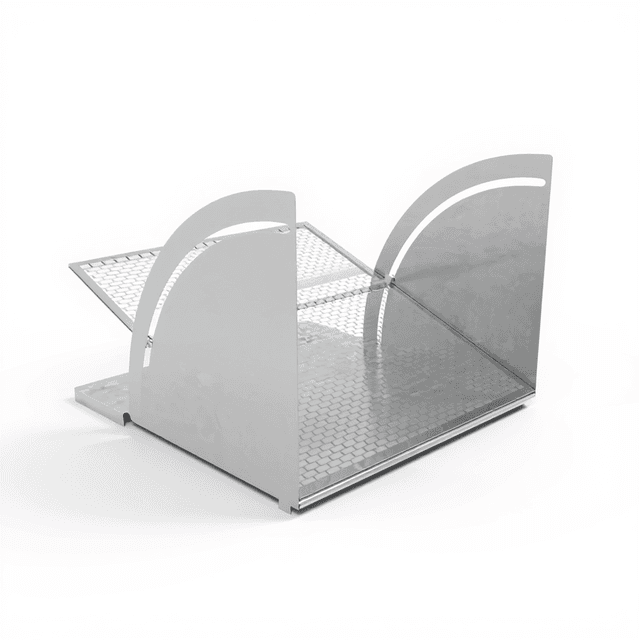
The apparatus consists of eight L-shaped arms radiating from a central circular platform. The central arena has a diameter of 152 cm approximately. The 167 x 58 x 75 cm arms (length, width, and height respectively) are closed with the help of hinged guillotine doors, which are opened to allow the subject to enter the specific alley or are closed to limit the access. The arms are secured by the aluminum maze walls which restrict any external cues from disturbing the test subject. Each maze arm has a double-layered plastic reward bowl placed at the end. The bottom layer of the bowl holds the food treats and is perforated to allow odor permeation. The bottom layer is clipped to the upper layer to prevent the dogs from obtaining this food. The top layer of the bowl is baited with accessible food. The subjects are restricted using a 5 meters extendable leash that allows the experimenter to perform forced choice trials.
Training Protocol
Before beginning the testing protocol, the maze alleys should be damp-mopped before and between the trials. By using the fabric odor-eliminating spray, the persistent odor can be neutralized during the trials. Place the baited bowl at the end of the maze arms as per experimental needs. The apparatus should be well lit, and shadows should be prevented from disturbing the task performance.
A video recording and tracking system such as the Noldus EthoVision XT can be used to assist with task observations.
Pre-training
The pre-training is done to acclimatize the animals to the maze and the food rewards placed at the end of the arms. Bait the maze alleys to encourage the exploratory behavior further. Each animal is given at least ten practice trials. Trial the animal once a day. Place the test animal in the central arena and allow it to explore the maze until it obtains all the placed rewards.
The pre-training procedures may vary according to the experimental needs.
Evaluation of Working Memory
For working memory assessment, free exploration trials are performed. Place the dog in the central arena and open the gates of all the maze alleys. Place food treats at the end of each maze arm. Allow the animal to explore the maze freely. Observe the behavior of the dog until it obtains all the food rewards. Consider the animal entered, if it crosses two-thirds of the arm.
Evaluation of Reference Memory
For reference memory assessment, put the food reward in four out of eight arms. Introduce the animal from the central platform and allow it to explore the maze. On returning to the central arena after obtaining the reward from one arm, close that arm and open the other seven alleys. If the subject enters the arm without food, count it as a reference memory error. Record the behavior of the animal in the maze.
Evaluation of Serial Position Effect
In this trial, place the dog in the central arena, and open the baited arms one by one. Allow the subject to retrieve the food until seven forced choices are made. The eighth arm is the distracter. After completing this, open the previously visited arm and the distracter simultaneously. Continue the trial until the eight selected-free choices are recorded. Observe the probability of correct choices made in the temporal sequence to evaluate the serial position effect in the subjects.
Assessment of the implication of resveratrol in cognitive functioning
Story et al. (2012) investigated the effect of resveratrol supplementation on cognitive ability in dogs. The subjects were divided into three groups: control group, resveratrol-treated gonadectomized group, and placebo-treated gonadectomized group. The animals except control group received 60 mg/kg resveratrol or placebo for two to four weeks before the trials started. Eight-arm Radial Maze was used to evaluate working memory in the dogs. The animals were allowed to explore the maze freely for the food reward placed at the end of each alley. During the 20-minutes trial, the dogs achieved an average of 7.2 correct choices over four consecutive trials. No noteworthy contrasts in the three cohorts for working memory were observed. Based on these observations, it was concluded that short-term oral resveratrol treatment does not improve the cognitive functioning in young, healthy dogs receiving extensive handling and environmental enrichment.
Investigation of serial position effect of spatial learning
Craig et al. (2012) assessed the listing memory and sequential retaining in domestic dogs. The study included three groups: untreated control group, resveratrol-treated gonadectomized group, and placebo-treated gonadectomized dogs. Sequence recall ability of dogs is utilized to evaluate the presence of primacy or recency effect using the eight-arm radial maze. During the selected-free trials, it was observed that the animals chose previously unentered arm correctly more often than expected. The results indicated a stronger primacy effect (recalling the items situated first in the list) than recency effect (remembering the bottom items in the list) in dogs.
Data Analysis
Data obtained from the Eight-arm Radial Maze is simple and easy to analyze. The parameters recorded in the task performance are mentioned below:
- The number of arms animals enter before locating the reward
- The number of different arms visited before finding the reward
- The sequence of the arms chosen
- Time taken to reach the reward
- Distance traveled
- Time spent in the central arena
- Time spent in the arm
- The number of trials taken to find the food
Strengths & Limitations
Strengths
The Eight-arm Radial Maze is a widely used neurobehavioral modality to assess spatial learning and working memory in dogs. Dogs as experimental animals are cheaper to maintain and easily accessible in large numbers. The apparatus is available for a range of species; therefore, the test is valuable for inter-species behavior comparisons. The task can be used to demonstrate serial position effects, spatial navigation, spatiotemporal memory approaches, delay implications, food-storage behavior, and active as well as passive learning. The studies involving neuropathology, age-related memory decline, cortical lesions, brain injury, and neuropsychiatric disorders can be well investigated using the Eight-arm Radial Maze.
Limitations
The Eight-arm Radial maze alone cannot cover the whole spectrum of spatial navigation and working memory. Thus, using it in combination with other neurobehavioral assays is recommended. Irregular chaining patterns in serial position effects assessment may render the investigation of spatial memory difficult, but it can be minimized by interfering with the sequential choices. The task requires food deprivation as stimulus; therefore, it is essential to make sure that all the experimental animals are equally hungry and motivated for the reward search. Further, the presence of proximal and olfactory cues may disturb the task performance. The outcomes may vary depending on the strain, age, species, and sex of the subject; thus, care must be taken while translating the results to human applications.
Summary & Key Points
- Eight-arm Radial Maze is a reliable task to investigate spatial, working and reference memory.
- The animals are scored for decisions taken to obtain the food, and errors made owing to re-entry into the previously visited arm.
- Eight-arm radial maze is walled and minimizes external, proximal, and distal cues from disturbing the task performance.
- By manipulating the task parameters and animal states, the apparatus can be effectively used to study working and reference memory interactions.
- Availability of the equipment for a range of species allows inter-species spatial learning comparisons.
- The apparatus can be used to investigate active as well as passive learning in domestic dogs.
- The toolkit is valuable to assess the serial position effect in canine disease models.
- Eight-arm Radial Maze alone may not provide a detailed analysis of spatial learning. Hence, it should be used in combination with other behavioral assays.
References
Craig, M., Rand, J., Mesch, R., Shyan-Norwalt, M., Morton, J., and Flickinger, E. (2012). Domestic dogs (Canis familiaris) and the radial arm maze: spatial memory and serial position effects. J Comp Psychol, 126 (3), 233-42.
Story, M, M., Rand, S, J., Shyan-Norwalt, M., Mesch, R., Morton, M, J., and Flickinger, A, E. (2012). Effect of Resveratrol Supplementation on the Performance of Dogs in an Eight-Arm Radial Maze. The Open Nutrition Journal, 6, 80-88.
From the Maze Engineers documentation for this apparatus.
How many arms are optimal for canine radial arm maze testing?
Arm number should be selected based on the cognitive capacity and attention span of canine subjects, typically ranging from 6-12 arms. Consult product specifications for available configurations.
What types of spatial memory can be assessed with this apparatus?
The maze can evaluate both working memory (remembering arms visited within a trial) and reference memory (learning consistently baited arm locations across trials) through different baiting protocols.
How should reward delivery be standardized across subjects?
Use consistent food rewards of equal palatability and size, delivered immediately upon arm entry. Consider individual dietary restrictions and motivation levels when selecting reinforcers.
What measures indicate successful task acquisition?
Key metrics include reduction in working memory errors (repeat entries), decreased reference memory errors (entries to never-baited arms), and improved trial completion times across sessions.
How does this compare to other spatial memory tests for dogs?
Unlike simple T-maze or Y-maze tests, the radial arm maze provides multiple choice points that more closely approximate natural foraging decisions and can detect subtle memory impairments.
What environmental controls are necessary for reliable results?
Maintain consistent lighting, minimize external noise and visual distractions, and ensure the testing room has stable spatial cues that subjects can use for navigation.
Have a question about this product?
Have a question? Just ask.
Send it over and we'll email you a personalized answer — no call, no scheduling.
Prefer to talk it through?
Accessories
Enhance your setup with compatible accessories

Frequently Bought Together