Dog Cognitive Bias Maze Arena
Specialized behavioral maze for assessing cognitive bias and decision-making patterns in dogs through controlled spatial navigation tasks.

Louise Corscadden, PhD
Director of Science · ConductScience
Ask Louise about Dog Cognitive Bias Maze Arena fit, setup, configuration, or quote prep.
Already working with us? Sign in to connect this with My Scientist.
Key Specifications
Full details →- Model fit
- Dog
- SKU family
- CS-958187
- Shipping box
- 65.0 x 36.0 x 27.0 cm
- Ordering
- Online checkout and quote request available
- Category
- Behavioral Mazes
- Build notes
- Confirm accessories, station layout, and support needs before purchase
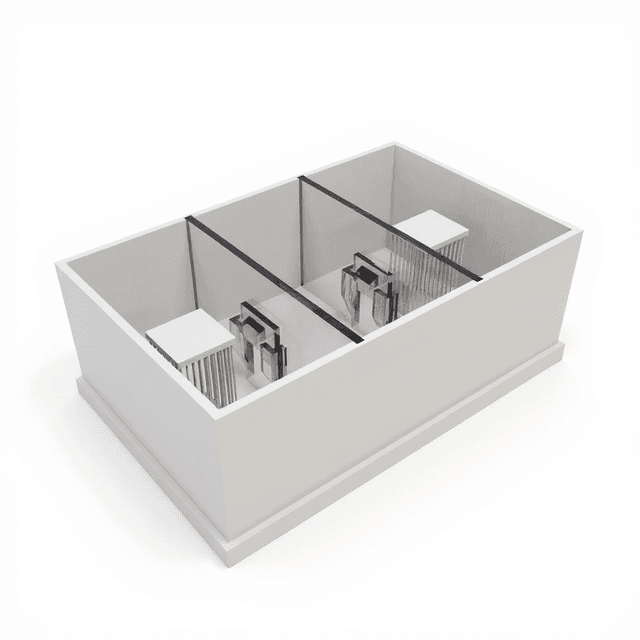
The Dog Cognitive Bias Maze Arena is a specialized behavioral testing apparatus designed for assessing cognitive bias and decision-making patterns in canines. This maze system enables researchers to evaluate optimistic and pessimistic response tendencies in dogs through controlled spatial navigation tasks. The arena provides a standardized environment for studying cognitive bias as a welfare indicator and for investigating the neurobiological mechanisms underlying judgment and decision-making processes in companion animals.
The maze configuration allows for systematic testing of approach-avoidance behaviors when dogs encounter ambiguous stimuli or spatial cues of uncertain reward value. Researchers can examine how individual dogs interpret and respond to intermediate or ambiguous situations, providing insights into their underlying emotional states and cognitive processing patterns. This methodology has applications in animal welfare assessment, behavioral pharmacology studies, and comparative cognition research.
How It Works
The cognitive bias maze operates on the principle that an animal's interpretation of ambiguous stimuli reflects its underlying emotional state and cognitive processing style. Dogs are initially trained to discriminate between two distinct spatial locations associated with different reward outcomes - typically a positive location yielding high-value rewards and a negative location associated with no reward or mild aversion. Following discrimination training, the animal is presented with probe trials featuring intermediate or ambiguous spatial cues.
The cognitive bias is measured by analyzing the dog's approach behavior, response latency, and choice patterns when encountering these ambiguous stimuli. Dogs exhibiting optimistic bias tend to approach ambiguous locations more readily, demonstrating faster response times and higher approach rates. Conversely, dogs with pessimistic bias show increased avoidance behaviors, longer latencies, and reduced exploration of uncertain spatial cues. The maze design allows for systematic manipulation of ambiguity levels and spatial complexity to quantify individual differences in judgment patterns.
Data collection focuses on behavioral metrics including approach/avoidance responses, response latencies, path trajectories, and choice consistency across trial blocks. These measurements provide quantitative assessments of cognitive bias that can be correlated with physiological stress markers, neurochemical profiles, or treatment interventions.
Features & Benefits
Behavioral Construct
- Cognitive Bias
- Decision Making
- Judgment
- Optimism/Pessimism
- Approach-Avoidance
- Spatial Learning
Automation Level
- manual
Research Domain
- Animal Welfare Research
- Behavioral Pharmacology
- Comparative Cognition
- Neuroscience
Species
- Dog
Compatible Tracking Software
- ConductVision
Shipping weight
- 6.06 lb
Shipping box
- L: 65.0 cm
- W: 36.0 cm
- H: 27.0 cm
| Feature | This Product | Typical Alternative | Advantage |
|---|---|---|---|
| Subject Species | Specifically designed for dogs | Most cognitive bias mazes are designed for rodents | Enables cognitive bias research in companion animal models with direct welfare and translational relevance. |
| Spatial Scale | Arena dimensions appropriate for canine locomotion | Smaller scale mazes designed for laboratory rodents | Accommodates natural movement patterns and spatial cognition scales relevant to larger mammals. |
| Behavioral Complexity | Supports complex spatial navigation and choice behaviors | Simple approach-avoidance paradigms | Allows assessment of more sophisticated cognitive processes including spatial memory integration with judgment bias. |
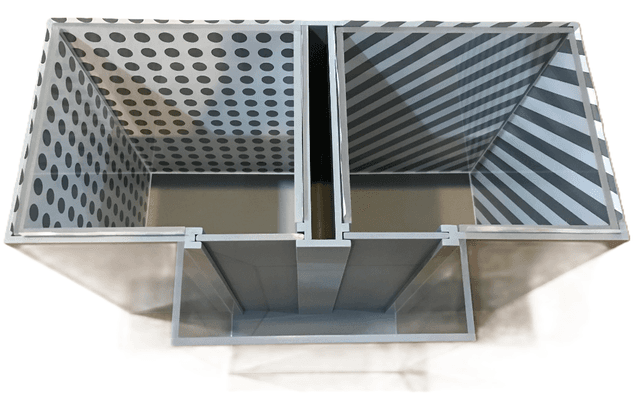
| Modular Design | Configurable maze layout with removable barriers | Fixed maze configurations | Enables systematic manipulation of task difficulty and spatial complexity within the same testing apparatus. |
The Dog Cognitive Bias Maze Arena provides a specialized testing environment for cognitive bias assessment in canines, featuring appropriate scaling for larger subjects and modular design flexibility. The system enables naturalistic behavioral assessment while maintaining experimental control necessary for quantitative cognitive bias measurement.
Practical Tips
Conduct discrimination training to a strict performance criterion before introducing probe trials to ensure reliable baseline performance.
Why: Inadequate discrimination learning leads to ambiguous probe trial results that cannot be interpreted as cognitive bias.
Validate spatial positioning of reward locations using consistent measurement tools and environmental landmarks.
Why: Small variations in spatial relationships can significantly impact discrimination difficulty and cognitive bias measurement validity.
Record behavioral responses from multiple camera angles to capture complete approach trajectories and behavioral nuances.
Why: Single-perspective recording may miss important behavioral indicators such as approach hesitation or partial avoidance responses.
Inspect maze wall connections and floor stability before each testing session to prevent structural shifts during testing.
Why: Structural instability can create unintended acoustic or tactile cues that influence subject behavior and compromise data validity.
If subjects show persistent side bias, rotate the maze orientation between sessions or counterbalance location assignments across subjects.
Why: Spatial biases unrelated to cognitive processes can confound interpretation of judgment bias measurements.
Ensure all wall sections are securely fastened and contain no sharp edges or gaps that could cause injury during vigorous movement.
Why: Subject safety is paramount and injuries could create negative associations that alter subsequent cognitive bias assessments.
Maintain detailed records of individual subject performance across all training and testing phases for longitudinal analysis.
Why: Cognitive bias patterns may change over time and require individual baseline comparisons for meaningful interpretation.
Setup Guide
What’s in the Box
- Maze arena wall sections (typical)
- Floor base components (typical)
- Assembly hardware and connectors (typical)
- Setup and operation manual (typical)
- Behavioral scoring sheets (typical)
Warranty
ConductScience provides a standard one-year manufacturer warranty covering structural defects and construction issues, with technical support available for setup and protocol optimization.
Compliance
References
Background reading relevant to this product:
What training protocol is recommended for establishing reliable discrimination performance?
Initial discrimination training typically requires 10-15 sessions with 80% correct responses over two consecutive sessions as criterion. Use consistent reward schedules and maintain clear spatial and temporal separation between positive and negative locations.
How many probe trials should be conducted to obtain reliable cognitive bias measurements?
A minimum of 8-12 probe trials per ambiguous location is recommended, interspersed with discrimination maintenance trials at a ratio of approximately 1:3 to prevent extinction of the learned associations.
What behavioral measures provide the most sensitive indicators of cognitive bias?
Response latency and approach probability are the primary measures, with path analysis and behavioral intensity ratings providing additional quantitative data on judgment bias patterns.
How should environmental factors be controlled during testing?
Maintain consistent lighting, temperature, and acoustic conditions. Remove potential confounding odors between subjects and ensure consistent handler positioning to avoid inadvertent cueing.
What statistical approaches are appropriate for analyzing cognitive bias data?
Mixed-effects models accounting for individual differences and repeated measures are recommended, with non-parametric tests for response latency data that may not meet normality assumptions.
Can the maze be used with dogs of different sizes?
The standard configuration accommodates medium to large breed dogs. Smaller breeds may require modified spatial dimensions to maintain appropriate scaling of discrimination difficulty and movement patterns.
How frequently should the apparatus be cleaned during multi-subject testing?
Clean all surfaces with appropriate disinfectant between each subject to eliminate olfactory cues that could influence subsequent behavioral responses and compromise data validity.
Have a question about this product?
Have a question? Just ask.
Send it over and we'll email you a personalized answer — no call, no scheduling.
Prefer to talk it through?
Accessories
Enhance your setup with compatible accessories