Droplet Generator with Encapsulation Module
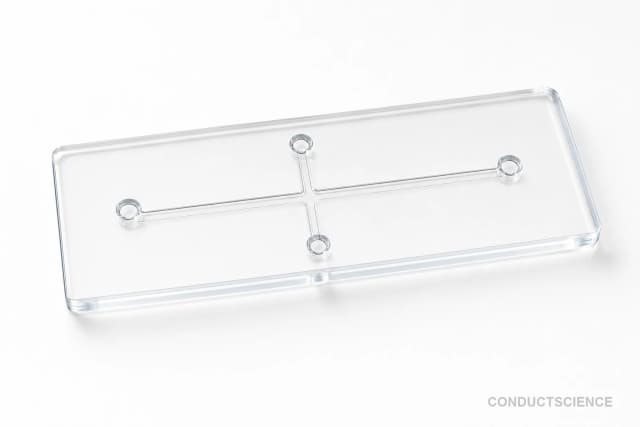
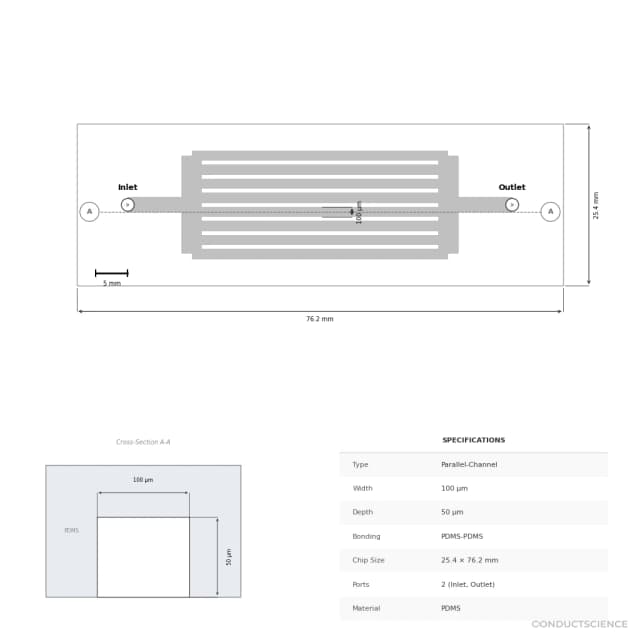
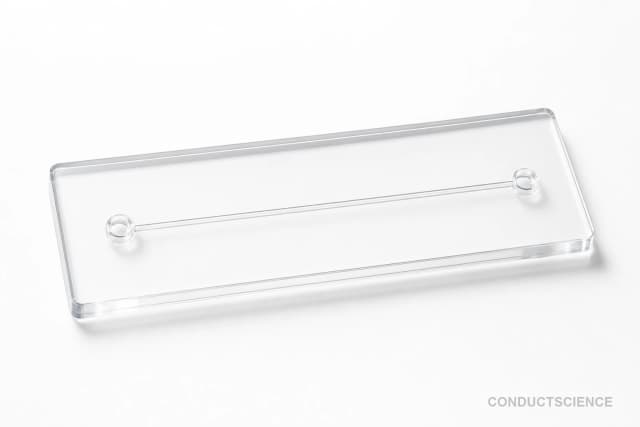
PDMS microfluidic chip with 100 x 100 µm channels for controlled generation of hydrogel beads and microcapsules with integrated encapsulation and curing zone.

Louise Corscadden, PhD
Director of Science · ConductScience
Ask Louise about Droplet Generator with Encapsulation Module fit, setup, configuration, or quote prep.
Already working with us? Sign in to connect this with My Scientist.
Key Specifications
Full details →- Model fit
- 3 selectable configurations
- SKU family
- WHM-0093
- Shipping box
- 181.8 x 136.3 x 90.9 cm
- Ordering
- Online checkout and quote request available
- Category
- Droplet Generator Chips
- Build notes
- Confirm accessories, station layout, and support needs before purchase
The Droplet Generator with Encapsulation Module is a specialized PDMS microfluidic device designed for controlled production of hydrogel beads and microcapsules. The chip features 100 x 100 µm channel dimensions optimized for single-cell encapsulation and droplet-based microfluidic applications. The integrated encapsulation and curing zone enables researchers to generate uniform microcapsules with precise control over size and contents.
This microfluidic platform supports cell encapsulation workflows commonly used in tissue engineering, drug screening, and single-cell analysis. The PDMS construction provides optical transparency for real-time monitoring of droplet formation and encapsulation processes, while the standardized channel geometry ensures reproducible results across experiments.
How It Works
The droplet generator operates on flow-focusing principles where two immiscible fluid phases converge at the channel junction. The continuous phase (typically oil with surfactant) flows through the outer channels while the dispersed phase (hydrogel precursor solution) flows through the central channel. Hydrodynamic forces at the junction create controlled breakup of the dispersed phase into uniform droplets.
The encapsulation zone downstream of the droplet formation point provides controlled residence time for gelation or polymerization reactions to occur. This curing zone allows transformation of liquid droplets into solid or semi-solid microcapsules while maintaining spherical geometry. The 100 x 100 µm channel dimensions are optimized for droplet sizes typically ranging from 50-200 µm diameter, depending on flow rate ratios and fluid properties.
PDMS construction enables real-time optical monitoring of the encapsulation process through standard microscopy techniques. The hydrophobic surface properties of PDMS facilitate oil-in-water emulsions for aqueous droplet formation, while surface treatments can modify wetting characteristics for specific applications.
Features & Benefits
Shipping weight
- 3.3 lb
Shipping box
- L: 181.8 cm
- W: 136.3 cm
- H: 90.9 cm
| Feature | This Product | Typical Alternative | Advantage |
|---|---|---|---|
| Channel Dimensions | 100 x 100 µm precision channels | Many devices offer larger channel dimensions or less precise geometries | Optimized size for single-cell applications while maintaining stable flow dynamics |
| Encapsulation Zone | Integrated encapsulation and curing zone | Basic droplet generators lack integrated curing capabilities | Complete microcapsule formation within the device eliminates external processing steps |
| Material Construction | PDMS with optical transparency | Some devices use opaque materials or glass substrates | Enables real-time visual monitoring of encapsulation processes |
| Application Focus | Specifically designed for hydrogel beads and microcapsules | General droplet generators may lack application-specific optimization | Geometry and surface properties optimized for hydrogel encapsulation workflows |
This device combines precise 100 µm channel geometry with integrated curing capabilities specifically optimized for hydrogel encapsulation applications. The PDMS construction provides optical access while maintaining biocompatibility for cell-based experiments.
| Model | SKU | Listed price | Status | Shipping box |
|---|---|---|---|---|
| 25-Pack | WHM-0093-25PK | Quote | Available | 181.8 x 136.3 x 90.9 cm |
| 10-Pack | WHM-0093-10PK | $1,490.00 | Available | 181.8 x 136.3 x 90.9 cm |
| 5-Pack | WHM-0093-5PK | Quote | Available | 181.8 x 136.3 x 90.9 cm |
Practical Tips
Pre-treat channels with continuous phase fluid for 10-15 minutes before starting droplet formation to establish stable surface wetting.
Why: Proper surface conditioning prevents droplet adhesion and ensures consistent formation characteristics.
Start with flow rate ratios of 5:1 (continuous:dispersed) and adjust gradually while monitoring droplet size and stability.
Why: Systematic approach to flow rate optimization prevents channel clogging and ensures reproducible results.
Flush channels immediately after each experiment to prevent hydrogel polymerization and channel blockage.
Why: Delayed cleaning can result in permanent channel obstruction requiring chip replacement.
Allow 5-10 minutes of stable operation before collecting data to ensure steady-state droplet formation.
Why: Initial flow instabilities can affect droplet size distribution and encapsulation efficiency measurements.
If droplet formation becomes unstable, check for air bubbles in the continuous phase and adjust surface treatment if needed.
Why: Air bubbles and improper wetting are the most common causes of droplet formation irregularities.
Use appropriate chemical compatibility guidelines when selecting solvents for cleaning PDMS devices.
Why: Some organic solvents can cause PDMS swelling or degradation affecting channel geometry.
Setup Guide
What’s in the Box
- Droplet Generator with Encapsulation Module chip
- User manual with protocols (typical)
- Quality control certificate (typical)
Warranty
ConductScience provides a 1-year manufacturer warranty covering defects in materials and workmanship. Technical support includes protocol guidance and troubleshooting assistance for optimal device performance.
Compliance
What droplet size range can be achieved with this chip?
With 100 x 100 µm channels, typical droplet sizes range from 50-200 µm diameter depending on flow rate ratios, fluid viscosities, and surface tension properties. Consult product datasheet for specific flow rate recommendations.
Is the chip compatible with UV-crosslinkable hydrogels?
Yes, the PDMS material is UV-transparent, allowing UV-induced crosslinking reactions in the curing zone. Ensure UV wavelength compatibility with your specific hydrogel system.
How many times can the chip be reused?
Reusability depends on cleaning protocols and experimental conditions. PDMS chips can typically be cleaned with solvents and reused multiple times if proper cleaning and storage procedures are followed.
What syringe pump flow rate range is recommended?
Flow rates typically range from 1-100 µL/min for each phase, with continuous to dispersed phase ratios of 2:1 to 10:1 for stable droplet formation. Specific rates depend on fluid properties.
Can cells survive the encapsulation process?
Yes, the gentle hydrodynamic encapsulation process is compatible with cell viability when using appropriate biocompatible hydrogels and maintaining physiological conditions.
What microscopy setup is needed for monitoring?
Standard inverted microscope with 10x-40x objectives provides adequate resolution for droplet formation monitoring. High-speed cameras can capture dynamic droplet formation processes.
How is the chip cleaned between experiments?
Flush channels with appropriate solvents (ethanol, isopropanol) followed by DI water and compressed air drying. Avoid harsh chemicals that may damage PDMS structure.
Have a question about this product?
Have a question? Just ask.
Send it over and we'll email you a personalized answer — no call, no scheduling.
Prefer to talk it through?