Dual-Purpose Cross Electrophoresis Chip
Microfluidic electrophoresis chip in standard slide format featuring dual-purpose long and short channel design for versatile electrophoretic separations.
Reusable chip — designed for multiple experimental runs. Compatible with standard microfluidic tubing: steel pins (0.7 mm ID / 1.0 mm OD) and silicone tubing (0.8 mm ID / 1.9 mm OD). Available in bulk packs (5‑, 10‑, and 25‑unit) for lab-scale and consumable workflows.

Louise Corscadden, PhD
Director of Science · ConductScience
Ask Louise about Dual-Purpose Cross Electrophoresis Chip fit, setup, configuration, or quote prep.
Already working with us? Sign in to connect this with My Scientist.
Key Specifications
Full details →- Model fit
- 3 selectable configurations
- SKU family
- WHM-0111
- Shipping box
- 181.8 x 136.3 x 90.9 cm
- Ordering
- Online checkout and quote request available
- Category
- Electrophoresis Chips
- Build notes
- Confirm accessories, station layout, and support needs before purchase
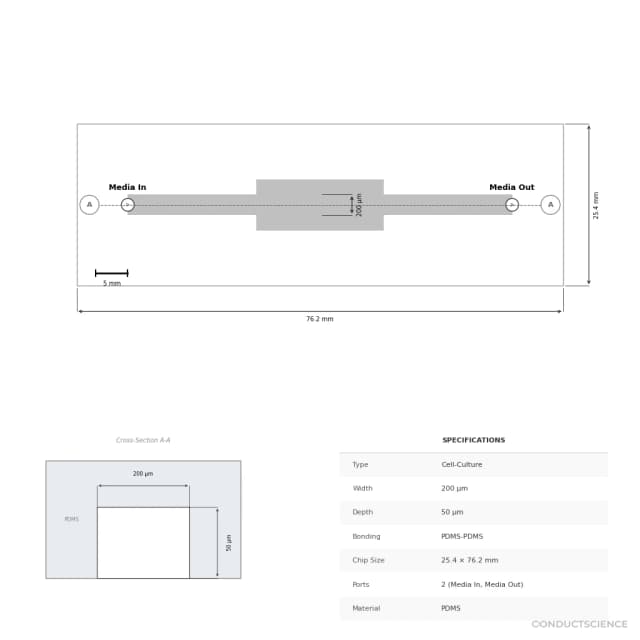
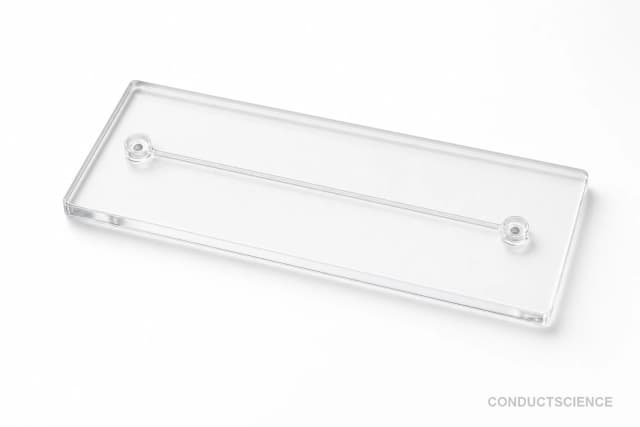
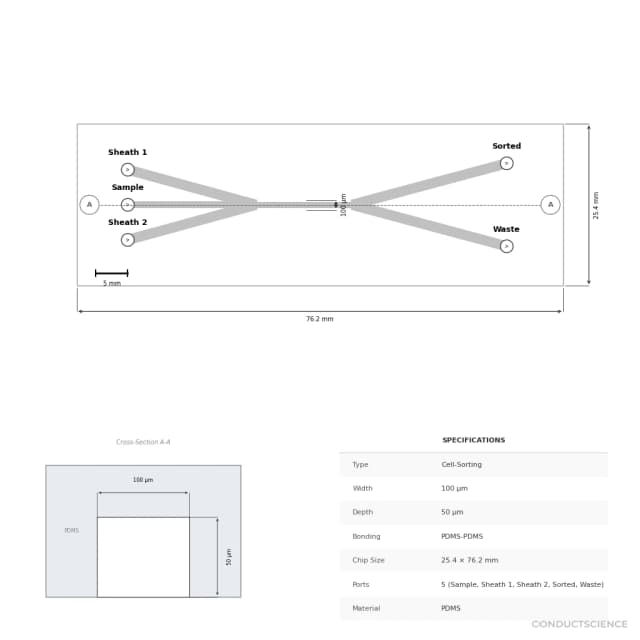
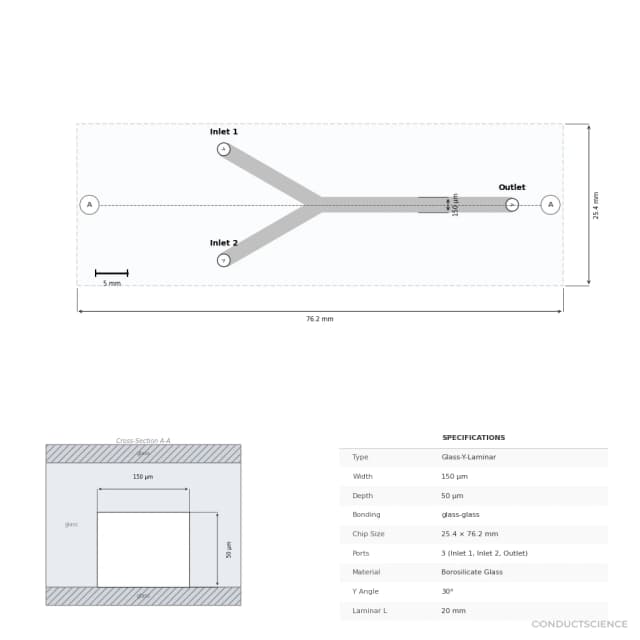
The Dual-Purpose Cross Electrophoresis Chip is a microfluidic separation device designed for versatile electrophoretic analysis in standard slide format (25 x 76 mm). The chip features a dual-purpose design incorporating both long and short channel configurations within a single platform, enabling researchers to optimize separation conditions for different analyte types and experimental requirements.
This cross-channel electrophoresis chip provides a controlled microenvironment for electrophoretic separation of charged molecules, proteins, and nucleic acids. The dual-purpose architecture allows for both high-resolution separations requiring longer migration distances and rapid analyses using shorter channels, making it suitable for method development, optimization studies, and routine analytical workflows in microfluidic electrophoresis applications.
How It Works
Cross electrophoresis operates on the principle of electrophoretic mobility, where charged analytes migrate through microfluidic channels under the influence of an applied electric field. The migration velocity of each species depends on its charge-to-size ratio, enabling separation based on electrophoretic mobility differences. The cross-channel design allows for sample injection perpendicular to the separation channel, providing precise control over sample introduction and separation conditions.
The dual-purpose architecture incorporates both long and short channel segments within the same chip design. Long channels provide enhanced resolution for complex mixtures requiring extensive separation distances, while short channels enable rapid analysis with faster run times. This configuration allows researchers to optimize separation conditions by selecting the appropriate channel length based on sample complexity and analytical requirements.
Electric field application across the channels drives analyte migration, with detection typically performed at defined points along the separation channels. The microfluidic format minimizes sample and reagent consumption while providing reproducible separation conditions through precise channel geometry control.
Features & Benefits
Shipping weight
- 3.3 lb
Shipping box
- L: 181.8 cm
- W: 136.3 cm
- H: 90.9 cm
| Feature | This Product | Typical Alternative | Advantage |
|---|---|---|---|
| Channel Configuration | Dual-purpose design with both long and short channels | Single-channel configurations offering either high resolution or rapid analysis | Enables method optimization and flexibility without requiring multiple chip types for different applications. |
| Format Compatibility | Standard slide format (25 x 76 mm) | Varies by model with some using proprietary formats | Compatible with existing microscope stages and standard laboratory equipment holders. |
| Cross-Channel Design | Cross-channel architecture for perpendicular sample injection | Linear channel designs with end-point injection | Provides more precise sample introduction and improved peak definition in separations. |
| Application Versatility | Versatile electrophoresis design for multiple analyte types | Specialized chips often optimized for specific applications | Reduces inventory requirements and enables diverse analytical workflows with a single chip design. |
This dual-purpose cross electrophoresis chip offers unique flexibility through its combined long and short channel design in standard slide format. The cross-channel architecture and versatile design make it suitable for both method development and routine analytical applications across diverse sample types.
| Model | SKU | Listed price | Status | Shipping box |
|---|---|---|---|---|
| 25-Pack | WHM-0111-25PK | Quote | Available | 181.8 x 136.3 x 90.9 cm |
| 10-Pack | WHM-0111-10PK | $1,490.00 | Available | 181.8 x 136.3 x 90.9 cm |
| 5-Pack | WHM-0111-5PK | Quote | Available | 181.8 x 136.3 x 90.9 cm |
Practical Tips
Select channel length based on separation requirements: use long channels for complex mixtures requiring high resolution and short channels for rapid screening or simple samples.
Why: Optimizes analysis time while maintaining required separation quality for specific applications.
Flush channels thoroughly with appropriate cleaning solutions between different sample types to prevent cross-contamination.
Why: Maintains analytical accuracy and prevents interference from residual analytes in subsequent analyses.
Verify electrical continuity across all channels before each use and document voltage-current relationships for quality control.
Why: Ensures consistent electric field application and identifies potential channel blockages or electrical issues.
Document buffer composition, voltage settings, and channel selection for each analysis to enable method reproducibility.
Why: Facilitates method transfer and troubleshooting while ensuring consistent analytical results across experiments.
If peak broadening occurs, check for air bubbles in channels and verify proper buffer ionic strength and pH.
Why: Air bubbles disrupt electric field uniformity while incorrect buffer conditions can affect separation efficiency.
Always handle chips with appropriate protective equipment and ensure proper electrical grounding of the electrophoresis system.
Why: Prevents sample contamination and protects against electrical hazards during high-voltage operations.
Setup Guide
What’s in the Box
- Dual-Purpose Cross Electrophoresis Chip
- User manual and technical specifications (typical)
- Quality control certificate (typical)
Warranty
ConductScience provides a standard one-year manufacturer warranty covering defects in materials and workmanship, with technical support available for application guidance and troubleshooting.
Compliance
What types of samples can be analyzed using this dual-purpose chip design?
The chip is designed for versatile electrophoresis applications and can accommodate proteins, nucleic acids, small organic molecules, and charged nanoparticles. The dual-purpose design allows optimization for different analyte types through selection of appropriate channel length and separation conditions.
How do I choose between using the long or short channels for my application?
Use long channels when high resolution separation is required for complex mixtures or when analytes have similar electrophoretic mobilities. Choose short channels for rapid screening applications, simple mixtures, or when analysis time is critical. The specific channel dimensions should be consulted in the product datasheet.
What electrophoresis systems are compatible with this chip format?
The standard slide format (25 x 76 mm) is compatible with most microfluidic electrophoresis systems and microscope stages designed for standard glass slides. Verify electrical contact requirements and voltage capabilities with your specific system before use.
What buffer systems can be used with this chip?
The chip design supports various electrophoresis buffer systems including Tris-glycine, bis-tris, and tricine buffers depending on your analytical requirements. Buffer selection should be optimized based on sample type, pH requirements, and separation objectives.
How many samples can be processed per chip?
Sample throughput depends on the specific experimental design and whether multiple injections are performed on the same chip. The cross-channel design enables multiple sample introductions, but the exact number should be determined based on channel conditioning requirements and contamination considerations.
What detection methods are compatible with this chip design?
The chip design supports various detection methods including fluorescence, UV absorbance, and electrochemical detection, depending on the capabilities of your electrophoresis system and the detection requirements of your analytes.
How should the chips be stored to maintain performance?
Store chips in a clean, dry environment away from direct sunlight and extreme temperatures. Keep chips in original packaging until use to prevent contamination and physical damage to the microfluidic channels.
Have a question about this product?
Have a question? Just ask.
Send it over and we'll email you a personalized answer — no call, no scheduling.
Prefer to talk it through?