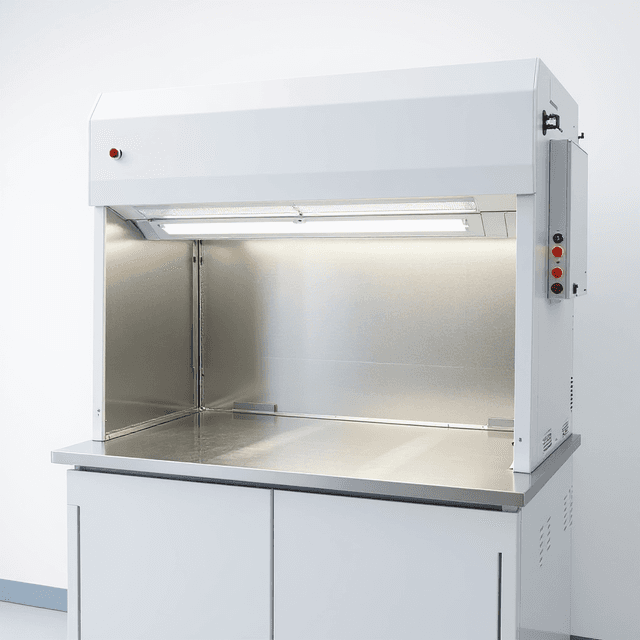
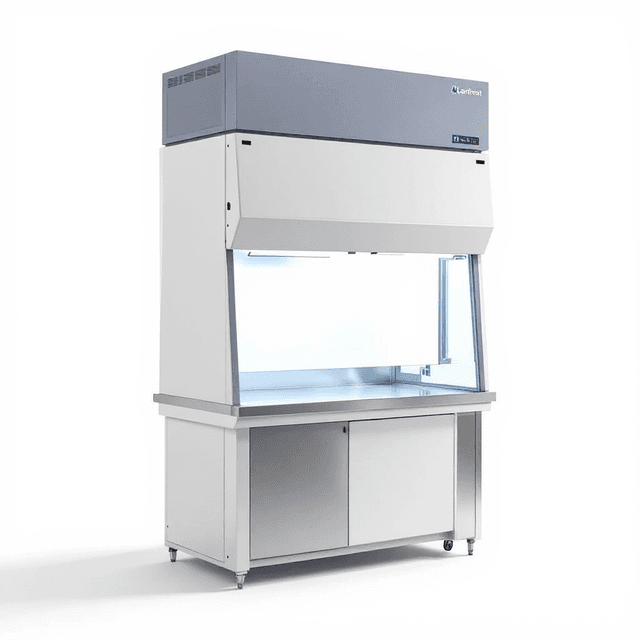
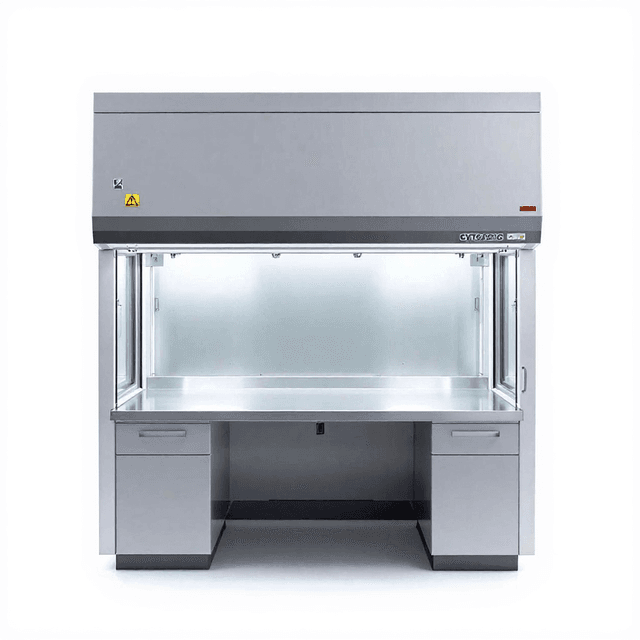
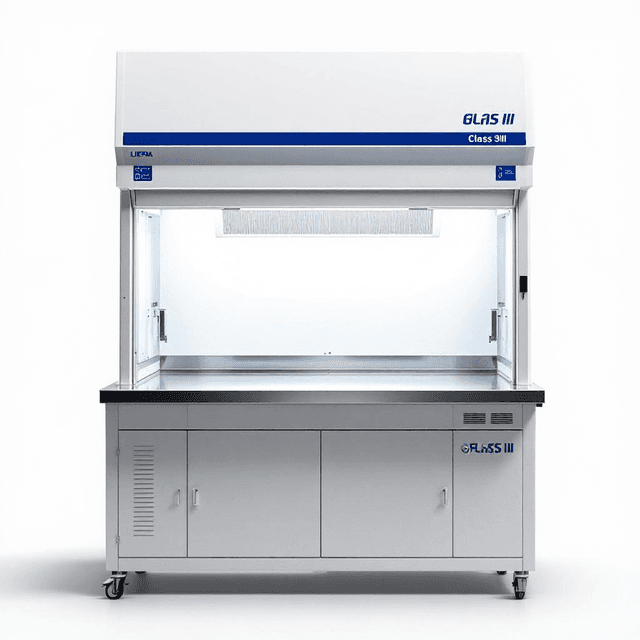
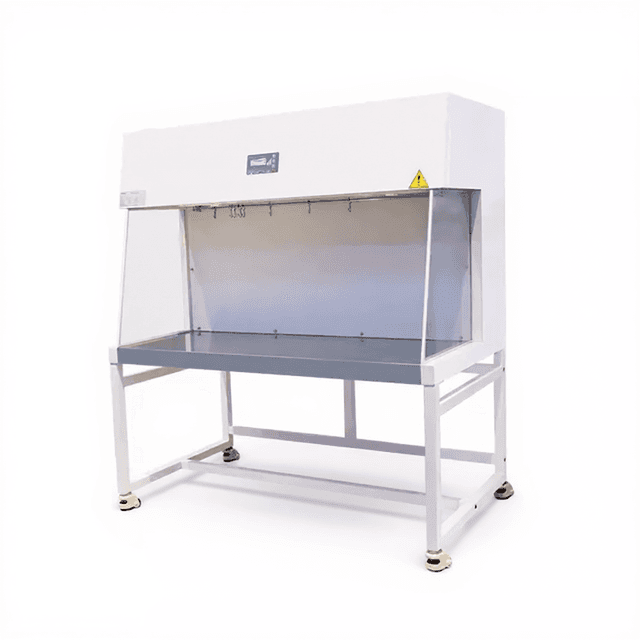
Ductless Fume Hood FH1000(C)
Self-contained ductless fume hood with integrated filtration system providing 0.4-0.6 m/s air velocity for chemical vapor containment in laboratory applications without external ductwork requirements.

Louise Corscadden, PhD
Director of Science · ConductScience
Ask Louise about Ductless Fume Hood FH1000(C) fit, setup, configuration, or quote prep.
Already working with us? Sign in to connect this with My Scientist.
Key Specifications
Full details →- Model fit
- Configured during quote
- SKU family
- BIO-0058
- Shipping box
- 214.0 x 100.0 x 83.0 cm
- Ordering
- Online checkout and quote request available
- Category
- Clean Benches & Fume Hoods
- Build notes
- Confirm accessories, station layout, and support needs before purchase
Ductless Fume Hood FH1000-C
Professional laboratory fume hood designed for safe work with hazardous chemicals and vapors. Features vertical laminar airflow with HEPA filtration and comprehensive operator protection in compliance with laboratory safety standards.
Key Features:
- Vertical laminar airflow design
- HEPA filtration system
- Multiple size configurations
- Durable construction materials
- Safety monitoring systems
- Operator-friendly controls
How It Works
The ductless fume hood operates on the principle of localized capture and filtration of chemical vapors through negative pressure containment. Air is drawn through the work opening at controlled velocities of 0.4-0.6 m/s, creating a containment zone that prevents vapor escape into the laboratory environment. The integrated centrifugal blower maintains consistent airflow across the work surface, with speed adjustment capability to match specific application requirements.
Captured air passes through an internal filtration system before recirculation, removing chemical contaminants from the airstream. The self-contained design eliminates the need for external ductwork or building ventilation modifications, making it suitable for laboratories with limited infrastructure or temporary installations.
The 650mm maximum sash opening provides operator access while maintaining containment performance, with the work surface positioned at 900mm height for ergonomic operation during extended procedures.
Features & Benefits
Automation Level
- manual
FH1200(C)
- FH1500(C)
External Size(W*D*H)
- 1000*830*2140mm
1200*830*2140mm
- 1500*940*2140mm
Internal Size(W*D*H)
- 910*690*740mm
1110*690*740mm
- 1410*690*740mm
Work Surface Height
- 900mm
Max. Opening
- 650mm
Air Velocity
- 0.4~0.6m/s
Airflow Volume
- 136m³/h
432m³/h
- 547m³/h
Noise
- ≤58dB(A)
Fluorescent Lamp
- 12W*2
UV Lamp(Optional)
- Emission of 253.7 nanometers for most efficient decontamination
Blower
- Built-in centrifugal blower, speed adjustable
Brand
- ConductScience
Research Domain
- Analytical Chemistry
- Environmental Monitoring
- Food Science
- Materials Science
- Microbiology
- Pharmaceutical QC
Shipping weight
- 290.0 lb
Shipping box
- L: 214.0 cm
- W: 100.0 cm
- H: 83.0 cm
| Feature | This Product | Typical Alternative | Advantage |
|---|---|---|---|
| Internal Workspace Dimensions | 910×690×740mm providing 0.44 m² work surface area | Entry-level models often offer smaller workspaces with limited depth | Adequate space for standard analytical procedures and equipment setup without workspace constraints. |
| Airflow Volume | 136 m³/h with adjustable speed control | Basic units may offer fixed airflow without adjustment capability | Allows optimization for specific applications while maintaining energy efficiency and containment performance. |
| Sash Opening Height | 650mm maximum opening for equipment access | Compact models typically offer smaller openings limiting equipment accommodation | Accommodates taller laboratory equipment while maintaining containment effectiveness during operation. |
| Noise Level | ≤58 dB(A) during operation | Higher noise levels common in budget models affecting laboratory environment | Maintains comfortable acoustic environment for extended laboratory work periods. |
| Work Surface Height | 900mm ergonomic positioning | Varies by model with some offering non-adjustable heights | Provides proper ergonomic positioning for standing laboratory work reducing operator fatigue. |
| UV Decontamination Option | 253.7 nm UV lamp available for surface sterilization | UV capability often not available in basic fume hood models | Enables additional decontamination capability for applications requiring enhanced sterility measures. |
The FH1000(C) offers a comprehensive workspace with adjustable airflow control and optional UV decontamination in a self-contained design. The system provides adequate containment performance for general laboratory applications while maintaining acoustic comfort and ergonomic operation.
Practical Tips
Verify face velocity at multiple points across the work opening using a calibrated digital anemometer, measuring at the plane of the sash opening.
Why: Ensures uniform containment performance across the entire workspace and identifies potential airflow irregularities.
Monitor filter condition through pressure differential measurements and visual inspection for saturation or breakthrough.
Why: Prevents loss of containment effectiveness and maintains optimal airflow performance throughout filter service life.
Keep equipment and materials at least 150mm back from the sash opening to prevent disruption of containment airflow patterns.
Why: Maintains effective vapor capture zone and prevents turbulence that could compromise containment performance.
Conduct initial containment verification with tracer gas testing before handling hazardous chemicals in the workspace.
Why: Confirms proper operation and containment effectiveness under actual operating conditions before exposure risk.
Check sash operation and sealing if containment performance appears compromised, ensuring proper closure and alignment.
Why: Sash position and sealing integrity directly affect airflow patterns and containment effectiveness.
Document airflow measurements and filter replacement dates to maintain performance history and predict maintenance needs.
Why: Enables proactive maintenance scheduling and provides evidence of proper equipment operation for compliance documentation.
Allow the system to operate for several minutes before beginning work to establish stable airflow patterns.
Why: Ensures consistent containment performance and allows airflow to stabilize before introducing chemical vapors.
Clean interior surfaces regularly with appropriate solvents to prevent chemical buildup and maintain visibility through the sash.
Why: Prevents accumulation of residues that could interfere with airflow or create contamination sources for subsequent procedures.
Setup Guide
What’s in the Box
- Fume hood main unit with integrated blower
- Fluorescent lighting system (12W×2)
- Internal filtration system (typical)
- Power cable and electrical connections (typical)
- Installation and operation manual (typical)
- Sash assembly and hardware (typical)
Warranty
ConductScience provides standard manufacturer warranty coverage for the fume hood system including blower, electrical components, and structural elements. Technical support is available for installation guidance and operational troubleshooting.
Compliance
References
Background reading relevant to this product:
What types of chemicals can be safely handled in this ductless fume hood?
Suitability depends on the specific filtration media installed. Consult the filtration specifications and manufacturer guidelines for chemical compatibility. Typically suitable for organic solvents and general laboratory reagents, but not for highly toxic or corrosive compounds requiring specialized filtration.
How often do the filters need replacement?
Filter replacement frequency depends on chemical usage, concentration, and operational hours. Monitor filter condition through pressure differential measurements and replace when breakthrough occurs or pressure drop exceeds specifications. Typical replacement intervals range from 6-18 months under normal laboratory use.
Can the airflow velocity be verified and calibrated?
Yes, the adjustable speed blower allows optimization of airflow. Use calibrated anemometer or digital manometer to verify face velocity at multiple points across the work opening. Regular velocity mapping ensures consistent containment performance across the workspace.
What maintenance procedures are required?
Regular maintenance includes filter inspection and replacement, blower cleaning, sash operation verification, and airflow performance testing. Clean interior surfaces regularly and inspect seals for proper containment. Schedule annual containment testing to verify performance standards.
How does this compare to ducted fume hood systems?
Ductless systems offer installation flexibility and lower infrastructure requirements but are limited to specific chemical classes based on filtration capability. Ducted hoods handle broader chemical ranges but require permanent ventilation infrastructure and higher energy consumption.
What electrical requirements are needed for installation?
Consult product specifications for exact electrical requirements including voltage, current, and frequency specifications. Ensure adequate electrical capacity for blower motor and lighting systems, with appropriate grounding for safety compliance.
Can multiple users work simultaneously in this hood?
The 910mm internal width accommodates single-user operation for most procedures. Multiple users may interfere with proper airflow patterns and containment effectiveness. Design workspace layout and procedures for sequential rather than simultaneous use.
What containment testing methods should be used?
Use tracer gas testing with sulfur hexafluoride or similar compounds to verify containment performance. Conduct tests at various sash positions and with representative equipment configurations to ensure effective vapor capture under actual operating conditions.
Have a question about this product?
Have a question? Just ask.
Send it over and we'll email you a personalized answer — no call, no scheduling.
Prefer to talk it through?