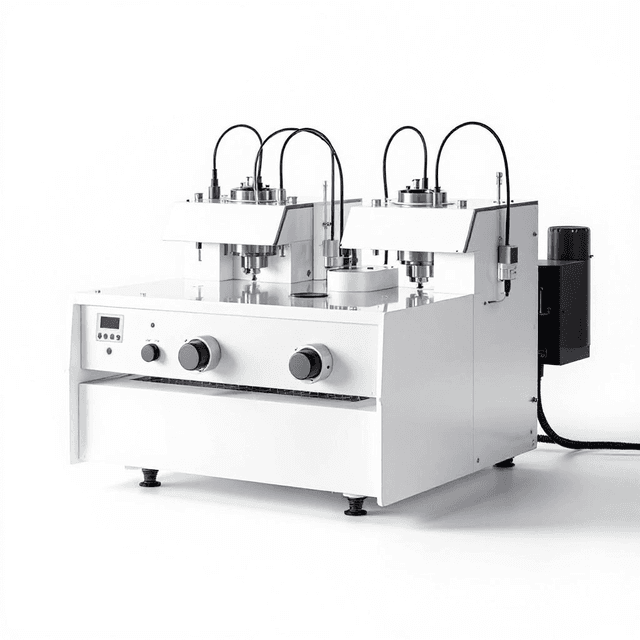
Electronic&Digital Heating Mantles HME-IB/HMD-IIC
Digital heating mantles with precise temperature control up to 450°C, available in capacities from 50 ml to 10,000 ml for laboratory thermal applications.

Louise Corscadden, PhD
Director of Science · ConductScience
Ask Louise about Electronic&Digital Heating Mantles HME-IB/HMD-IIC fit, setup, configuration, or quote prep.
Already working with us? Sign in to connect this with My Scientist.
Key Specifications
Full details →- Model fit
- Configured during quote
- SKU family
- BIO-0688
- Shipping box
- 42.0 x 43.6 x 38.0 cm
- Ordering
- Online checkout and quote request available
- Category
- Benchtop Instruments
- Build notes
- Confirm accessories, station layout, and support needs before purchase
The Electronic & Digital Heating Mantles HME-IB/HMD-IIC series provides precise thermal control for laboratory glassware applications requiring controlled heating up to 450°C. These heating mantles offer multiple capacity options from 50 ml to 10,000 ml with corresponding power ratings from 0.08 kW to 1.2 kW, enabling researchers to select appropriate thermal management for their specific vessel sizes.
Digital temperature control and electronic monitoring ensure reproducible heating profiles essential for synthetic chemistry, extraction procedures, and thermal analysis protocols. The continuous working time capability supports extended reactions and processes without thermal cycling interruptions that could affect experimental outcomes.
How It Works
The heating mantles utilize resistive heating elements integrated into a hemispherical housing designed to conform to round-bottom glassware. Digital temperature controllers monitor thermal output through integrated sensors, maintaining set temperatures through feedback control systems that adjust power delivery to the heating elements.
The electronic control system provides precise temperature regulation by continuously monitoring actual versus target temperatures, automatically adjusting heating power to maintain thermal stability. This closed-loop control prevents temperature overshoot and maintains consistent heating profiles throughout extended operational periods.
Features & Benefits
Automation Level
- semi-automated
Capacity(ml)
- 50
100
- 250
500
- 1000
2000
- 3000
5000
- 10000
Max. Temp
- 450℃
Working Time
- Continuous
Heating Power(kW)
- 0.08
0.1
- 0.15
0.25
- 0.35
0.45
- 0.6
0.8
- 1.2
External Size(mm)
- Φ200*165
Φ280*220
- Φ330*230
Brand
- ConductScience
Research Domain
- Analytical Chemistry
- Environmental Monitoring
- Food Science
- Materials Science
- Microbiology
- Pharmaceutical QC
Shipping weight
- 29.98 lb
Shipping box
- L: 42.0 cm
- W: 43.6 cm
- H: 38.0 cm
| Feature | This Product | Typical Alternative | Advantage |
|---|---|---|---|
| Maximum Operating Temperature | 450°C maximum temperature | Entry-level models often limited to 350-400°C ranges | Higher temperature capability enables broader range of synthetic chemistry and thermal analysis applications. |
| Capacity Range | 50 ml to 10,000 ml capacity options | Limited capacity selections in many product lines | Comprehensive size range accommodates both analytical and preparative scale laboratory work. |
| Power Scaling | 0.08 kW to 1.2 kW power range matched to capacity | Fixed power ratings regardless of vessel size | Optimized thermal input prevents overheating of small volumes and ensures adequate heating for large vessels. |
| Control System | Digital electronic temperature control | Analog control systems with limited precision | Enhanced temperature accuracy and reproducibility for consistent experimental conditions. |
This heating mantle series provides comprehensive capacity coverage with digital temperature control reaching 450°C maximum operating temperature. The power scaling matched to vessel capacity and continuous operation capability support both routine and demanding thermal applications.
Practical Tips
Verify temperature accuracy using calibrated thermometer or thermocouple before critical experiments.
Why: Ensures reported temperatures match actual vessel contents for reproducible thermal conditions.
Clean heating well surfaces regularly with appropriate solvents to remove residue buildup.
Why: Maintains efficient thermal transfer and prevents contamination of subsequent samples.
Allow gradual temperature ramping for thick-walled glassware to prevent thermal stress cracking.
Why: Prevents glassware damage and maintains experimental continuity during thermal procedures.
Install temperature monitoring alarms for unattended high-temperature operations.
Why: Provides early warning of temperature excursions that could compromise safety or experimental results.
Record actual vessel temperature in addition to controller setpoint for accurate documentation.
Why: Accounts for thermal lag and ensures precise temperature records for experimental reproducibility.
Check for proper glassware contact if heating rates appear slower than expected.
Why: Poor thermal contact reduces heating efficiency and temperature control accuracy.
Setup Guide
What’s in the Box
- Heating mantle main unit
- Digital temperature controller
- Power cord
- User manual
- Safety documentation (typical)
Warranty
ConductScience provides standard one-year manufacturer warranty covering defects in materials and workmanship, with technical support for operational guidance and troubleshooting assistance.
Compliance
What is the temperature accuracy and stability of the digital control system?
Consult product datasheet for specific temperature accuracy and stability specifications for precise experimental planning.
Can the heating mantle accommodate non-round glassware geometries?
The hemispherical design is optimized for round-bottom flasks; consult manufacturer for compatibility with other vessel shapes.
What safety features prevent overheating during unattended operation?
Digital control systems typically include temperature monitoring and emergency shutoff capabilities; verify specific safety features in technical documentation.
How quickly does the system reach target temperature from ambient conditions?
Heating rate depends on capacity, power rating, and thermal mass of contents; consult specifications for thermal performance data.
Is external temperature monitoring compatible with the control system?
Integration with external temperature probes may be possible; verify compatibility requirements with technical support.
What maintenance procedures are required for reliable operation?
Regular cleaning of heating wells and periodic calibration verification maintain optimal thermal performance and accuracy.
Have a question about this product?
Have a question? Just ask.
Send it over and we'll email you a personalized answer — no call, no scheduling.
Prefer to talk it through?