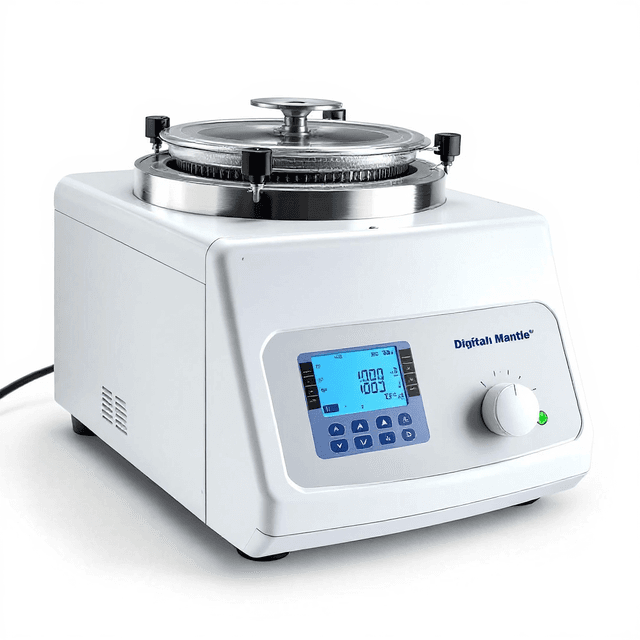
Several Rows Electronic Control Heating Mantles
Multi-vessel electronic heating mantles with continuous temperature control up to 380°C for laboratory heating, digestion, and synthesis applications.

Louise Corscadden, PhD
Director of Science · ConductScience
Ask Louise about Several Rows Electronic Control Heating Mantles fit, setup, configuration, or quote prep.
Already working with us? Sign in to connect this with My Scientist.
Key Specifications
Full details →- Model fit
- Configured during quote
- SKU family
- BIO-0689
- Shipping box
- 42.0 x 43.6 x 38.0 cm
- Ordering
- Online checkout and quote request available
- Category
- Benchtop Instruments
- Build notes
- Confirm accessories, station layout, and support needs before purchase
The Several Rows Electronic Control Heating Mantles provide precise temperature control for multi-vessel heating applications in research and analytical laboratories. These units feature electronic temperature control systems capable of maintaining continuous operation at temperatures up to 380°C, making them suitable for a wide range of heating, digestion, and synthesis procedures.
Available in multiple configurations with varying heating capacities from 100W to 1800W, these heating mantles accommodate different vessel sizes and experimental requirements. The electronic control system ensures stable temperature regulation for reproducible results in synthetic chemistry, sample preparation, and analytical procedures requiring controlled thermal environments.
How It Works
Electronic heating mantles operate through resistive heating elements embedded within thermally insulated housings. The heating elements convert electrical energy to thermal energy, which is transferred to laboratory vessels through direct contact with the heated surface. Electronic temperature controllers monitor the heating element temperature through integrated sensors and modulate power output to maintain the desired set point.
The multi-row configuration allows simultaneous heating of multiple vessels while maintaining independent temperature zones. Heat transfer occurs primarily through conduction from the heating element to the vessel bottom, with uniform heat distribution achieved through the mantle design. The electronic control system provides stable temperature regulation by continuously adjusting power input based on thermal feedback.
Features & Benefits
Automation Level
- semi-automated
Two Rows
- 100
380°C
- Contin- uous
280*290*150
- 375*385*245
4kg
- 7kg
250
- 1080
500
- 1500
320*320*155
- 415*415*245
5kg
- 8kg
1000
- 1800
390*355*150
- 485*450*245
7kg
- 10kg
100
- 400
550*290*150
- 645*385*245
8kg
- 11kg
Brand
- ConductScience
Research Domain
- Analytical Chemistry
- Environmental Monitoring
- Food Science
- Materials Science
- Microbiology
- Pharmaceutical QC
Shipping weight
- 8.82 lb
Shipping box
- L: 42.0 cm
- W: 43.6 cm
- H: 38.0 cm
| Feature | This Product | Typical Alternative | Advantage |
|---|---|---|---|
| Maximum Operating Temperature | 380°C continuous operation | Basic heating mantles often limited to 300°C maximum | Higher temperature capability accommodates demanding synthetic chemistry and high-temperature digestion procedures |
| Temperature Control System | Electronic temperature control with digital regulation | Manual voltage control systems provide less precise regulation | Electronic control delivers better temperature stability and reproducibility for consistent experimental results |
| Multi-Position Configuration | Several rows with multiple heating positions | Single-position mantles require multiple separate units | Simultaneous multi-sample processing improves laboratory efficiency and reduces bench space requirements |
| Heating Capacity Options | Variable capacities from 100W to 1800W | Fixed heating capacity models offer limited flexibility | Multiple capacity options allow matching heating power to specific vessel sizes and application requirements |
| Continuous Operation Design | Designed for extended continuous heating cycles | Entry-level units may have duty cycle limitations | Supports long-duration procedures without thermal cycling interruptions that could affect experimental outcomes |
This heating mantle system provides electronic temperature control up to 380°C with multi-position capability and variable heating capacities. The continuous operation design and electronic control system offer enhanced performance for laboratory heating applications requiring precise thermal management.
Practical Tips
Verify temperature accuracy using a calibrated thermometer in a reference vessel before critical experiments.
Why: Temperature calibration ensures accurate thermal control for reproducible experimental results.
Clean heating surfaces regularly with appropriate solvents to remove residue buildup.
Why: Clean surfaces maintain efficient heat transfer and prevent contamination of subsequent samples.
Allow gradual temperature increases when heating thick-walled glassware to prevent thermal shock.
Why: Gradual heating prevents vessel breakage and ensures uniform temperature distribution throughout the sample.
Never leave high-temperature heating operations unattended and ensure proper ventilation.
Why: Continuous monitoring prevents overheating incidents and maintains safe laboratory conditions.
Record both set point and actual temperatures during critical procedures.
Why: Temperature documentation provides essential data for experimental reproducibility and validation.
Check vessel contact with heating surface if uneven heating is observed.
Why: Poor thermal contact reduces heating efficiency and can cause temperature variations across the vessel.
Position the unit away from air currents and temperature fluctuations for stable operation.
Why: Environmental stability reduces temperature controller cycling and improves heating consistency.
Setup Guide
What’s in the Box
- Heating mantle unit (typical)
- Electronic temperature controller (typical)
- Power cord (typical)
- User manual and safety instructions (typical)
Warranty
ConductScience provides a standard one-year manufacturer warranty covering defects in materials and workmanship, with technical support available for operational guidance and troubleshooting.
Compliance
What is the temperature accuracy and stability of the electronic control system?
Consult product datasheet for specific temperature accuracy and stability specifications of the electronic control system.
Can different heating zones be controlled independently?
The multi-row configuration allows separate vessel heating, though specific zone independence capabilities should be verified in the product specifications.
What vessel sizes and types are compatible with these heating mantles?
The units accommodate various laboratory glassware through direct contact heating; specific vessel compatibility depends on the heating surface dimensions provided.
How quickly do these units reach target temperature?
Heat-up rate depends on heating capacity, vessel size, and target temperature; consult product datasheet for specific thermal performance data.
Are these units suitable for overnight or extended heating procedures?
Yes, the units are designed for continuous operation at temperatures up to 380°C, making them suitable for extended heating applications.
What maintenance is required for reliable operation?
Regular cleaning of heating surfaces and periodic inspection of temperature sensors and electrical connections maintain optimal performance.
Can these units be used with corrosive chemicals?
Chemical compatibility depends on construction materials; verify compatibility with specific reagents before use with corrosive substances.
Have a question about this product?
Have a question? Just ask.
Send it over and we'll email you a personalized answer — no call, no scheduling.
Prefer to talk it through?
Upgrade Options