Electrophoresis Chip (200 um, Type A)
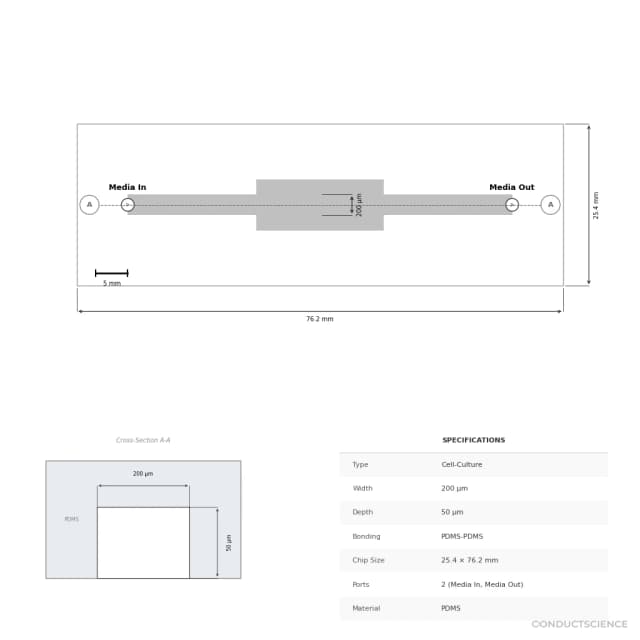
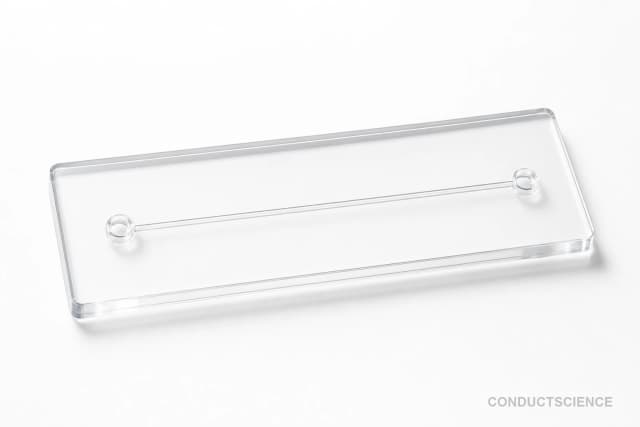
Microfluidic electrophoresis chip with 200 × 200 μm channels optimized for high sample volume applications and effective analyte separation.
Reusable chip — designed for multiple experimental runs. Compatible with standard microfluidic tubing: steel pins (0.7 mm ID / 1.0 mm OD) and silicone tubing (0.8 mm ID / 1.9 mm OD). Available in bulk packs (5‑, 10‑, and 25‑unit) for lab-scale and consumable workflows.

Louise Corscadden, PhD
Director of Science · ConductScience
Ask Louise about Electrophoresis Chip (200 um, Type A) fit, setup, configuration, or quote prep.
Already working with us? Sign in to connect this with My Scientist.
Key Specifications
Full details →- Model fit
- 3 selectable configurations
- SKU family
- WHM-0107
- Shipping box
- 181.8 x 136.3 x 90.9 cm
- Ordering
- Online checkout and quote request available
- Category
- Electrophoresis Chips
- Build notes
- Confirm accessories, station layout, and support needs before purchase
The Electrophoresis Chip (200 μm, Type A) is a microfluidic device designed for high-volume electrophoretic separations in laboratory applications. Featuring 200 × 200 μm channel dimensions, this chip provides optimized geometry for processing larger sample volumes while maintaining effective separation resolution.
This microfluidic platform enables researchers to perform electrophoretic analyses with improved sample throughput compared to smaller channel configurations. The square channel cross-section provides consistent electric field distribution and predictable migration behavior for charged analytes. The Type A configuration offers standardized connectivity for integration with common microfluidic pumping and detection systems.
How It Works
Electrophoresis separates charged molecules based on their differential migration rates in an applied electric field. When voltage is applied across the microfluidic channels, positively charged molecules migrate toward the cathode while negatively charged molecules move toward the anode. The migration velocity depends on the charge-to-size ratio of each analyte.
The 200 × 200 μm square channel geometry provides several advantages over smaller channels: increased sample loading volume, reduced clogging potential, and improved heat dissipation during electrophoresis. The larger cross-sectional area accommodates higher sample volumes while maintaining laminar flow conditions essential for reproducible separations.
Sample introduction typically occurs through inlet ports connected to the channel network, with detection performed optically through the chip substrate or via integrated electrodes. The standardized Type A configuration ensures compatibility with common microfluidic interfaces and detection systems.
Features & Benefits
Shipping weight
- 3.3 lb
Shipping box
- L: 181.8 cm
- W: 136.3 cm
- H: 90.9 cm
| Feature | This Product | Typical Alternative | Advantage |
|---|---|---|---|
| Channel Dimensions | 200 × 200 μm square channels | Smaller channels (50-100 μm) in entry-level devices | Accommodates larger sample volumes and reduces clogging from complex samples. |
| Sample Volume Capacity | High sample volume handling | Limited volume capacity in narrow channel devices | Enables analysis of larger specimens or more concentrated samples for improved sensitivity. |
| Channel Cross-Section | Square geometry for uniform field distribution | Varies by model | Provides predictable migration behavior and consistent separation performance. |
| Interface Standard | Type A standardized configuration | Proprietary interfaces in some systems | Ensures compatibility with common microfluidic pumping and detection equipment. |
This electrophoresis chip provides larger channel dimensions than typical microfluidic devices, enabling high sample volume applications while maintaining effective separation capabilities. The standardized Type A configuration ensures broad compatibility with existing laboratory equipment.
| Model | SKU | Listed price | Status | Shipping box |
|---|---|---|---|---|
| 25-Pack | WHM-0107-25PK | Quote | Available | 181.8 x 136.3 x 90.9 cm |
| 10-Pack | WHM-0107-10PK | $1,490.00 | Available | 181.8 x 136.3 x 90.9 cm |
| 5-Pack | WHM-0107-5PK | Quote | Available | 181.8 x 136.3 x 90.9 cm |
Practical Tips
Prime channels thoroughly with running buffer before sample introduction to ensure complete removal of air bubbles.
Why: Air bubbles disrupt electric field uniformity and can cause irregular migration patterns.
Use molecular weight standards appropriate for your analyte range to verify separation performance.
Why: Standards provide reference points for migration time reproducibility and resolution assessment.
Clean channels with mild detergent solution between different sample types to prevent cross-contamination.
Why: Residual analytes can interfere with subsequent analyses and affect quantitative results.
If current is unstable, check for buffer evaporation or electrode degradation before replacing the chip.
Why: Electrical issues often stem from buffer conditions rather than chip defects.
Monitor current throughout the run to detect changes in buffer conductivity or channel blockage.
Why: Current fluctuations indicate system changes that can affect separation reproducibility.
Always verify electrical connections are secure before applying voltage to prevent arcing or equipment damage.
Why: Poor connections can create safety hazards and damage sensitive detection equipment.
Setup Guide
What’s in the Box
- Electrophoresis chip with 200 × 200 μm channels (typical)
- Port connection hardware (typical)
- User manual and protocol guidelines (typical)
- Quality control certificate (typical)
Warranty
ConductScience provides a standard one-year manufacturer warranty covering defects in materials and workmanship, along with technical support for setup and operation questions.
Compliance
What buffer systems are compatible with this chip?
Most standard electrophoresis buffers can be used, including Tris-glycine, bis-tris, and tricine systems. Consult product datasheet for specific pH and ionic strength recommendations.
How does the 200 μm channel size affect separation resolution?
Larger channels provide increased sample loading capacity but may reduce separation efficiency compared to smaller channels. Optimal resolution depends on analyte properties and applied field strength.
What voltage range can be safely applied?
Applied voltage depends on channel length and buffer conductivity. Consult product datasheet for maximum field strength specifications to prevent chip damage.
How many samples can be processed before chip replacement?
Chip lifetime depends on sample types and cleaning protocols. Protein samples may require more frequent replacement than small molecule analyses.
What detection methods are compatible?
The chip supports optical detection methods including fluorescence, UV absorbance, and refractive index detection through the substrate material.
How does this compare to traditional gel electrophoresis?
Microfluidic electrophoresis offers faster separations, lower sample consumption, and automated operation, but may have different resolution characteristics than slab gels.
Have a question about this product?
Have a question? Just ask.
Send it over and we'll email you a personalized answer — no call, no scheduling.
Prefer to talk it through?