Fine-Channel Chemical Synthesis Chip (100 um)
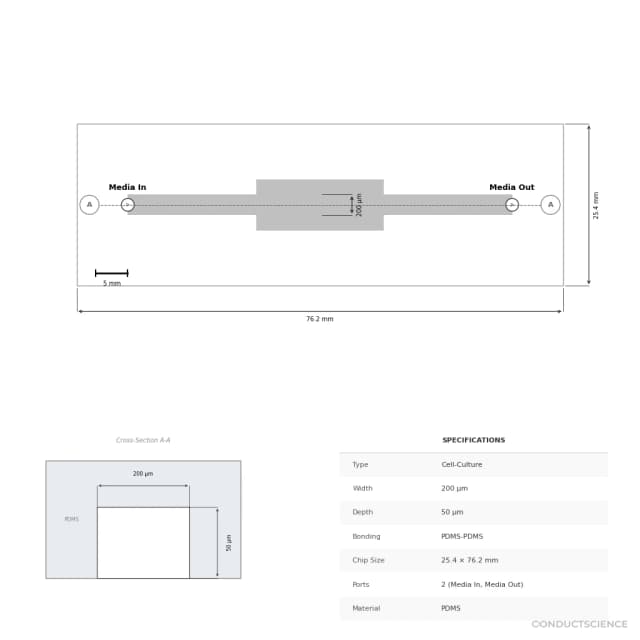
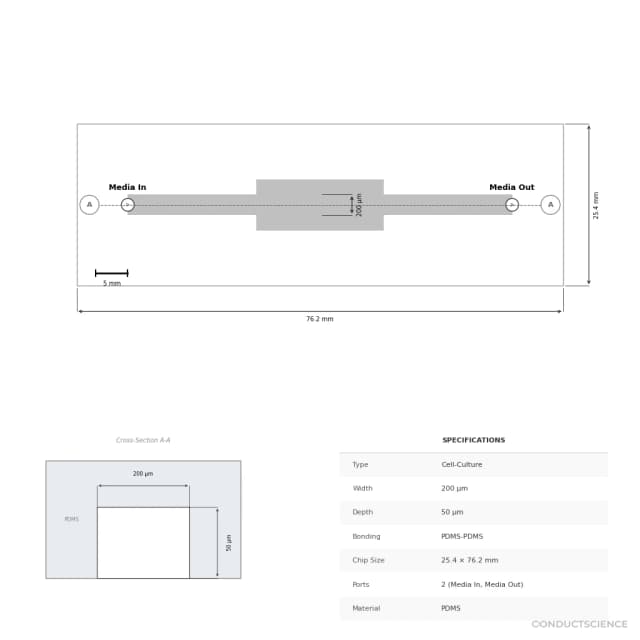
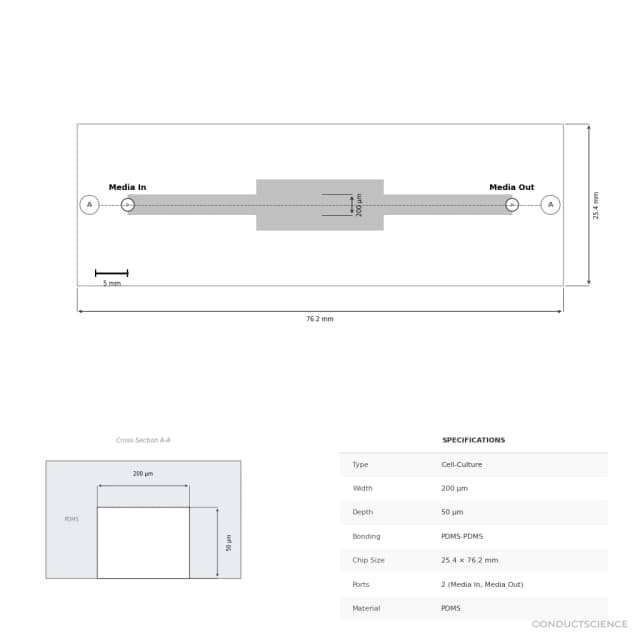
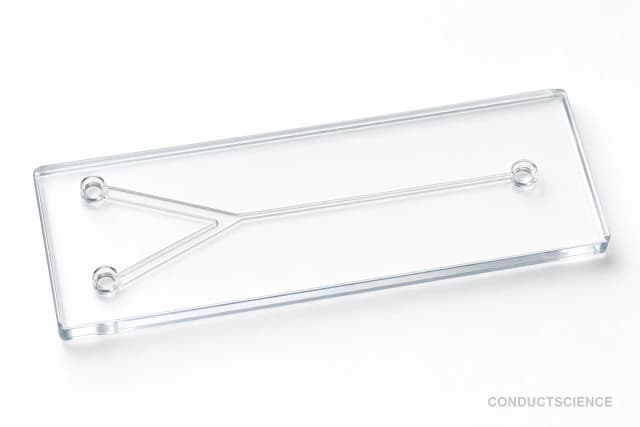
Precision microfluidic chip with 100 x 100 µm channels designed for continuous flow chemical synthesis and fast reaction applications.
Reusable chip — designed for multiple experimental runs. Compatible with standard microfluidic tubing: steel pins (0.7 mm ID / 1.0 mm OD) and silicone tubing (0.8 mm ID / 1.9 mm OD). Available in bulk packs (5‑, 10‑, and 25‑unit) for lab-scale and consumable workflows.

Louise Corscadden, PhD
Director of Science · ConductScience
Ask Louise about Fine-Channel Chemical Synthesis Chip (100 um) fit, setup, configuration, or quote prep.
Already working with us? Sign in to connect this with My Scientist.
Key Specifications
Full details →- Model fit
- 3 selectable configurations
- SKU family
- WHM-0100
- Shipping box
- 181.8 x 136.3 x 90.9 cm
- Ordering
- Online checkout and quote request available
- Category
- Chemical Synthesis Chips
- Build notes
- Confirm accessories, station layout, and support needs before purchase
The Fine-Channel Chemical Synthesis Chip (100 µm) is a precision microfluidic device designed for continuous flow chemical synthesis applications. The chip features square channels with 100 x 100 µm cross-sectional dimensions, optimized for fast reactions and microscale synthesis operations. This platform enables researchers to conduct chemical transformations in a controlled microenvironment with precise reagent mixing and reaction control.
The device supports continuous flow synthesis protocols, allowing for real-time monitoring and control of reaction parameters. The fine channel geometry provides high surface-to-volume ratios and enhanced mass transfer characteristics, making it suitable for applications requiring rapid mixing and short residence times. Researchers can integrate this chip into existing microfluidic setups for lab-on-chip synthesis workflows.
How It Works
The Fine-Channel Chemical Synthesis Chip operates on continuous flow microfluidic principles, where reagents are introduced through separate inlets and mixed within the 100 µm square channels. The small channel dimensions create laminar flow conditions with Reynolds numbers typically below 1, ensuring predictable fluid behavior and consistent mixing patterns. Mass transfer occurs primarily through molecular diffusion across the channel width, with mixing times on the order of milliseconds to seconds depending on the specific reagents and flow rates.
The high surface-to-volume ratio inherent in the 100 µm channel geometry enhances heat transfer, allowing for precise temperature control during exothermic or endothermic reactions. Reaction residence time is controlled by adjusting the volumetric flow rate, enabling optimization of conversion efficiency and product selectivity. The continuous flow format allows for steady-state operation and real-time sampling of reaction products.
Chemical synthesis occurs as reagent streams converge and react while flowing through the channel network. The confined geometry prevents dispersion and maintains concentration gradients, resulting in more uniform reaction conditions compared to batch synthesis methods. Product streams can be collected continuously or directed to downstream analytical systems for real-time monitoring.
Features & Benefits
Shipping weight
- 3.3 lb
Shipping box
- L: 181.8 cm
- W: 136.3 cm
- H: 90.9 cm
| Feature | This Product | Typical Alternative | Advantage |
|---|---|---|---|
| Channel Cross-Section | 100 x 100 µm square channels | Larger channels (200-500 µm) or circular geometries | Square geometry provides predictable flow patterns and enhanced mixing efficiency compared to circular channels. |
| Application Focus | Chemical synthesis and fast reactions | General-purpose mixing or analytical applications | Optimized channel dimensions and flow characteristics specifically for synthesis applications. |
| Channel Dimensions | Precisely defined 100 µm dimensions | Variable dimensional tolerances | Consistent channel geometry ensures reproducible flow characteristics across experiments. |
| Flow Regime | Laminar flow with predictable mixing | Turbulent mixing or less controlled flow patterns | Laminar conditions provide consistent and reproducible synthesis conditions. |
The Fine-Channel Chemical Synthesis Chip offers precisely controlled 100 µm square channels optimized for fast chemical reactions. The design provides predictable laminar flow characteristics and enhanced mixing efficiency specifically for synthesis applications.
| Model | SKU | Listed price | Status | Shipping box |
|---|---|---|---|---|
| 25-Pack | WHM-0100-25PK | Quote | Available | 181.8 x 136.3 x 90.9 cm |
| 10-Pack | WHM-0100-10PK | $1,490.00 | Available | 181.8 x 136.3 x 90.9 cm |
| 5-Pack | WHM-0100-5PK | Quote | Available | 181.8 x 136.3 x 90.9 cm |
Practical Tips
Prime all channels thoroughly with appropriate solvents before introducing reagents to ensure complete air bubble removal.
Why: Air bubbles can disrupt flow patterns and create inconsistent reaction conditions.
Clean channels immediately after each synthesis run using compatible cleaning solvents to prevent residue buildup.
Why: Prompt cleaning prevents channel blockage and maintains consistent flow characteristics.
Verify flow rates using independent flow measurement methods before critical synthesis experiments.
Why: Accurate flow rate control is essential for reproducible residence times and reaction outcomes.
Allow the system to reach steady-state before collecting product samples for analysis.
Why: Initial flow conditions may not be representative of steady-state synthesis performance.
Monitor pressure drop across the chip to detect potential channel blockages or flow restrictions.
Why: Pressure changes can indicate developing flow problems before complete channel blockage occurs.
Use appropriate chemical-resistant tubing and fittings compatible with your specific reagent systems.
Why: Incompatible materials can degrade and introduce contaminants into the synthesis stream.
Start with lower flow rates and gradually increase to optimize mixing and reaction conversion.
Why: Systematic optimization prevents loss of expensive reagents and identifies optimal operating conditions.
Setup Guide
What’s in the Box
- Fine-Channel Chemical Synthesis Chip (100 µm)
- Protective storage container (typical)
- Product documentation and specifications (typical)
- Quality control certificate (typical)
Warranty
ConductScience provides a standard one-year manufacturer warranty covering defects in materials and workmanship, with technical support for setup and application guidance.
Compliance
What flow rates are optimal for the 100 µm channels?
Flow rates typically range from 1-100 µL/min depending on the specific synthesis application and desired residence time. Lower flow rates increase residence time for slower reactions, while higher flow rates enable rapid throughput for fast reactions.
How do I prevent channel clogging during synthesis?
Use appropriate solvents to maintain reagent solubility, implement inline filtration, and avoid reactions that produce solid precipitates. Regular flushing with compatible cleaning solvents helps maintain channel integrity.
Can the chip handle organic solvents?
Solvent compatibility depends on the chip material construction. Consult the product datasheet for specific chemical resistance data and recommended solvent systems.
What is the typical residence time in the channels?
Residence time is calculated based on channel volume and flow rate. For the 100 µm channels, typical residence times range from seconds to minutes depending on the total channel length and volumetric flow rate.
How many synthesis reactions can be performed per chip?
The number of uses depends on the specific chemistry and cleaning protocols. Many chips can be reused dozens of times with proper cleaning and maintenance procedures.
What analytical methods can be coupled with this chip?
The chip can interface with UV-Vis spectroscopy, mass spectrometry, HPLC, and other flow-compatible analytical techniques for real-time reaction monitoring.
How do I ensure reproducible mixing in the channels?
Maintain consistent flow rates, use appropriate inlet configurations, and ensure complete channel priming. The laminar flow conditions in 100 µm channels provide inherently reproducible mixing characteristics.
Have a question about this product?
Have a question? Just ask.
Send it over and we'll email you a personalized answer — no call, no scheduling.
Prefer to talk it through?