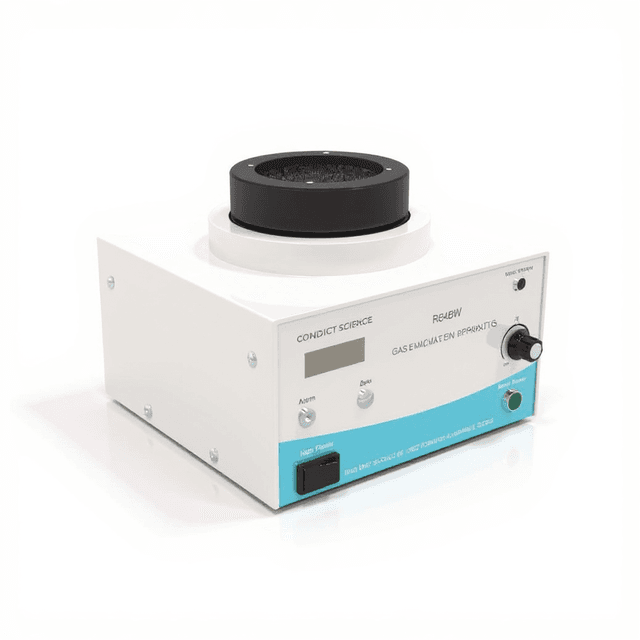
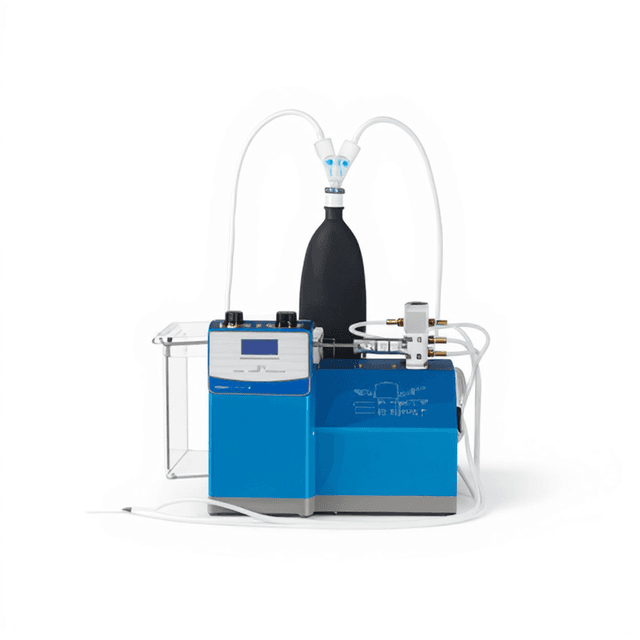
Gas Filter Canister
Activated carbon filter canisters for absorbing isoflurane and sevoflurane from anesthesia waste gas streams, featuring intelligent system identification and dual alarm replacement indicators.
| absorption_capacity | up to 200g |
| compatible_anesthetics | isoflurane and sevoflurane |
| model_number | RWD-R510-31 |
| alarm_system | double sound and light alarm |
| intelligent_identification | devices can intelligently identify the filter canister |
| Automation Level | semi-automated |

Pack mapping & per-filter economics
Updated attribute labels make it obvious what each WooCommerce option maps to in the R510-31 family.
- Small 6-pack (R510-31S-6): $85 list ? $14.17 per charcoal cartridge.
- Small 16-pack (R510-31S-16): $168 list ? $10.50 per cartridge for vivarium-scale work.
- Large 6-pack (R510-31-6): $135 list ? $22.50 per cartridge for high-flow manifolds.
Benchmark: BPLabLine advertises the large 6-pack at $126.65 after discount, so the ConductScience delta simply covers 48-hour swap stock and SDS handling.
Datasheet: RWD R510-31 absorption & safety specs
The RWD-R510-31 Gas Filter Canister provides essential anesthetic waste gas scavenging for laboratory and veterinary anesthesia systems. Utilizing high-quality activated carbon, these canisters effectively absorb isoflurane and sevoflurane vapors from exhaust gas streams, preventing contamination of the operating environment and protecting personnel from occupational exposure to anesthetic agents.
The canisters feature intelligent identification compatibility with supporting anesthesia systems, enabling automatic recognition and monitoring without manual configuration. With an absorption capacity of up to 200g, the filters provide reliable waste gas management while integrated sound and light alarm systems alert users when replacement is required. Available in both small and large sizes with package quantities ranging from 6 to 16 units to accommodate varying laboratory throughput requirements.
How It Works
The gas filter canister operates through adsorption of volatile anesthetic molecules onto the extensive surface area of activated carbon granules. When anesthetic-laden exhaust gas passes through the canister, isoflurane and sevoflurane molecules are trapped within the microporous structure of the carbon matrix through van der Waals forces and physical adsorption mechanisms.
The activated carbon material provides a high surface area-to-volume ratio, typically exceeding 500 m²/g, enabling efficient capture of anesthetic vapors from the gas stream. As the anesthetic molecules accumulate within the carbon pores, the filter's absorption capacity gradually decreases until saturation is reached at approximately 200g of captured anesthetic agent.
Compatible anesthesia systems utilize intelligent identification technology to automatically detect the presence and status of installed filter canisters. This integration enables real-time monitoring of filter capacity and triggers dual sound and light alarms when replacement is required, ensuring continuous waste gas management without manual tracking.
Features & Benefits
Pieces
- 16 pcs
- 6 pcs
absorption_capacity
- up to 200g
compatible_anesthetics
- isoflurane and sevoflurane
model_number
- RWD-R510-31
alarm_system
- double sound and light alarm
intelligent_identification
- devices can intelligently identify the filter canister
Size
- Large
- Small
Automation Level
- semi-automated
Material
- activated carbon
Research Domain
- Behavioral Pharmacology
- Cancer Research
- Cardiovascular Research
- Industrial Hygiene
- Neuroscience
- Veterinary Surgery
Species
- Gerbil
- Hamster
- Non-human Primate
- Rabbit
- Mouse
- Rat
- Guinea pig
Weight
- 6.06 kg
Dimensions
- L: 65.0 mm
- W: 36.0 mm
- H: 27.0 mm
Comparison Guide
| Feature | This Product | Typical Alternative | Advantage |
|---|---|---|---|
| Absorption Capacity | Up to 200g of anesthetic vapors | Entry-level filters often offer 50-100g capacity | Extended operational periods reduce replacement frequency and minimize procedure interruptions. |
| System Integration | Intelligent identification with automatic recognition | Manual tracking and replacement scheduling | Eliminates human error in filter monitoring and ensures timely replacement. |
| Replacement Notification | Dual sound and light alarm system | Single alarm type or visual indicator only | Redundant notification methods ensure replacement alerts are not missed during busy procedures. |
| Anesthetic Compatibility | Optimized for isoflurane and sevoflurane | Generic carbon may have varying absorption efficiency | Specialized carbon formulation maximizes absorption efficiency for commonly used research anesthetics. |
| Package Options | Available in 6-pack and 16-pack quantities | Limited packaging options | Flexible quantities accommodate both standard laboratories and high-throughput facilities. |
The RWD-R510-31 series combines high-capacity activated carbon absorption with intelligent system integration and dual alarm notification. The 200g capacity and automated monitoring reduce operational burden while maintaining consistent waste gas management.
Practical Tips
Track canister installation dates and usage hours to validate alarm system accuracy and identify usage patterns.
Why: Historical data helps optimize inventory management and predict replacement timing for future procedures.
Store unused canisters in a cool, dry environment away from volatile compounds to preserve activated carbon effectiveness.
Why: Environmental exposure can pre-saturate the carbon and reduce absorption capacity before installation.
Ensure proper ventilation when removing saturated canisters as they contain concentrated anesthetic vapors.
Why: Saturated filters can release absorbed anesthetics during handling, creating potential exposure risks.
If the alarm system fails to activate, verify proper canister seating and connection integrity before assuming filter saturation.
Why: Loose connections can prevent proper system identification and monitoring of filter status.
Document filter replacement times and correlate with anesthetic usage records to validate absorption capacity estimates.
Why: Usage correlation helps verify manufacturer specifications and optimize replacement scheduling.
Keep spare canisters readily available to minimize procedure delays when replacement alarms activate.
Why: Immediate replacement capability maintains continuous waste gas management without interrupting research schedules.
Inspect canister housing and fittings for cracks or damage during each replacement cycle.
Why: Physical damage can compromise seal integrity and reduce absorption efficiency.
Setup Guide
What’s in the Box
- Gas filter canisters (6 or 16 pieces depending on model)
- Installation instructions (typical)
- Compatibility guide (typical)
Warranty
ConductScience provides a one-year manufacturer warranty covering defects in materials and workmanship, with technical support available for installation and operational questions.
Compliance
How do I know when the filter canister needs replacement?
The intelligent identification system triggers dual sound and light alarms when the 200g absorption capacity is reached, providing clear notification for replacement.
Can these canisters be used with other volatile anesthetics besides isoflurane and sevoflurane?
The activated carbon is specifically optimized for isoflurane and sevoflurane absorption. Consult product datasheet for compatibility with other anesthetic agents.
What is the difference between small and large canister sizes?
Both sizes offer the same 200g absorption capacity but differ in physical dimensions to accommodate different anesthesia system configurations and space constraints.
How long does a canister typically last before replacement?
Lifespan depends on anesthetic flow rates, vapor concentrations, and usage frequency. The intelligent monitoring system tracks actual absorption to determine replacement timing.
Are there any maintenance requirements for the canisters?
The canisters are single-use consumables requiring no maintenance. Simply replace when the alarm system indicates saturation has been reached.
Can the canisters be regenerated or refilled?
These are designed as single-use disposable units. The activated carbon cannot be safely regenerated once saturated with anesthetic vapors.
What flow rates are these canisters rated for?
Consult product datasheet for specific flow rate specifications compatible with your anesthesia system's waste gas evacuation capacity.
Have a question about this product?
Frequently Bought Together
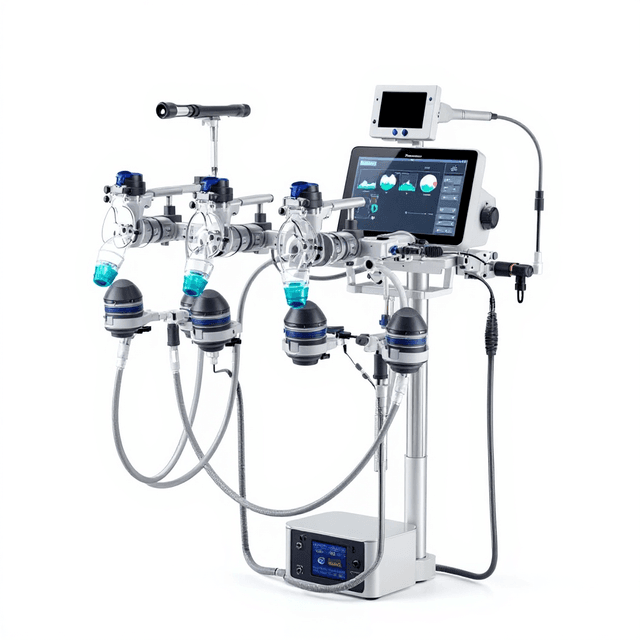
![Anesthesia Small Animal Operation Platform [Manifold for Cone & Tubing Mask]](/_next/image?url=https%3A%2F%2Fconductscience.com%2Fwp-content%2Fuploads%2F2026%2F02%2Fkontext%2Fkontext_anesthesia-small-animal-operation-platform-manifold-for-cone-mask.jpg&w=640&q=75)
Upgrade Options