Heavy Metal Monitoring Microfluidic Chip
Disposable microfluidic chip for simultaneous detection of five heavy metals (Pb, Cd, Hg, As, Cr) in water samples, designed for portable environmental monitoring and water quality testing applications.
Reusable chip — designed for multiple experimental runs. Compatible with standard microfluidic tubing: steel pins (0.7 mm ID / 1.0 mm OD) and silicone tubing (0.8 mm ID / 1.9 mm OD). Available in bulk packs (5‑, 10‑, and 25‑unit) for lab-scale and consumable workflows.

Louise Corscadden, PhD
Director of Science · ConductScience
Ask Louise about Heavy Metal Monitoring Microfluidic Chip fit, setup, configuration, or quote prep.
Already working with us? Sign in to connect this with My Scientist.
Key Specifications
Full details →- Model fit
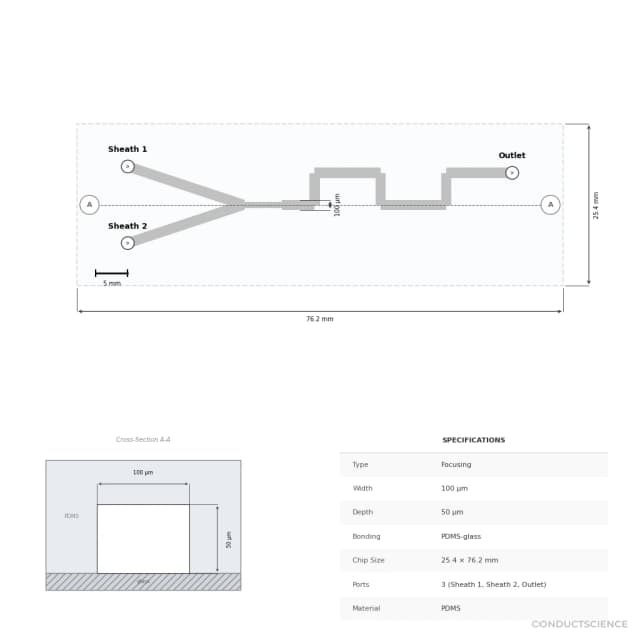
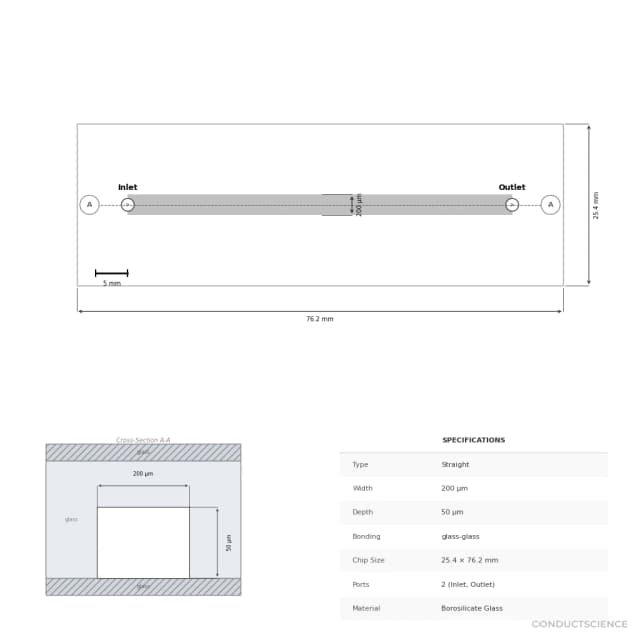
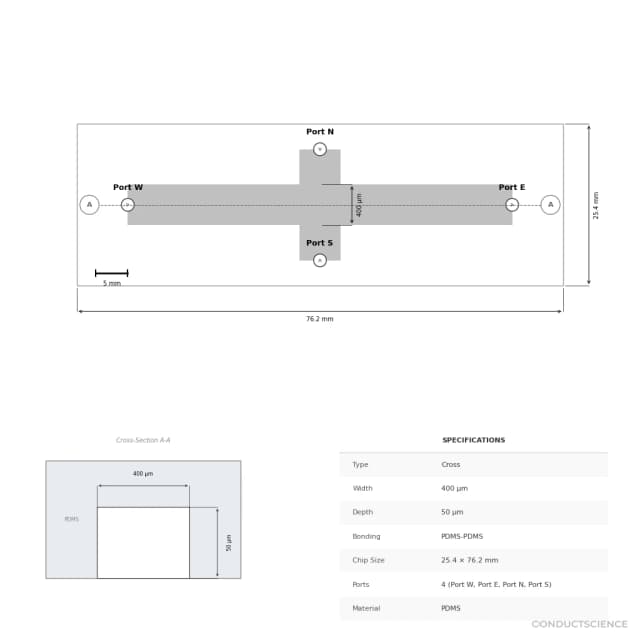
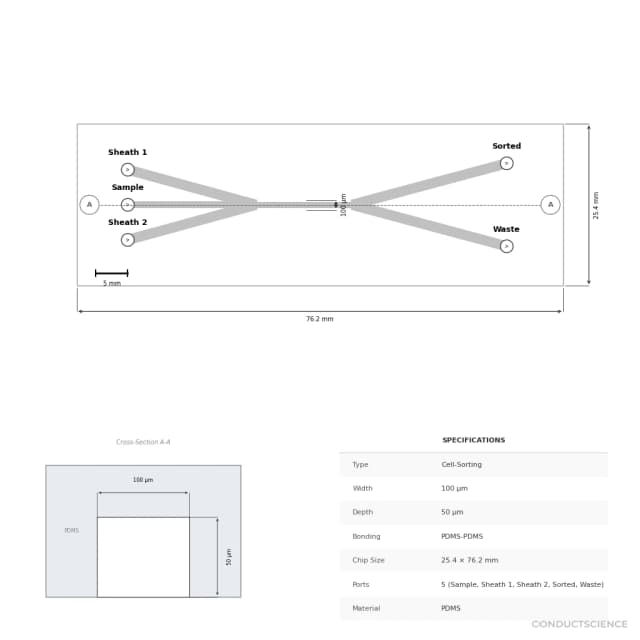
- 3 selectable configurations
- SKU family
- WHM-0131
- Shipping box
- 181.8 x 136.3 x 90.9 cm
- Ordering
- Online checkout and quote request available
- Category
- Environmental Detection Chips
- Build notes
- Confirm accessories, station layout, and support needs before purchase
The Heavy Metal Monitoring Microfluidic Chip provides on-chip detection and quantification of five priority heavy metal contaminants: lead (Pb), cadmium (Cd), mercury (Hg), arsenic (As), and chromium (Cr). This microfluidic platform integrates sample processing and detection in a single disposable chip format, enabling rapid analysis of water samples and environmental matrices without the need for extensive sample preparation or laboratory instrumentation.
Designed for point-of-care and field applications, this chip leverages microfluidic technology to minimize sample volumes while maintaining analytical sensitivity for trace-level heavy metal detection. The platform supports both colorimetric and electrochemical detection methods, making it suitable for research applications requiring portable, cost-effective heavy metal monitoring capabilities in environmental and water quality assessment studies.
How It Works
The Heavy Metal Monitoring Microfluidic Chip utilizes integrated microfluidic channels to control sample flow and reaction conditions for heavy metal detection. Sample introduction occurs through dedicated inlet ports, where the aqueous sample encounters immobilized chelating agents or metal-specific reagents within the microfluidic network. The chip design incorporates mixing chambers and reaction zones optimized for the formation of detectable metal-chelate complexes or electroactive species.
Detection is achieved through either colorimetric or electrochemical transduction methods. In colorimetric mode, metal-specific chromogenic reactions produce measurable absorbance changes proportional to analyte concentration. Electrochemical detection employs integrated microelectrodes to measure current responses from metal redox reactions or stripping voltammetry processes. The microfluidic format enables precise control of reaction volumes and timing while minimizing reagent consumption and sample waste.
The multiplexed design allows simultaneous analysis of all five target metals (Pb, Cd, Hg, As, Cr) within a single chip, with individual detection zones preventing cross-interference between analytes. Results are obtained through optical measurement or electrical signal readout, depending on the detection method employed.
Features & Benefits
Shipping weight
- 3.3 lb
Shipping box
- L: 181.8 cm
- W: 136.3 cm
- H: 90.9 cm
| Feature | This Product | Typical Alternative | Advantage |
|---|---|---|---|
| Number of Target Analytes | Five heavy metals (Pb, Cd, Hg, As, Cr) simultaneous detection | Single-analyte test strips or 2-3 metal panels in portable devices | Comprehensive screening reduces analysis time and sample volume requirements for multi-metal contamination assessment. |
| Detection Methods | Dual capability for colorimetric and electrochemical detection | Limited to single detection principle in most portable devices | Method flexibility allows optimization for specific sensitivity requirements and available instrumentation. |
| Sample Processing Format | Integrated microfluidic chip with controlled fluid handling | Manual mixing and reagent addition in test tubes or wells | Automated fluid control improves reproducibility and reduces operator variability in reaction conditions. |
| Contamination Control | Single-use disposable chip design | Reusable cells requiring extensive cleaning protocols | Eliminates cross-contamination risk and reduces cleaning time between samples in high-throughput workflows. |
This microfluidic chip provides simultaneous five-metal detection capability in a disposable format with dual detection method compatibility. The integrated microfluidic design offers controlled sample processing and reduced contamination risk compared to manual analytical procedures.
| Model | SKU | Listed price | Status | Shipping box |
|---|---|---|---|---|
| 25-Pack | WHM-0131-25PK | Quote | Available | 181.8 x 136.3 x 90.9 cm |
| 10-Pack | WHM-0131-10PK | $1,490.00 | Available | 181.8 x 136.3 x 90.9 cm |
| 5-Pack | WHM-0131-5PK | Quote | Available | 181.8 x 136.3 x 90.9 cm |
Practical Tips
Prepare fresh calibration standards in the same matrix as test samples and include standards covering the expected concentration range.
Why: Matrix matching reduces systematic errors and ensures accurate quantification across the analytical range.
Store unused chips in original packaging with desiccant to prevent moisture absorption that could affect reagent stability.
Why: Moisture can degrade detection reagents and compromise analytical performance.
Filter all water samples through 0.45 μm membrane before analysis to remove particulates that could clog microfluidic channels.
Why: Particulate matter can block narrow channels and cause inconsistent flow patterns affecting detection accuracy.
Include certified reference materials and method blanks in each analytical batch to monitor system performance and contamination.
Why: Quality control samples provide real-time validation of analytical accuracy and precision.
If detection signals are inconsistent, check for air bubbles in microfluidic channels by visual inspection before sample loading.
Why: Air bubbles disrupt fluid flow and mixing, leading to incomplete reactions and poor reproducibility.
Dispose of used chips as heavy metal contaminated waste following institutional hazardous waste procedures.
Why: Chips contain concentrated heavy metals after analysis and require proper disposal to prevent environmental contamination.
Setup Guide
What’s in the Box
- Heavy Metal Monitoring Microfluidic Chip (typical)
- User manual with detection protocols (typical)
- Quality control certificate (typical)
Warranty
ConductScience provides a standard manufacturer warranty covering defects in materials and workmanship. Technical support is available for method optimization and troubleshooting assistance.
Compliance
What detection limits can be achieved for each target heavy metal?
Specific detection limits depend on the detection method employed (colorimetric vs electrochemical) and sample matrix effects. Consult product datasheet for validated limit of detection values for each analyte in different water types.
How many samples can be processed per chip?
Each chip is designed for single-use analysis to prevent cross-contamination. The disposable format requires a new chip for each water sample or standard analyzed.
What sample volume is required for analysis?
Microfluidic design minimizes sample requirements to microliter volumes. Exact sample volume specifications should be confirmed in the analytical protocol documentation.
Can the chip detect metals in complex matrices like wastewater or industrial effluent?
The chip is designed for water testing applications, but matrix effects from high ionic strength or organic content may require sample dilution or pretreatment. Validation testing is recommended for complex samples.
What instrumentation is required for detection readout?
Detection requires either a spectrophotometer for colorimetric analysis or a potentiostat/electrochemical analyzer for electrochemical detection, depending on the chosen detection method.
How should chips be stored before use?
Store chips in original packaging at room temperature in a dry environment. Avoid exposure to extreme temperatures or humidity that could affect reagent stability or channel integrity.
What quality control procedures are recommended?
Include certified reference standards and blank samples in each analytical batch. Run duplicate analyses for critical samples and monitor recovery rates using spiked samples to validate method performance.
Have a question about this product?
Have a question? Just ask.
Send it over and we'll email you a personalized answer — no call, no scheduling.
Prefer to talk it through?