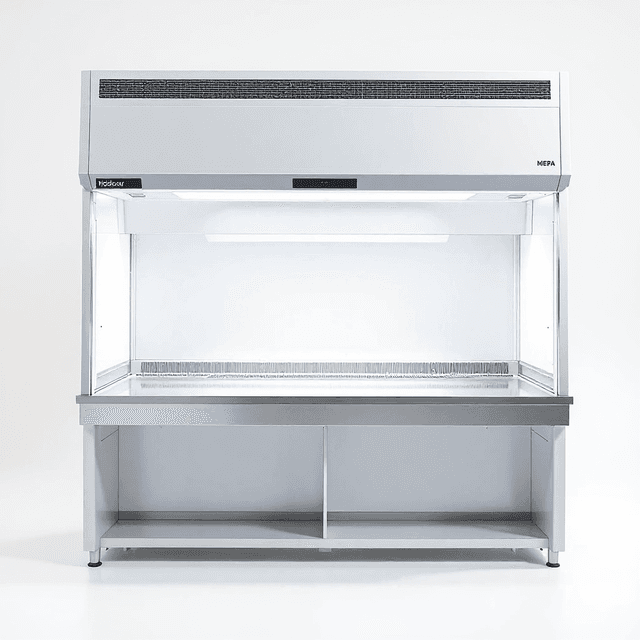
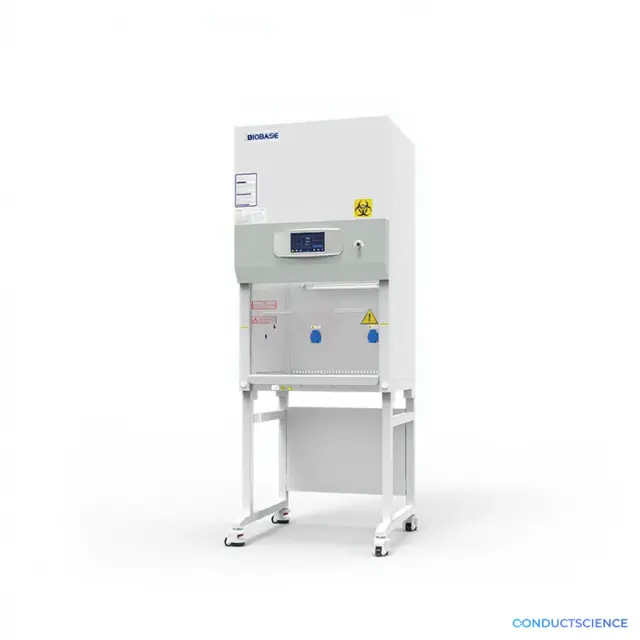
Horizontal Laminar Flow Cabinet
Horizontal laminar flow clean bench providing ISO Class 5 air quality with H14 HEPA filtration for sterile work procedures.

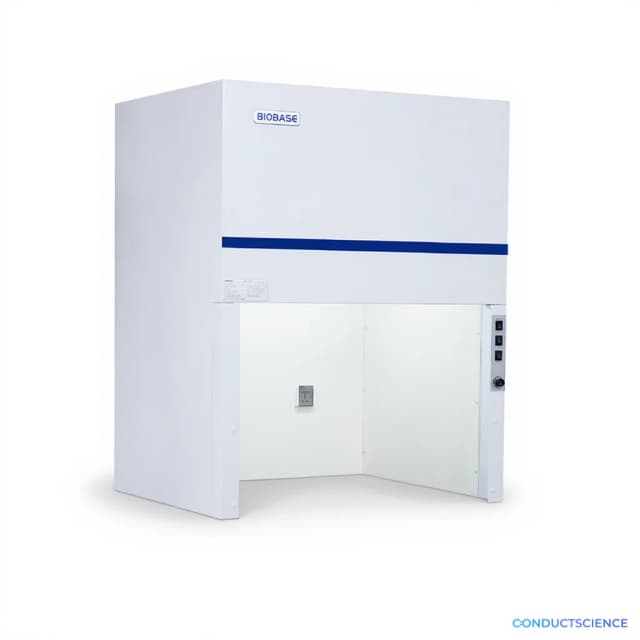
The Horizontal Laminar Flow Cabinet provides a controlled sterile work environment through horizontal HEPA-filtered airflow at 0.2-0.45 m/s velocity. This clean bench delivers ISO Class 5 (100 levels) air quality with H14 HEPA filtration achieving ≥99.995% efficiency for 0.3 μm particles, supporting aseptic manipulation procedures in research and quality control applications.
The cabinet accommodates 1-2 users simultaneously with integrated LED and UV lighting systems, temperature and humidity monitoring, and low vibration operation (≤5 μm rms). Standard configuration includes dual waterproof sockets for equipment power, maintaining sterile conditions with colonies number ≤0.5 CFU/30min under normal operation.
How It Works
The horizontal laminar flow cabinet operates by drawing ambient air through a pre-filter, then forcing it through a H14 HEPA filter that removes ≥99.995% of particles ≥0.3 μm in diameter. The filtered air flows horizontally across the work surface at a controlled velocity of 0.2-0.45 m/s, creating a unidirectional laminar airstream that sweeps particulates away from the work area toward the front opening.
This horizontal airflow pattern provides product protection by maintaining a sterile environment over the work surface while allowing easy access for manipulation. The continuous positive pressure prevents room air from entering the work zone, while the laminar flow minimizes turbulence that could redistribute contaminants. Temperature and humidity sensors monitor environmental conditions that affect air density and flow characteristics.
UV lamps provide surface sterilization during non-working periods, while LED illumination maintains ≥300 lx lighting levels for detailed work. The low-vibration design (≤5 μm rms) prevents disturbance of sensitive procedures and maintains consistent airflow patterns across the work surface.
Features & Benefits
Weight
- 220.0 kg
Dimensions
- L: 173.0 mm
- W: 150.0 mm
- H: 80.0 mm
Comparison Guide
| Feature | This Product | Typical Alternative | Advantage |
|---|---|---|---|
| HEPA Filter Grade | H14 grade with ≥99.995% efficiency for 0.3 μm particles | Entry-level models often use H13 filters with lower efficiency | Higher filtration efficiency ensures removal of submicron contaminants critical for sensitive cell culture and analytical work |
| Airflow Velocity Control | Variable airflow 0.2-0.45 m/s | Fixed airflow systems offer limited adjustment range | Adjustable velocity allows optimization for different procedures and maintains laminar characteristics under varying load conditions |
| User Capacity | Designed for 1-2 simultaneous users | Smaller units typically accommodate single operator only | Collaborative work capability increases productivity while maintaining sterile conditions across the extended work surface |
| Environmental Monitoring | Integrated temperature and humidity sensors | Basic models lack environmental sensing capabilities | Real-time monitoring helps maintain optimal conditions and provides documentation for quality control records |
| Lighting System | Dual LED (≥300 lx) and UV sterilization lamps | Standard fluorescent lighting without UV sterilization | LED provides better illumination quality while UV enables surface sterilization between work sessions |
| Vibration Control | Low vibration ≤5 μm rms operation | Higher vibration levels in budget models | Minimal vibration prevents disturbance to delicate manipulations and maintains consistent airflow patterns |
This cabinet combines H14 HEPA filtration with variable airflow control and environmental monitoring to deliver ISO Class 5 performance. The dual-user design with integrated LED/UV lighting and low-vibration operation provides comprehensive contamination control for critical sterile procedures.
Practical Tips
Verify airflow velocity at multiple points across the work surface using a calibrated anemometer at least quarterly.
Why: Uneven airflow can create turbulence zones where contamination may accumulate
Monitor HEPA filter pressure differential and replace when airflow drops below 0.2 m/s minimum velocity.
Why: Reduced airflow compromises sterile barrier protection and indicates filter saturation
Allow 15-30 minutes purge time after startup before beginning sterile procedures.
Why: Initial airflow stabilization ensures consistent laminar characteristics across the work surface
If particle counts exceed specifications, check for air leaks around HEPA filter seals and work surface joints.
Why: Bypass air can introduce unfiltered contamination into the sterile work zone
Document environmental conditions during critical procedures using the integrated temperature and humidity sensors.
Why: Environmental variations affect air density and contamination control effectiveness
Never use this cabinet for toxic, radioactive, or infectious materials requiring operator protection.
Why: Horizontal flow directs potentially hazardous aerosols toward the operator
Position equipment and materials to maintain unobstructed airflow patterns across the entire work surface.
Why: Airflow disruption creates dead spaces where contaminants can accumulate
Replace UV lamps according to manufacturer specifications or after 10,000 hours of operation.
Why: UV output decreases over time, reducing sterilization effectiveness between work sessions
Setup Guide
What’s in the Box
- Horizontal laminar flow cabinet main unit
- LED lamps (2 units)
- UV lamps (2 units)
- Base stand
- Waterproof sockets (2 units)
- Temperature and humidity sensor
- H14 HEPA filter
- Power cord
- User manual and documentation
- Calibration certificate (typical)
Warranty
ConductScience provides a standard one-year manufacturer warranty covering defects in materials and workmanship, with technical support for installation and operational guidance.
Compliance
What particle size range does the H14 HEPA filter effectively remove?
The H14 HEPA filter achieves ≥99.995% filtration efficiency for particles ≥0.3 μm diameter, effectively removing bacteria, fungal spores, and most airborne particulates that could compromise sterile procedures.
How do I verify the cabinet maintains ISO Class 5 performance over time?
Regular particle counting and microbial settle plate testing should confirm ≤0.5 CFU/30min colony levels. Airflow velocity measurements across the work surface should remain within 0.2-0.45 m/s range.
Can this cabinet accommodate standard laboratory equipment during operation?
Yes, dual waterproof sockets provide 500VA total capacity for powering microscopes, heating blocks, or other equipment within the sterile work zone without compromising airflow protection.
What maintenance is required for the HEPA filtration system?
Monitor pressure differential across the HEPA filter and replace when airflow velocity drops below specifications. UV lamps require periodic replacement based on exposure hours for continued sterilization effectiveness.
How does horizontal flow compare to vertical flow cabinets for my application?
Horizontal flow provides product protection with easy work access but offers no operator protection. Suitable for non-hazardous materials requiring sterile handling but not for toxic or infectious agents.
What environmental conditions affect cabinet performance?
Room temperature and humidity variations affect air density and flow characteristics. The integrated sensors monitor these parameters, with optimal performance in stable laboratory conditions.
Can the work surface height be customized for ergonomic requirements?
The standard work surface height is 750mm but can be customized during manufacturing. Optional armrests are available to improve operator comfort during extended procedures.
What noise level should I expect during normal operation?
Operating noise is ≤65 dB(A), comparable to normal conversation levels, allowing comfortable communication during collaborative work sessions.
Have a question about this product?
Accessories
Enhance your setup with compatible accessories
Replacement Parts & Consumables
Frequently Bought Together
Upgrade Options