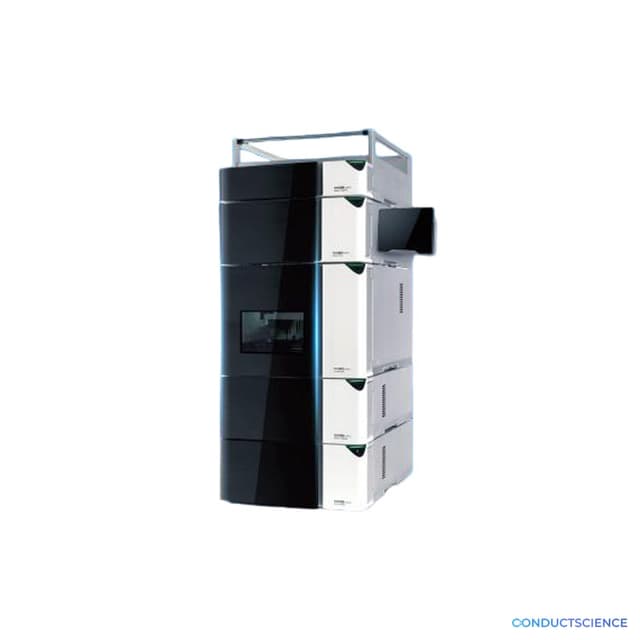
High Performance Liquid Chromatography (HPLC) System
High-performance liquid chromatography system for precise separation, identification, and quantification of chemical compounds. Available in multiple configurations from standard analytical to high-pressure systems.

The High Performance Liquid Chromatography System EClassical 3100 is a precision analytical instrument designed for high-resolution separation and quantitative analysis of complex mixtures. The system integrates a high-pressure binary gradient pump with flow rates from 0.001 to 10.000 mL/min and operating pressures up to 63 MPa, coupled with a UV-Vis detector providing wavelength coverage from 190 to 800 nm.
This HPLC system delivers analytical precision with retention time repeatability ≤0.1% and gradient accuracy ≤±1%, supporting quantitative workflows requiring consistent chromatographic performance. The mixed volume of 750 μL and noise specifications ≤±1.0x10⁻⁵ AU enable sensitive detection of analytes across diverse sample matrices, while UDP network communication facilitates integration with laboratory information management systems.
How It Works
High Performance Liquid Chromatography operates on the principle of differential partitioning between a mobile phase (liquid solvent) and a stationary phase (column packing material). The EClassical 3100 employs a high-pressure binary gradient pump system that delivers precise solvent mixtures at pressures up to 63 MPa, forcing the mobile phase through packed analytical columns.
Sample components are separated based on their differential interactions with the stationary phase, with compounds eluting at characteristic retention times. The integrated UV-Vis detector monitors absorbance across wavelengths from 190 to 800 nm, generating chromatograms where peak area corresponds to analyte concentration. The gradient mixing system enables optimization of separation conditions by programmed changes in solvent composition during the analytical run.
Temperature precision of ±0.3°C and flow rate accuracy ensure reproducible chromatographic conditions, while the low detector noise (≤±1.0x10⁻⁵ AU) enables sensitive quantitation of trace-level components in complex sample matrices.
Features & Benefits
Model
- EClassical 3100
- Agress 1100
- EClassical 3200
- BK-80 HPLC
Weight
- 18.0 kg
Dimensions
- L: 17.5 mm
- W: 50.0 mm
- H: 30.0 mm
Comparison Guide
| Feature | This Product | Typical Alternative | Advantage |
|---|---|---|---|
| Pressure Range | 0-45 MPa operating, 63 MPa maximum working pressure | Entry-level systems often limited to 40 MPa or less | Higher pressure capability enables use of sub-2 μm columns and faster separations for improved analytical throughput. |
| Flow Rate Precision | 0.001-10.000 mL/min with step control of 0.001 mL/min | Basic systems may offer 0.01 mL/min step resolution | Fine flow control enables precise method development and accommodates both analytical and micro-preparative applications. |
| Gradient Accuracy | ≤±1% gradient accuracy | Entry-level systems may achieve ±2-5% gradient accuracy | Superior gradient precision ensures reproducible separations critical for pharmaceutical and regulatory analysis. |
| Detector Sensitivity | ≤±1.0x10⁻⁵ AU noise level | Basic UV detectors typically show higher noise levels | Low noise enables detection of trace-level analytes and improves quantitation limits for sensitive applications. |
| Temperature Control | ±0.3°C accuracy with ≤0.1°C precision | Standard systems may offer ±1-2°C temperature control | Precise temperature control ensures consistent retention times and peak shapes for method reproducibility. |
| Communication Interface | UDP network communication | Basic systems may rely on USB or RS-232 connections | Network connectivity facilitates integration with modern laboratory information systems and remote monitoring capabilities. |
The EClassical 3100 provides analytical laboratory performance with high-pressure capability, precise gradient control, and sensitive UV detection. The system's combination of 63 MPa pressure capability, sub-0.1% precision specifications, and network connectivity addresses requirements for both routine analysis and demanding applications requiring regulatory compliance documentation.
Practical Tips
Perform flow rate calibration using a graduated cylinder and stopwatch monthly, verifying accuracy across the full 0.001-10.000 mL/min range.
Why: Flow rate accuracy directly affects retention times and quantitative precision in HPLC analysis.
Replace system and column inlet filters every 500-1000 injections or when pressure increases beyond normal operating ranges.
Why: Clean filters prevent particulate contamination that can damage pump seals and column efficiency.
Allow 30 minutes system equilibration after changing mobile phase composition or temperature to achieve stable baseline conditions.
Why: Equilibration ensures the ≤±1.0x10⁻⁵ AU noise specification is met for sensitive trace analysis.
Verify gradient accuracy using a gradient test mixture with compounds having different retention characteristics.
Why: Gradient accuracy verification ensures the ≤±1% specification is maintained for reproducible separations.
Monitor system pressure trends during analysis to identify developing blockages or pump seal wear before complete failure.
Why: Proactive pressure monitoring prevents unplanned downtime and maintains analytical continuity.
Use system suitability standards at the beginning of each analytical sequence to verify ≤0.1% retention time repeatability.
Why: System suitability testing ensures analytical performance meets specifications before sample analysis begins.
Ensure proper ventilation around the system and use appropriate secondary containment for organic solvents.
Why: HPLC solvents pose health and fire risks that require proper laboratory safety protocols.
Flush the system with water-miscible solvent before extended shutdown to prevent salt precipitation in flow paths.
Why: Proper shutdown procedures prevent blockages and extend component lifetime, particularly for pump seals and injector valves.
Setup Guide
What’s in the Box
- EClassical 3100 HPLC main unit
- Power cable and connectors (typical)
- Solvent inlet tubing and fittings (typical)
- UV-Vis detector flow cell (typical)
- User manual and software documentation (typical)
- Installation qualification documentation (typical)
Compliance
Warranty & ConductCare
ConductScience provides a standard one-year manufacturer warranty covering parts and labor, with technical support for method development and troubleshooting. Extended service contracts are available for critical analytical applications requiring guaranteed uptime.
What column types are compatible with the 63 MPa pressure capability?
The system supports standard HPLC columns including C18, C8, phenyl, and specialty phases. The 63 MPa capability accommodates sub-2 μm particles and UHPLC columns for high-efficiency separations, though specific column compatibility should be verified against manufacturer pressure ratings.
How does the gradient accuracy of ≤±1% affect method reproducibility?
The ≤±1% gradient accuracy ensures consistent solvent composition delivery, critical for reproducible retention times and peak shapes in gradient methods. This precision level meets pharmaceutical and environmental regulatory requirements for method validation.
What sample volumes are optimal for the 750 μL mixed volume system?
The 750 μL mixed volume accommodates injection volumes from 1-100 μL effectively. Smaller injection volumes (1-20 μL) are preferred for trace analysis to minimize sample dilution effects, while larger volumes may be used for preparative applications.
Can the UV-Vis detector operate simultaneously at multiple wavelengths?
Consult product datasheet for specific multi-wavelength capabilities. The 190-800 nm range covers most UV-absorbing organic compounds, with wavelength selection optimized based on analyte absorption maxima for maximum sensitivity.
What data formats are supported through UDP network communication?
Consult product datasheet for specific data format specifications. UDP communication typically supports real-time chromatographic data transfer and integration with laboratory information management systems for automated data processing.
How frequently should system calibration be performed?
System suitability testing should be performed daily, with formal calibration verification monthly or per laboratory SOPs. Flow rate accuracy and detector linearity should be verified during method validation and after any major maintenance.
What maintenance is required for consistent ≤0.1% retention time repeatability?
Maintain consistent temperature control, use high-quality solvents, replace column and system filters regularly, and perform routine pump maintenance. System equilibration between different mobile phase compositions is essential for reproducible results.
How does this system compare to UHPLC instruments for analytical throughput?
While optimized for high analytical precision, this system focuses on reliable performance rather than maximum speed. The 63 MPa capability supports faster separations compared to conventional HPLC, though dedicated UHPLC systems may offer higher throughput for specific applications.
Have a question about this product?
Accessories
Enhance your setup with compatible accessories
Frequently Bought Together