Ion Concentration Enrichment Chip
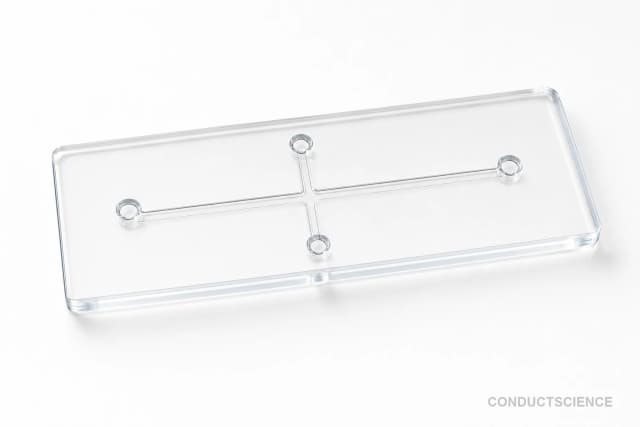
CNC-machined PMMA microfluidic chip for electrokinetic enrichment of ionic species with 100-1000x concentration factors for trace analysis applications.
Reusable chip — designed for multiple experimental runs. Compatible with standard microfluidic tubing: steel pins (0.7 mm ID / 1.0 mm OD) and silicone tubing (0.8 mm ID / 1.9 mm OD). Available in bulk packs (5‑, 10‑, and 25‑unit) for lab-scale and consumable workflows.

Louise Corscadden, PhD
Director of Science · ConductScience
Ask Louise about Ion Concentration Enrichment Chip fit, setup, configuration, or quote prep.
Already working with us? Sign in to connect this with My Scientist.
Key Specifications
Full details →- Model fit
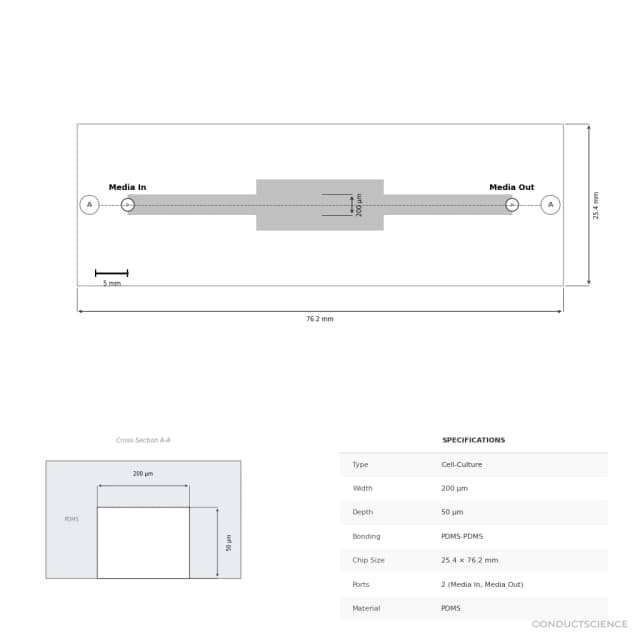
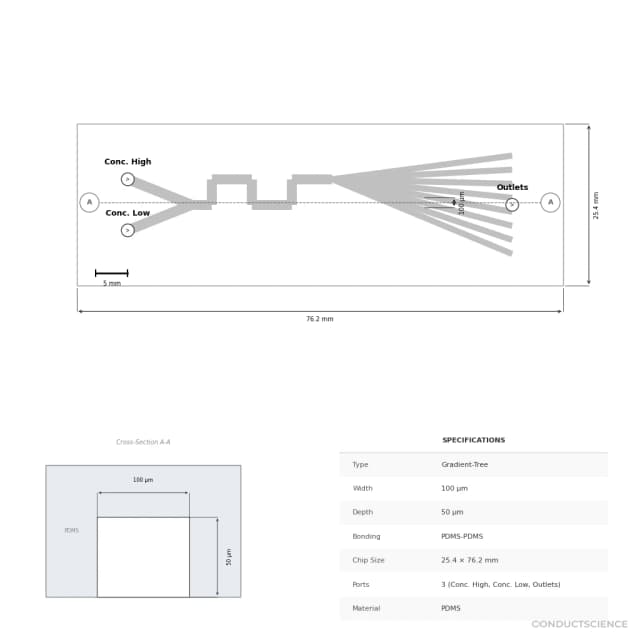
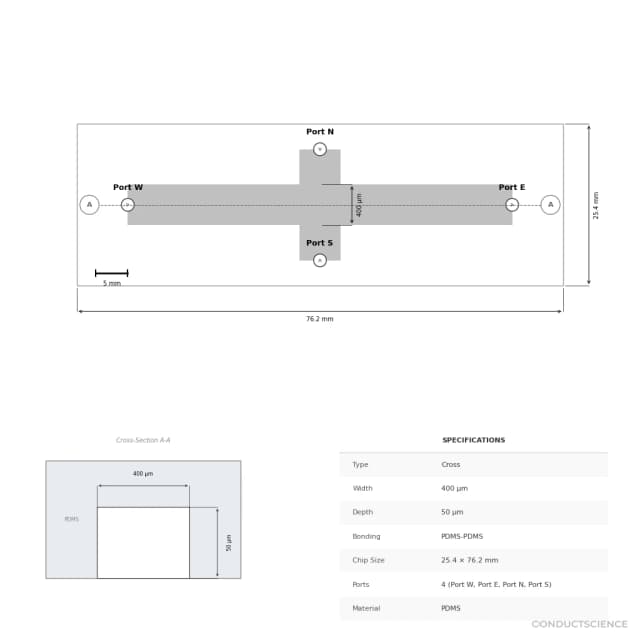
- 3 selectable configurations
- SKU family
- WHM-0138
- Shipping box
- 181.8 x 136.3 x 90.9 cm
- Ordering
- Online checkout and quote request available
- Category
- Environmental Detection Chips
- Build notes
- Confirm accessories, station layout, and support needs before purchase
The Ion Concentration Enrichment Chip is a precision microfluidic device designed for electrokinetic concentration of ionic species in aqueous samples. Fabricated from CNC-machined PMMA, this chip employs ion concentration polarization principles to achieve 100-1000x enrichment factors for trace-level analytes. The device integrates microchannels with selective ion transport membranes to create localized concentration gradients under applied electric fields.
This lab-on-chip platform enables researchers to preconcentrate dilute ionic samples prior to downstream detection, effectively lowering detection limits for trace analysis applications. The controlled microfluidic environment provides reproducible enrichment conditions while minimizing sample volumes and processing time compared to conventional preconcentration methods.
How It Works
The Ion Concentration Enrichment Chip operates through ion concentration polarization (ICP), a phenomenon that occurs when an electric field is applied across an ion-selective interface. Within the microfluidic channels, localized depletion and enrichment zones form on opposite sides of selective transport regions. Cations and anions migrate under electrokinetic forces, creating concentration gradients that can exceed 1000-fold over baseline levels.
The PMMA substrate houses precisely machined microchannels that direct sample flow while maintaining controlled electric field distributions. Ion-selective membranes or nanochannels within the device create the selective transport barrier necessary for concentration polarization. As voltage is applied, ionic species accumulate in defined regions of the chip, effectively concentrating dilute samples for subsequent analysis.
Sample introduction occurs through inlet ports, with enriched fractions collected at designated outlets. The controlled geometry and surface chemistry of the CNC-machined channels ensure reproducible flow patterns and concentration profiles across multiple analyses.
Features & Benefits
Shipping weight
- 3.3 lb
Shipping box
- L: 181.8 cm
- W: 136.3 cm
- H: 90.9 cm
| Feature | This Product | Typical Alternative | Advantage |
|---|---|---|---|
| Concentration Factor | 100-1000x enrichment range | Many commercial preconcentration systems offer fixed enrichment ratios or require multiple processing steps | Variable concentration factors allow optimization for specific analyte concentrations and detection requirements |
| Sample Volume | Microfluidic volumes (microliters) | Traditional methods often require milliliter volumes or larger | Minimal sample consumption preserves precious or limited specimens for multiple analyses |
| Processing Time | Rapid electrokinetic concentration | Conventional enrichment methods may require hours for extraction or column processing | Faster sample preparation increases analytical throughput and reduces analysis time |
| Chemical Compatibility | PMMA construction with aqueous sample compatibility | Some enrichment materials have limited chemical resistance or require organic solvents | Eliminates solvent disposal concerns and reduces chemical interference in downstream analysis |
| Automation Integration | Lab-on-chip design for integrated workflows | Traditional methods often require manual handling steps | Enables incorporation into automated analytical systems for consistent sample preparation |
The chip provides variable 100-1000x concentration factors in a microfluidic format with CNC-machined precision. PMMA construction ensures chemical compatibility for aqueous samples while enabling integration into automated analytical workflows.
| Model | SKU | Listed price | Status | Shipping box |
|---|---|---|---|---|
| 25-Pack | WHM-0138-25PK | Quote | Available | 181.8 x 136.3 x 90.9 cm |
| 10-Pack | WHM-0138-10PK | $1,490.00 | Available | 181.8 x 136.3 x 90.9 cm |
| 5-Pack | WHM-0138-5PK | Quote | Available | 181.8 x 136.3 x 90.9 cm |
Practical Tips
Verify enrichment factors with standard solutions of known concentration before processing unknown samples.
Why: Establishes baseline performance and ensures optimal voltage and flow conditions for your analytical requirements.
Store the chip in deionized water when not in use to prevent channel drying and maintain surface hydrophilicity.
Why: Prevents channel blockage and ensures consistent flow patterns during subsequent analyses.
Monitor current during voltage application to detect changes in sample conductivity or potential channel blockages.
Why: Current changes indicate system performance variations that could affect enrichment reproducibility.
Check for air bubbles in channels if enrichment zones do not form as expected, as bubbles disrupt electric field distribution.
Why: Even small air bubbles can create non-uniform electric fields that reduce concentration efficiency.
Include blank runs with buffer-only solutions to assess baseline signals and potential contamination from previous samples.
Why: Establishes analytical baseline and ensures that enhanced signals result from sample enrichment rather than carryover.
Use appropriate personal protective equipment when handling samples and avoid direct contact with electrode surfaces during voltage application.
Why: Prevents exposure to potentially hazardous samples and eliminates risk of electrical shock during operation.
Document voltage, flow rate, and buffer conditions for each sample type to establish reproducible protocols.
Why: Enables method validation and ensures consistent enrichment performance across multiple analyses.
Periodically inspect electrode surfaces for corrosion or deposits that could affect current distribution and enrichment uniformity.
Why: Electrode degradation can create uneven electric fields that reduce concentration efficiency and reproducibility.
Setup Guide
What’s in the Box
- Ion Concentration Enrichment Chip
- User manual with operating protocols (typical)
- Certificate of specifications (typical)
- Storage and handling instructions (typical)
Warranty
ConductScience provides a one-year manufacturer warranty covering material defects and fabrication quality. Technical support includes application guidance and troubleshooting assistance for optimal enrichment performance.
Compliance
What buffer conditions are optimal for achieving maximum enrichment factors?
Enrichment efficiency depends on buffer ionic strength, pH, and analyte mobility. Low-conductivity buffers typically enhance concentration polarization effects. Consult product datasheet for recommended buffer compositions and ionic strength ranges for your specific analytes.
How do I determine the appropriate voltage and flow rate for my sample?
Voltage selection depends on analyte type and desired enrichment factor. Start with low voltages to avoid joule heating and gradually increase while monitoring current. Flow rates should be optimized to balance residence time with concentration efficiency for your specific application.
Can this chip handle samples with high salt concentrations?
High salt concentrations can reduce enrichment efficiency by decreasing concentration polarization effects. Sample dilution or desalting may be necessary for optimal performance. The concentration factor range of 100-1000x is typically achieved with low to moderate ionic strength samples.
What is the typical lifetime of the chip with regular use?
Chip lifetime depends on operating voltage, sample chemistry, and cleaning protocols. PMMA construction provides chemical resistance for aqueous samples. Regular cleaning with deionized water and avoiding excessive voltages help maintain performance over multiple uses.
How does this compare to traditional SPE or liquid-liquid extraction methods?
Microfluidic enrichment offers faster processing times, lower sample volumes, and elimination of organic solvents compared to conventional methods. However, traditional SPE may achieve higher absolute recovery for some analytes. The choice depends on sample throughput, volume constraints, and analytical requirements.
Can I integrate this chip with standard analytical instruments?
Yes, the chip outputs can be connected to various analytical systems including ion chromatographs, mass spectrometers, or spectroscopic instruments. Interface compatibility depends on flow rate matching and connection hardware for your specific analytical platform.
What maintenance is required between analyses?
Flush channels with deionized water between samples to prevent cross-contamination and analyte carryover. Periodic cleaning with appropriate solvents may be needed depending on sample matrix complexity. Store in clean, dry conditions to prevent channel contamination.
How do I troubleshoot poor enrichment performance?
Check electrode connectivity, verify buffer conductivity, and inspect channels for blockages or air bubbles. Poor performance often results from inadequate voltage, excessive flow rate, or inappropriate buffer conditions. Systematic optimization of these parameters typically resolves enrichment issues.
Have a question about this product?
Have a question? Just ask.
Send it over and we'll email you a personalized answer — no call, no scheduling.
Prefer to talk it through?