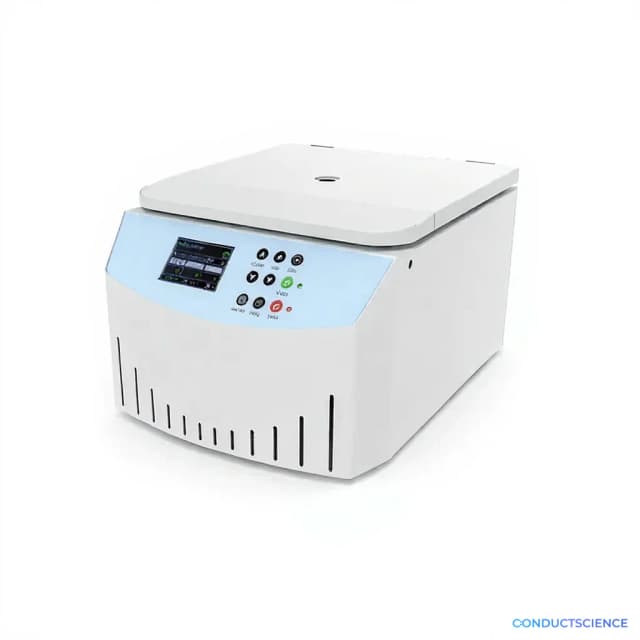
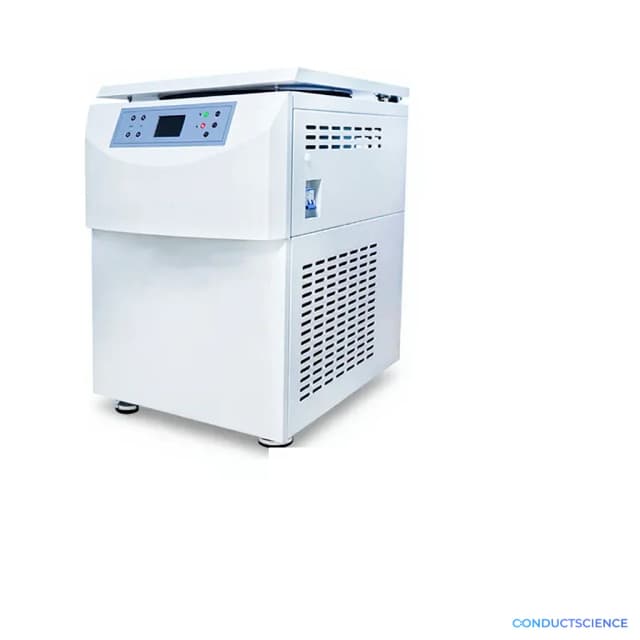
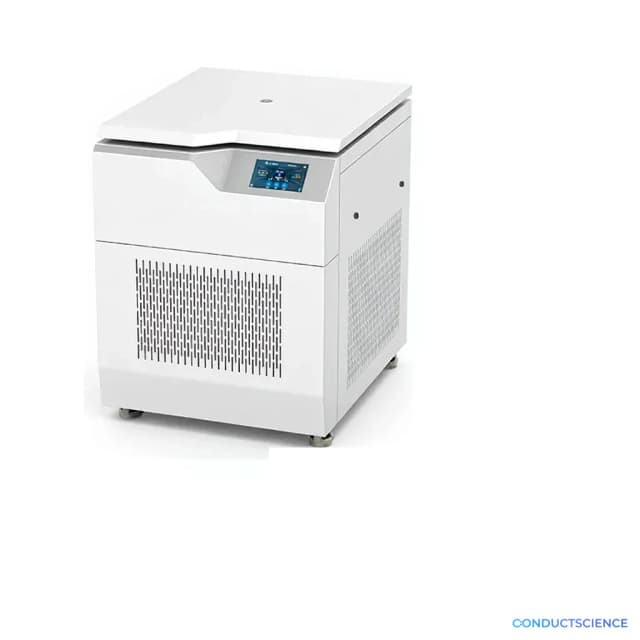
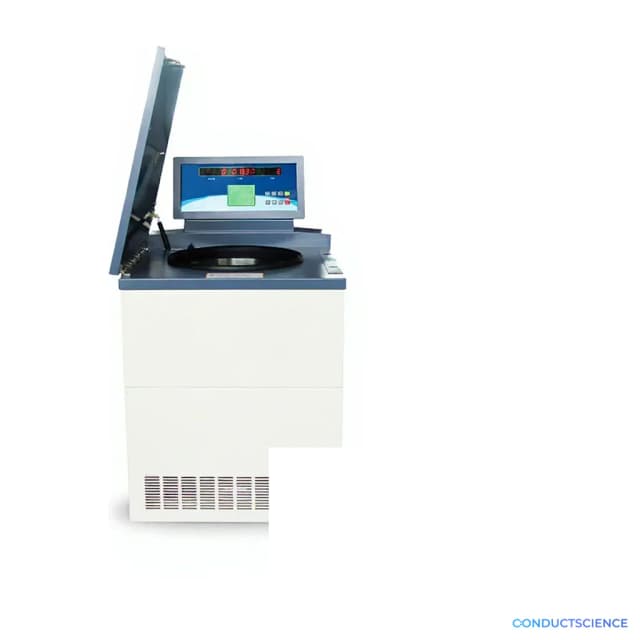
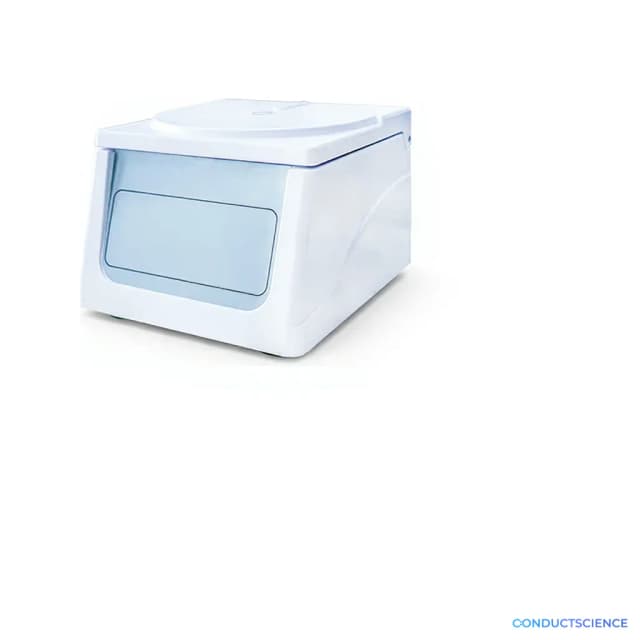
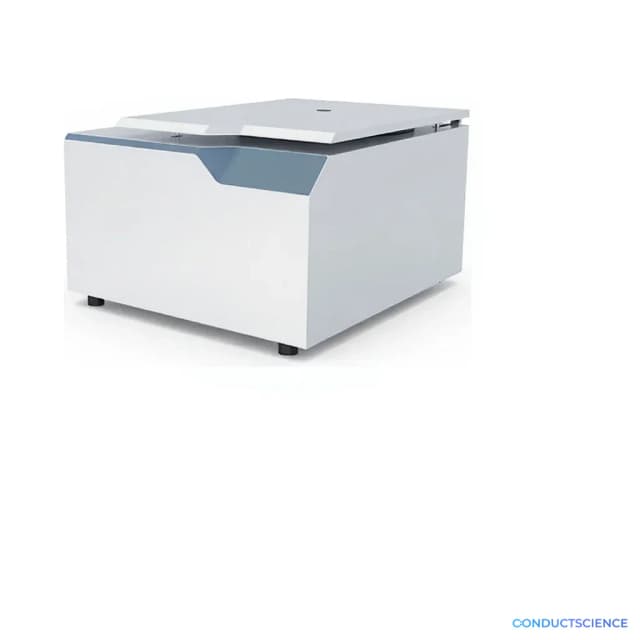
Laboratory Table Top 18500rpm 21000rpm High Speed Centrifuge
High-speed benchtop centrifuge available in 18,500 rpm (12 x 10ml) and 21,000 rpm (6 x 100ml) configurations for routine sample preparation and cellular fractionation.
| Automation Level | semi-automated |
| BKC-TH18II | BKC-TH21 |
| 12*10ml | 6*100ml |
| 18500rpm | 21000rpm |
| 26019xg | 30409xg |
| 330*390*325 | 380*450*390 |

Laboratory benchtop high-speed centrifuge designed for routine sample preparation and cellular fractionation protocols in research laboratories. Available in two configurations: operating at 18,500 rpm (26,019 x g) with 12 x 10ml rotor capacity, and operating at 21,000 rpm (30,409 x g) with 6 x 100ml rotor capacity. Both models feature compact footprints suitable for benchtop installation in space-constrained laboratory environments.
The centrifuge employs high-speed rotor systems for pelleting cellular components, protein precipitation, and nucleic acid isolation protocols commonly required in cell biology and biochemistry workflows. Digital control systems provide precise speed and time programming for reproducible separations across sample batches.
How It Works
High-speed centrifugation employs centrifugal force to separate particles based on their density, size, and shape differences. When samples are subjected to high rotational speeds, denser particles migrate toward the bottom of the centrifuge tube while lighter components remain in the supernatant. The centrifugal force (measured in relative centrifugal force or RCF) is calculated as RCF = 1.118 × 10^-5 × r × N^2, where r is the radius in cm and N is the rotational speed in rpm.
The rotor design determines separation efficiency and sample capacity. Fixed-angle rotors, commonly used in high-speed applications, hold tubes at a fixed angle (typically 20-40 degrees) to the vertical axis, creating shorter sedimentation paths and faster separation times compared to swing-bucket rotors. The combination of high rotational speeds and optimized rotor geometry enables rapid pelleting of cellular components and efficient clarification of biological samples.
Features & Benefits
Automation Level
- semi-automated
BKC-TH18II
- BKC-TH21
12*10ml
- 6*100ml
18500rpm
- 21000rpm
26019xg
- 30409xg
330*390*325
- 380*450*390
480*415*420
- 620*545*530
30
- 42
38
- 50
Brand
- ConductScience
Research Domain
- Analytical Chemistry
- Cell Biology
- Clinical Diagnostics
- Microbiology
- Pharmaceutical QC
Weight
- 29.98 kg
Dimensions
- L: 42.0 mm
- W: 43.6 mm
- H: 38.0 mm
Comparison Guide
| Feature | This Product | Typical Alternative | Advantage |
|---|---|---|---|
| Maximum Speed Range | 18,500 rpm (BKC-TH18II) and 21,000 rpm (BKC-TH21) configurations | Entry-level models often limited to 15,000 rpm or below | Higher speeds enable more efficient separation of dense cellular components and faster protocol completion. |
| Rotor Configuration Options | Choice between 12 x 10ml and 6 x 100ml rotor capacities | Most models offer single rotor configuration | Allows laboratories to select optimal configuration for their primary sample processing requirements. |
| Centrifugal Force Generation | Up to 30,409 x g maximum RCF | Basic models typically achieve lower RCF values | Higher RCF enables more complete pelleting and separation of challenging samples. |
| Benchtop Footprint | Compact dimensions: 330 x 390 x 325 mm (BKC-TH18II) and 380 x 450 x 390 mm (BKC-TH21) | High-speed models often require larger floor space | Space-efficient design maximizes laboratory bench utilization while maintaining high performance. |
The centrifuge system provides high-speed performance up to 21,000 rpm with flexible rotor options in a compact benchtop format. Digital controls and dual model configurations address diverse laboratory sample processing requirements from high-throughput small volumes to preparative larger samples.
Practical Tips
Always balance samples across opposing rotor positions using tubes of equal weight and volume.
Why: Proper balancing prevents excessive vibration and extends rotor and motor lifespan.
Allow rotor to come to complete stop before opening lid, and never attempt to manually stop rotation.
Why: High-speed rotors store significant kinetic energy and sudden stopping can cause mechanical damage or injury.
Clean rotor and tube holders after each use, particularly when processing biological samples.
Why: Residual sample material can cause corrosion and imbalance issues affecting separation quality.
Verify speed accuracy periodically using a tachometer or strobe light calibration method.
Why: Speed accuracy directly affects RCF calculations and separation reproducibility in quantitative protocols.
If unusual vibration occurs, immediately stop operation and check for tube breakage or sample spillage.
Why: Continued operation with imbalanced or contaminated rotors can cause mechanical damage and safety hazards.
Record actual run conditions including speed, time, and temperature for protocol documentation.
Why: Complete documentation enables protocol reproducibility and troubleshooting of separation inconsistencies.
Setup Guide
What’s in the Box
- High-speed centrifuge main unit
- Fixed-angle rotor (12 x 10ml or 6 x 100ml depending on model)
- Tube adapters and holders (typical)
- Power cord
- User manual and operation instructions
- Safety guidelines documentation (typical)
Warranty
ConductScience provides a standard one-year manufacturer warranty covering parts and labor, with technical support available for troubleshooting and maintenance guidance throughout the warranty period.
Compliance
What is the maximum RCF achievable with each model?
The BKC-TH18II generates maximum 26,019 x g at 18,500 rpm, while the BKC-TH21 achieves 30,409 x g at 21,000 rpm.
Can both rotors accommodate standard laboratory tube sizes?
The BKC-TH18II uses 12 x 10ml tube capacity while the BKC-TH21 handles 6 x 100ml tubes. Consult product datasheet for specific tube compatibility and adapter requirements.
What are the power requirements and installation considerations?
Consult product datasheet for specific electrical requirements. Both models require stable, level installation surfaces with adequate ventilation clearance.
How precise is the speed control and what is the temperature rise during operation?
Digital controls provide precise speed programming for reproducible protocols. Operating temperature characteristics and cooling specifications should be verified in the product datasheet.
What maintenance is required for optimal performance?
Regular rotor inspection, periodic calibration verification, and proper cleaning protocols are essential. Specific maintenance schedules and procedures are detailed in the user manual.
Are there safety interlocks and imbalance detection systems?
Safety features and protective systems vary by model. Consult product documentation for specific safety mechanisms and operational safeguards.
Have a question about this product?
Accessories
Enhance your setup with compatible accessories
Replacement Parts & Consumables
Frequently Bought Together
Upgrade Options