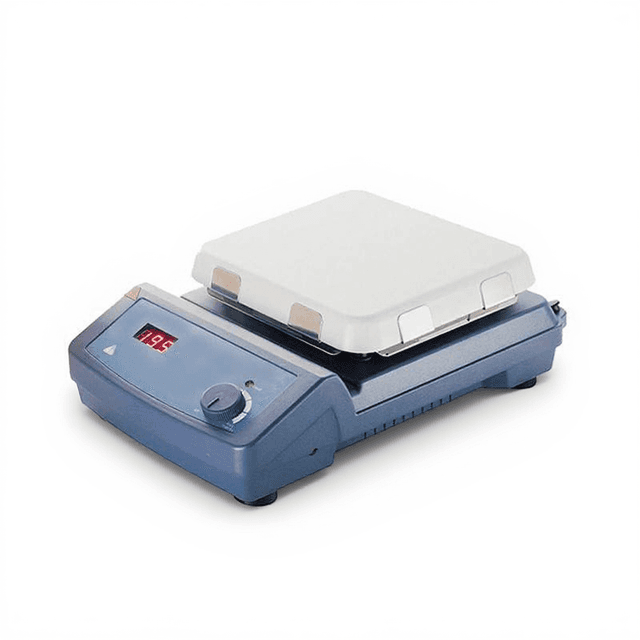
Microplate Mixer
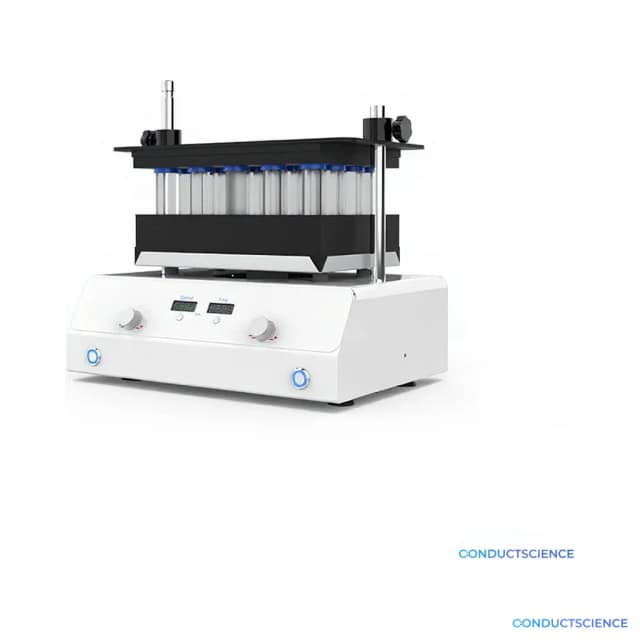
Orbital microplate mixer with 4.5mm diameter motion, variable speed control 0-1500 rpm, and capacity for single or double microplate configurations.

Louise Corscadden, PhD
Director of Science · ConductScience
Ask Louise about Microplate Mixer fit, setup, configuration, or quote prep.
Already working with us? Sign in to connect this with My Scientist.
Key Specifications
Full details →- Model fit
- Configured during quote
- SKU family
- BIO-0596
- Shipping box
- 8.0 x 26.0 x 15.0 cm
- Ordering
- Online checkout and quote request available
- Category
- Benchtop Instruments
- Build notes
- Confirm accessories, station layout, and support needs before purchase
The ConductScience Microplate Mixer delivers precise orbital mixing for microplates in laboratory applications requiring gentle yet effective sample agitation. This benchtop instrument utilizes a brushless DC motor to provide consistent 4.5mm orbital motion across a speed range of 0-1500 rpm for single microplates and 0-1000 rpm when accommodating double microplate configurations.
The compact design features IP21 protection rating and operates reliably within standard laboratory environmental conditions (5-40°C, 80% RH). The 10W motor output provides sufficient torque for consistent mixing while maintaining low power consumption at 20W total. The scale speed display allows for reproducible experimental protocols, and the universal AC100-240V power supply ensures global laboratory compatibility.
How It Works
The microplate mixer operates on orbital motion principles, where the platform moves in a circular pattern with a fixed 4.5mm diameter. This orbital motion creates controlled fluid dynamics within microplate wells, generating convective currents that promote mixing without the harsh acceleration forces associated with linear shaking methods.
The brushless DC motor provides precise speed control and eliminates electromagnetic interference common with brush-type motors. The 10W output delivers consistent torque across the entire speed range, while the motor's feedback control system maintains stable orbital motion even as sample viscosity varies. The IP21 protection rating ensures reliable operation in typical laboratory environments where dust and occasional liquid exposure may occur.
Features & Benefits
Automation Level
- manual
Item No.
- 8031202000
Shaking Mode
- Orbital
Orbital Diameter
- 4.5mm
Max. Shaking Weight(With attachments)
- 0.5kg
Motor Type
- Brushless DC motor
Motor Input
- 18W
Motor Output
- 10W
Speed Range
- 0~1500rpm(single microplate); 0~1000rpm(double microplate)
Speed Display
- Scale
Ambient Temp.
- 5~40°C
Relative Humidity
- 80%RH
Protection Type
- IP21
Brand
- ConductScience
Research Domain
- Analytical Chemistry
- Cell Biology
- Clinical Diagnostics
- Immunology
- Microbiology
- Pharmaceutical QC
Power/Voltage
- AC100~240V, 50/60Hz
Shipping weight
- 0.5 lb
Shipping box
- L: 8.0 cm
- W: 26.0 cm
- H: 15.0 cm
| Feature | This Product | Typical Alternative | Advantage |
|---|---|---|---|
| Motor Type | Brushless DC motor with 10W output | Entry-level models often use brush-type motors | Eliminates maintenance requirements and provides quieter, more reliable operation over extended use periods. |
| Speed Range | 0-1500 rpm single plate, 0-1000 rpm double plate | Basic mixers typically offer narrower speed ranges | Wider speed range allows optimization for diverse sample types from gentle cell mixing to vigorous reagent homogenization. |
| Load Capacity | 0.5kg maximum weight with attachments | Compact mixers often have lower weight limits | Higher capacity accommodates multiple plates or deep-well plates with larger sample volumes. |
| Protection Rating | IP21 dust and drip protection | Basic models may lack environmental protection ratings | Enhanced durability in laboratory environments where dust and occasional liquid exposure occur. |
| Power Supply | Universal AC100-240V, 50/60Hz | Some models require specific voltage configurations | Global compatibility eliminates need for voltage converters in international laboratory settings. |
| Orbital Diameter | Fixed 4.5mm orbital motion | Varies by model, some offer adjustable orbital diameter | Optimized diameter provides effective mixing for standard microplate applications without sample spillage risk. |
This microplate mixer offers brushless motor reliability, wide speed control range, and environmental protection in a compact benchtop format. The dual-plate capacity with optimized speed ranges provides flexibility for varying throughput requirements while maintaining consistent mixing performance.
Practical Tips
Verify speed settings with empty plates before adding samples to ensure proper orbital motion without excessive vibration.
Why: Prevents sample spillage and ensures reproducible mixing conditions across different experimental protocols.
Clean the platform regularly with laboratory disinfectants and ensure ventilation openings remain clear of dust buildup.
Why: Maintains motor cooling efficiency and prevents contamination between different sample sets.
Start mixing at lower speeds and gradually increase to optimal settings to prevent sudden fluid displacement in wells.
Why: Minimizes risk of sample loss and cross-contamination between adjacent wells during protocol initiation.
If excessive vibration occurs, verify the platform is properly secured and total load weight is within 0.5kg specification.
Why: Prevents mechanical damage and ensures stable orbital motion necessary for consistent mixing results.
Allow samples to settle briefly after mixing before optical measurements to eliminate air bubbles that may affect absorbance readings.
Why: Ensures accurate spectrophotometric measurements by eliminating optical interference from entrained air.
Use sealed plates or plate sealing films when mixing volatile solvents or potentially hazardous biological samples.
Why: Prevents vapor exposure and sample evaporation while maintaining mixing effectiveness in controlled environments.
Match mixing time and speed to sample viscosity - use lower speeds for longer duration with viscous solutions.
Why: Achieves thorough homogenization without generating excessive heat or shear forces that could affect sample integrity.
Inspect platform attachments regularly for wear and ensure secure mounting before each use session.
Why: Prevents platform detachment during operation and maintains consistent orbital motion characteristics.
Setup Guide
What’s in the Box
- Microplate mixer main unit
- AC power cord
- Single microplate platform (typical)
- User manual and operating instructions
- Warranty documentation
Warranty
ConductScience provides a standard one-year manufacturer warranty covering defects in materials and workmanship, with technical support available for operational guidance and troubleshooting assistance.
Compliance
What is the maximum sample volume per well that can be mixed effectively?
The 4.5mm orbital diameter is optimized for standard microplate well volumes up to 200-300μL. Consult product datasheet for specific volume recommendations based on plate format and mixing requirements.
Can the mixer accommodate different microplate formats beyond standard 96-well plates?
The platform can accept various microplate formats including 384-well and deep-well plates, provided the total weight including samples remains within the 0.5kg maximum load capacity.
How does the speed range change when using double microplate configuration?
Speed range reduces from 0-1500 rpm (single plate) to 0-1000 rpm (double plate) to maintain stable orbital motion and prevent mechanical stress with increased load.
Is the mixer suitable for temperature-controlled applications?
The mixer operates in ambient temperatures from 5-40°C but does not provide active heating or cooling. For temperature-controlled mixing, use within an incubator or temperature-controlled chamber.
What maintenance is required for the brushless motor?
Brushless motors require minimal maintenance - periodic cleaning of external surfaces and ensuring adequate ventilation. No brush replacement or internal maintenance is needed.
Can the mixing speed be programmed or automated?
The current model features manual speed control via scale display. For automated protocols, integration with external control systems would require additional interface hardware.
How does orbital motion compare to linear shaking for microplate mixing?
Orbital motion provides gentler mixing with reduced risk of sample spillage and foam formation compared to linear shaking, making it preferred for cell cultures and sensitive assays.
Have a question about this product?
Have a question? Just ask.
Send it over and we'll email you a personalized answer — no call, no scheduling.
Prefer to talk it through?
Accessories
Enhance your setup with compatible accessories