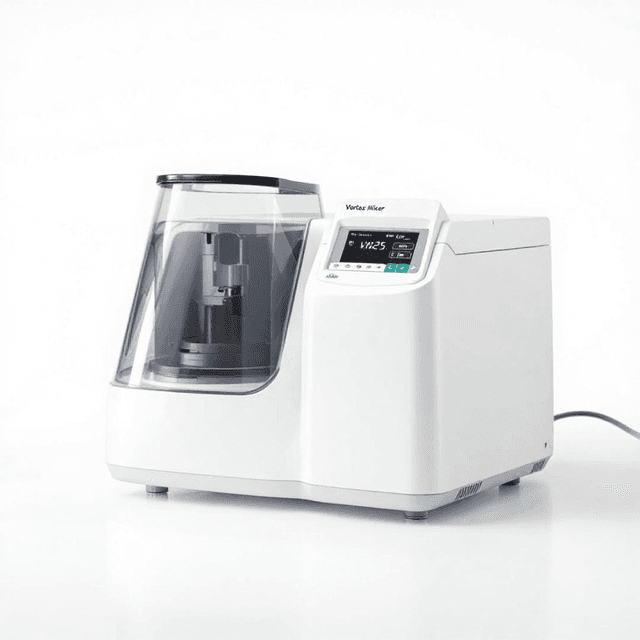
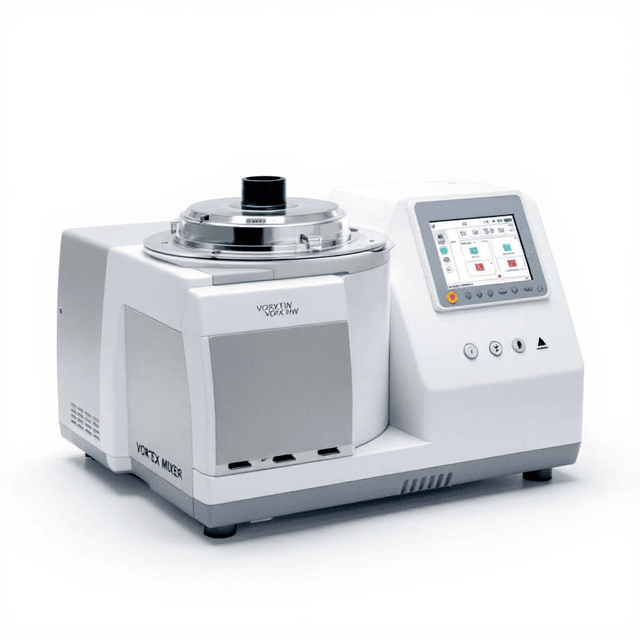
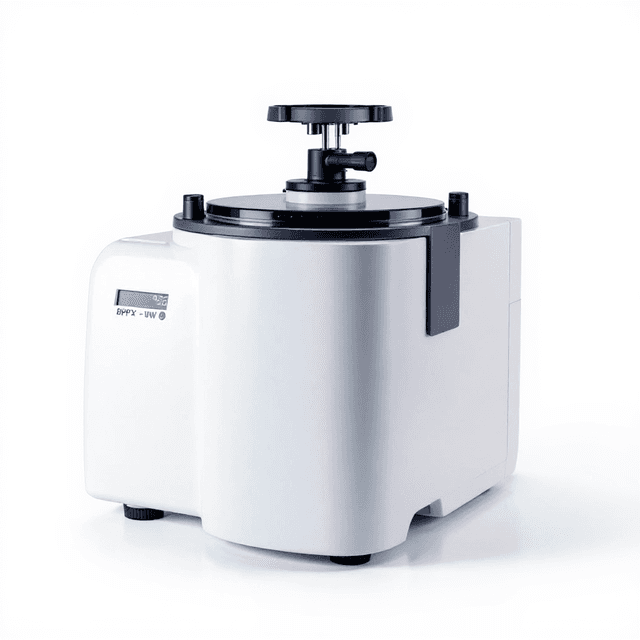
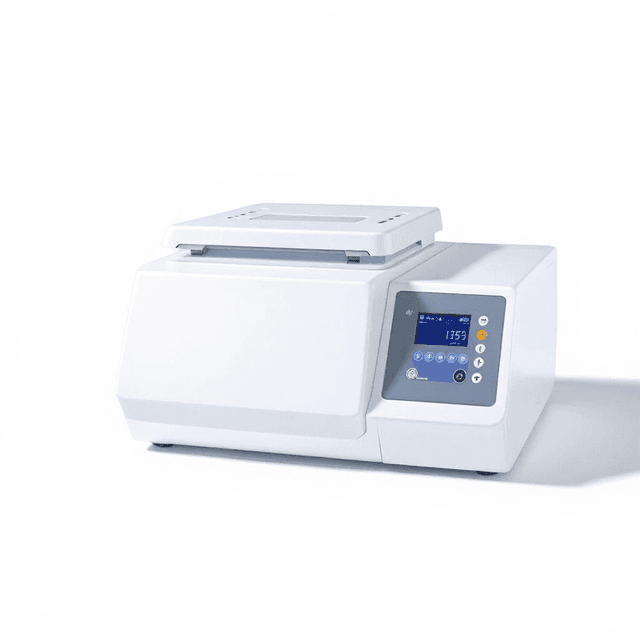
Multi-Tube Vortex Mixer
Benchtop vortex mixer for simultaneous agitation of multiple tubes, featuring variable speed control (500-2500 rpm) and programmable timing from 1 second to 99+ hours with pulse mode capabilities.

Louise Corscadden, PhD
Director of Science · ConductScience
Ask Louise about Multi-Tube Vortex Mixer fit, setup, configuration, or quote prep.
Already working with us? Sign in to connect this with My Scientist.
Key Specifications
Full details →- Model fit
- Configured during quote
- SKU family
- BIO-0922
- Shipping box
- 42.9 x 43.8 x 30.1 cm
- Ordering
- Online checkout and quote request available
- Category
- Benchtop Instruments
- Build notes
- Confirm accessories, station layout, and support needs before purchase
The Multi-Tube Vortex Mixer is a benchtop instrument designed for simultaneous agitation of multiple sample tubes in laboratory workflows. This unit operates at variable speeds from 500 to 2500 rpm with ±1 rpm regulation accuracy, providing consistent orbital mixing motion with a 4mm amplitude across multiple tube positions. The instrument features programmable timing capabilities spanning 1 second to 99 hours 59 minutes for continuous operation, plus pulse mode functionality with adjustable intervals and operation durations.
The system accommodates various tube formats through interchangeable accessories, with the standard configuration including 48-well virus sampling tube rack compatibility. Power consumption is rated at 120W with universal AC input (100-240V, 50/60Hz), making it suitable for international laboratory environments. The robust construction and precise speed control make this mixer appropriate for applications requiring reproducible sample preparation across multiple tubes simultaneously.
How It Works
The Multi-Tube Vortex Mixer operates on the principle of orbital agitation, where multiple tubes are subjected to simultaneous circular motion at a controlled amplitude of 4mm. The motor-driven platform creates a consistent orbital pattern that generates vortex flow within each tube, promoting efficient mixing of liquid contents without requiring individual tube manipulation. The variable speed control (500-2500 rpm) allows users to adjust mixing intensity based on sample viscosity and mixing requirements.
The instrument's timing control system enables both continuous and pulse mode operation. Continuous mode provides uninterrupted mixing for extended periods up to 99 hours 59 minutes, suitable for long-term sample conditioning. Pulse mode alternates between mixing and rest periods, with independently adjustable pulse intervals (1-99 seconds) and operation durations (1 second to 99 minutes 59 seconds), allowing for temperature-sensitive samples or specific protocol requirements.
Speed regulation accuracy of ±1 rpm ensures reproducible mixing conditions across experimental replicates. The standardized tube rack accessories maintain consistent tube positioning and orbital radius, resulting in uniform mixing energy transfer to all samples simultaneously.
Features & Benefits
Shipping weight
- 27.0 lb
Shipping box
- L: 42.9 cm
- W: 43.8 cm
- H: 30.1 cm
| Feature | This Product | Typical Alternative | Advantage |
|---|---|---|---|
| Speed Range | 500-2500 rpm with ±1 rpm accuracy | Many entry-level models offer narrower speed ranges or lower precision | Wide range accommodates diverse sample types from delicate cells to viscous chemicals in a single instrument |
| Timing Control | 1 second to 99 hours 59 minutes with pulse mode | Basic models often limited to shorter time ranges or lack pulse functionality | Extended timing capability supports long-term conditioning protocols and temperature-sensitive sample handling |
| Multiple Tube Capacity | 48-well capacity with multiple rack accessories | Lower-capacity models typically handle fewer samples simultaneously | Higher throughput reduces processing time for batch sample preparation workflows |
| Speed Regulation Accuracy | ±1 rpm precision control | Basic mixers may have ±5-10 rpm or no specified accuracy | Precise control ensures reproducible results critical for quantitative applications and protocol standardization |
| Power Supply Compatibility | Universal 100-240V, 50/60Hz input | Some models require specific voltage configurations | International compatibility simplifies procurement and installation in multi-site laboratory environments |
This mixer combines high-capacity multi-tube processing with precise speed control and extended timing capabilities. The wide speed range (500-2500 rpm) with ±1 rpm accuracy provides protocol flexibility, while programmable timing up to 99+ hours with pulse mode supports diverse laboratory applications from routine sample prep to specialized conditioning procedures.
Practical Tips
Verify speed accuracy using a non-contact tachometer at multiple rpm settings across the operating range.
Why: Speed calibration ensures reproducible mixing energy delivery critical for quantitative protocols.
Clean the orbital platform regularly with laboratory-grade disinfectants and inspect for wear on the drive mechanism.
Why: Regular maintenance prevents contamination and extends instrument lifespan while maintaining mixing accuracy.
Distribute tubes evenly across the rack to maintain platform balance and prevent excessive vibration.
Why: Balanced loading reduces mechanical stress and ensures uniform mixing energy distribution to all samples.
Start mixing at lower speeds and gradually increase to optimize mixing efficiency without sample damage.
Why: Progressive speed increase allows observation of mixing effectiveness while preventing protein denaturation or cell lysis.
If excessive vibration occurs, verify tube rack is properly seated and sample load is balanced across positions.
Why: Unbalanced loads or loose racks can cause platform instability leading to inconsistent mixing or equipment damage.
Record mixing speed, duration, and sample volumes in laboratory notebooks for protocol reproducibility.
Why: Documented mixing parameters enable protocol optimization and support regulatory compliance in validated environments.
Ensure all tubes are properly capped and inspect for cracks before starting mixing to prevent sample spillage.
Why: Secure sample containment prevents cross-contamination and protects operators from exposure to potentially hazardous materials.
Setup Guide
What’s in the Box
- Multi-Tube Vortex Mixer main unit
- 48-Well Virus Sampling Tube Rack (Accessory I)
- Additional tube rack accessories (II, III, IV)
- Power cord
- User manual
- Calibration certificate (typical)
- Quick start guide (typical)
Warranty
ConductScience provides a one-year manufacturer warranty covering parts and labor, with technical support available for installation, calibration, and troubleshooting assistance.
Compliance
What tube formats are compatible with the included accessories?
The standard configuration includes a 48-well virus sampling tube rack (Accessory I) plus three additional rack types (II, III, IV). Specific tube diameter and length compatibility should be verified in the product datasheet for each accessory type.
Can the mixer handle temperature-sensitive samples?
Yes, the pulse mode allows for intermittent mixing with adjustable rest periods (1-99 second intervals) to minimize heat buildup. Pulse operation duration is programmable from 1 second to 99 minutes 59 seconds.
How do I determine the appropriate speed for my application?
Start with lower speeds (500-1000 rpm) for fragile samples like cells or proteins, and use higher speeds (1500-2500 rpm) for chemical extractions or viscous solutions. The ±1 rpm accuracy allows precise optimization for specific protocols.
What is the maximum volume per tube that can be effectively mixed?
Effective mixing volume depends on tube dimensions and sample viscosity. The 4mm amplitude is optimized for standard laboratory tubes, but specific volume recommendations should be confirmed through the product datasheet or application testing.
How often does the mixer require calibration or maintenance?
Speed calibration should be verified annually or per laboratory SOP requirements. Routine maintenance involves cleaning the platform and checking for wear on moving parts. Consult the user manual for detailed maintenance schedules.
Can multiple racks be run with different speed settings?
No, the mixer operates as a single platform system where all loaded tubes experience the same speed and timing parameters. For different mixing conditions, samples must be processed in separate runs.
Is the mixer suitable for continuous 24/7 operation?
The unit supports continuous operation up to 99 hours 59 minutes per cycle with 120W power consumption. For extended continuous use beyond this timeframe, consult technical specifications for duty cycle recommendations.
How does this compare to single-tube vortex mixers in terms of reproducibility?
Multi-tube mixing provides better inter-sample consistency since all tubes experience identical mixing conditions simultaneously, eliminating operator variability and timing differences inherent in sequential single-tube processing.
Have a question about this product?
Have a question? Just ask.
Send it over and we'll email you a personalized answer — no call, no scheduling.
Prefer to talk it through?
Upgrade Options