Monkey T maze
Behavioral testing apparatus for assessing spatial learning, memory, and decision-making in non-human primates through controlled choice-based navigation tasks.

Louise Corscadden, PhD
Director of Science · ConductScience
Ask Louise about Monkey T maze fit, setup, configuration, or quote prep.
Already working with us? Sign in to connect this with My Scientist.
Key Specifications
Full details →- Model fit
- Non-human Primate
- SKU family
- CS-958175
- Sizing
- Monkey T maze: Length of room 27 ft · Width of room 10 ft
- Ordering
- Online checkout and quote request available
- Category
- Behavioral Mazes
- Build notes
- Confirm accessories, station layout, and support needs before purchase
The Monkey T Maze is a specialized behavioral testing apparatus designed for assessing spatial learning, memory, and decision-making processes in non-human primates. This instrument provides a controlled environment for conducting choice-based paradigms where subjects navigate between two alternative pathways, enabling researchers to evaluate cognitive function, working memory, and reward-based learning mechanisms.
The T-maze configuration allows for systematic evaluation of spatial alternation tasks, delayed alternation protocols, and forced-choice procedures commonly employed in primate cognition research. The apparatus supports various experimental designs including spontaneous alternation, rewarded alternation, and cognitive flexibility assessments, making it suitable for investigations into executive function and memory systems in non-human primate models.
How It Works
The T-maze operates on the principle of binary choice discrimination, where subjects must select between two alternative pathways to obtain rewards or complete tasks. The apparatus consists of a start arm leading to a choice point where two goal arms extend in opposite directions, creating the characteristic T-shaped configuration.
During testing, subjects are placed in the start arm and must navigate to the choice point where they select one of the two available pathways. The experimental protocol determines reward contingencies, which may include spatial alternation rules, delayed response requirements, or specific reward locations. Performance metrics include choice accuracy, response latency, and error patterns.
The spatial alternation paradigm specifically challenges working memory systems by requiring subjects to alternate between left and right choices on successive trials. This protocol engages prefrontal-hippocampal circuits involved in spatial working memory and executive control, providing insights into cognitive function and neural mechanisms underlying decision-making processes.
Features & Benefits
Sizes by model
| Measurement | Monkey T maze |
|---|---|
| Length of room | 27 ft |
| Width of room | 10 ft |
- Acrylic frame and wire mesh enclosure: 2ft 2 in cross section
- Length of stem from the start door to the beginning of the choice point: 3ft
- Length of arms from the choice point to the goal-box doors: 6ft
- Height of entire maze above the floor: 6inches
Behavioral Construct
- Spatial Learning
- Working Memory
- Decision Making
- Cognitive Flexibility
- Executive Function
Automation Level
- manual
Research Domain
- Aging Research
- Behavioral Pharmacology
- Learning and Memory
- Neurodegeneration
- Neuroscience
Species
- Non-human Primate
Compatible Tracking Software
- ConductVision
Shipping weight
- 6.06 lb
Shipping box
- L: 65.0 cm
- W: 36.0 cm
- H: 27.0 cm
| Feature | This Product | Typical Alternative | Advantage |
|---|---|---|---|
| Configuration Complexity | Standardized T-shaped design with three arms | Some systems offer multiple arm configurations or radial designs | Simplified setup and standardized protocols facilitate cross-study comparisons and replication |
| Species Compatibility | Optimized for non-human primate subjects | Many maze systems are designed primarily for rodent research | Appropriate scaling and construction for primate behavioral studies and safety requirements |
| Protocol Flexibility | Supports multiple choice-based paradigms | Some apparatus limit protocol options or require extensive modifications | Single apparatus can accommodate various experimental designs without major reconfiguration |
| Automation Level | Manual operation with optional automated components | Fully automated systems may lack flexibility for protocol modifications | Allows researcher control over timing and contingencies while maintaining experimental precision |
This T-maze offers standardized spatial learning assessment specifically scaled for non-human primate research. The design balances experimental control with protocol flexibility, supporting various cognitive testing paradigms in a single apparatus.
Practical Tips
Conduct habituation sessions before formal testing to reduce stress responses and novelty effects that could confound cognitive measurements.
Why: Familiar environments allow subjects to focus on task demands rather than environmental exploration.
Establish individual baseline performance levels before introducing experimental manipulations or treatments.
Why: Individual differences in cognitive ability require within-subject comparisons for accurate effect detection.
Clean and disinfect all surfaces between subjects using appropriate primate-safe cleaning agents.
Why: Prevents cross-contamination and eliminates olfactory cues that could influence choice behavior.
Record detailed behavioral observations alongside choice data to identify potential confounding factors.
Why: Behavioral context helps interpret performance changes and identify non-cognitive influences on task performance.
If subjects show side preferences, implement forced-choice trials to ensure equal exposure to both goal arms.
Why: Unbalanced arm exposure can create learned preferences unrelated to the cognitive task requirements.
Inspect all structural components regularly for wear or damage that could pose safety risks to subjects.
Why: Primate strength and activity levels can cause gradual structural deterioration requiring preventive maintenance.
Setup Guide
What’s in the Box
- T-maze apparatus with start arm and goal arms (typical)
- Assembly hardware and connection components (typical)
- User manual with protocol guidelines (typical)
- Reward well inserts (typical)
- Cleaning and maintenance accessories (typical)
Warranty
ConductScience provides a standard one-year manufacturer warranty covering structural defects and construction quality, with technical support available for setup and protocol optimization.
Compliance
References
Background reading relevant to this product:
Protocol and background
Introduction
The monkey T-maze is used for analyzing learning abilities, spatial recognition, object identification, and memory function in different species of monkeys. The apparatus is based on the basic T-maze assembly used for studying cognitive functions in rodents. The T-maze tests the subjects' ability to learn the path and chooses the correct goal box in the presence of reinforcement. Different stimuli can influence subjects’ cognitive behavior in the T-maze. Social stimuli like mirrors, visual cues (such as an artificial tree, sink, or posters), spatial and environmental cues are incorporated as positive or negative reinforcements in the T-maze for creating more challenging tasks.
Monkeys depend on spatial working memory for awareness of their surroundings, particularly the placement of objects and configuration of space around them. Spatial memory is markedly controlled by the hippocampus and medial temporal lobes in the brain. Monkeys having hippocampal lesions show difficulty in finding a hidden reward in delay after sampling the target task (Hampton, Hampstead, & Murray, 2004). The monkey T-maze can be used in performing tasks that analyze the effects of brain injury on spatial representations and memory in monkeys.
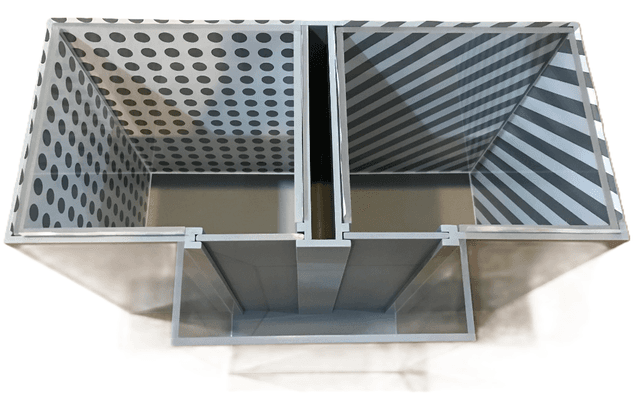
The monkey T-maze is a T shaped apparatus consisting of a longitudinal arm having a start box that leads to two-goal arms, on the right and the left side, which are fitted with the goal boxes. The goal boxes and the start box can be detached and reinstalled according to the task requirement. Other T-maze apparatus used for cognitive functions’ assessment of other animals include rodent T-maze, Pig T Maze, Piglet T maze, Zebrafish T Maze, and Cuttlefish T-Maze.
Apparatus and Equipment
The monkey T-maze is a T shaped apparatus consisting of one longitudinal arm and two-goal arms. The longitudinal arm measures 3 feet from the start to the choice point. The goal arms measure 6 feet from choice points to the goal box doors. The height of the maze is 6 inches. The maze contains five doors at different positions, one start door present between the start box and the longitudinal arm, two choice point doors present between choice points and goal arm entrances, and two goal-box doors present between goal-box start and end of goal arms. The start and goal boxes measure 40 x 54 x 51 cm each. Each box contains a feeder to hold food reward for the subjects.
Training Protocol
Clean the apparatus thoroughly before starting the trial. Maintain the hygiene of the apparatus by removing any traces of urine or feces found during the trials to avoid any disturbance cues. An external tracking and recording system such as Noldus Ethovision XT can be used with the monkey T-Maze for observing subjects’ behavior.
The following describes the protocol for the delayed-nonmatching-to-sample task using the Monkey T-maze.
Shaping
Stage 1
Allow each monkey to enter the start box and explore the maze for 30 minutes. Place food reward in the feeder present in the goal boxes for subject motivation. If the subject eats all the food reward, refill the feeder with more food. After 30 minutes, encourage the monkey to come back to the start box and then return it to its home cage.
Stage 2
Place the food reward along the runway between the start box and the respective goal box. Place extra food reward in the goal box. Keep the subject in the start box. As the subject enters the longitudinal arm, close the start box door. Allow each subject to explore the T-maze for 15 min for 2 days. On day 1, close the choice point door towards the left arm of the maze and let the subject explore the right arm. On the second day, close the choice point door towards the right arm and let the subject explore the left arm. Encourage the subject to leave the start box at the start and return to the start box by the end of the shaping period by tapping the boxes.
Stage 3
Perform 12 training sessions, 3 sessions per day for 4 days on each subject. Place the food reward along the runway and in the goal box during 1-3 sessions. Reduce the quantity of food a little bit during sessions 4-6. For session 7-12, keep the food reward only in the goal box. Place the subject in the start box. Close the start box door and let it explore one arm of the maze while blocking the other arm. Let the monkey reach the goal box within 1 min from the start box. Repeat the process for the other arm.
Testing Procedure
Place the food reward in both goal boxes. Put less amount of food in the goal box, which will be visited by the subject first and more quantity of reward in the other goal box (correct choice goal box). Conduct a forced sample run by opening the choice point door towards the goal box with less quantity of food reward. Place the subject in the start box and allow it to enter the goal box and receive the reward. Detach the goal box and start box from the apparatus. Interchange the positions of the goal box and the start box. Raise all the doors of the maze except the start box door. After 1-minute interval, initiate the choice run by lifting the start box door. Reward the monkeys with food for choosing the new arm (correct choice). Keep the 1-hour interval between each trial. Perform four trials on each subject per day for five days.
Correction Trial
Perform correction trials for monkeys that could not perform well in the T-maze task. Once a subject makes an incorrect choice, repeat the choice run by allowing the monkey to enter the start box and choose any of the two goal arms. If the monkey makes an incorrect choice again, keep the passage towards correct goal arm open for ‘forced run,' and the other one blocked. Reward the subjects only when they choose the correct goal box.
Evaluation of the effects of fornix transection and cingulate ablation on spatial memory
Murray, Davidson, Gaffan, Olton, and Suomi (1989) analyzed spatial working memory in monkeys having fornix transection and cingulate ablation. The rhesus monkeys (Macaca mulatta) underwent surgical fornix transection and cortical ablation surgeries. Based on the surgical procedure, the test subjects were categorized in different groups for fornix transection FX-1, FX-2, FX-4, and cingulate cortex ablation CC-1, CC-2, and CC-4. The surgery performed on the control group did not involve tissue and bone flap removal. The subjects were tested in a delayed nonmatching to sample (DNMS) task by using a monkey T-maze and a spatial visual conditional discrimination task. The results from the DNMS task showed significant impairment in task performance due to fornix transection. The results from pre-operative learning indicated that subjects took 152 trials and 68 errors to attain the required criterion. Post-surgery control monkeys relearned in 45 trials and 13 errors, whereas subjects with fornix transection took five times more time than the control group. On the contrary, fornix transection did not significantly affect subjects’ performance in the spatial conditional task. Results from cingulate ablation remain inconclusive; however, the effects of cingulate ablation were the same as fornix transection in the DNMS task and the spatial visual discrimination task.
Evaluation of spatial learning of marmoset monkeys
Easton, Parker, Derrington, and Parker (2003) analyzed spatial learning and memory of Callithrix jacchus marmoset monkeys in a T-Maze delayed nonmatching to sample task. Results showed that five out of six marmosets made correct choices in the first trial, whereas 4 out of 6 subjects chose the novel arm in ten trials, which indicated that marmosets followed the spontaneous alteration strategy in the spatial delayed nonmatching to sample task. Easton et al. also compared the cognitive data with the performance of rats and macaque monkeys in studies conducted by Markowska, Olton, Murray, & Gaffan, (1989) and Murray et al. (1989), respectively. The learning and performance of marmosets were better in the T-maze as compared to the rats and macaque monkeys. None of the subjects exceeded the 180 trials criterion.
Data Analysis
Following parameters can be observed by using the monkey T-maze:
- Number of visits to the right goal arm
- Number of visits to the left goal arm
- Time spent in right goal arm
- Time spent in left goal arm
- Time spent in the start box
Strengths and Limitations
Strengths
The monkey T-maze is available with detachable start box and goal boxes that allow easy manipulation according to task requirements. The construction of the maze is simple and easy to assemble. The monkey T-maze can be modified easily to apply in researches on different species of monkeys. Modifications can be made by adding different positive or negative reinforcements on the T-maze to make it more challenging and complicated. The presence of a start box allows the reduction of stress-induced by novelty and thus minimizes its effect on task performances. The addition of the guillotine door enables control of movement and the introduction of delays into the task.
Limitations
Proper cleaning is crucial because of the presence of olfactory cues that may disrupt task performance. The species, gender, and age of the subjects may also influence task performance. The experiments performed in the monkey T-maze are time-consuming. Mishandling and overtraining may induce stress and anxiety in monkeys that can disturb their performance in the task.
Summary
- The monkey T-maze is used to analyze the spatial mapping, learning, and memory function in monkeys.
- The goal boxes and the start box of the monkey T-maze can be easily detached and reinstalled according to the experimental requirement.
- The monkey T-maze can be modified by adding positive or negative reinforcements for creating more challenging tasks.
- Factors such as age, gender, and strain of the species can significantly impact the task performance.
- Overtraining or mishandling of subjects may induce anxiety and stress in subjects; therefore, proper handling is necessary.
References
- Easton, A., Parker, K., Derrington, A. M., & Parker, A. (2003). Behaviour of marmoset monkeys in a T-maze: comparison with rats and macaque monkeys on a spatial delayed non-match to sample task. 150(1), 114-6.
- Hampton, R. R., Hampstead, B. M., & Murray, E. A. (2004). Selective Hippocampal Damage in Rhesus Monkeys Impairs Spatial Memory in an Open-Field Test. Hippocampus, 14(7), 808-18.
- Markowska, A., Olton, D., Murray, E., & Gaffan, D. (1989). A comparative analysis of the role of fornix and cingulate cortex in memory: rats. Experimental Brain Research, 74(1), 187–201.
- Murray, E. A., Davidson, M., Gaffan, D., Olton, D. S., & Suomi, S. (1989). Effects of fornix transection and cingulate cortical ablation on spatial memory in rhesus monkeys. Experimental Brain Research, 74(1), 173–186.
From the Maze Engineers documentation for this apparatus.
What experimental protocols can be implemented with this T-maze design?
The apparatus supports spontaneous alternation, delayed alternation, forced-choice discrimination, and reward-based learning protocols. Timing intervals and reward contingencies can be customized based on specific research objectives.
How does this compare to automated operant chambers for primate cognition research?
The T-maze provides direct spatial navigation assessment with natural movement patterns, while operant chambers offer automated trial control and data collection. T-mazes are particularly valuable for spatial working memory and hippocampal function studies.
What species size range is this apparatus designed for?
Consult product datasheet for specific dimensional specifications to ensure appropriate sizing for target primate species, considering both safety and natural behavioral expression.
Can the apparatus be modified for different experimental requirements?
The modular design typically allows for arm length adjustments and reward system configurations, though specific modification capabilities should be verified with technical specifications.
What data collection methods are recommended for T-maze studies?
Standard metrics include choice accuracy, response latency, error patterns, and behavioral observations. Video recording systems can provide detailed movement analysis and behavioral scoring.
How should the apparatus be maintained between experimental sessions?
Regular cleaning with appropriate disinfectants is essential between subjects. Inspect structural components periodically and ensure reward systems function correctly before each testing session.
Have a question about this product?
Have a question? Just ask.
Send it over and we'll email you a personalized answer — no call, no scheduling.
Prefer to talk it through?
Accessories
Enhance your setup with compatible accessories