Multi-Channel PDMS Drug Screening Chip
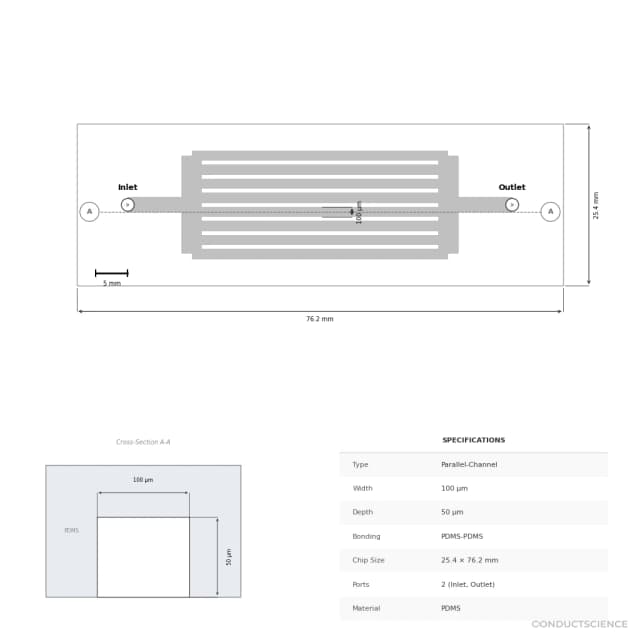
Multi-channel PDMS microfluidic chip with 100 x 100 μm channels designed for parallel drug screening and compound testing applications.
Reusable chip — designed for multiple experimental runs. Compatible with standard microfluidic tubing: steel pins (0.7 mm ID / 1.0 mm OD) and silicone tubing (0.8 mm ID / 1.9 mm OD). Available in bulk packs (5‑, 10‑, and 25‑unit) for lab-scale and consumable workflows.

Louise Corscadden, PhD
Director of Science · ConductScience
Ask Louise about Multi-Channel PDMS Drug Screening Chip fit, setup, configuration, or quote prep.
Already working with us? Sign in to connect this with My Scientist.
Key Specifications
Full details →- Model fit
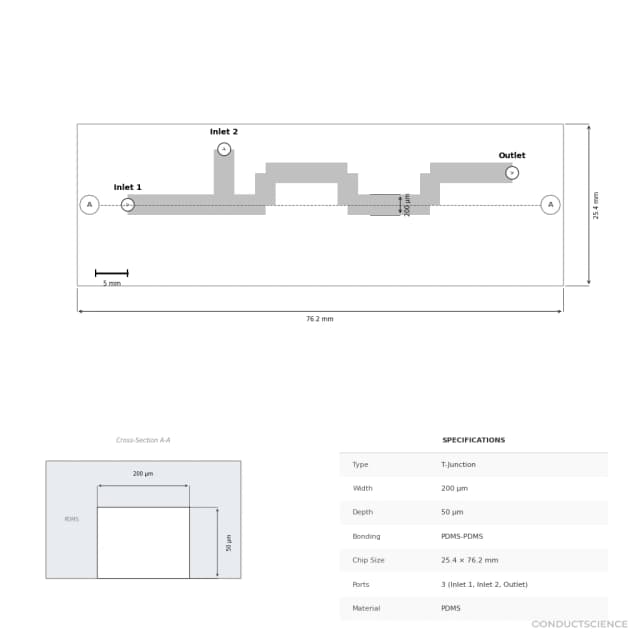
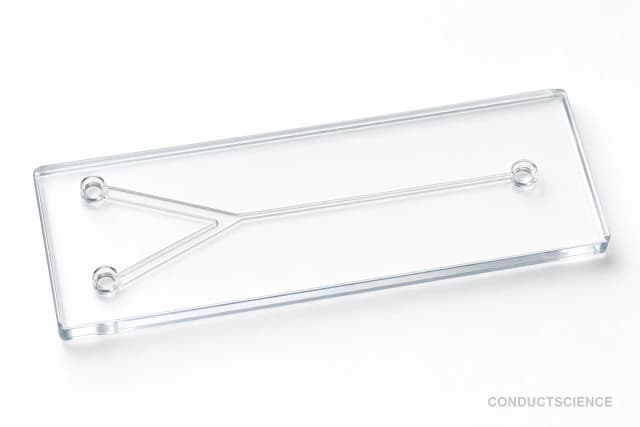
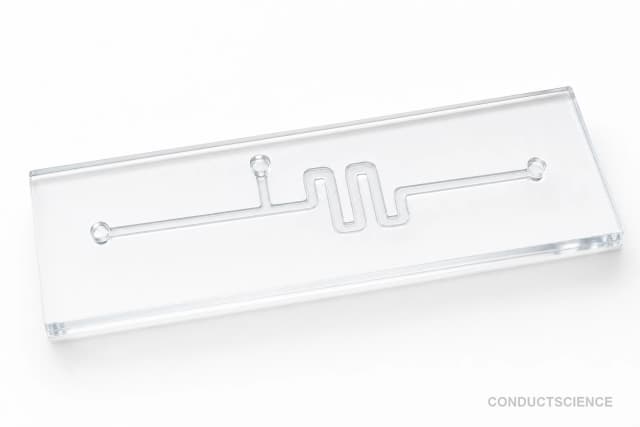
- 3 selectable configurations
- SKU family
- WHM-0085
- Shipping box
- 181.8 x 136.3 x 90.9 cm
- Ordering
- Online checkout and quote request available
- Category
- Drug Screening Chips
- Build notes
- Confirm accessories, station layout, and support needs before purchase
The Multi-Channel PDMS Drug Screening Chip is a microfluidic device engineered for parallel compound testing in pharmaceutical research and drug discovery workflows. Fabricated from polydimethylsiloxane (PDMS), this chip features multiple independent channels with 100 x 100 μm cross-sectional dimensions, enabling simultaneous evaluation of multiple drug formulations or concentration gradients under controlled microenvironmental conditions.
The device supports cell-based assays and compound screening protocols where researchers require precise fluid control and parallel testing capabilities. The PDMS construction provides optical transparency for real-time microscopy observation while maintaining biocompatibility for cell culture applications. Each channel operates independently, allowing for comparative studies of drug efficacy, toxicity profiles, or dose-response relationships within a single experimental setup.
How It Works
The Multi-Channel PDMS Drug Screening Chip operates on microfluidic principles where fluid flow is governed by laminar flow conditions at low Reynolds numbers. Each channel with 100 x 100 μm dimensions provides a controlled microenvironment where diffusion dominates mass transport, enabling precise concentration gradient formation and maintenance. Sample introduction occurs through inlet ports, with flow rates controlled by external pumping systems or pressure differentials.
The PDMS material properties enable gas permeability for cell culture applications while providing optical clarity for microscopic observation. Channel geometry ensures predictable fluid dynamics, allowing for stable concentration profiles and minimal cross-contamination between parallel channels. Drug compounds introduced at channel inlets establish concentration gradients through diffusive mixing, creating defined exposure conditions for biological samples or chemical reactions.
Detection and analysis occur through optical microscopy, fluorescence imaging, or spectroscopic methods compatible with the chip's transparent construction. The parallel channel design enables simultaneous data collection from multiple experimental conditions, increasing throughput while maintaining experimental consistency across all channels.
Features & Benefits
Shipping weight
- 3.3 lb
Shipping box
- L: 181.8 cm
- W: 136.3 cm
- H: 90.9 cm
| Feature | This Product | Typical Alternative | Advantage |
|---|---|---|---|
| Channel Dimensions | 100 x 100 μm channels | Varies widely from 50-500 μm in commercial devices | Optimized dimensions provide controlled microenvironment while maintaining practical flow rates for drug screening |
| Material | PDMS construction | Glass or rigid plastics in many commercial systems | PDMS offers superior optical clarity and biocompatibility compared to rigid alternatives |
| Application Focus | Designed specifically for drug screening and parallel testing | General-purpose microfluidic chips often lack application-specific optimization | Purpose-built design ensures optimal performance for pharmaceutical research workflows |
| Multi-Channel Design | Multiple independent parallel channels | Single channel or limited parallel configurations | Enables simultaneous testing of multiple conditions, increasing experimental throughput |
This PDMS drug screening chip offers application-specific optimization with 100 x 100 μm channels designed for pharmaceutical research. The multi-channel parallel design and PDMS construction provide advantages for cell-based drug screening compared to general-purpose microfluidic devices.
| Model | SKU | Listed price | Status | Shipping box |
|---|---|---|---|---|
| 25-Pack | WHM-0085-25PK | Quote | Available | 181.8 x 136.3 x 90.9 cm |
| 10-Pack | WHM-0085-10PK | $1,490.00 | Available | 181.8 x 136.3 x 90.9 cm |
| 5-Pack | WHM-0085-5PK | Quote | Available | 181.8 x 136.3 x 90.9 cm |
Practical Tips
Degas all solutions before introduction to prevent bubble formation in the microchannels.
Why: Air bubbles can disrupt flow patterns and interfere with concentration gradient formation.
Flush channels with appropriate cleaning solutions immediately after experiments to prevent protein or chemical buildup.
Why: Prompt cleaning prevents channel blockage and maintains consistent flow characteristics for subsequent use.
Verify flow uniformity across all channels using fluorescent tracers before each experimental session.
Why: Flow variations between channels can compromise data quality and experimental reproducibility.
Allow sufficient equilibration time before data collection to establish stable concentration gradients.
Why: Premature data collection can result in transient artifacts that mask true drug responses.
If channels become blocked, apply gentle back-pressure with cleaning solution rather than excessive forward pressure.
Why: High pressure can damage PDMS structure or create permanent deformation in channel geometry.
Use appropriate chemical compatibility protocols when working with organic solvents that may swell PDMS.
Why: Certain solvents can cause PDMS swelling or extraction of uncured oligomers that interfere with experiments.
Setup Guide
What’s in the Box
- Multi-Channel PDMS Drug Screening Chip
- User manual with protocols (typical)
- Packaging protection case (typical)
Warranty
ConductScience provides a one-year manufacturer warranty covering material defects and fabrication quality. Technical support includes protocol guidance and troubleshooting assistance for microfluidic applications.
Compliance
What flow rates are recommended for the 100 x 100 μm channels?
Flow rates typically range from 0.1-10 μL/min depending on application requirements. Consult product datasheet for specific recommendations based on your experimental protocol and desired residence times.
How many channels does this chip contain?
The specific number of channels should be confirmed in the product datasheet. The multi-channel design enables parallel testing of multiple conditions simultaneously.
What surface treatments are compatible with PDMS?
PDMS is compatible with plasma oxidation for hydrophilic surfaces, silane functionalization for specific binding, and various chemical treatments depending on experimental requirements.
Can this chip be reused for multiple experiments?
PDMS chips can typically be cleaned and reused with appropriate protocols, though single-use is recommended for cell culture applications to prevent contamination.
What microscopy systems work with this chip?
The transparent PDMS construction is compatible with standard inverted microscopes, fluorescence systems, and phase contrast imaging commonly used in cell biology laboratories.
How do I prevent bubble formation in the channels?
Proper priming with degassed buffers and gradual flow rate increases help prevent bubble formation. Plasma treatment can also improve wetting properties.
What drug concentration ranges can be tested?
Concentration ranges depend on your experimental design and compound solubility. The microfluidic format enables testing from nanomolar to millimolar concentrations with precise gradient control.
Have a question about this product?
Have a question? Just ask.
Send it over and we'll email you a personalized answer — no call, no scheduling.
Prefer to talk it through?