Multi-Scale Drug Screening Chip
Microfluidic chip for multi-scale drug screening across molecular, single-cell, and embryonic levels using zebrafish models.
Reusable chip — designed for multiple experimental runs. Compatible with standard microfluidic tubing: steel pins (0.7 mm ID / 1.0 mm OD) and silicone tubing (0.8 mm ID / 1.9 mm OD). Available in bulk packs (5‑, 10‑, and 25‑unit) for lab-scale and consumable workflows.

Louise Corscadden, PhD
Director of Science · ConductScience
Ask Louise about Multi-Scale Drug Screening Chip fit, setup, configuration, or quote prep.
Already working with us? Sign in to connect this with My Scientist.
Key Specifications
Full details →- Model fit
- 3 selectable configurations
- SKU family
- WHM-0088
- Shipping box
- 181.8 x 136.3 x 90.9 cm
- Ordering
- Online checkout and quote request available
- Category
- Drug Screening Chips
- Build notes
- Confirm accessories, station layout, and support needs before purchase
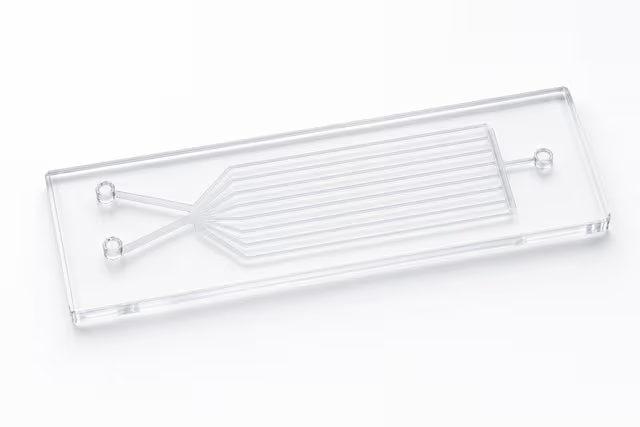
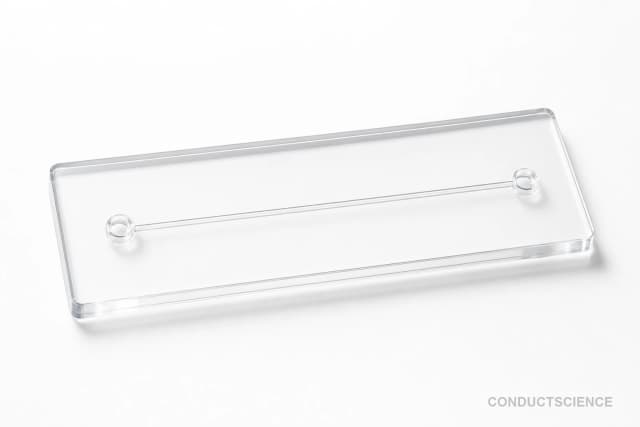
The Multi-Scale Drug Screening Chip is a microfluidic platform designed for comprehensive drug screening across molecular, single-cell, and embryonic levels. This chip enables researchers to conduct multi-scale drug screening experiments using zebrafish models, providing a controlled environment for assessing drug effects at different biological scales within a single device.
The chip's multi-scale design allows for simultaneous evaluation of drug responses from molecular mechanisms to whole-organism effects in zebrafish embryos. This integrated approach supports drug discovery workflows by enabling researchers to assess therapeutic efficacy and toxicity across multiple levels of biological organization, streamlining the screening process and reducing the need for separate experimental setups.
How It Works
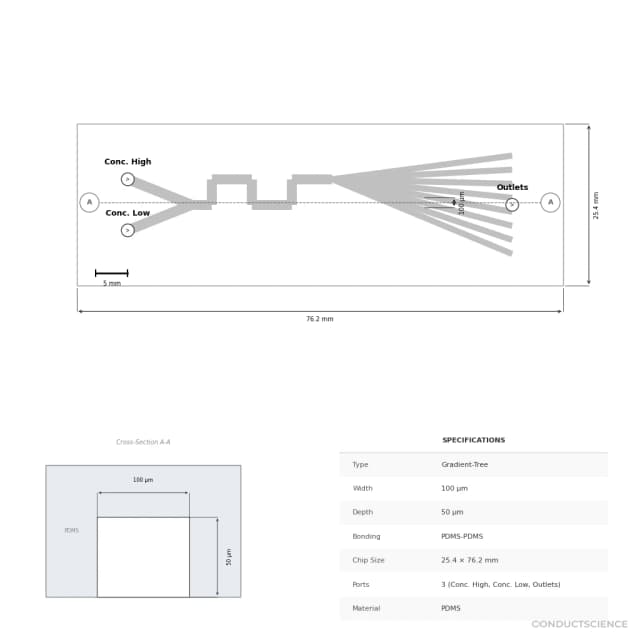
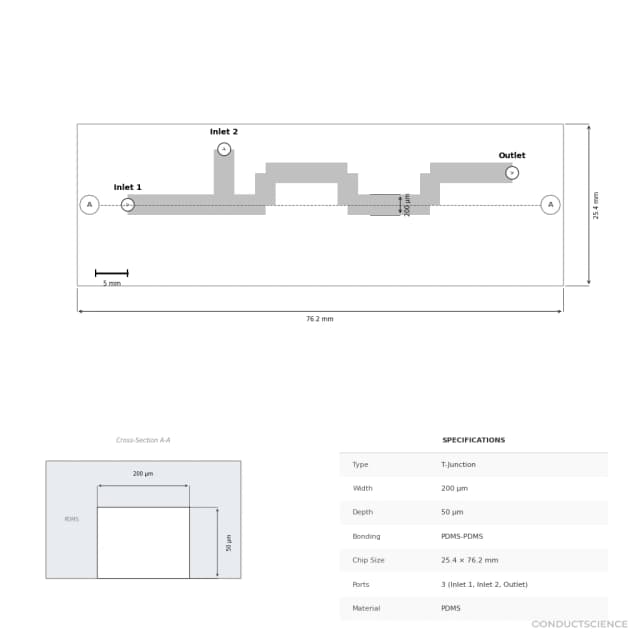
The Multi-Scale Drug Screening Chip utilizes microfluidic channel networks to create controlled environments for zebrafish embryo exposure to test compounds. The chip's design incorporates multiple chambers and channels that enable precise fluid control, allowing for gradient generation, compound mixing, and waste removal while maintaining optimal conditions for zebrafish embryo development.
Drug screening occurs through perfusion-based exposure systems where test compounds are introduced through inlet channels and distributed across experimental chambers containing zebrafish embryos. The microfluidic environment enables real-time monitoring of drug effects at molecular levels through fluorescence detection, at cellular levels through microscopic observation, and at organismal levels through behavioral and morphological assessment. The chip's multi-scale architecture allows simultaneous data collection across all levels, providing comprehensive dose-response profiles for each tested compound.
Features & Benefits
Shipping weight
- 3.3 lb
Shipping box
- L: 181.8 cm
- W: 136.3 cm
- H: 90.9 cm
| Feature | This Product | Typical Alternative | Advantage |
|---|---|---|---|
| Screening Scale Integration | Molecular, single-cell, and embryonic level screening in one platform | Most systems focus on single-scale endpoints | Provides comprehensive drug response profiles without requiring separate experimental setups for different biological scales. |
| Zebrafish Compatibility | Specifically designed for zebrafish embryo screening applications | Generic microfluidic devices may lack optimal chamber dimensions | Ensures proper embryo positioning and development conditions throughout screening protocols. |
| Application Scope | Multi-scale drug screening with zebrafish models | Limited to cell-based assays or adult organism testing | Bridges the gap between molecular mechanisms and whole-organism responses in drug discovery workflows. |
| Experimental Control | Microfluidic flow control for precise compound delivery | Static well-plate systems with limited concentration control | Enables gradient generation and dynamic compound exposure profiles for more physiologically relevant screening conditions. |
This Multi-Scale Drug Screening Chip offers integrated screening capabilities across molecular, single-cell, and embryonic levels using zebrafish models. The microfluidic design provides precise control over experimental conditions while enabling real-time observation of drug effects across multiple biological scales.
| Model | SKU | Listed price | Status | Shipping box |
|---|---|---|---|---|
| 25-Pack | WHM-0088-25PK | Quote | Available | 181.8 x 136.3 x 90.9 cm |
| 10-Pack | WHM-0088-10PK | $1,490.00 | Available | 181.8 x 136.3 x 90.9 cm |
| 5-Pack | WHM-0088-5PK | Quote | Available | 181.8 x 136.3 x 90.9 cm |
Practical Tips
Pre-equilibrate the chip with embryo medium before loading zebrafish embryos to ensure optimal pH and osmolarity conditions.
Why: Prevents osmotic shock and maintains embryo viability during the initial experimental setup phase.
Clean all microfluidic channels immediately after experiments using appropriate solvents followed by sterile water rinses.
Why: Prevents compound carryover and maintains channel integrity for subsequent experiments.
Verify flow rates using fluorescent dyes or traceable flow standards before each screening campaign.
Why: Ensures accurate compound delivery and concentration profiles across all experimental chambers.
Include multiple controls and replicates across different chip positions to assess experimental uniformity.
Why: Identifies potential spatial variations in compound exposure or environmental conditions within the chip.
Check for air bubbles in tubing connections if flow appears irregular or embryos show signs of stress.
Why: Air bubbles can disrupt flow patterns and create oxygen depletion zones that affect embryo health.
Handle zebrafish embryos according to institutional animal care protocols and dispose of compounds following chemical waste guidelines.
Why: Ensures compliance with ethical standards and environmental safety requirements for biological research.
Document imaging parameters and chip positioning for each experiment to ensure reproducible data collection.
Why: Enables consistent data analysis and comparison across different experimental sessions and screening campaigns.
Setup Guide
What’s in the Box
- Multi-Scale Drug Screening Chip
- Inlet/outlet tubing set (typical)
- Syringe connectors (typical)
- User protocol guide (typical)
- Storage case (typical)
Warranty
ConductScience provides a standard 1-year manufacturer warranty covering defects in materials and workmanship, with technical support for setup and operation protocols.
Compliance
What zebrafish developmental stages are compatible with this chip?
The chip is designed for zebrafish embryo screening applications. Specific developmental stage compatibility and chamber dimensions should be verified in the product datasheet to ensure proper embryo accommodation throughout the experimental timeline.
How many compounds can be screened simultaneously?
The number of simultaneous screening conditions depends on the chip's chamber configuration and inlet design. Consult the product datasheet for specific chamber counts and compound delivery capabilities.
What compound concentration ranges are achievable?
Compound concentration ranges depend on the microfluidic mixing capabilities and dilution ratios supported by the chip design. Check technical specifications for flow rate ranges and mixing chamber configurations.
Is the chip compatible with fluorescence microscopy?
The chip design typically supports optical transparency for microscopic observation. Confirm material specifications and optical properties in the product datasheet for specific fluorescence applications.
How long can experiments run continuously?
Experimental duration is limited by zebrafish embryo development requirements and chip material stability. Consult protocols for recommended exposure periods and perfusion parameters.
What controls are recommended for screening experiments?
Include vehicle controls, positive controls with known bioactive compounds, and negative controls without compound exposure. Multiple replicates across different chip positions help assess spatial uniformity.
Can the chip be reused for multiple experiments?
Reusability depends on chip material and cleaning protocols. Some microfluidic chips are single-use while others support multiple experiments with proper cleaning and sterilization procedures.
Have a question about this product?
Have a question? Just ask.
Send it over and we'll email you a personalized answer — no call, no scheduling.
Prefer to talk it through?