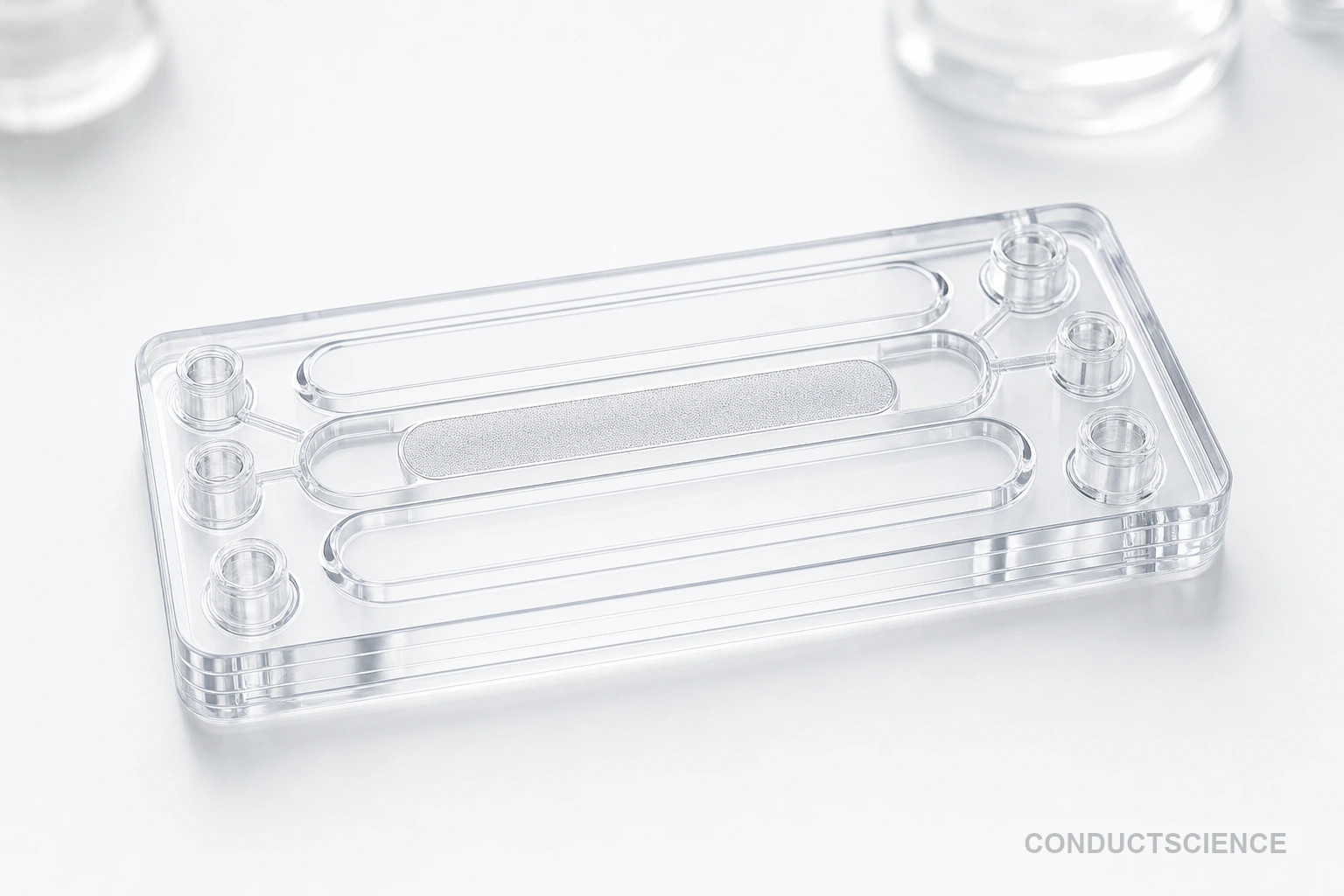
Organ-on-a-Chip Microfluidic Platform
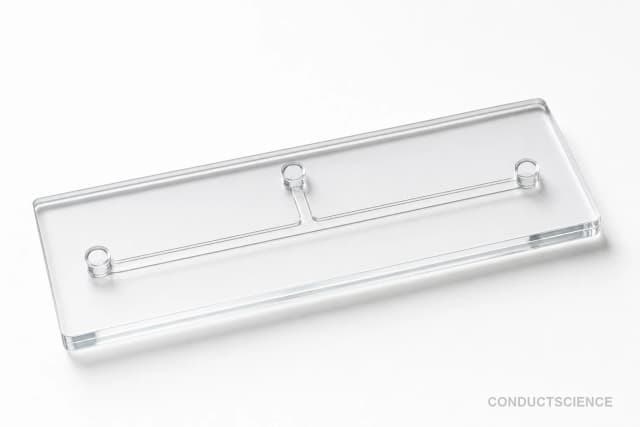
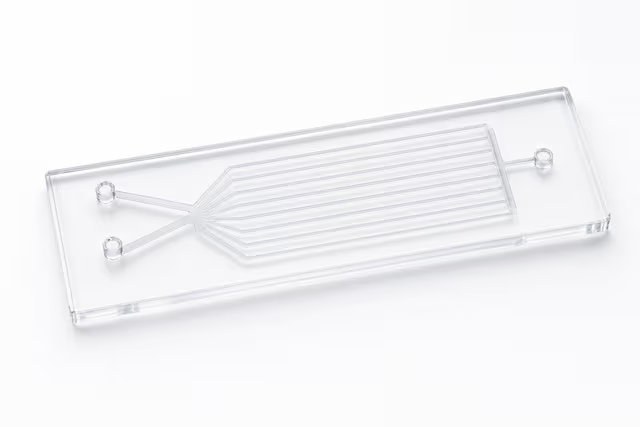
Multi-layer microfluidic platform with porous membranes for organ-on-chip applications, supporting lung, heart, and custom organ models in multiple material configurations.
Reusable chip — designed for multiple experimental runs. Compatible with standard microfluidic tubing: steel pins (0.7 mm ID / 1.0 mm OD) and silicone tubing (0.8 mm ID / 1.9 mm OD). Available in bulk packs (5‑, 10‑, and 25‑unit) for lab-scale and consumable workflows.

Louise Corscadden, PhD
Director of Science · ConductScience
Ask Louise about Organ-on-a-Chip Microfluidic Platform fit, setup, configuration, or quote prep.
Already working with us? Sign in to connect this with My Scientist.
Key Specifications
Full details →- Model fit
- 3 selectable configurations
- SKU family
- WHM-0081
- Shipping box
- 181.8 x 136.3 x 90.9 cm
- Ordering
- Online checkout and quote request available
- Category
- Cell Culture Chips
- Build notes
- Confirm accessories, station layout, and support needs before purchase
The Organ-on-a-Chip Microfluidic Platform represents a sophisticated microphysiological system designed to recapitulate human organ function in vitro. This platform utilizes multi-layer architecture with integrated porous membranes to create physiologically relevant tissue barriers that mimic native organ microenvironments. The system supports multiple organ models including lung and heart configurations, with custom designs available to meet specific research requirements.
Fabricated from a range of materials including PDMS, PMMA, glass, and silicon, this platform provides researchers with material options optimized for different experimental conditions and analytical requirements. The multi-layer design with porous membrane technology enables co-culture of multiple cell types while maintaining controlled fluid flow and biochemical gradients essential for organ-level functionality studies.
How It Works
The platform operates on microfluidic principles where precise fluid control enables creation of physiologically relevant microenvironments. The multi-layer architecture incorporates porous membranes that serve as tissue barriers, allowing selective transport of nutrients, waste products, and signaling molecules while maintaining physical separation of different cell populations. This design recapitulates the barrier function found in native organs such as the alveolar-capillary barrier in lungs or endothelial barriers in cardiovascular tissues.
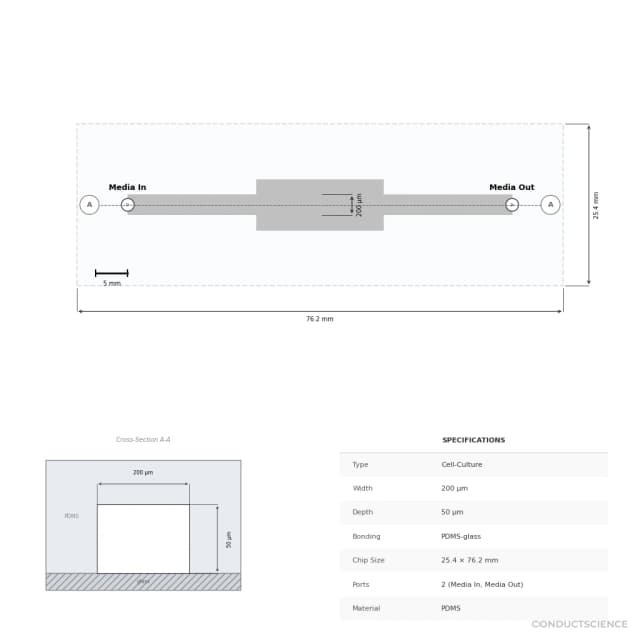
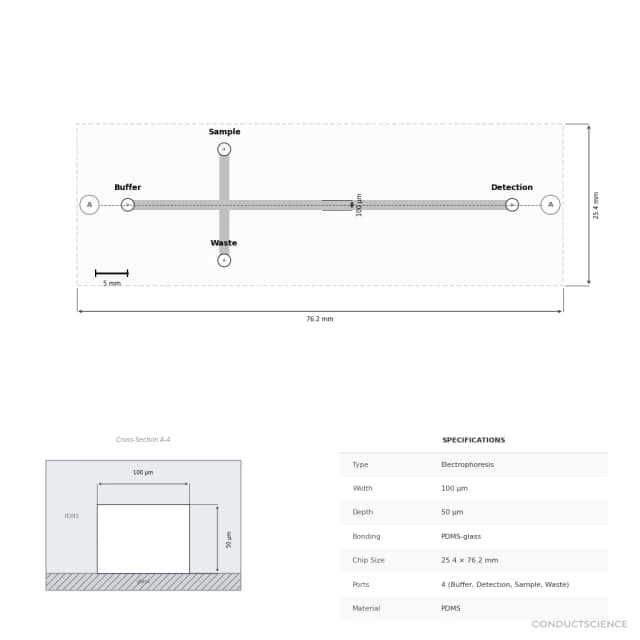
Cell cultures are established in designated chambers connected by microchannels that maintain continuous perfusion. The porous membrane technology enables co-culture configurations where different cell types can interact through paracrine signaling while experiencing distinct microenvironmental conditions. Fluid flow rates and shear stresses can be precisely controlled to match physiological conditions, while the platform's geometry allows for real-time monitoring of cellular responses.
Material selection (PDMS, PMMA, glass, or silicon) determines the platform's optical properties, surface chemistry, and compatibility with different analytical techniques. Each material offers specific advantages: PDMS provides flexibility and gas permeability, PMMA offers optical clarity, glass enables high-resolution imaging, and silicon supports advanced microfabrication features.
Features & Benefits
Shipping weight
- 3.3 lb
Shipping box
- L: 181.8 cm
- W: 136.3 cm
- H: 90.9 cm
| Feature | This Product | Typical Alternative | Advantage |
|---|---|---|---|
| Material Options | PDMS, PMMA, glass, and silicon options available | Most platforms offer single material, typically PDMS only | Allows researchers to optimize platform properties for specific analytical requirements and imaging needs |
| Membrane Integration | Multi-layer architecture with integrated porous membranes | Simple chamber designs without barrier functionality | Enables physiologically relevant transport studies and tissue barrier modeling |
| Organ Model Support | Established lung and heart models with custom options | Generic cell culture chambers without organ-specific design | Provides validated protocols and geometries optimized for specific organ functions |
| Co-culture Capability | Multi-layer design supporting complex cell interactions | Single-layer platforms with limited co-culture options | Enables study of organ-level responses involving multiple cell types and tissue interfaces |
This platform distinguishes itself through multi-material availability and integrated porous membrane technology that enables physiologically relevant organ modeling. The established lung and heart configurations provide researchers with validated starting points for organ-on-chip studies.
| Model | SKU | Listed price | Status | Shipping box |
|---|---|---|---|---|
| 25-Pack | WHM-0081-25PK | Quote | Available | 181.8 x 136.3 x 90.9 cm |
| 10-Pack | WHM-0081-10PK | $1,490.00 | Available | 181.8 x 136.3 x 90.9 cm |
| 5-Pack | WHM-0081-5PK | Quote | Available | 181.8 x 136.3 x 90.9 cm |
Practical Tips
Select material based on downstream analytical requirements, with glass preferred for high-resolution imaging and PDMS for flexibility.
Why: Material properties directly impact experimental outcomes and analytical compatibility.
Clean platforms immediately after use with appropriate solvents based on material type to prevent protein fouling.
Why: Residual biological material can affect subsequent experiments and platform performance.
Verify flow rates using tracer particles or dyes before cell seeding to ensure proper perfusion conditions.
Why: Accurate flow control is essential for maintaining physiological shear stress and nutrient delivery.
Use appropriate personal protective equipment when handling different platform materials, especially when using organic solvents for cleaning.
Why: Material compatibility varies with different chemicals used in cleaning and experimental protocols.
Allow cell cultures to stabilize for appropriate equilibration period before data collection to ensure representative organ function.
Why: Cells require time to adapt to microfluidic environment and establish proper tissue architecture.
Check for air bubbles in channels using bright-field microscopy if flow appears irregular or cell behavior is abnormal.
Why: Air bubbles disrupt flow patterns and can create non-physiological conditions affecting cell responses.
Setup Guide
What’s in the Box
- Microfluidic platform chip (typical)
- Tubing connectors (typical)
- User manual and protocols (typical)
- Quality control certificate (typical)
Warranty
ConductScience provides a one-year manufacturer warranty covering defects in materials and workmanship, with technical support for setup and operation.
Compliance
References
Background reading relevant to this product:
What membrane pore sizes are available for tissue barrier studies?
Consult product datasheet for specific pore size options, as these vary based on organ model and application requirements.
How long can cell cultures be maintained in the platform?
Culture duration depends on cell type and experimental conditions, with some organ models supporting weeks of continuous culture under optimal conditions.
What imaging modalities are compatible with different materials?
Glass and PMMA offer optimal optical clarity for fluorescence microscopy, while PDMS provides moderate imaging capability with some autofluorescence considerations.
Can the platform be used for permeability assays?
Yes, the porous membrane design enables transport studies and permeability measurements across tissue barriers.
What flow rates are achievable with this platform?
Consult product datasheet for channel dimensions and recommended flow rate ranges for specific organ models.
How do I select the appropriate material for my application?
Consider optical requirements (glass/PMMA for imaging), flexibility needs (PDMS), and chemical compatibility with experimental conditions.
Can multiple organ models be connected for multi-organ studies?
Custom designs can incorporate multiple organ compartments for body-on-chip applications, depending on experimental requirements.
Have a question about this product?
Have a question? Just ask.
Send it over and we'll email you a personalized answer — no call, no scheduling.
Prefer to talk it through?