Paper-Based Microfluidic Platform
Paper-based microfluidic platform utilizing capillary flow for lateral flow assays and point-of-care testing applications with colorimetric detection capabilities.

Louise Corscadden, PhD
Director of Science · ConductScience
Ask Louise about Paper-Based Microfluidic Platform fit, setup, configuration, or quote prep.
Already working with us? Sign in to connect this with My Scientist.
Key Specifications
Full details →- Model fit
- 1 selectable configurations
- SKU family
- WHM-0125
- Shipping box
- 181.8 x 136.3 x 90.9 cm
- Ordering
- Quote-reviewed before fulfillment
- Category
- Microfluidic Chips
- Build notes
- Confirm accessories, station layout, and support needs before purchase
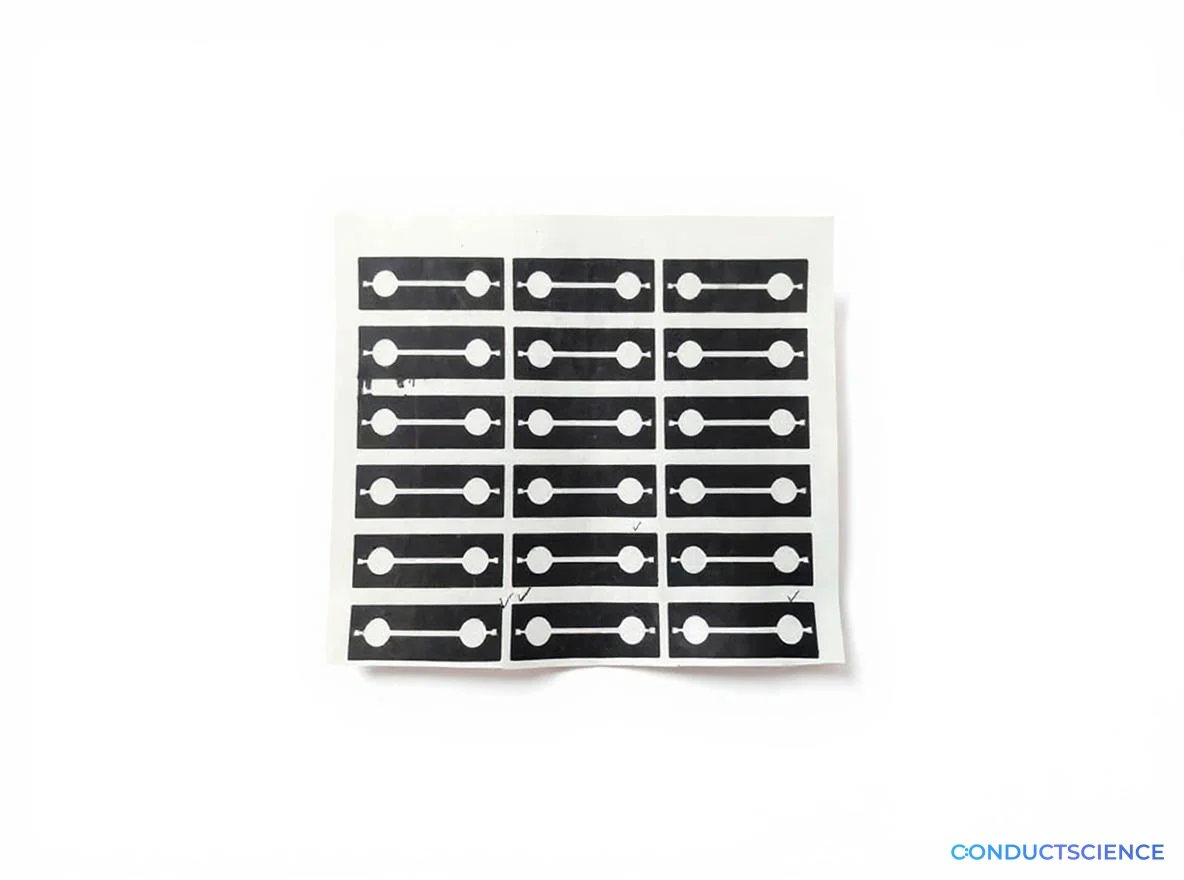
The Paper-Based Microfluidic Platform (WHM-0125) provides a cost-effective solution for point-of-care testing and diagnostic applications using paper substrate technology. This microfluidic device leverages the natural wicking properties of specialized chromatography paper to transport samples through defined channels via capillary flow, enabling colorimetric detection without external pumps or power sources.
The platform supports lateral flow assay development and implementation, making it particularly valuable for field testing scenarios where traditional laboratory infrastructure is unavailable. The paper substrate allows for straightforward fabrication of microfluidic channels while maintaining compatibility with various biological samples and reagent systems. Colorimetric detection enables visual or optical readout of assay results, supporting both qualitative and semi-quantitative analysis.
How It Works
Paper-based microfluidic platforms operate on the principle of capillary flow, where liquid samples are transported through porous paper substrates without external pumping mechanisms. The paper substrate, typically chromatography paper or filter paper, contains a network of cellulose fibers that create capillary channels. Sample fluid is drawn through these channels by surface tension forces and the wicking properties of the paper matrix.
Detection is achieved through colorimetric reactions where target analytes interact with immobilized reagents within the paper matrix. In lateral flow assay configurations, samples migrate from the sample application zone through conjugate release pads containing labeled detection reagents, then across test and control lines containing capture molecules. Positive results generate visible color changes that can be interpreted visually or measured optically.
The paper substrate provides several advantages including low cost, ease of fabrication, biocompatibility, and the ability to store dried reagents for extended periods. Channel geometry can be defined through wax printing, photolithography, or laser cutting to create complex fluidic networks within the paper matrix.
Features & Benefits
Shipping weight
- 3.3 lb
Shipping box
- L: 181.8 cm
- W: 136.3 cm
- H: 90.9 cm
| Feature | This Product | Typical Alternative | Advantage |
|---|---|---|---|
| Substrate Material | Paper substrate | Glass or polymer substrates common in traditional microfluidics | Significantly reduces manufacturing costs while maintaining biocompatibility for diagnostic applications |
| Flow Mechanism | Capillary flow transport | External pumping systems required for most microfluidic platforms | Eliminates need for power sources and complex fluidic connections in field testing scenarios |
| Detection Method | Colorimetric detection | Various detection methods including fluorescence and electrochemical | Enables visual readout without specialized instrumentation requirements |
| Application Focus | Lateral flow assays and point-of-care testing | General microfluidic applications with broader scope | Optimized specifically for rapid diagnostic and field testing applications |
This paper-based platform prioritizes cost-effectiveness and simplicity for diagnostic applications over the precision control available in traditional microfluidic systems. The colorimetric detection and capillary flow design make it particularly suitable for point-of-care and field testing scenarios.
Practical Tips
Apply samples slowly and steadily to ensure uniform wetting of the paper substrate and consistent flow characteristics.
Why: Rapid sample application can cause uneven flow patterns that affect assay reproducibility.
Store unused platforms in sealed containers with desiccant to prevent moisture absorption and paper degradation.
Why: Paper substrates are hygroscopic and moisture can affect capillary flow properties and reagent stability.
Include both positive and negative controls with each assay run to validate proper platform function and reagent activity.
Why: Controls help identify issues with flow characteristics, reagent performance, or detection sensitivity.
If flow appears to stall, check for air bubbles or uneven sample application that can disrupt capillary action.
Why: Uniform sample distribution is critical for maintaining consistent flow through paper microchannels.
Establish baseline colorimetric response using known standard concentrations before testing unknown samples.
Why: Paper substrates can show batch-to-batch variations that affect detection sensitivity and dynamic range.
Handle paper platforms with clean gloves to prevent contamination and avoid touching detection zones.
Why: Skin oils and contaminants can interfere with colorimetric reactions and affect assay results.
Setup Guide
What’s in the Box
- Paper-based microfluidic platform chips (typical)
- User manual and protocol guide (typical)
- Storage container or packaging (typical)
Warranty
ConductScience provides standard manufacturer warranty coverage for paper-based microfluidic platforms with technical support for setup and application guidance.
Compliance
References
Background reading relevant to this product:
What sample volumes are compatible with the paper-based platform?
Sample volume requirements depend on the specific channel design and assay format. Consult product datasheet for recommended application volumes for optimal capillary flow and detection performance.
How should paper-based platforms be stored to maintain performance?
Store in dry, room temperature conditions away from direct light and moisture to preserve paper substrate integrity and prevent reagent degradation if pre-loaded.
Can the platform be customized for specific assay requirements?
Paper-based platforms can often be modified for different channel geometries, detection zones, and reagent loading depending on the specific assay design and application needs.
What types of samples are compatible with paper substrates?
The platform typically handles aqueous samples including biological fluids, environmental samples, and chemical solutions. Sample viscosity and composition may affect flow characteristics.
How is detection sensitivity determined in colorimetric assays?
Detection sensitivity depends on reagent concentration, reaction kinetics, and optical measurement methods. Visual detection limits differ from instrumental optical measurements.
What quality control measures apply to paper-based assays?
Include positive and negative controls, monitor flow characteristics, verify colorimetric response consistency, and validate against reference methods for quantitative applications.
Have a question about this product?
Have a question? Just ask.
Send it over and we'll email you a personalized answer — no call, no scheduling.
Prefer to talk it through?