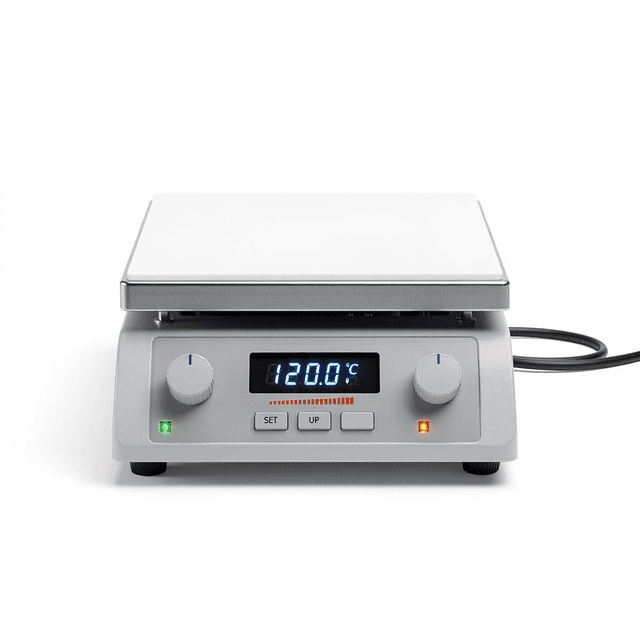
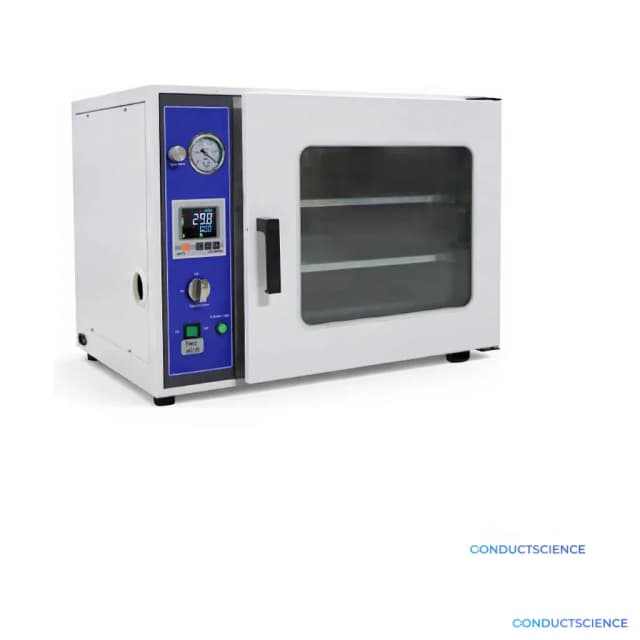
PDMS Mixed Defoaming and Curing System
Integrated system for PDMS chip fabrication combining mixing, defoaming, and curing functions in a single platform for microfluidic device preparation.

Louise Corscadden, PhD
Director of Science · ConductScience
Ask Louise about PDMS Mixed Defoaming and Curing System fit, setup, configuration, or quote prep.
Already working with us? Sign in to connect this with My Scientist.
Key Specifications
Full details →- Model fit
- Configured during quote
- SKU family
- WHM-0043
- Shipping box
- 400.0 x 350.0 x 400.0 cm
- Ordering
- Online checkout and quote request available
- Category
- Lab Equipment
- Build notes
- Confirm accessories, station layout, and support needs before purchase
The PDMS Mixed Defoaming and Curing System is a specialized laboratory instrument designed for polymer chip fabrication workflows. This system integrates mixing, defoaming, and curing functions in a single platform, enabling consistent preparation of polydimethylsiloxane (PDMS) components for microfluidic devices and other polymer-based research applications.
The system addresses critical challenges in PDMS preparation, including air bubble removal and controlled curing conditions that affect final chip quality and dimensional accuracy. The integrated approach eliminates manual transfer steps between separate mixing, defoaming, and curing equipment, reducing contamination risk and improving process reproducibility for research applications requiring precise polymer substrates.
How It Works
The system operates through sequential processing stages that address the critical requirements of PDMS preparation. During the mixing phase, mechanical agitation homogenizes the polymer base and curing agent while the integrated defoaming function applies vacuum or centrifugal forces to remove entrained air bubbles that would compromise final chip quality.
The curing stage provides controlled temperature and time profiles optimized for PDMS cross-linking reactions. The system maintains precise thermal conditions that ensure complete polymerization while preventing thermal degradation of the polymer matrix. This integrated approach eliminates manual handling between process steps, reducing contamination and improving batch-to-batch consistency.
Process parameters including mixing speed, defoaming duration, and curing temperature profiles can be programmed to accommodate different PDMS formulations and chip geometries. The system's compact design (400 × 350 × 400 mm) enables benchtop operation in standard laboratory environments.
Features & Benefits
Functions
- Mixing, defoaming, curing
Automation Level
- semi-automated
Brand
- ConductScience
Research Domain
- Analytical Chemistry
- Biomedical Engineering
- Cell Biology
- Environmental Monitoring
- Materials Science
Shipping weight
- 25.0 lb
Shipping box
- L: 400.0 cm
- W: 350.0 cm
- H: 400.0 cm
| Feature | This Product | Typical Alternative | Advantage |
|---|---|---|---|
| Process Integration | Combines mixing, defoaming, and curing in single platform | Separate equipment requiring manual transfer between process steps | Reduces contamination risk and improves batch-to-batch consistency for research applications. |
| Defoaming Capability | Integrated vacuum defoaming function | Manual defoaming or separate vacuum chambers | Eliminates air bubbles that compromise microfluidic channel integrity and optical clarity. |
| Process Control | Programmable mixing, defoaming, and curing parameters | Fixed settings or manual parameter adjustment | Enables optimization for different PDMS formulations and chip geometries. |
| Footprint | Compact 400 × 350 × 400 mm benchtop design | Larger systems requiring dedicated floor space | Fits standard laboratory workspace while maintaining full processing capability. |
| Automation Level | Semi-automated with programmable sequences | Manual processing requiring constant operator attention | Reduces operator variability and enables reproducible chip fabrication. |
This system provides integrated PDMS processing with programmable control in a compact benchtop format. The combination of mixing, defoaming, and curing functions eliminates manual transfer steps while maintaining process flexibility for research applications.
Practical Tips
Verify temperature accuracy using certified calibration standards before processing critical chip batches.
Why: Temperature variations can affect PDMS cross-linking rates and final material properties.
Clean mixing chamber thoroughly between different PDMS formulations to prevent cross-contamination.
Why: Residual curing agent can alter polymerization kinetics in subsequent batches.
Allow PDMS components to reach room temperature before mixing to improve defoaming efficiency.
Why: Temperature differences between base and curing agent can trap additional air during mixing.
Record mixing time, defoaming duration, and curing temperature for each batch to enable process optimization.
Why: Process parameters directly affect PDMS mechanical properties and chip performance.
Extend defoaming time if bubbles persist in cured PDMS, but verify vacuum system performance first.
Why: Inadequate defoaming can compromise microfluidic channel integrity and experimental results.
Ensure adequate ventilation during curing cycles as PDMS can release volatile compounds at elevated temperatures.
Why: Proper ventilation prevents accumulation of potentially harmful vapors in laboratory environment.
Weigh PDMS components accurately as small ratio variations significantly affect curing characteristics.
Why: Incorrect base-to-curing agent ratios can result in incomplete cross-linking or altered mechanical properties.
Inspect heating elements regularly for uniform temperature distribution across the curing chamber.
Why: Temperature gradients can cause uneven curing and dimensional variations in fabricated chips.
Setup Guide
What’s in the Box
- PDMS Mixed Defoaming and Curing System main unit
- Power cord and adapters
- Mixing chamber and accessories (typical)
- Temperature calibration standards (typical)
- User manual and process guide (typical)
- Software installation media (typical)
Warranty
ConductScience provides a one-year manufacturer warranty covering defects in materials and workmanship. Technical support includes process optimization guidance and troubleshooting assistance for PDMS fabrication applications.
Compliance
References
Background reading relevant to this product:
What PDMS formulations are compatible with this system?
The system accommodates standard PDMS base and curing agent combinations commonly used in microfluidics, typically Sylgard 184 and similar formulations. Consult process guide for specific mixing ratios and curing parameters for different polymer grades.
How does the defoaming function prevent bubble formation in microchannels?
The integrated vacuum defoaming removes entrained air before curing, preventing bubble migration into microfluidic features. Defoaming duration can be adjusted based on mixing intensity and PDMS viscosity.
What temperature range is available for PDMS curing?
Consult product datasheet for specific temperature range and ramp rates. The system provides programmable temperature profiles optimized for PDMS cross-linking without thermal degradation.
Can the system handle different batch sizes for chip fabrication?
The mixing chamber accommodates various batch sizes for research-scale production. Minimum and maximum volumes depend on mixing chamber specifications detailed in the technical manual.
How do I optimize curing parameters for different chip thicknesses?
Thicker PDMS layers require longer curing times or higher temperatures to ensure complete cross-linking. The programmable controller enables adjustment of time and temperature profiles based on chip geometry.
Is the system suitable for cleanroom operation?
The compact design and contained processing minimize particulate generation, making it suitable for controlled environments. Verify specific cleanroom class compatibility based on facility requirements.
What maintenance is required for consistent performance?
Regular cleaning of mixing chamber and temperature calibration verification ensure consistent results. Consult maintenance schedule for recommended cleaning procedures and calibration intervals.
Have a question about this product?
Have a question? Just ask.
Send it over and we'll email you a personalized answer — no call, no scheduling.
Prefer to talk it through?