Polymer Curing Microfluidic Chip
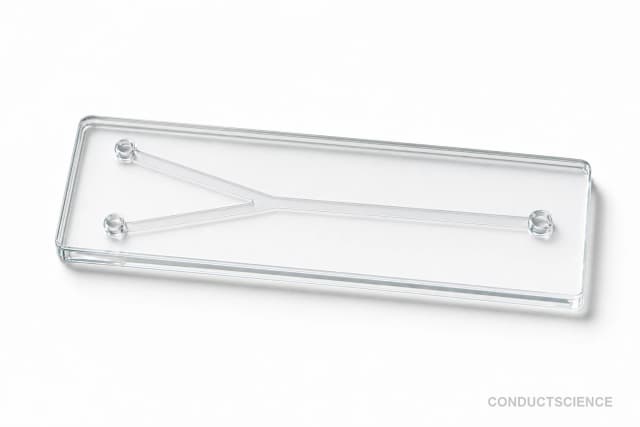
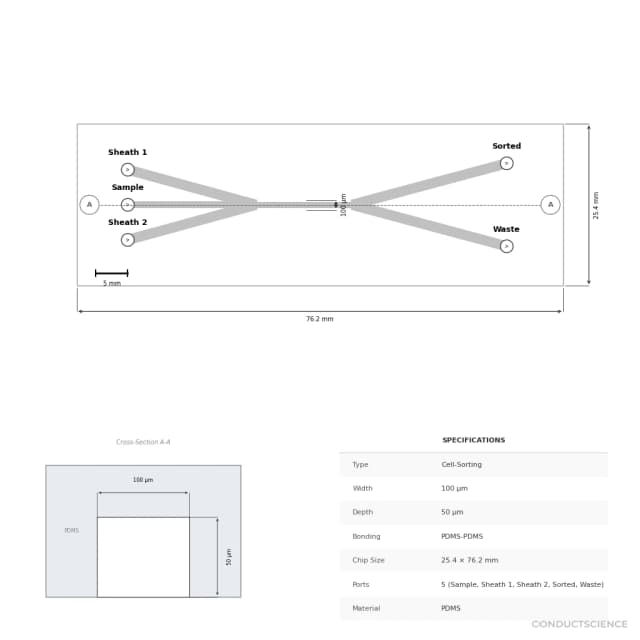
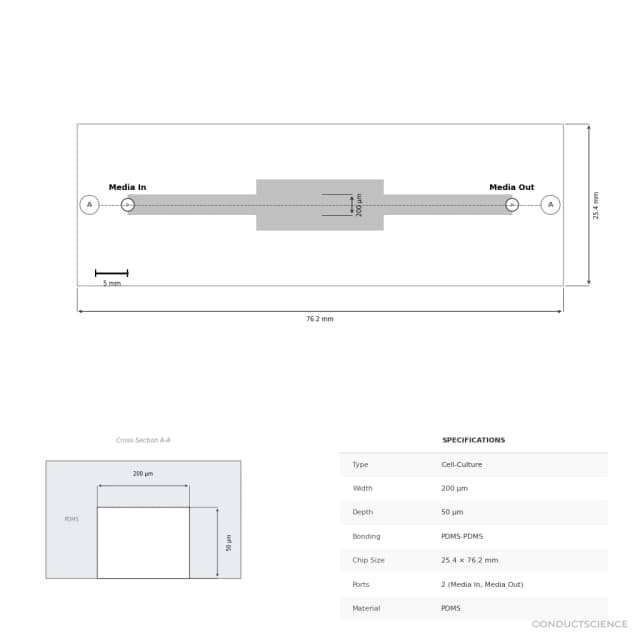
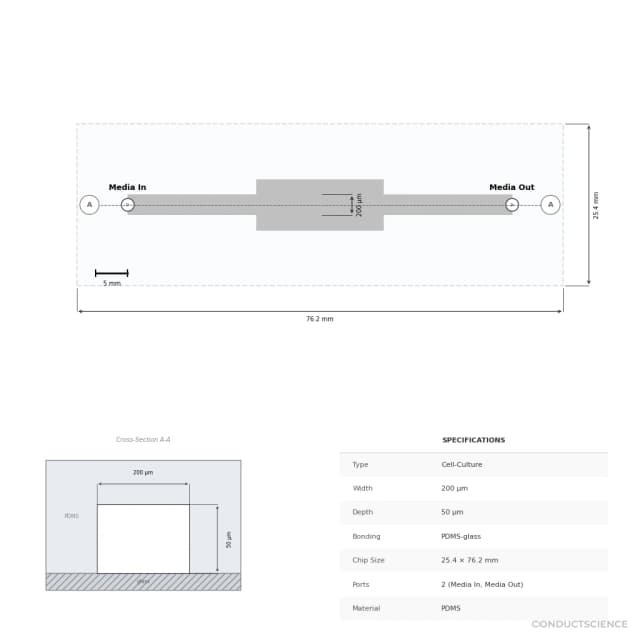
Microfluidic chip with 200 x 200 μm channels designed for controlled polymer curing, hydrogel synthesis, and composite material processing reactions.
Reusable chip — designed for multiple experimental runs. Compatible with standard microfluidic tubing: steel pins (0.7 mm ID / 1.0 mm OD) and silicone tubing (0.8 mm ID / 1.9 mm OD). Available in bulk packs (5‑, 10‑, and 25‑unit) for lab-scale and consumable workflows.

Louise Corscadden, PhD
Director of Science · ConductScience
Ask Louise about Polymer Curing Microfluidic Chip fit, setup, configuration, or quote prep.
Already working with us? Sign in to connect this with My Scientist.
Key Specifications
Full details →- Model fit
- 3 selectable configurations
- SKU family
- WHM-0102
- Shipping box
- 181.8 x 136.3 x 90.9 cm
- Ordering
- Online checkout and quote request available
- Category
- Chemical Synthesis Chips
- Build notes
- Confirm accessories, station layout, and support needs before purchase
The Polymer Curing Microfluidic Chip (WHM-0102) is a specialized chemical synthesis platform designed for controlled polymer curing reactions within microfluidic channels. Featuring 200 x 200 μm channel dimensions, this chip enables precise control over reaction conditions for polymer synthesis applications including hydrogel formation, composite material processing, and crosslinking reactions.
The device supports multiple curing mechanisms including thermal, UV, and photopolymerization processes within the confined microfluidic environment. The standardized channel geometry provides reproducible flow characteristics and reaction volumes, making it suitable for materials science research requiring consistent polymer processing conditions.
How It Works
The microfluidic chip operates on the principle of controlled fluid dynamics within precisely defined channels to enable uniform polymer curing reactions. The 200 x 200 μm channel dimensions create laminar flow conditions that prevent turbulent mixing while allowing controlled diffusion of reactants across stream boundaries.
For thermal curing applications, the chip can be placed on a temperature-controlled stage to provide uniform heating across the reaction zone. UV curing is achieved by exposing the transparent chip material to controlled UV irradiation, with the channel geometry ensuring uniform light penetration and exposure times. The confined reaction volume provides precise control over reactant concentrations and residence times.
The microfluidic environment enables real-time monitoring of polymerization progress and allows for rapid optimization of reaction parameters through systematic variation of flow rates, temperatures, and exposure conditions.
Features & Benefits
Shipping weight
- 3.3 lb
Shipping box
- L: 181.8 cm
- W: 136.3 cm
- H: 90.9 cm
| Feature | This Product | Typical Alternative | Advantage |
|---|---|---|---|
| Channel Dimensions | 200 x 200 μm standardized channels | Variable channel sizes, often larger dimensions with less precision | Provides consistent reaction volumes and reproducible flow characteristics across experiments |
| Application Range | Multi-modal curing (thermal, UV, photopolymerization) for polymers, hydrogels, and composites | Often limited to single curing method or material type | Enables diverse polymer synthesis workflows within a single platform |
| Channel Geometry | Square cross-section channels optimized for uniform flow | Varies by design, often with less controlled geometries | Ensures predictable flow patterns and mixing characteristics for consistent results |
| Material Compatibility | Compatible with polymer precursors, hydrogels, and composite materials | Limited chemical compatibility ranges | Supports wide range of polymer chemistry applications without material constraints |
This chip offers standardized 200 x 200 μm channels designed specifically for polymer curing applications across multiple synthesis modalities. The platform supports thermal, UV, and photopolymerization processes while maintaining consistent flow characteristics for reproducible materials synthesis.
| Model | SKU | Listed price | Status | Shipping box |
|---|---|---|---|---|
| 25-Pack | WHM-0102-25PK | Quote | Available | 181.8 x 136.3 x 90.9 cm |
| 10-Pack | WHM-0102-10PK | $1,490.00 | Available | 181.8 x 136.3 x 90.9 cm |
| 5-Pack | WHM-0102-5PK | Quote | Available | 181.8 x 136.3 x 90.9 cm |
Practical Tips
Calibrate flow rates using water or test solutions before introducing polymer precursors to ensure accurate flow control.
Why: Viscosity differences between calibration fluids and polymer solutions can significantly affect actual flow rates.
Clean channels immediately after each use to prevent polymer residue buildup that can alter channel dimensions.
Why: Cured polymers can permanently block or narrow channels if not removed promptly.
Pre-filter all solutions through 0.2 μm filters to remove particles that could clog the microchannels.
Why: Even small particles can block the 200 μm channels and disrupt uniform flow patterns.
If flow becomes irregular, check for air bubbles and ensure all connections are secure and leak-free.
Why: Air bubbles can create flow instabilities and affect mixing uniformity in polymer synthesis.
Document all flow rates, temperatures, and exposure times for each experiment to ensure reproducible synthesis conditions.
Why: Small variations in processing conditions can significantly affect polymer properties and crosslinking density.
Use appropriate fume extraction when working with volatile polymer precursors or solvents in the microfluidic system.
Why: Confined spaces can concentrate vapors even from small volumes of chemicals.
Allow the chip to equilibrate to operating temperature before beginning polymer synthesis to ensure uniform conditions.
Why: Temperature gradients can cause uneven curing and affect polymer uniformity across the channel.
Setup Guide
What’s in the Box
- Polymer Curing Microfluidic Chip
- User manual (typical)
- Connection guide (typical)
Warranty
ConductScience provides a standard 1-year manufacturer warranty covering defects in materials and workmanship, with technical support for setup and operation guidance.
Compliance
References
Background reading relevant to this product:
What flow rates are recommended for optimal polymer curing in the 200 x 200 μm channels?
Flow rates depend on the specific polymer system and desired residence time. Start with rates of 1-10 μL/min and adjust based on polymerization kinetics. Consult product datasheet for pressure limits.
Can this chip handle high-temperature thermal curing processes?
The chip supports thermal curing applications, but maximum operating temperature depends on the chip material properties. Consult product datasheet for specific temperature limits and thermal cycling capabilities.
What UV wavelength ranges are compatible with photopolymerization applications?
UV compatibility depends on the chip material's transmission characteristics. Most applications use 365 nm UV-A sources, but verify wavelength transmission properties in the product datasheet.
How do I prevent channel clogging during polymer synthesis?
Use appropriate flow rates to prevent premature gelation, filter all solutions to remove particles, and consider using stop-flow techniques for controlled reaction timing.
Can multiple polymer streams be processed simultaneously?
The specific channel configuration determines multi-stream capability. Review the chip layout in the product documentation to understand flow path options.
What cleaning protocols are recommended between different polymer systems?
Use compatible solvents to dissolve residual polymers, followed by thorough flushing with clean solvent and air drying. Avoid harsh chemicals that may damage chip materials.
How is the chip material selected for chemical compatibility?
The chip material must be compatible with your polymer precursors and solvents. Consult the product datasheet for chemical compatibility information and recommended applications.
Have a question about this product?
Have a question? Just ask.
Send it over and we'll email you a personalized answer — no call, no scheduling.
Prefer to talk it through?