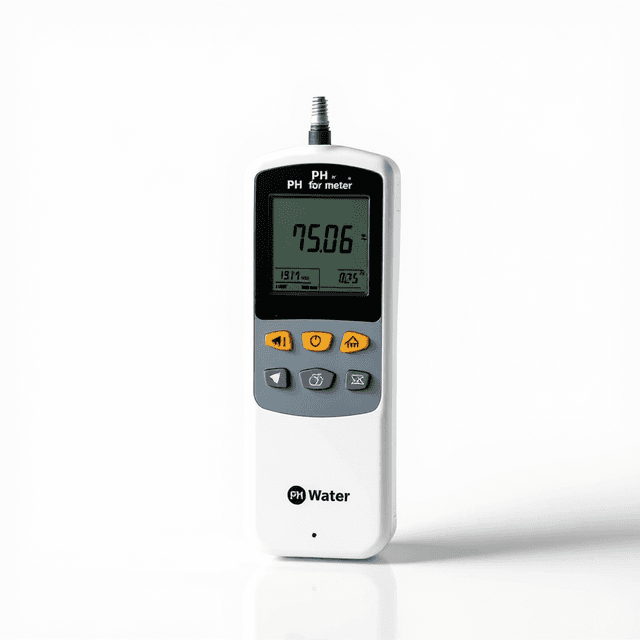
Portable pH Meter
Portable electrochemical pH meter with 7-inch touch screen, automatic temperature compensation, and 500-group data storage capacity for field and laboratory measurements.
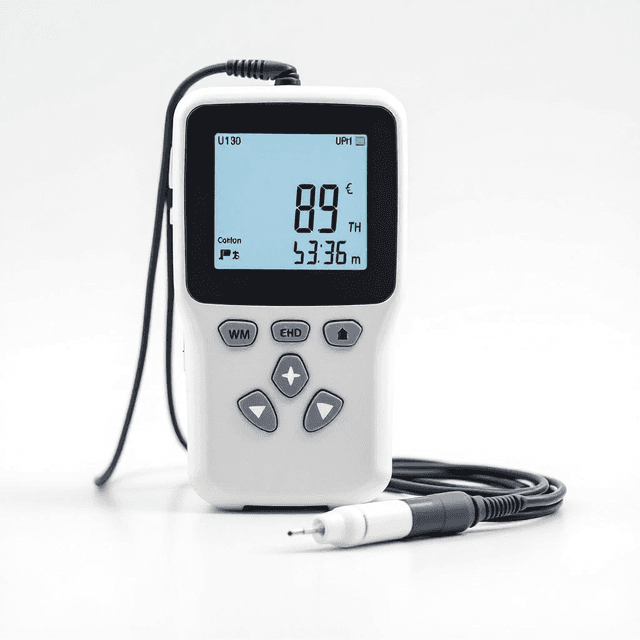
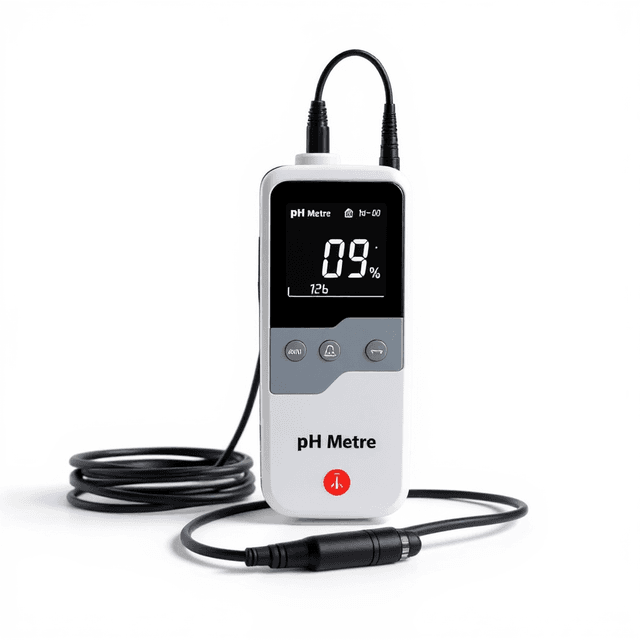
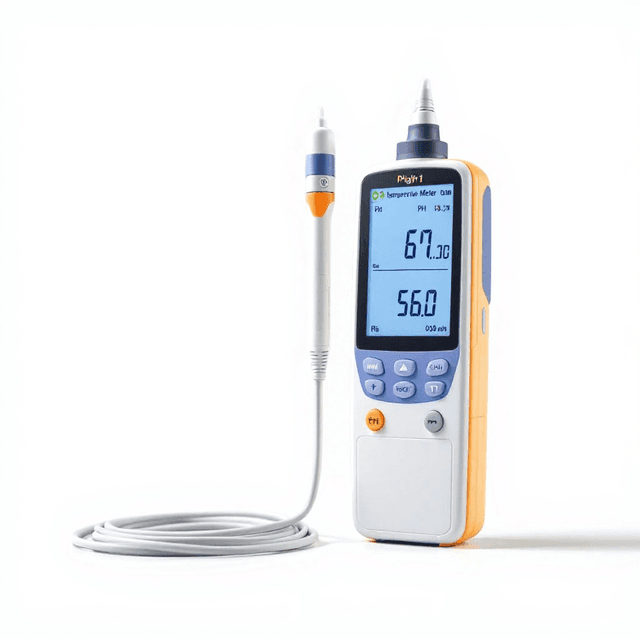
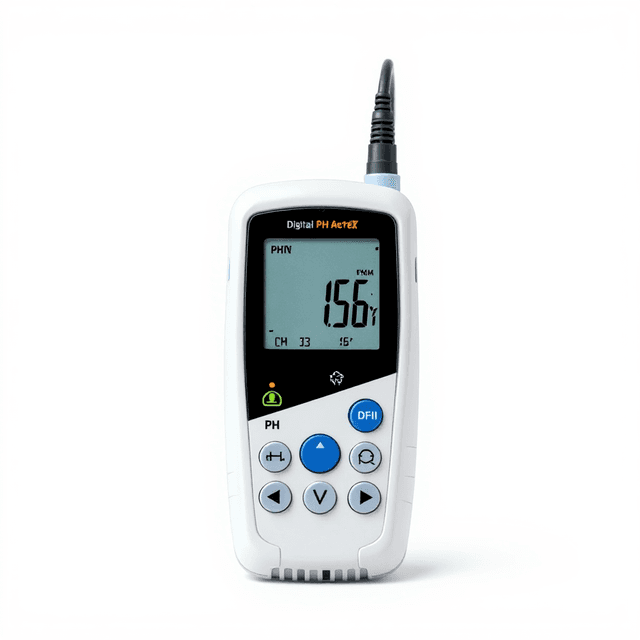
The ConductScience Portable pH Meter (BIO-0378) is a precision electrochemical measurement instrument designed for field and laboratory pH determination across diverse research applications. This portable unit features a 7-inch touch screen interface and supports 1-3 point calibration with automatic or manual temperature compensation from 0.0 to 100.0°C. The instrument operates on a rechargeable lithium battery system and provides data storage for 500 measurement groups with USB 2.0 connectivity and optional Bluetooth module for wireless data transfer.
Built for research environments requiring accurate pH monitoring, this meter delivers measurement capabilities with 0.1°C temperature resolution and ±0.5°C accuracy. The compact form factor (195×135×40mm, 600g) enables portable field measurements while maintaining laboratory-grade performance standards. Optional ORP probe compatibility extends measurement capabilities to oxidation-reduction potential monitoring for comprehensive water chemistry analysis.
How It Works
The portable pH meter operates through potentiometric measurement using a glass electrode system sensitive to hydrogen ion activity. The glass electrode develops a voltage potential proportional to the logarithm of hydrogen ion concentration in solution, following the Nernst equation. This potential difference, measured against a stable reference electrode, is converted to pH units through the instrument's internal calibration algorithms.
Temperature compensation functionality accounts for the temperature dependence of the Nernst slope, which varies approximately 2% per degree Celsius. The system performs automatic or manual temperature correction using integrated temperature sensors to ensure accurate pH readings across the full operational range of 0.0-100.0°C. The 7-inch touch screen interface provides real-time display of pH, temperature, and measurement statistics.
Data acquisition occurs through the instrument's internal storage system, capable of retaining 500 measurement groups with associated temperature and timestamp information. USB 2.0 and optional Bluetooth connectivity enable data transfer to external devices for analysis and record-keeping in research protocols.
Features & Benefits
Weight
- 4.5 kg
Dimensions
- L: 4.0 mm
- W: 19.5 mm
- H: 13.5 mm
Comparison Guide
| Feature | This Product | Typical Alternative | Advantage |
|---|---|---|---|
| Display Interface | 7-inch touch screen with graphical interface | Basic LCD displays with button navigation are common in portable units | Large touch screen enables intuitive operation and clear data visualization in field conditions |
| Calibration Points | 1-3 point calibration flexibility | Entry-level models often limited to 2-point calibration | Three-point calibration enables better linearity verification across full measurement range |
| Temperature Compensation Range | 0.0-100.0°C with automatic/manual modes | Limited temperature ranges in basic portable units | Extended temperature range supports diverse sample types from environmental to industrial applications |
| Data Storage Capacity | 500 measurement groups | Basic models typically store 50-200 measurements | High-capacity storage supports extended field studies without data loss or frequent downloads |
| Connectivity Options | USB 2.0 and optional Bluetooth module | Many portable units lack wireless connectivity | Wireless data transfer enables real-time monitoring and integration with laboratory information systems |
| Power System | 3.7V/1800mA rechargeable lithium battery | Standard AA/AAA battery operation varies by model | Rechargeable system reduces operational costs and environmental impact for frequent field use |
This portable pH meter combines laboratory-grade measurement accuracy with advanced features including touch screen interface, extended temperature compensation range, and wireless connectivity. The 500-group data storage capacity and flexible calibration options support comprehensive field research protocols while maintaining measurement traceability.
Practical Tips
Perform calibration at the temperature closest to your sample measurement conditions for optimal accuracy.
Why: Temperature-dependent electrode response is most accurately compensated when calibration and measurement temperatures are similar.
Use fresh buffer solutions and replace monthly or when values drift outside specification limits.
Why: Buffer degradation from contamination or evaporation leads to systematic measurement errors.
Store the glass electrode in appropriate storage solution, never allow it to dry completely.
Why: Electrode dehydration damages the glass membrane and reduces measurement sensitivity and response time.
Clean electrode junction regularly with distilled water and gentle brushing to remove sample residue.
Why: Junction fouling creates high impedance connections that slow response time and reduce accuracy.
Allow samples to reach thermal equilibrium before measurement, especially when switching between hot and cold samples.
Why: Temperature gradients in the sample create convection currents that interfere with stable electrode readings.
Rinse electrode thoroughly between samples with distilled water and gently blot dry with soft tissue.
Why: Cross-contamination between samples introduces measurement errors, particularly with samples of very different pH or ionic strength.
Record measurement conditions including temperature, sample volume, and stirring rate for reproducible results.
Why: Environmental factors affect measurement precision and are essential for protocol validation and method transfer.
Check electrode response time by monitoring stabilization in fresh buffer solution - replace electrode if response exceeds 30 seconds.
Why: Slow electrode response indicates membrane degradation or reference junction problems that compromise measurement reliability.
Setup Guide
What’s in the Box
- Portable pH meter main unit
- Glass pH electrode (typical)
- Temperature sensor probe (typical)
- USB 2.0 cable
- Battery charging cable
- Calibration buffer solutions (pH 4, 7, 10) (typical)
- Electrode storage solution (typical)
- User manual and calibration certificate (typical)
- Protective carrying case (typical)
Warranty
ConductScience provides a standard 1-year manufacturer warranty covering defects in materials and workmanship, with technical support for calibration procedures and measurement troubleshooting. Extended warranty options and calibration services are available for research applications requiring validated measurement traceability.
Compliance
What calibration frequency is recommended for maintaining measurement accuracy?
Daily calibration with 2-point buffer solutions (pH 4 and 7) is recommended for routine measurements. For critical applications or after extended storage, perform 3-point calibration including pH 10 buffer to verify full-range linearity.
How does the temperature compensation function affect measurement precision?
Temperature compensation corrects for the Nernst slope variation with temperature, providing accuracy within ±0.5°C across the 0.0-100.0°C range. Automatic mode continuously adjusts readings, while manual mode allows user-defined temperature input for stable sample conditions.
What data formats are supported for measurement export?
Data export capabilities include USB 2.0 transfer and optional Bluetooth connectivity. Consult product datasheet for specific file formats and compatibility with laboratory information management systems.
Can the instrument measure samples with high ionic strength or extreme pH values?
The instrument supports standard pH measurement range with glass electrode technology. For extreme pH conditions or high ionic strength samples, electrode selection and calibration protocols should be optimized for specific sample matrices.
What maintenance procedures are required for the glass electrode?
Store electrode in appropriate storage solution between measurements, perform regular cleaning with distilled water, and replace electrode when response time exceeds manufacturer specifications or calibration stability degrades.
How long does the rechargeable battery operate on a single charge?
The 3.7V/1800mA lithium battery provides extended field operation capability. Consult product datasheet for specific runtime specifications under various measurement protocols and display brightness settings.
Is the optional ORP probe calibrated separately from pH measurements?
ORP measurements require separate calibration procedures using standard ORP solutions. The instrument supports both pH and ORP measurement modes with independent calibration protocols and data storage.
What environmental conditions affect measurement stability?
Temperature fluctuations, electromagnetic interference, and sample matrix effects can influence measurement stability. Use temperature compensation, shield from electrical interference, and allow thermal equilibration for optimal results.
Have a question about this product?
Accessories
Enhance your setup with compatible accessories
Frequently Bought Together
Upgrade Options