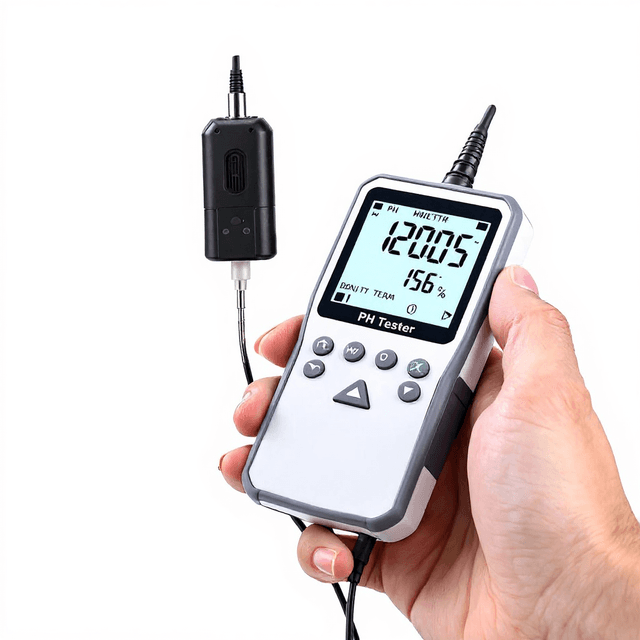
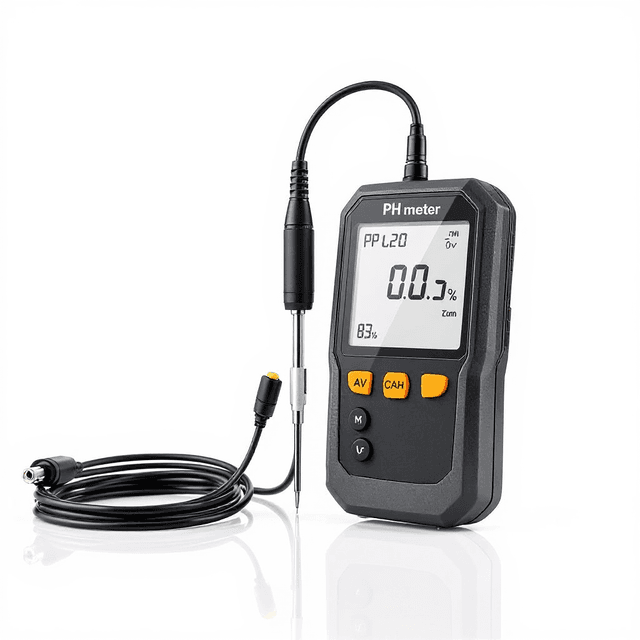
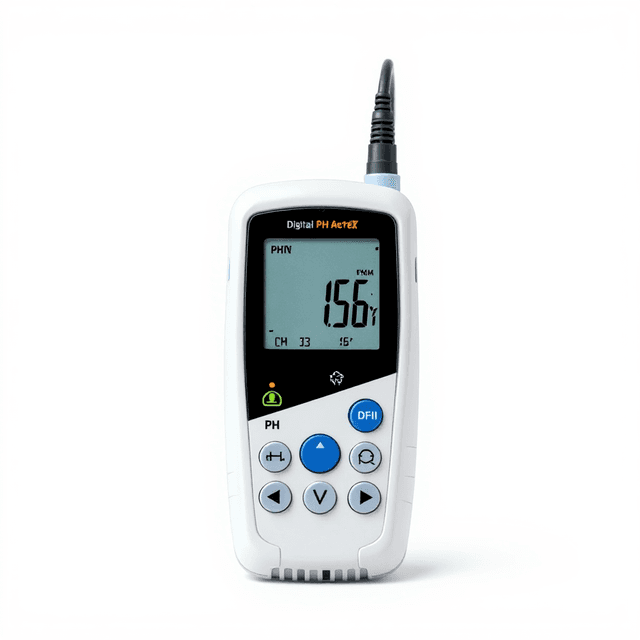
Portable pH Meter
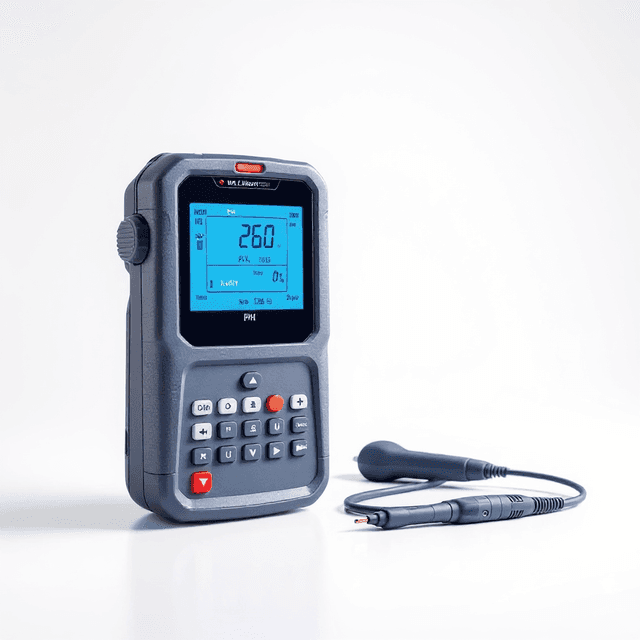
Portable electrochemical pH meter with automatic temperature compensation, 1-3 point calibration, and rechargeable battery for laboratory and field measurements.

Louise Corscadden, PhD
Director of Science · ConductScience
Ask Louise about Portable pH Meter fit, setup, configuration, or quote prep.
Already working with us? Sign in to connect this with My Scientist.
Key Specifications
Full details →- Model fit
- 1 selectable configurations
- SKU family
- BIO-0379
- Shipping box
- 20.4 x 7.9 x 3.2 cm
- Ordering
- Online checkout and quote request available
- Category
- pH Meters
- Build notes
- Confirm accessories, station layout, and support needs before purchase
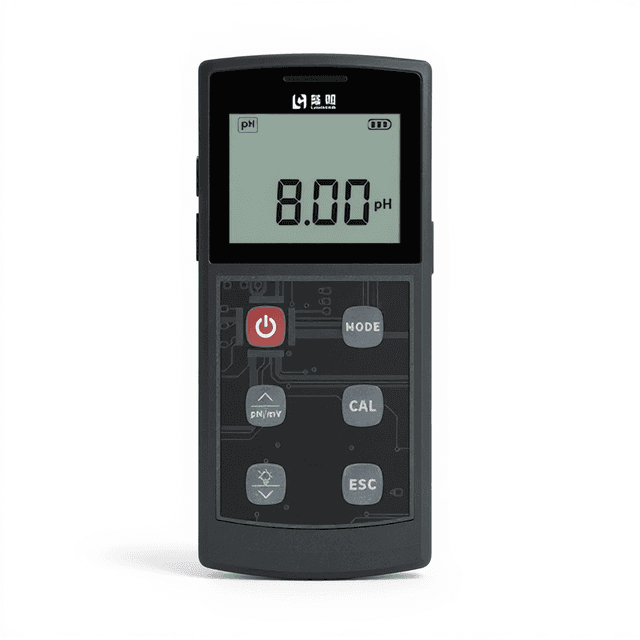
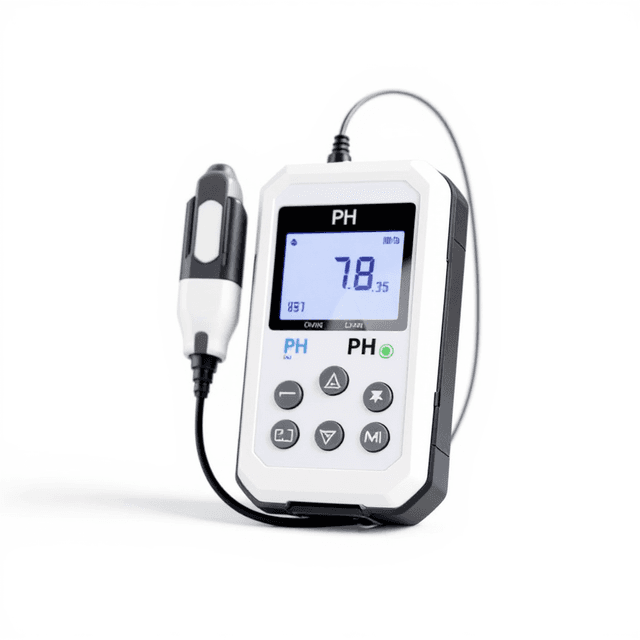
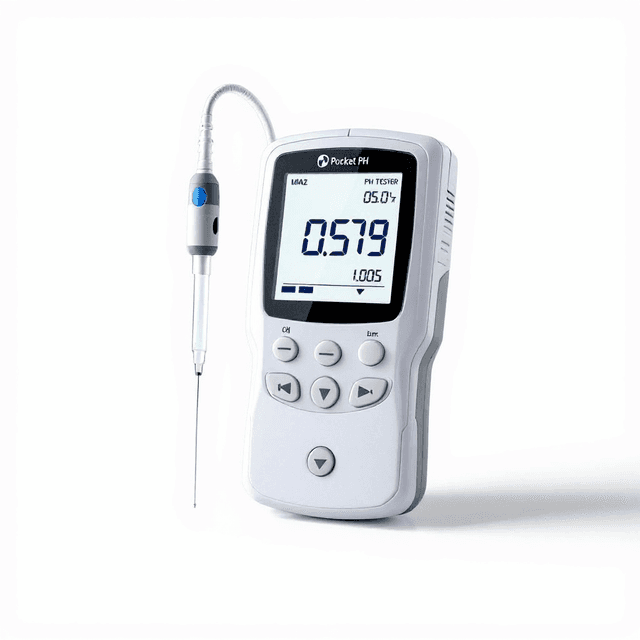
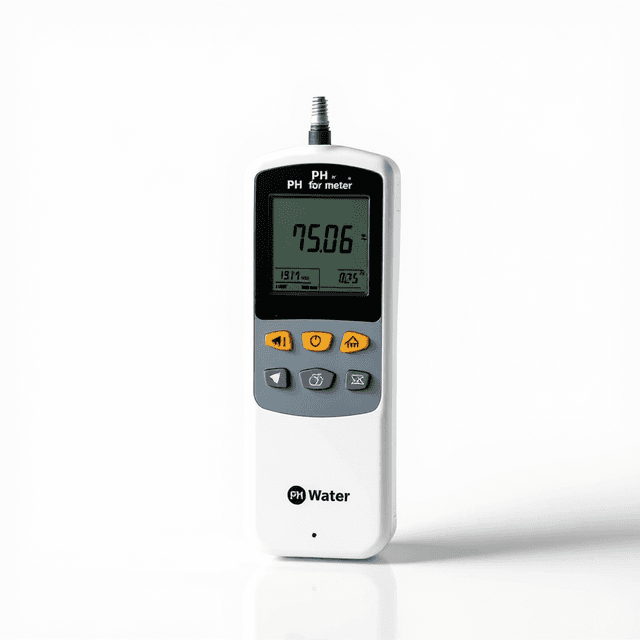
The Portable pH Meter (BIO-0379) is a handheld electrochemical instrument designed for accurate pH and temperature measurement in laboratory and field applications. The device features automatic temperature compensation across a range of 0.0-100.0°C (32.0-212.0°F) and supports 1-3 point calibration for enhanced measurement precision. With ±0.2°C temperature accuracy and 0.1°C resolution, this meter provides reliable data for aqueous sample analysis.
The instrument operates on a rechargeable lithium battery and includes Type-C USB charging capability for extended field use. The compact design (79×32×204mm, 350g net weight) facilitates portable measurements while maintaining laboratory-grade performance standards. Optional ORP probe compatibility extends functionality to oxidation-reduction potential measurements when required.
How It Works
The pH meter operates using a glass electrode sensor that generates a potential difference proportional to the hydrogen ion activity in solution. The glass membrane selectively responds to H+ ions, creating a measurable voltage that follows the Nernst equation relationship between pH and electrode potential. The reference electrode provides a stable potential against which the glass electrode voltage is measured.
Automatic temperature compensation adjusts readings based on the temperature coefficient of the pH measurement, accounting for the temperature dependence of both the Nernst slope and sample characteristics. The internal microprocessor applies these corrections in real-time, ensuring accurate measurements across the specified temperature range. Multi-point calibration using standard buffer solutions establishes the electrode response curve for precise pH determination.
Features & Benefits
Shipping weight
- 2.0 lb
Shipping box
- L: 20.4 cm
- W: 7.9 cm
- H: 3.2 cm
| Feature | This Product | Typical Alternative | Advantage |
|---|---|---|---|
| Temperature Compensation Range | 0.0-100.0°C automatic compensation | Many portable meters offer narrower temperature ranges or manual compensation | Enables accurate measurements across wider sample temperature conditions without manual adjustments |
| Calibration Points | 1-3 point calibration capability | Entry-level models often limited to 1-2 point calibration | Provides flexibility to optimize accuracy across different sample pH ranges |
| Power System | Rechargeable lithium battery with Type-C USB charging | Many models use disposable batteries or proprietary charging | Reduces operating costs and provides convenient charging with standard USB cables |
| Temperature Accuracy | ±0.2°C accuracy with 0.1°C resolution | Basic models often have ±0.5°C accuracy | Ensures reliable temperature compensation and better overall pH measurement precision |
| Additional Measurement Capability | Optional ORP probe compatibility | Most pH-only meters lack multi-parameter capability | Expands measurement capabilities for water treatment and environmental applications |
| Portable Design | 350g net weight, compact 79×32×204mm dimensions | Varies by model, some meters are larger or heavier | Facilitates easy transport for field measurements and reduces laboratory bench space requirements |
This pH meter combines automatic temperature compensation across a wide temperature range with flexible calibration options and rechargeable power system. The compact design and optional ORP capability provide versatility for both routine laboratory measurements and field monitoring applications.
Practical Tips
Perform calibration at the same temperature as your samples when possible, and always use fresh buffer solutions.
Why: Temperature differences between calibration and measurement can introduce systematic errors despite automatic compensation.
Clean the electrode with distilled water between different samples and use appropriate cleaning solutions for protein or organic contamination.
Why: Cross-contamination and electrode fouling can cause measurement drift and reduced response time.
Allow sufficient equilibration time in each sample and ensure complete electrode immersion during measurement.
Why: Incomplete equilibration or partial immersion leads to unstable readings and measurement errors.
Record sample temperature along with pH readings even when using automatic temperature compensation.
Why: Temperature data provides important context for interpreting pH results and troubleshooting measurement issues.
If readings become unstable or drift excessively, check electrode condition and perform fresh calibration with new buffer solutions.
Why: Electrode aging or contaminated buffers are common sources of measurement problems.
Rinse electrodes thoroughly when moving between samples of different pH ranges or chemical compositions.
Why: Chemical incompatibilities can damage the electrode or create hazardous reactions.
Use the minimum number of calibration points that span your expected sample pH range for fastest calibration.
Why: Unnecessary calibration points increase setup time without improving accuracy within the working range.
Store the instrument with the electrode in proper storage solution and keep the Type-C charging port clean and dry.
Why: Proper storage maintains electrode performance and prevents corrosion of electrical connections.
Setup Guide
What’s in the Box
- Portable pH meter main unit
- pH electrode with protective cap
- Type-C USB charging cable
- User manual and calibration guide
- Carrying case (typical)
- Calibration certificate (typical)
Warranty
ConductScience provides a standard one-year manufacturer warranty covering defects in materials and workmanship, with technical support available for calibration and operational guidance.
Compliance
What calibration buffers are recommended for optimal accuracy?
Use certified pH buffers at 4.01, 7.00, and 10.01 for 3-point calibration, or pH 7.00 and one endpoint buffer for 2-point calibration depending on your sample range. Ensure buffers are at measurement temperature for best results.
How does the automatic temperature compensation function?
The built-in temperature sensor measures sample temperature and automatically applies corrections based on the Nernst slope temperature coefficient and sample thermal characteristics across the 0-100°C range.
What is the expected electrode lifetime and replacement indicators?
Glass pH electrodes typically last 6-12 months with regular use. Replace when calibration drift exceeds specifications, response time increases significantly, or the electrode fails to achieve stable readings in buffer solutions.
Can this meter measure samples with high ionic strength or extreme pH?
Performance depends on the specific electrode used and sample matrix. Consult product datasheet for pH range specifications and consider specialized electrodes for extreme conditions or high ionic strength samples.
What data logging or connectivity options are available?
Consult product datasheet for specific data storage and connectivity features. The Type-C USB port may support data transfer depending on instrument configuration.
How should the electrode be stored between measurements?
Store the electrode in pH 7 buffer solution or manufacturer-recommended storage solution to maintain glass membrane hydration and junction electrolyte levels. Never store in distilled water.
What maintenance is required for consistent performance?
Regular calibration verification, electrode cleaning with appropriate solutions, and proper storage are essential. Clean protein or organic fouling with enzymatic cleaners and mineral deposits with dilute acid solutions.
Have a question about this product?
Have a question? Just ask.
Send it over and we'll email you a personalized answer — no call, no scheduling.
Prefer to talk it through?
Accessories
Enhance your setup with compatible accessories
Frequently Bought Together