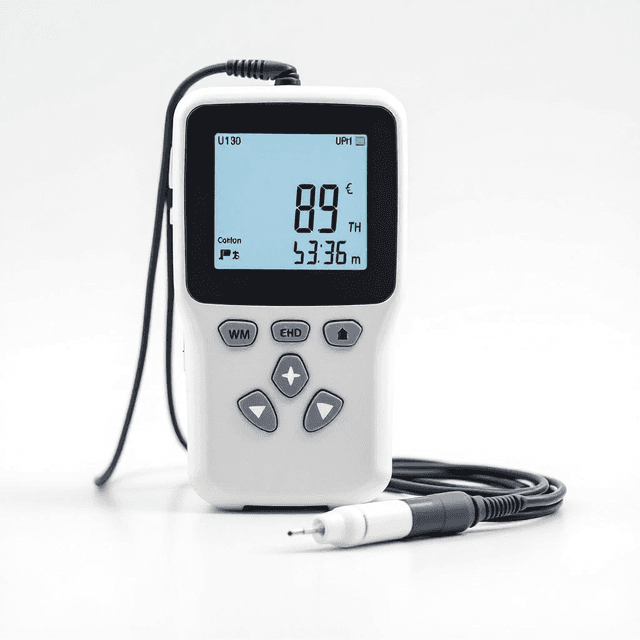
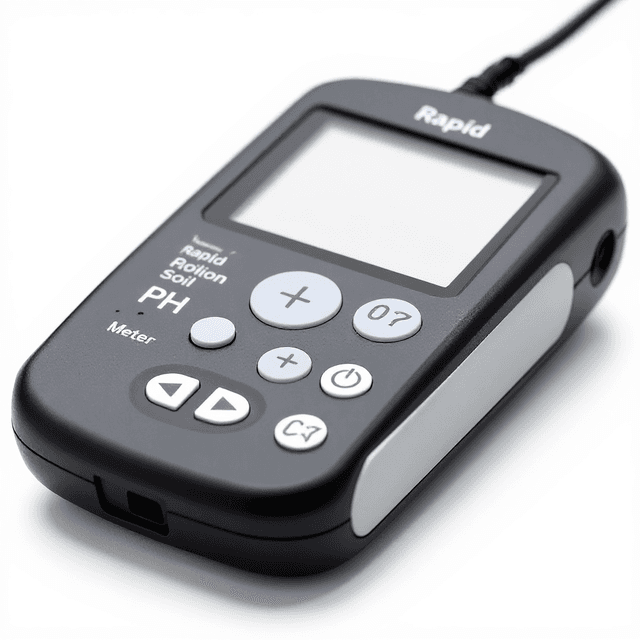
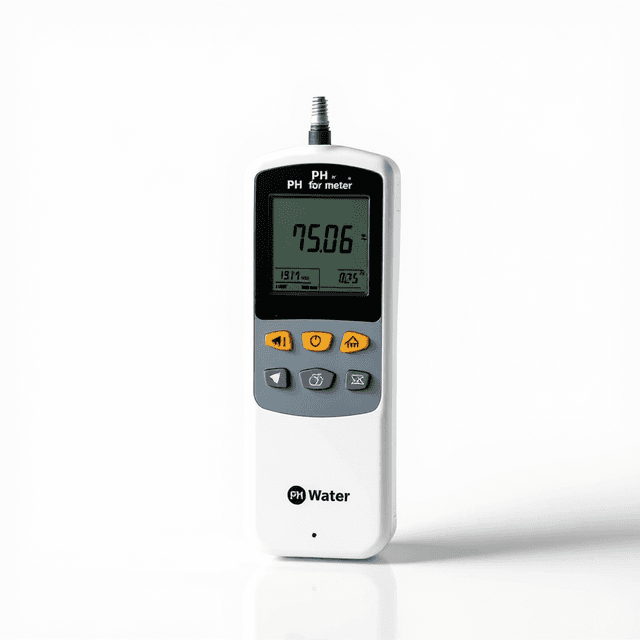
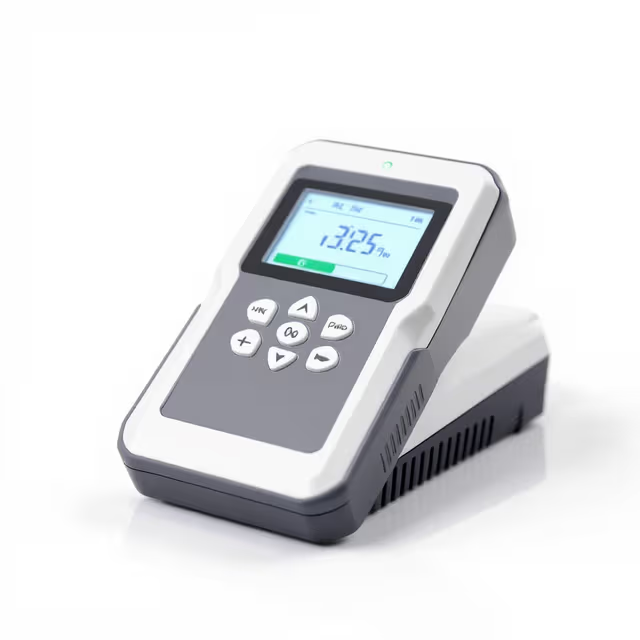
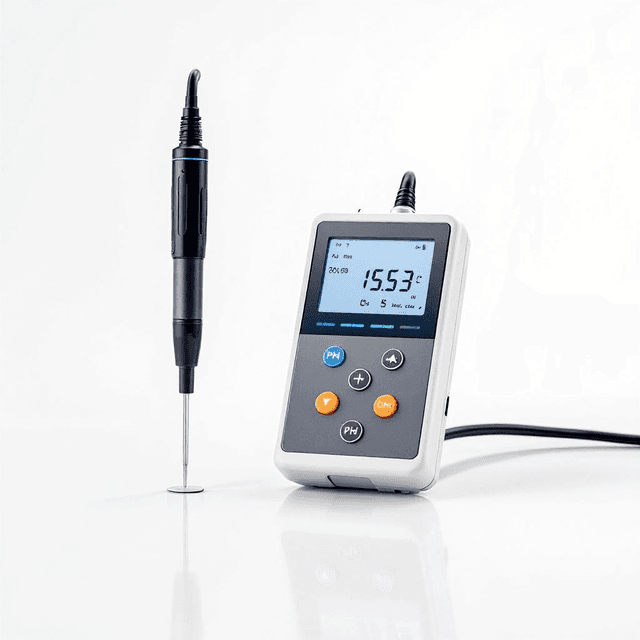
Pocket pH Tester
Compact handheld pH meter with 0.01 pH resolution, ±0.05 pH accuracy, and IP57 protection for field and laboratory pH measurements.

Louise Corscadden, PhD
Director of Science · ConductScience
Ask Louise about Pocket pH Tester fit, setup, configuration, or quote prep.
Already working with us? Sign in to connect this with My Scientist.
Key Specifications
Full details →- Model fit
- Configured during quote
- SKU family
- LH-0007
- Shipping box
- 2.0 x 18.5 x 5.0 cm
- Ordering
- Online checkout and quote request available
- Category
- pH Meters
- Build notes
- Confirm accessories, station layout, and support needs before purchase
The Pocket pH Tester is a compact, portable pH measurement instrument designed for field and laboratory applications requiring accurate pH determination. This handheld device features 0.01 pH resolution with ±0.05 pH accuracy, providing reliable measurements across standard pH ranges. The instrument incorporates manual temperature compensation (0-99.9°C) and supports 1-3 point calibration using standard buffer solutions (pH 4.00, 6.86, 9.18).
With its IP57 protection rating and compact form factor (185×50×20mm), this pH tester enables measurements in diverse environments while maintaining measurement integrity. The device operates on dual CR2032 lithium batteries and weighs only 30g, making it suitable for extended field use and routine laboratory pH monitoring protocols.
How It Works
The pH tester operates using a glass electrode system that generates a voltage potential proportional to hydrogen ion activity in solution. The glass membrane selectively responds to H+ ions, creating an electrochemical potential difference measured against a reference electrode. This potential, following the Nernst equation, correlates directly with pH at a given temperature.
The instrument incorporates manual temperature compensation to account for the temperature dependence of electrode response and sample pH. Calibration using standard buffer solutions (pH 4.00, 6.86, 9.18) establishes the electrode slope and offset parameters, ensuring accurate measurements across the pH range.
Digital signal processing converts the analog electrode potential to pH units with 0.01 pH resolution. The compact electronics package includes amplification circuits, analog-to-digital conversion, and display drivers housed within the IP57-rated enclosure.
Features & Benefits
Shipping weight
- 0.03 lb
Shipping box
- L: 2.0 cm
- W: 18.5 cm
- H: 5.0 cm
| Feature | This Product | Typical Alternative | Advantage |
|---|---|---|---|
| pH Resolution | 0.01 pH | Entry-level models often provide 0.1 pH resolution | Higher resolution enables detection of small pH changes critical in analytical and quality control applications. |
| Accuracy Specification | ±0.05 pH | Basic pocket meters commonly offer ±0.1 pH accuracy | Improved accuracy reduces measurement uncertainty for applications requiring reliable pH determination. |
| Calibration Points | 1-3 point calibration (pH 4.00/6.86/9.18) | Single-point calibration systems limit range optimization | Multi-point calibration allows accuracy optimization across different pH ranges for diverse sample types. |
| Temperature Compensation Range | 0-99.9°C manual compensation | Limited temperature ranges in basic models | Extended temperature range accommodates diverse sample conditions from cold storage to heated processes. |
| Protection Rating | IP57 dust and water protection | Basic models often lack environmental protection | Environmental protection enables reliable operation in field conditions and wet laboratory environments. |
| Weight | 30g instrument weight | Varies by model and feature set | Lightweight design reduces fatigue during extended measurement sessions and improves portability. |
This pH tester combines analytical-grade accuracy (±0.05 pH) with portable design for field and laboratory applications. The multi-point calibration system and extended temperature compensation range provide measurement flexibility across diverse sample types and conditions.
Practical Tips
Always use fresh buffer solutions and calibrate in the pH range closest to your expected sample values for optimal accuracy.
Why: Buffer degradation and calibration range selection directly affect measurement accuracy and reliability.
Clean the electrode with distilled water between samples and store in appropriate storage solution when not in use.
Why: Proper cleaning prevents cross-contamination while appropriate storage maintains electrode responsiveness and extends lifespan.
Allow sufficient equilibration time for each measurement and record temperature conditions for documentation purposes.
Why: Electrode equilibration ensures accurate readings while temperature documentation supports data quality and traceability.
If readings drift or appear unstable, check battery level and verify electrode storage and cleaning procedures.
Why: Low battery voltage and electrode contamination are common causes of measurement instability and drift.
Perform calibration verification using a third buffer solution not used in the calibration process to validate accuracy.
Why: Independent verification confirms calibration quality and identifies potential electrode or calibration issues.
Rinse electrode thoroughly after measuring aggressive or contaminated samples to prevent damage or cross-contamination.
Why: Chemical compatibility and contamination control protect both the instrument and subsequent measurement integrity.
Set manual temperature compensation accurately for each sample type and measurement environment.
Why: Temperature compensation directly affects pH accuracy since electrode response is temperature-dependent according to the Nernst equation.
Setup Guide
What’s in the Box
- Pocket pH Tester main unit
- Two CR2032 lithium batteries
- Protective electrode cap (typical)
- User manual and quick start guide (typical)
- Calibration buffer samples (typical)
Warranty
ConductScience provides a standard one-year manufacturer warranty covering defects in materials and workmanship. Technical support is available for calibration procedures, troubleshooting, and operational guidance throughout the warranty period.
Compliance
What is the calibration stability and how often should I recalibrate?
Calibration stability depends on electrode condition and usage frequency. For analytical work, daily calibration verification is recommended. Field applications may require more frequent calibration depending on sample matrix complexity.
Can the electrode be replaced if damaged?
Consult product datasheet for electrode replacement specifications. Most pocket pH meters use integrated electrode assemblies that may require manufacturer service for replacement.
What is the measurement response time for different sample types?
Response time varies with sample ionic strength and temperature. Aqueous solutions typically stabilize within 30-60 seconds, while viscous or low-ionic-strength samples may require longer equilibration.
How does temperature compensation affect measurement accuracy?
Manual temperature compensation corrects for the Nernst equation temperature dependence (~0.2 pH units per 25°C). Accurate temperature setting is critical for precise pH measurements, especially outside ambient conditions.
What sample volume is required for accurate measurements?
Minimum sample volume should allow complete electrode immersion. Typically 10-20mL provides adequate depth for the electrode junction and reference system to function properly.
Is the device suitable for non-aqueous or organic solvent measurements?
Standard glass electrodes are designed for aqueous solutions. Organic solvents may damage the electrode or provide unreliable readings. Consult product datasheet for specific solvent compatibility.
How do I store the electrode when not in use?
Store the electrode in pH 7 buffer solution or KCl storage solution to maintain proper hydration. Avoid storing dry or in distilled water, which can damage the glass membrane.
What maintenance is required for optimal performance?
Regular calibration, proper storage, and periodic cleaning with appropriate solutions maintain electrode performance. Replace batteries when low battery indicators appear to ensure stable operation.
Have a question about this product?
Have a question? Just ask.
Send it over and we'll email you a personalized answer — no call, no scheduling.
Prefer to talk it through?