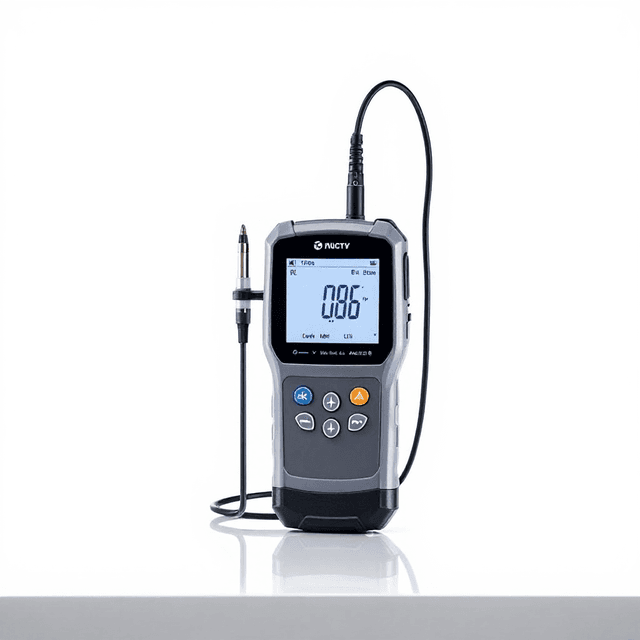
Portable Turbidity and Total Suspended Solids Meter IP65 (Lohand)
Portable dual-parameter instrument measuring turbidity (0-1000 NTU) and total suspended solids (0-1000 mg/L) using dual-detector near-infrared technology with IP65 weatherproof rating for field applications.
| Turbidity Range | 0-1000 NTU |
| TSS Range | 0-1000 mg/L |
| IP Rating | IP65 |
| Detector System | Dual-detector: 90deg scattered + 180deg transmitted |
| Light Source | Near-infrared LED |
| Automation Level | manual |

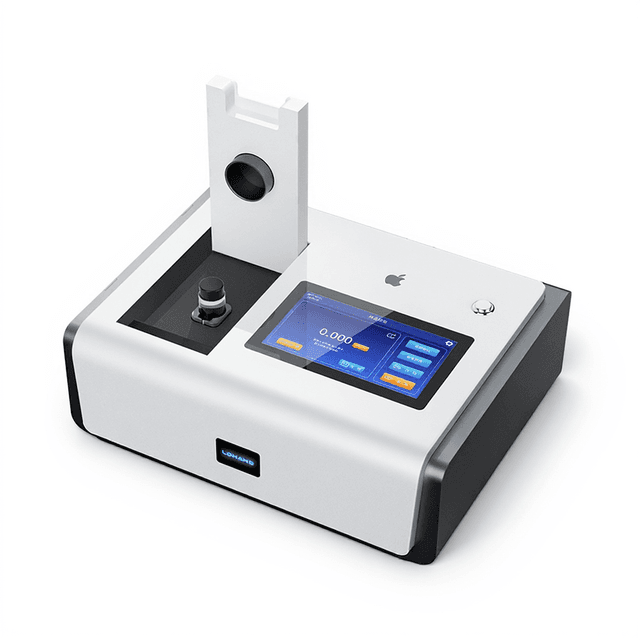
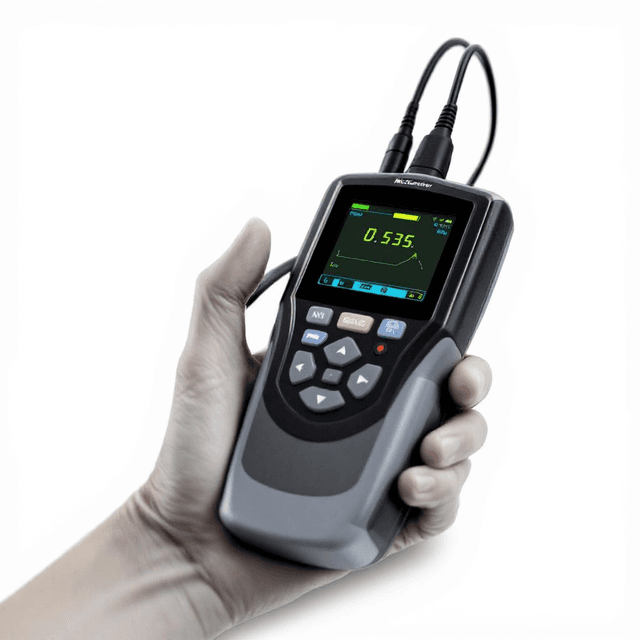
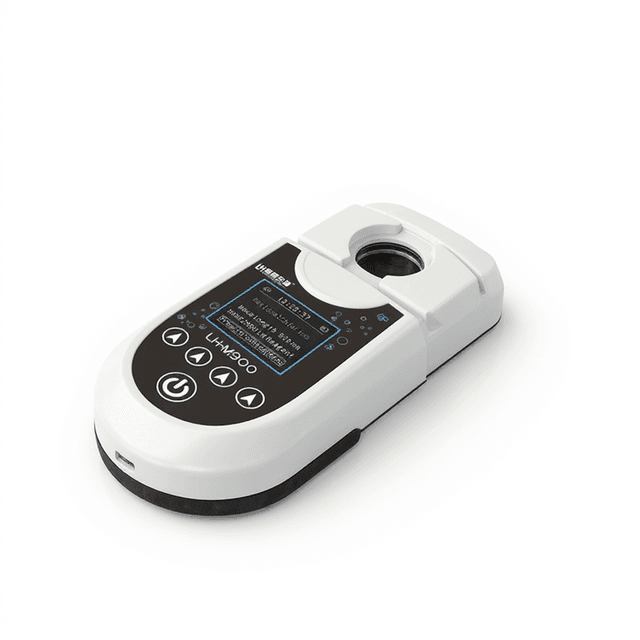
The Portable Turbidity and Total Suspended Solids Meter provides dual-parameter water quality measurement capabilities for field and laboratory applications. This instrument employs a dual-detector system with 90-degree scattered light detection and 180-degree transmitted light measurement using a near-infrared LED source, enabling simultaneous turbidity quantification (0-1000 NTU) and total suspended solids determination (0-1000 mg/L). The OLED HD display provides clear readout visibility under varying lighting conditions, while the IP65 rating ensures protection against dust ingress and water jets for reliable field operation.
The compact form factor (170 x 72 x 44 mm, 0.29 kg) facilitates portable measurements across diverse sampling locations. The near-infrared light source minimizes interference from colored dissolved organic matter, providing accurate turbidity measurements in natural water samples. The dual-detector configuration allows for comprehensive particle characterization by measuring both forward-scattered and back-scattered light signals, supporting both turbidity assessment and suspended solids concentration estimation from a single measurement.
How It Works
The instrument operates on the principle of optical light scattering and attenuation measurement. When the near-infrared LED illuminates a water sample, suspended particles cause light scattering at various angles depending on particle size, concentration, and refractive index properties. The dual-detector system simultaneously measures light scattered at 90 degrees (nephelometric method) and light transmitted at 180 degrees (attenuation method) to provide comprehensive particle characterization.
Turbidity measurement follows the nephelometric principle, where suspended particles scatter incident light proportionally to their concentration and size distribution. The 90-degree detector measures this scattered light intensity, which correlates with turbidity in Nephelometric Turbidity Units (NTU). The transmitted light detector measures light attenuation through the sample, providing information about particle loading and enabling total suspended solids estimation through empirically derived algorithms.
The near-infrared wavelength selection minimizes interference from colored dissolved organic matter commonly present in natural waters, ensuring accurate measurements across diverse sample matrices. The microprocessor-controlled system processes both detector signals to calculate turbidity and TSS values, displaying results on the integrated OLED screen for immediate field assessment.
Features & Benefits
Turbidity Range
- 0-1000 NTU
TSS Range
- 0-1000 mg/L
IP Rating
- IP65
Detector System
- Dual-detector: 90deg scattered + 180deg transmitted
Light Source
- Near-infrared LED
Automation Level
- manual
Brand
- ConductScience
Display Type
- OLED HD
Research Domain
- Environmental Monitoring
- Food Science
- Industrial Hygiene
- Materials Science
- Microbiology
- Pharmaceutical QC
Weight
- 0.29 kg
Dimensions
- L: 170.0 mm
- W: 72.0 mm
- H: 44.0 mm
Comparison Guide
| Feature | This Product | Typical Alternative | Advantage |
|---|---|---|---|
| Measurement Parameters | Dual-parameter: turbidity (0-1000 NTU) and TSS (0-1000 mg/L) | Single-parameter instruments often measure only turbidity or require separate TSS analysis | Eliminates need for separate suspended solids testing, reducing analysis time and improving data correlation. |
| Detection System | Dual-detector with 90° scattered and 180° transmitted light measurement | Single-detector systems typically use only nephelometric measurement | Provides more comprehensive particle characterization and enables TSS estimation through combined optical signals. |
| Light Source | Near-infrared LED | White light LEDs or tungsten sources are common in entry-level models | Reduces interference from colored dissolved organic matter, improving accuracy in natural water samples. |
| Display Technology | OLED HD display | LCD displays with limited visibility in bright conditions | Ensures clear readout visibility in direct sunlight and low-light field conditions. |
| Environmental Protection | IP65 rating for dust and water jet protection | Lower IP ratings or laboratory-only instruments | Enables reliable field operation in harsh outdoor conditions without protective enclosures. |
| Portability | Compact design: 170 x 72 x 44 mm, 0.29 kg | Larger benchtop units or heavier portable models | Facilitates transport to remote sampling locations and enables single-handed field operation. |
This instrument combines dual-parameter measurement capability with robust field-portable design, offering both turbidity and TSS quantification in a single compact unit. The near-infrared LED and dual-detector system provide enhanced measurement capability compared to single-parameter instruments, while the IP65 rating ensures reliable field operation in demanding environmental conditions.
Practical Tips
Perform zero calibration with fresh deionized water at the beginning of each measurement session and verify with certified standards.
Why: Optical drift and contamination can affect baseline readings, compromising measurement accuracy.
Clean optical windows with lens tissue and appropriate solvent after each field deployment, checking for scratches or deposits.
Why: Optical contamination directly affects light transmission and scattering measurements, leading to systematic errors.
Allow samples to equilibrate to ambient temperature and gently mix without introducing air bubbles before measurement.
Why: Temperature differences and air bubbles create optical artifacts that interfere with accurate turbidity and TSS determination.
Fill the sample cell completely and ensure no air gaps are present in the optical path during measurement.
Why: Air bubbles scatter light and create false positive readings that do not represent actual particle content.
Record measurement conditions including temperature, sample source, and time since collection for data interpretation.
Why: Environmental factors and sample handling can influence results and are essential for proper data analysis and quality assurance.
If readings appear unstable, check for sample cell contamination and ensure proper insertion into the measurement chamber.
Why: Improper optical alignment or surface contamination causes measurement variability and unreliable results.
Handle samples according to appropriate laboratory safety protocols and dispose of standards properly after use.
Why: Water samples may contain biological or chemical contaminants requiring proper handling and disposal procedures.
Verify instrument linearity across the full measurement range using multiple certified standards rather than single-point calibration.
Why: Multi-point verification ensures accurate measurements across the entire operating range and identifies potential calibration drift.
Setup Guide
What’s in the Box
- Turbidity and TSS meter main unit
- Sample measurement cell
- Power adapter and charging cable (typical)
- Calibration standards set (typical)
- Carrying case (typical)
- Quick start guide and user manual (typical)
- Calibration certificate (typical)
Warranty
ConductScience provides a standard one-year manufacturer warranty covering defects in materials and workmanship, with technical support available for instrument operation and troubleshooting assistance.
Compliance
What is the detection limit and precision for turbidity measurements at low concentrations?
Consult the product datasheet for specific detection limits and precision specifications. The 0-1000 NTU range suggests capability for both low-level drinking water and high-turbidity natural water applications.
How does the TSS correlation algorithm account for different particle types and densities?
The instrument uses empirically derived algorithms based on optical properties. Correlation accuracy may vary with particle composition - site-specific calibration with gravimetric TSS analysis is recommended for critical applications.
Can the instrument store measurement data and what output formats are available?
Consult product specifications for data storage capacity and output options. Many portable instruments provide internal memory and USB connectivity for data transfer to analysis software.
What maintenance is required for the optical components and measurement chamber?
Regular cleaning of optical windows with appropriate solvents and verification with certified standards. The IP65 rating suggests the optical system is protected but periodic calibration verification is essential.
How does temperature affect measurement accuracy and is compensation provided?
Temperature can affect both optical properties and particle settling. Check specifications for operating temperature range and automatic temperature compensation features.
What sample volume is required and can measurements be performed in continuous flow?
The integrated sample cell design suggests discrete sample measurements. Consult specifications for minimum sample volume requirements and potential flow-through accessories.
How does this dual-detector approach compare to single-angle nephelometers?
The dual-detector system provides both turbidity (scattered light) and attenuation (transmitted light) data, potentially offering better characterization of complex particle distributions than single-angle instruments.
What quality control standards should be used for routine calibration verification?
Use NIST-traceable turbidity standards spanning your measurement range, typically including 0.1, 20, 100, and 800 NTU standards for comprehensive linearity verification.
Have a question about this product?
Accessories
Enhance your setup with compatible accessories
Frequently Bought Together
Upgrade Options