PP Island Bench
Standalone laboratory bench providing flexible workspace for equipment placement and sample preparation in research environments.

Louise Corscadden, PhD
Director of Science · ConductScience
Ask Louise about PP Island Bench fit, setup, configuration, or quote prep.
Already working with us? Sign in to connect this with My Scientist.
Key Specifications
Full details →- Model fit
- Configured during quote
- SKU family
- BIO-0755
- Shipping box
- 42.0 x 43.6 x 38.0 cm
- Ordering
- Online checkout and quote request available
- Category
- Storage & Furniture
- Build notes
- Confirm accessories, station layout, and support needs before purchase
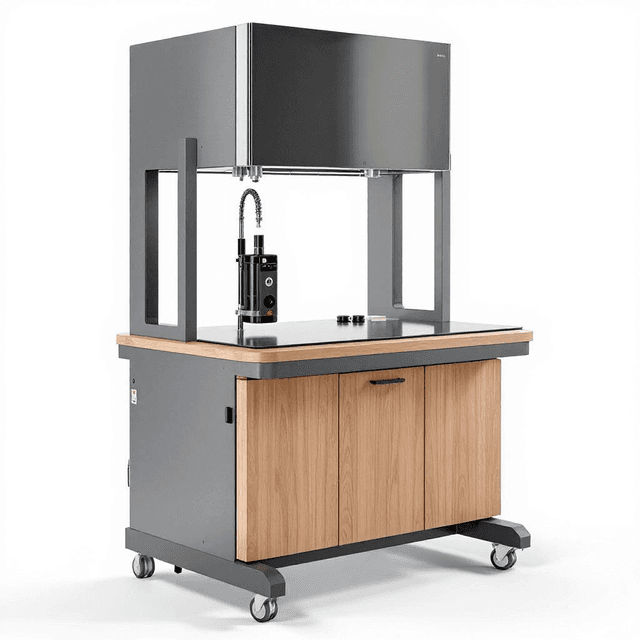
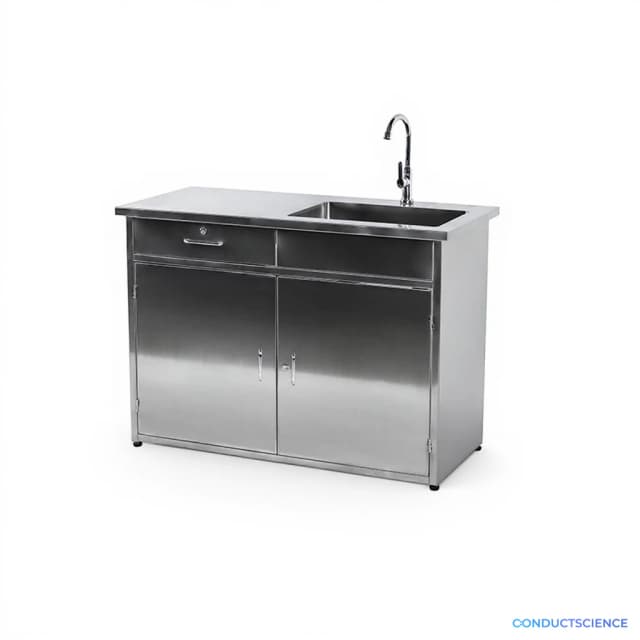
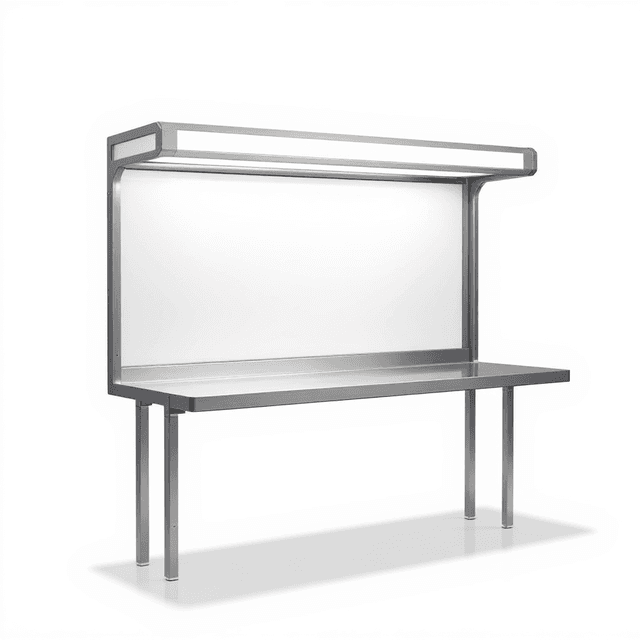
The PP Island Bench is a laboratory furniture solution designed for modern research environments requiring flexible and functional workspace organization. This bench system provides an independent work surface that can be positioned anywhere within the laboratory, offering researchers dedicated space for equipment placement, sample preparation, and analytical procedures without requiring wall mounting or permanent installation.
Constructed for laboratory use, the island bench accommodates various research workflows while maintaining the durability and chemical resistance standards expected in scientific environments. The bench design allows for optimal laboratory layout planning, enabling researchers to create efficient work zones that can be reconfigured as experimental needs evolve.
How It Works
The PP Island Bench functions as a standalone laboratory work surface that provides structural support and chemical-resistant workspace for research activities. The bench utilizes a robust frame design that distributes weight evenly across the laboratory floor, eliminating the need for wall support or permanent mounting hardware.
The polypropylene construction offers chemical resistance to common laboratory solvents, acids, and bases, while maintaining dimensional stability under varying temperature and humidity conditions. The bench surface provides a flat, stable platform suitable for precision instruments, analytical balances, and other research equipment requiring vibration-free mounting.
Laboratory workflow optimization occurs through strategic positioning of the island bench to create efficient work triangles between equipment, storage, and utility connections. The independent nature of the bench allows researchers to reconfigure laboratory layouts without structural modifications to existing infrastructure.
Features & Benefits
Brand
- ConductScience
Research Domain
- Analytical Chemistry
- Cell Biology
- Food Science
- Materials Science
- Microbiology
- Pharmaceutical QC
Shipping weight
- 29.98 lb
Shipping box
- L: 42.0 cm
- W: 43.6 cm
- H: 38.0 cm
| Feature | This Product | Typical Alternative | Advantage |
|---|---|---|---|
| Construction Material | Polypropylene construction | Metal or phenolic resin surfaces are common in laboratory furniture | Polypropylene offers superior chemical resistance to acids and bases while maintaining lighter weight than metal alternatives |
| Installation Method | Standalone island design | Many laboratory benches require wall mounting or permanent installation | Independent positioning allows laboratory layout flexibility without structural modifications |
| Mobility | Repositionable within laboratory | Fixed benches cannot be moved once installed | Enables laboratory reconfiguration as research needs evolve without reinstallation costs |
| Chemical Resistance | Polypropylene chemical resistance | Wood or composite surfaces may have limited chemical compatibility | Withstands exposure to common laboratory chemicals and cleaning agents without degradation |
The PP Island Bench provides chemical-resistant workspace with positioning flexibility through its standalone polypropylene construction. The island design enables laboratory layout optimization without requiring permanent installation or wall mounting.
Practical Tips
Position the bench to create efficient work triangles between equipment, storage, and utility access points.
Why: Optimized positioning reduces researcher movement and improves laboratory workflow efficiency.
Clean the polypropylene surface with standard laboratory cleaning agents and avoid abrasive materials.
Why: Proper cleaning maintains chemical resistance and prevents surface damage that could harbor contaminants.
Verify floor levelness before final positioning to ensure equipment stability.
Why: Level mounting surface is critical for precision instruments and analytical equipment accuracy.
Distribute heavy equipment loads evenly across the work surface to prevent concentration of stress.
Why: Even load distribution maintains bench integrity and prevents localized deformation.
Check all connection points if the bench becomes unstable during use.
Why: Loose connections can develop over time with thermal cycling and equipment vibration.
Plan utility routing before final bench positioning to avoid interference with equipment access.
Why: Proper utility access prevents the need for bench repositioning after equipment installation.
Setup Guide
What’s in the Box
- Island bench frame components (typical)
- Polypropylene work surface (typical)
- Assembly hardware kit (typical)
- Installation instructions (typical)
- Leveling feet or adjusters (typical)
Warranty
ConductScience provides standard manufacturer warranty coverage for laboratory furniture products. Technical support is available for assembly guidance and specification inquiries.
Compliance
What is the maximum weight capacity of the island bench?
Weight capacity specifications should be consulted in the product datasheet to ensure compatibility with your specific equipment loads and safety requirements.
How does polypropylene construction affect chemical compatibility?
Polypropylene provides resistance to most common laboratory acids, bases, and organic solvents, though specific chemical compatibility should be verified for your particular reagents.
Can the bench be moved after installation?
The island design allows for repositioning within the laboratory, though equipment should be removed and proper lifting techniques used to prevent damage.
What are the available size options?
Consult the product specifications for available dimensions to match your laboratory space and workflow requirements.
Does the bench require any utility connections?
The basic bench structure does not require utilities, though positioned equipment may need access to power, gas, or data connections.
How should the bench surface be cleaned and maintained?
Standard laboratory cleaning protocols using appropriate chemical-resistant cleaning agents can be applied to the polypropylene surface.
Is the bench suitable for vibration-sensitive equipment?
The solid construction provides stability for most laboratory equipment, though specific vibration requirements should be evaluated for sensitive instrumentation.
Have a question about this product?
Have a question? Just ask.
Send it over and we'll email you a personalized answer — no call, no scheduling.
Prefer to talk it through?