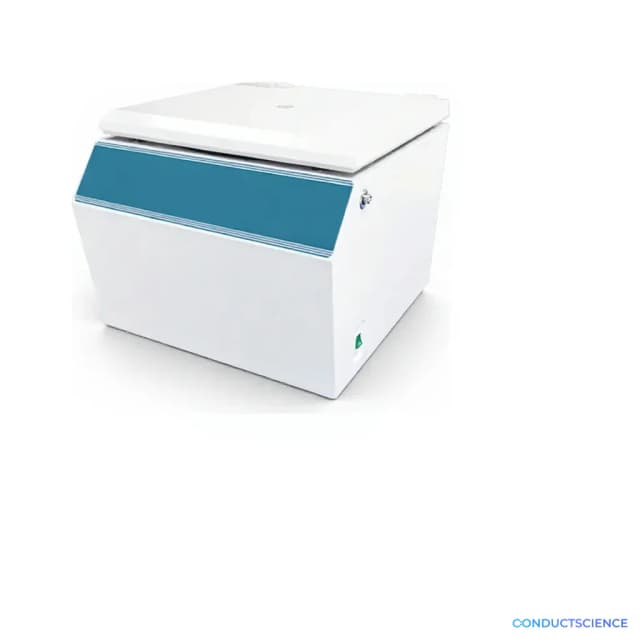
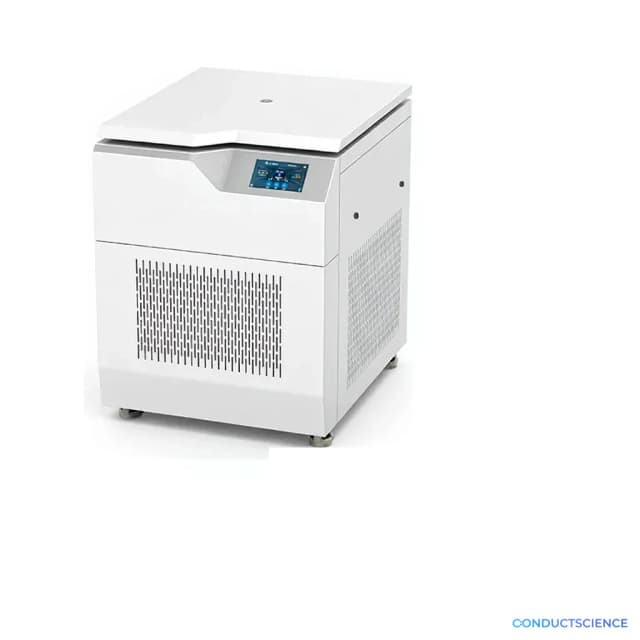
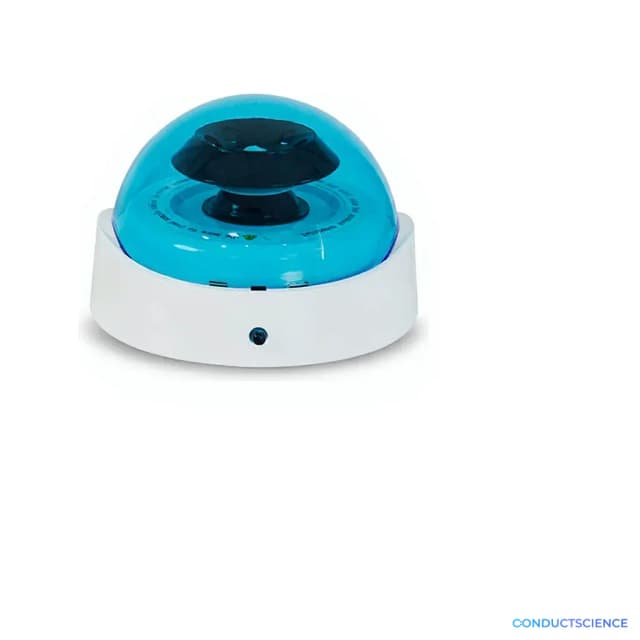
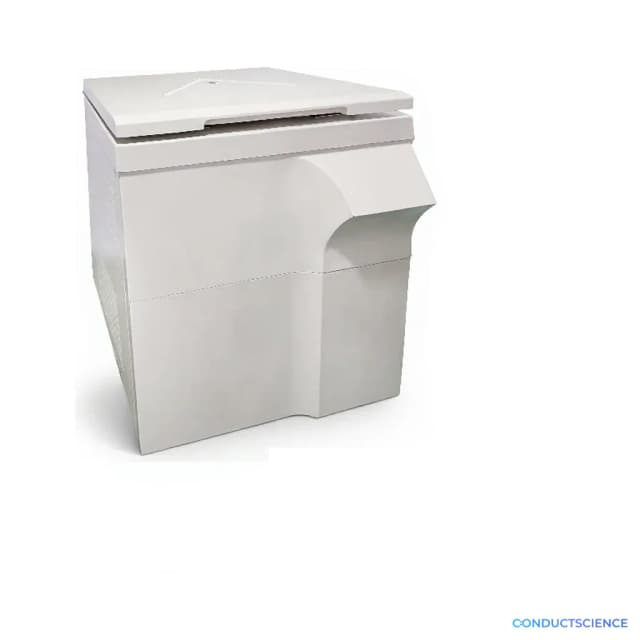
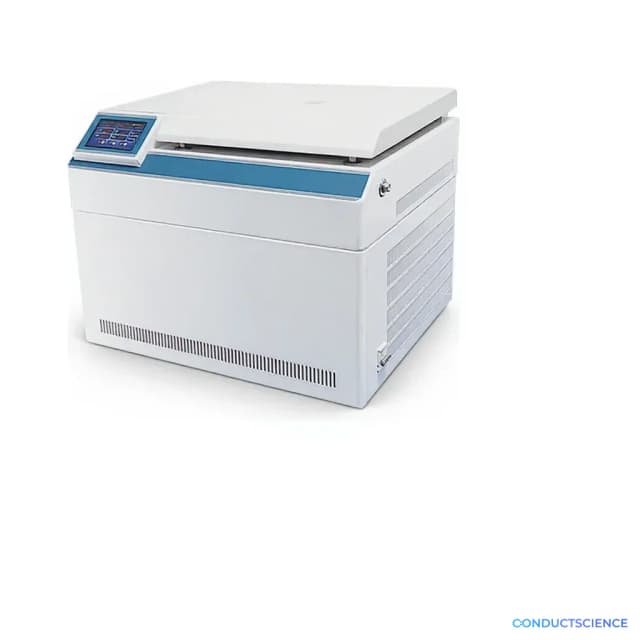
PRP Centrifuge DM0412P
Benchtop centrifuge with preloaded PRP, PRF, and CGF programs featuring programmable memory for 9 custom protocols with 6-step capability and 30-second to 99-minute timing range.

Louise Corscadden, PhD
Director of Science · ConductScience
Ask Louise about PRP Centrifuge DM0412P fit, setup, configuration, or quote prep.
Already working with us? Sign in to connect this with My Scientist.
Key Specifications
Full details →- Model fit
- Configured during quote
- SKU family
- BIO-0340
- Shipping box
- 42.0 x 43.6 x 38.0 cm
- Ordering
- Online checkout and quote request available
- Category
- Centrifuges
- Build notes
- Confirm accessories, station layout, and support needs before purchase
The PRP Centrifuge DM0412P is a specialized benchtop centrifuge designed for platelet-rich plasma (PRP) preparation and related blood component separation protocols. This tabletop unit features preloaded programs for PRP, platelet-rich fibrin (PRF), and concentrated growth factor (CGF) preparation, with timing control ranging from 30 seconds to 99 minutes. The LCD display provides clear visibility of operational parameters during processing cycles.
The centrifuge incorporates programmable memory capability with 9 custom programs, each supporting up to 6 sequential steps for complex separation protocols. This flexibility allows researchers to develop and store standardized procedures for reproducible blood component isolation across multiple sample types and experimental conditions.
How It Works
The PRP Centrifuge DM0412P operates on the principle of differential centrifugation, utilizing controlled rotational forces to separate blood components based on their specific densities. When blood samples are subjected to centrifugal force, the denser components (red blood cells) migrate toward the bottom of the tube, while less dense components (plasma and platelets) remain in the upper layers. The specific speed and duration parameters determine the degree of separation achieved.
The preloaded programs for PRP, PRF, and CGF utilize predetermined speed and timing profiles optimized for each separation type. PRP protocols typically employ moderate speeds to maintain platelet viability while achieving plasma separation. PRF programs use different parameters to create a fibrin matrix with embedded platelets and growth factors. The programmable memory system allows users to create custom protocols by defining up to 6 sequential steps with varying speeds and durations for complex separation requirements.
The LCD display provides real-time monitoring of operational parameters including remaining time, current speed, and program status. The 30-second to 99-minute timing range accommodates both rapid preliminary separations and extended protocols requiring longer processing times for optimal component isolation.
Features & Benefits
Automation Level
- semi-automated
Timing Range
- 30sec-99min
Preloaded Program
- PRP, PRF, CGF
Custom Programs Memory
- 9 programs (6 steps for each program)
Brand
- ConductScience
Research Domain
- Analytical Chemistry
- Cancer Research
- Cardiovascular
- Cell Biology
- Clinical Diagnostics
- Immunology
Display Type
- LCD
Shipping weight
- 29.98 lb
Shipping box
- L: 42.0 cm
- W: 43.6 cm
- H: 38.0 cm
| Feature | This Product | Typical Alternative | Advantage |
|---|---|---|---|
| Preloaded Programs | PRP, PRF, and CGF programs included | Basic centrifuges often require manual parameter setting for each application | Eliminates protocol development time and ensures reproducible results for blood component separation procedures. |
| Programming Memory | 9 custom programs with 6 steps each | Entry-level models typically offer 2-4 program slots with single-step capability | Supports complex multi-stage protocols and provides extensive method storage for diverse research applications. |
| Timing Range | 30 seconds to 99 minutes | Basic models often limited to shorter maximum run times | Accommodates both rapid separations and extended protocols requiring longer processing times for optimal yield. |
| Display Interface | LCD display for parameter monitoring | LED or basic digital displays with limited information | Provides clear visibility of all operational parameters and remaining time during processing cycles. |
| Multi-Step Capability | 6 sequential steps per program | Single-step operation requiring manual intervention for protocol changes | Enables automated sequential processing with varying parameters without operator intervention. |
The PRP Centrifuge DM0412P combines specialized blood component separation programs with extensive programmability through 9 custom program slots and 6-step sequential capability. The 30-second to 99-minute timing range and LCD display interface provide operational flexibility and clear parameter monitoring for reproducible results.
Practical Tips
Verify rotor balance before each use by ensuring even weight distribution across tube positions.
Why: Proper balance prevents vibration and ensures consistent separation results while protecting the motor system.
Clean the rotor chamber after each use with mild detergent and ensure complete drying before storage.
Why: Prevents sample cross-contamination and extends rotor life by removing biological residues that can cause corrosion.
Allow tubes to reach room temperature before centrifugation to prevent condensation and ensure consistent separation.
Why: Temperature equilibration prevents condensation artifacts and ensures reproducible density-based separation results.
If excessive vibration occurs during operation, immediately stop and check tube balance and rotor seating.
Why: Unbalanced loads can damage the motor and produce inconsistent separation results while creating safety hazards.
Document centrifugation parameters and environmental conditions for each run to ensure protocol reproducibility.
Why: Systematic record-keeping enables troubleshooting of separation issues and supports method validation requirements.
Always ensure the lid is fully closed and locked before initiating centrifugation cycles.
Why: Proper lid closure prevents sample spillage and protects operators from rotating components while ensuring optimal separation conditions.
Use identical tube types and fill volumes within each run to maintain consistent separation parameters.
Why: Uniform sample presentation ensures reproducible centrifugal force distribution and comparable separation results across samples.
Periodically inspect the rotor for wear, cracks, or corrosion that could affect performance or safety.
Why: Regular rotor inspection prevents failure during operation and maintains separation accuracy by ensuring proper mechanical integrity.
Setup Guide
What’s in the Box
- PRP Centrifuge DM0412P main unit
- Fixed-angle rotor (typical)
- Tube adapters and inserts (typical)
- Power cord
- User manual and protocol guide
- Warranty documentation
Warranty
ConductScience provides a 1-year manufacturer warranty covering defects in materials and workmanship, with technical support for operational guidance and protocol optimization. Extended service plans and calibration services are available for long-term maintenance requirements.
Compliance
What tube sizes and volumes are compatible with this centrifuge system?
Consult product datasheet for specific rotor configurations and tube capacity. The benchtop design typically accommodates standard blood collection tubes and various microcentrifuge tube formats with appropriate adapters.
Can the custom programs be exported or shared between instruments?
The 9-program memory system stores protocols in internal memory. Contact technical support for information about program transfer capabilities and protocol sharing options between units.
What is the maximum RCF (relative centrifugal force) achievable with this model?
Maximum RCF specifications are not provided in the current product data. Consult the technical datasheet for complete speed and RCF specifications for your specific rotor configuration.
How do I validate the preloaded PRP and PRF programs for my specific application?
Validate programs using known standards and control samples. Document centrifugation parameters, measure platelet concentrations, and assess growth factor recovery to establish protocol suitability for your research requirements.
What maintenance schedule is recommended for optimal performance?
Perform daily cleaning of rotor and chamber, weekly inspection of moving parts, and periodic calibration verification. Schedule annual professional maintenance for motor and control system inspection to maintain accuracy.
Can temperature be controlled during centrifugation cycles?
Temperature control specifications are not indicated in the provided product data. Consult the technical documentation for information about ambient temperature operation and any available cooling options.
How reproducible are the separation results between different operators?
The programmable memory system and LCD display interface minimize operator-dependent variables. Protocol standardization through stored programs ensures consistent separation parameters across different users and experimental sessions.
What data logging or connectivity options are available?
Data logging and connectivity features are not specified in the current product information. Contact technical support for details about run documentation, data export capabilities, and laboratory information system integration options.
Have a question about this product?
Have a question? Just ask.
Send it over and we'll email you a personalized answer — no call, no scheduling.
Prefer to talk it through?