Psyllid Y-Maze
Y-shaped behavioral maze for studying spatial learning, host preference, and decision-making in psyllids and other small insects through controlled choice paradigms.

Louise Corscadden, PhD
Director of Science · ConductScience
Ask Louise about Psyllid Y-Maze fit, setup, configuration, or quote prep.
Already working with us? Sign in to connect this with My Scientist.
Key Specifications
Full details →- Model fit
- Drosophila
- SKU family
- CS-958168
- Shipping box
- 65.0 x 36.0 x 27.0 cm
- Ordering
- Online checkout and quote request available
- Category
- Behavioral Mazes
- Build notes
- Confirm accessories, station layout, and support needs before purchase
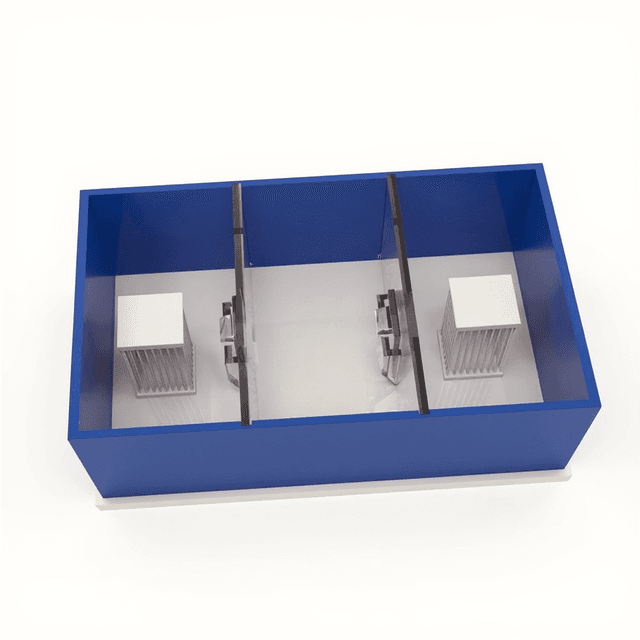
The Psyllid Y-Maze is a specialized behavioral apparatus designed for studying spatial learning, memory, and decision-making in small insects, particularly psyllids and other hemipteran species. This apparatus features a Y-shaped configuration with two choice arms extending from a central starting area, allowing researchers to investigate host plant preference, olfactory responses, and learning behaviors in controlled laboratory conditions.
The maze provides a simple yet effective platform for behavioral studies requiring binary choice paradigms. Researchers can evaluate insect responses to various stimuli including chemical cues, visual markers, or environmental gradients. The apparatus supports both short-term preference testing and longer-term learning protocols, making it suitable for investigations into insect cognition, host selection mechanisms, and behavioral adaptation.
How It Works
The Y-maze operates on the principle of binary choice testing, where insects are presented with two distinct pathways from a central decision point. The subject begins in a starting chamber and must choose between two arms that can contain different stimuli, environments, or reward conditions. This design allows researchers to quantify preference strength, learning rates, and decision-making patterns through systematic observation of choice behavior.
The maze configuration eliminates spatial bias by allowing arm assignment randomization and provides clear behavioral endpoints for data collection. Researchers can modify environmental conditions in each arm independently, enabling controlled studies of sensory responses, learning acquisition, and memory retention. The apparatus supports both immediate preference testing and training protocols involving multiple trials with reinforcement schedules.
Features & Benefits
Behavioral Construct
- spatial learning
- preference behavior
- decision-making
- choice behavior
- host selection
Automation Level
- manual
Research Domain
- Agricultural Research
- Behavioral Ecology
- Entomology
- Environmental Monitoring
Species
- Drosophila
Compatible Tracking Software
- ConductVision
Shipping weight
- 6.06 lb
Shipping box
- L: 65.0 cm
- W: 36.0 cm
- H: 27.0 cm
| Feature | This Product | Typical Alternative | Advantage |
|---|---|---|---|
| Number of Choice Points | Single binary choice point | Multi-arm radial mazes offer 4-8 choice points | Simplifies data analysis and reduces decision complexity for clear preference measurement |
| Setup Complexity | Simple two-arm assembly | Complex mazes require multiple stimulus zones and tracking systems | Enables rapid protocol setup and between-subject transitions for high-throughput studies |
| Subject Size Range | Optimized for small insects like psyllids | Generic mazes often designed for larger arthropods | Proper scaling ensures natural behavior expression and accurate choice measurement in target species |
| Observation Requirements | Single decision point monitoring | Multiple tracking points increase observation complexity | Reduces observer workload and enables focus on detailed behavioral analysis at the critical choice point |
The Psyllid Y-Maze provides a focused solution for binary choice behavioral studies in small insects, offering simplified setup and clear data interpretation compared to more complex maze designs while maintaining rigorous experimental control.
Practical Tips
Test for spatial bias by running blank trials with identical conditions in both arms before introducing experimental stimuli.
Why: Ensures any observed preferences result from experimental manipulation rather than inherent apparatus bias
Clean all surfaces with 70% ethanol between subjects and allow complete drying to prevent chemical contamination.
Why: Residual odors from previous subjects can influence choice behavior and confound experimental results
Randomize arm assignment for stimulus presentation across trials to control for potential side preferences.
Why: Eliminates systematic bias and strengthens statistical validity of preference measurements
Record environmental conditions including temperature, humidity, and lighting for each session.
Why: Environmental factors can significantly influence insect behavior and choice responses
If subjects show reluctance to move, check for proper ventilation and appropriate temperature conditions for the species.
Why: Inactive subjects provide limited behavioral data and may indicate suboptimal testing conditions
Handle all test subjects according to institutional guidelines and maintain appropriate containment during trials.
Why: Ensures subject welfare and prevents escape of potentially regulated or non-native species
Setup Guide
What’s in the Box
- Y-maze base assembly (typical)
- Two choice arms (typical)
- Central starting chamber (typical)
- Connection hardware (typical)
- User manual and protocol guide (typical)
Warranty
ConductScience provides a standard one-year manufacturer warranty covering defects in materials and workmanship, with technical support for setup and protocol optimization.
Compliance
References
Background reading relevant to this product:
What size range of insects can be effectively tested in this maze?
The maze is optimized for psyllid-sized insects but can accommodate other small arthropods of similar dimensions. Consult product datasheet for specific dimensional tolerances to ensure appropriate scaling for your target species.
How do you prevent odor contamination between trials?
The removable components allow thorough cleaning with ethanol or other appropriate solvents between subjects. Allow complete drying and air circulation before introducing the next subject to eliminate residual chemical cues.
Can the maze be modified for different experimental protocols?
Yes, the modular design allows customization of arm contents and environmental conditions. Researchers commonly modify lighting, substrate materials, or add stimulus delivery systems to each arm based on experimental requirements.
What is the typical trial duration for psyllid behavioral testing?
Trial duration varies by species and protocol, typically ranging from 5-30 minutes depending on subject activity levels and decision-making speed. Monitor individual subject behavior to determine optimal timing for your experimental conditions.
How do you quantify choice behavior and learning responses?
Standard measures include first choice direction, time to decision, total time spent in each arm, and number of arm entries. Video recording enables detailed analysis of movement patterns and behavioral sequences for comprehensive data collection.
Can multiple stimuli be presented simultaneously in each arm?
The maze design supports multiple stimulus zones within each arm, allowing presentation of chemical, visual, or tactile cues in combination. Ensure stimuli do not interfere with each other or create confounding gradients across the apparatus.
Have a question about this product?
Have a question? Just ask.
Send it over and we'll email you a personalized answer — no call, no scheduling.
Prefer to talk it through?