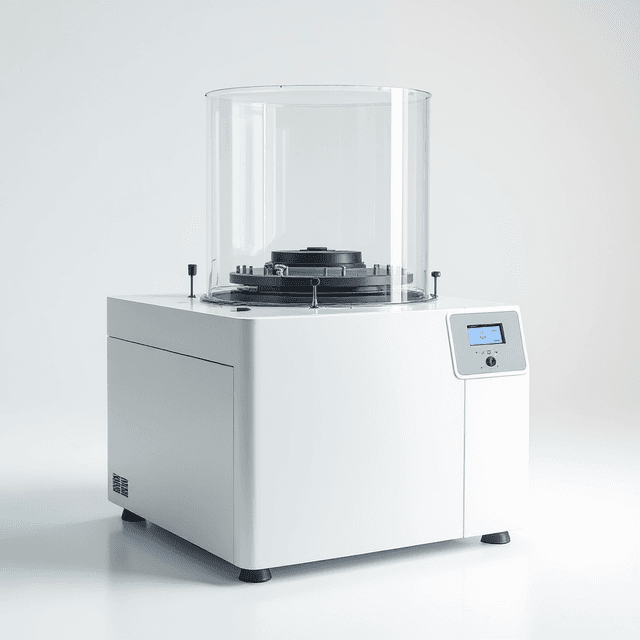
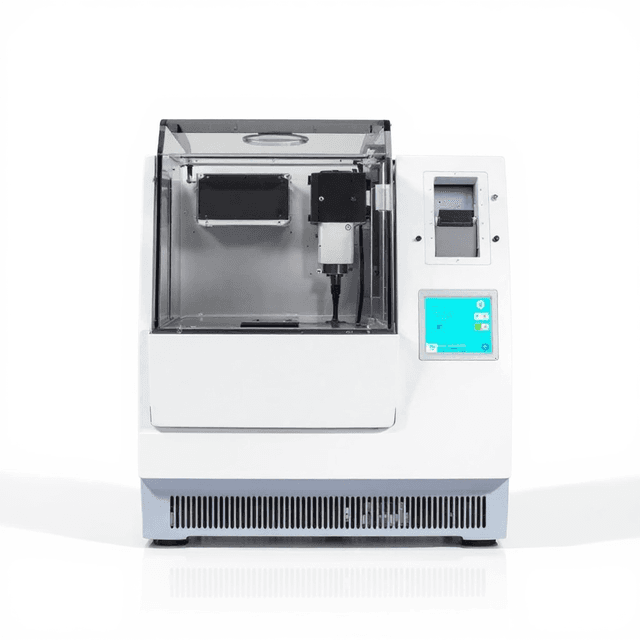
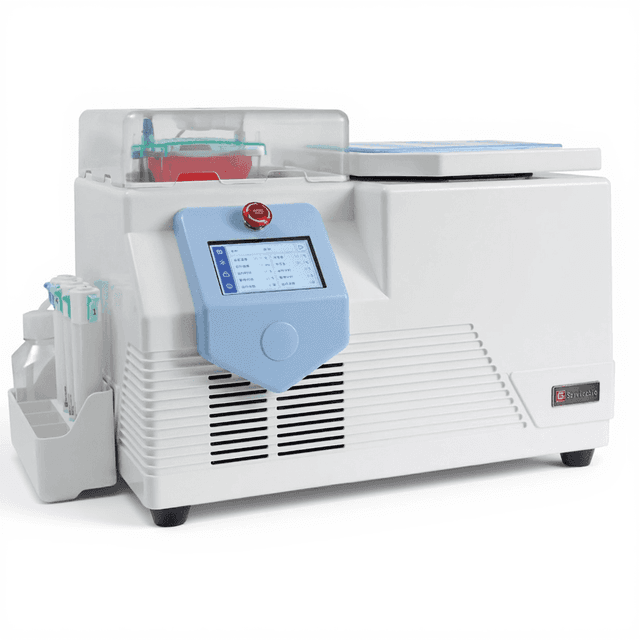
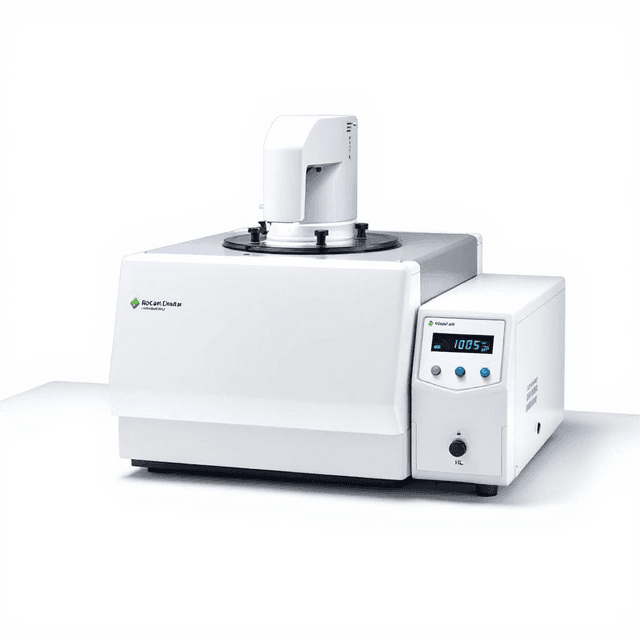
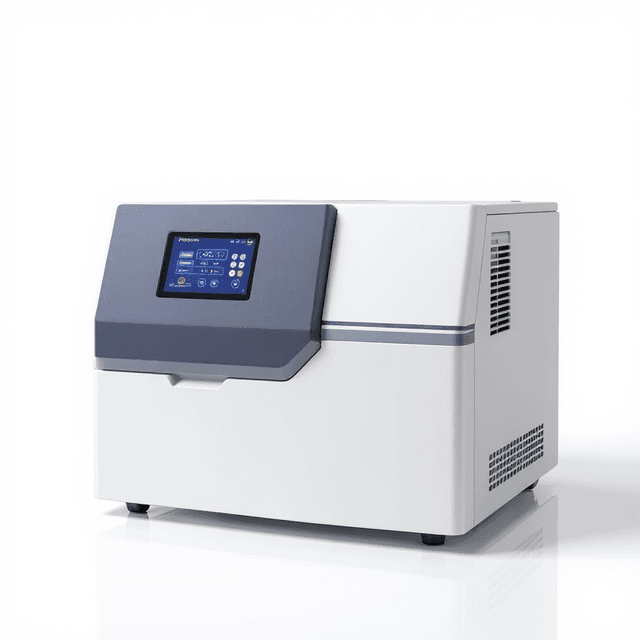
RE-2012 Rotary Evaporator
Benchtop rotary evaporator with 1L capacity, variable speed rotation (10-310 rpm), and precise temperature control (RT-99°C ±1°C) for efficient solvent removal and concentration.

Louise Corscadden, PhD
Director of Science · ConductScience
Ask Louise about RE-2012 Rotary Evaporator fit, setup, configuration, or quote prep.
Already working with us? Sign in to connect this with My Scientist.
Key Specifications
Full details →- Model fit
- Configured during quote
- SKU family
- BIO-0611
- Shipping box
- 40.0 x 73.0 x 55.0 cm
- Ordering
- Online checkout and quote request available
- Category
- Benchtop Instruments
- Build notes
- Confirm accessories, station layout, and support needs before purchase
The RE-2012 Rotary Evaporator is a benchtop concentration system designed for efficient solvent removal in analytical and preparative chemistry workflows. This unit employs controlled heating, vacuum application, and rotary motion to accelerate evaporation rates while maintaining sample integrity through precise temperature control within RT-99°C range with ±1°C accuracy.
The system features a vertical condenser configuration with 0.15 m² condensing area and achieves vacuum levels down to 399.9 Pa (3 mmHg) for effective solvent recovery. With variable rotation speeds from 10-310 rpm (bidirectional capability) and an evaporation rate of 23 ml/min, the RE-2012 accommodates diverse sample processing requirements across pharmaceutical, analytical chemistry, and materials science applications.
How It Works
Rotary evaporation operates on the principle of reducing solvent boiling point through vacuum application while enhancing evaporation kinetics via mechanical agitation. The rotating motion creates a thin film of solution across the evaporation flask's inner surface, dramatically increasing the surface area exposed to vacuum conditions and enabling faster solvent removal at lower temperatures.
The RE-2012 employs a vertical condenser system where evaporated solvent vapor travels upward into the cooling zone maintained at ambient temperature or below. The condensed solvent collects in the receiving flask while the concentrated sample remains in the rotating vessel. Temperature control prevents thermal degradation of heat-sensitive compounds, while the PTFE and fluororubber composite sealing system maintains vacuum integrity throughout the process.
Features & Benefits
Automation Level
- semi-automated
Rotary Bottle
- 1L 29# Standard opening
Collecting Bottle
- 1L 35# Ball mill opening
Condenser
- Vertical φ80*370mm
Charging Valve
- 19#(Standard size)
Rotary Speed
- 10~310rpm(Can rotate forward and reverse)
Vacuum
- 399.9Pa(3mmHg)
Temp. Range
- RT~99℃
Temp. Accuracy
- ±1℃
Lifting Stroke
- 170mm
Rotary Motor Power
- 30W
Heating Power
- 1300W
Evaporating Speed
- 23ml/min
Sealing Part
- PTFE+Fluororubber composite sealing ring
Condensing Area
- 0.15㎡
Brand
- ConductScience
Research Domain
- Analytical Chemistry
- Environmental Monitoring
- Food Science
- Materials Science
- Pharmaceutical QC
Shipping weight
- 11.5 lb
Shipping box
- L: 40.0 cm
- W: 73.0 cm
- H: 55.0 cm
| Feature | This Product | Typical Alternative | Advantage |
|---|---|---|---|
| Temperature Range | RT to 99°C with ±1°C accuracy | Basic models often offer limited temperature control or wider tolerance ranges | Precise temperature control prevents thermal degradation of sensitive compounds while enabling reproducible processing conditions |
| Rotation Speed Range | 10-310 rpm with bidirectional capability | Entry-level units typically offer narrower speed ranges without reverse rotation | Wide speed range accommodates diverse sample viscosities while reverse rotation prevents sample adherence to glassware |
| Vacuum Performance | 399.9 Pa (3 mmHg) ultimate vacuum | Basic rotary evaporators may achieve only 10-20 mbar vacuum levels | Deep vacuum capability enables low-temperature processing of high-boiling solvents and efficient recovery of valuable compounds |
| Condenser Design | Vertical configuration with 0.15 m² condensing area | Diagonal condensers may offer less efficient cooling in compact designs | Vertical design maximizes cooling efficiency while minimizing benchtop footprint requirements |
| Lifting Mechanism | 170mm motorized lifting stroke | Manual lifting systems require operator intervention for bath positioning | Automated lifting enables rapid sample immersion and emergency stops for improved safety and convenience |
The RE-2012 combines precise temperature control, variable speed rotation with bidirectional capability, and deep vacuum performance in a compact vertical design. Key strengths include wide operating parameter ranges and automated lifting functionality for enhanced safety and reproducibility.
Practical Tips
Verify temperature accuracy monthly using a calibrated thermometer in the heating bath.
Why: Temperature accuracy directly affects evaporation rate and sample integrity, particularly for thermolabile compounds.
Inspect and replace sealing rings when vacuum performance degrades or visible wear appears.
Why: Worn seals compromise vacuum integrity leading to inefficient evaporation and potential sample loss.
Pre-cool the condenser and collection flask before starting evaporation of volatile solvents.
Why: Cold surfaces improve condensation efficiency and prevent solvent vapor loss to the vacuum system.
Always use a secondary trap between the rotary evaporator and vacuum pump when processing organic solvents.
Why: Protects the vacuum pump from solvent vapor contamination and prevents pump oil degradation.
Record rotation speed, temperature, and vacuum level for each sample to ensure reproducible conditions.
Why: Consistent operating parameters are essential for quantitative recovery and method validation in analytical workflows.
If foaming occurs, reduce rotation speed and temperature, or add anti-foam agent to the sample.
Why: Excessive foaming can cause sample carryover into the condenser, resulting in product loss and contamination.
Monitor evaporation progress and adjust vacuum gradually to maintain steady evaporation without bumping.
Why: Gradual vacuum application prevents violent boiling that can cause sample loss and equipment damage.
Clean glassware immediately after use with appropriate solvents to prevent residue buildup.
Why: Prompt cleaning maintains heat transfer efficiency and prevents cross-contamination between samples.
Setup Guide
What’s in the Box
- RE-2012 main unit
- 1L evaporation flask (29# joint)
- 1L collection flask (35# ball joint)
- Vertical condenser assembly
- PTFE composite sealing rings
- Power cable
- User manual and operation guide (typical)
- Calibration certificate (typical)
Warranty
ConductScience provides a standard one-year manufacturer warranty covering defects in materials and workmanship. Technical support includes operation guidance and troubleshooting assistance for optimal performance.
Compliance
References
Background reading relevant to this product:
What is the maximum safe sample volume for efficient evaporation?
While the flask capacity is 1L, fill to maximum 500 mL to allow for sample expansion during rotation and prevent overflow into the condenser system.
Can this system handle water-miscible organic solvents like methanol and acetonitrile?
Yes, the PTFE and fluororubber sealing system is compatible with most organic solvents including alcohols, acetonitrile, and other common laboratory solvents.
How do I select appropriate rotation speed for different applications?
Start with 60-80 rpm for most applications. Use lower speeds (10-40 rpm) for viscous solutions or foaming samples, and higher speeds (150-310 rpm) for rapid processing of non-foaming solutions.
What vacuum pump specifications are required for optimal performance?
Use a pump capable of achieving at least 1 mbar (100 Pa) ultimate vacuum with sufficient pumping speed to maintain vacuum during evaporation, typically 15-25 L/min for this capacity.
How does this compare to simple distillation for solvent removal?
Rotary evaporation operates at lower temperatures due to vacuum application, making it suitable for thermolabile compounds, while providing faster evaporation rates through increased surface area.
What maintenance schedule is recommended for consistent performance?
Clean glassware after each use, inspect sealing rings weekly, and perform monthly checks of vacuum connections and heating bath fluid levels.
Can the evaporation rate be increased beyond the specified 23 ml/min?
Evaporation rate depends on solvent properties, temperature, vacuum level, and rotation speed. Optimize these parameters within safe operating limits rather than exceeding equipment specifications.
Have a question about this product?
Have a question? Just ask.
Send it over and we'll email you a personalized answer — no call, no scheduling.
Prefer to talk it through?