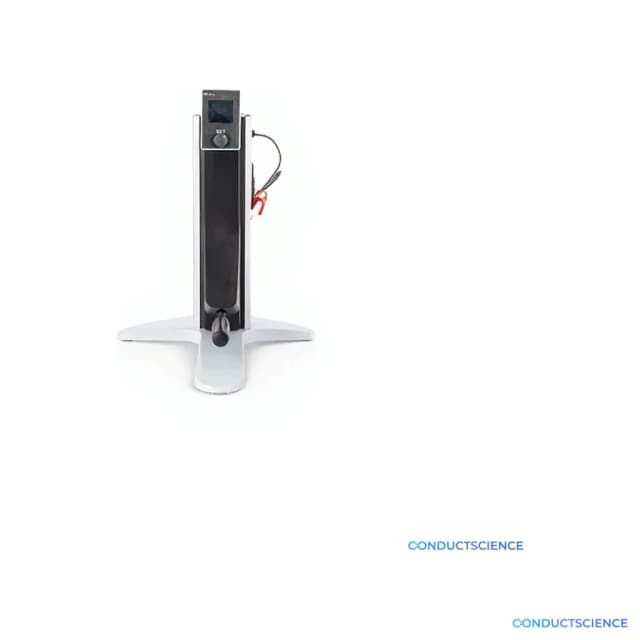
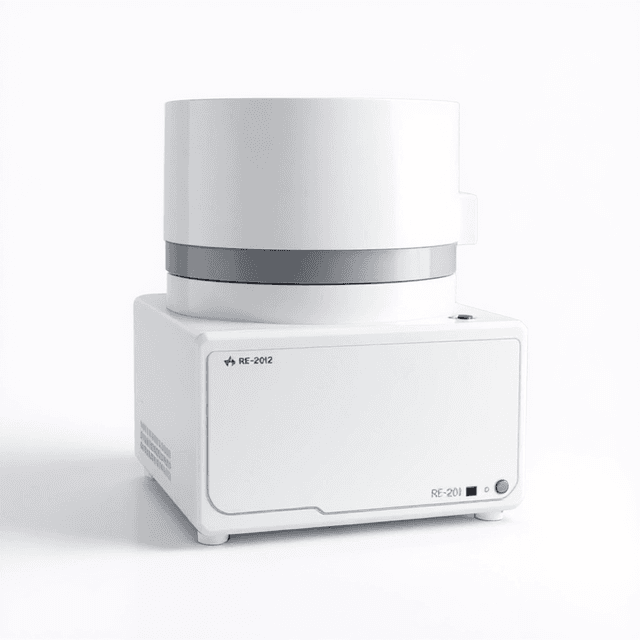
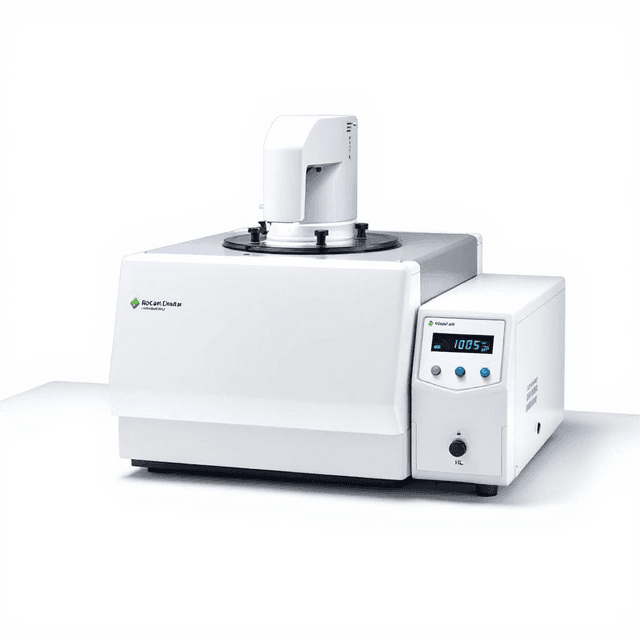
Rotary Evaporator(New Design) RE 100-Pro
Advanced rotary evaporator with automated lift, DC brushless motor, and LCD display for efficient solvent removal and sample concentration in research laboratories.

Louise Corscadden, PhD
Director of Science · ConductScience
Ask Louise about Rotary Evaporator(New Design) RE 100-Pro fit, setup, configuration, or quote prep.
Already working with us? Sign in to connect this with My Scientist.
Key Specifications
Full details →- Model fit
- Configured during quote
- SKU family
- BIO-0610
- Shipping box
- 58.3 x 46.5 x 45.7 cm
- Ordering
- Online checkout and quote request available
- Category
- Benchtop Instruments
- Build notes
- Confirm accessories, station layout, and support needs before purchase
The RE 100-Pro Rotary Evaporator represents a modern approach to solvent removal and concentration in research laboratories. This benchtop instrument combines automated lift mechanisms with precise temperature and rotation control to enable efficient distillation under reduced pressure. The system features a DC brushless motor providing rotation speeds from 20-280 rpm with reversible direction capability, integrated with a 1300W heating system covering temperatures from room temperature to 180°C.
Designed for laboratories requiring reliable solvent recovery and sample concentration, the RE 100-Pro incorporates an LCD display for real-time monitoring and programmable timing control from 1-999 minutes. The automated 150mm stroke displacement with motor-driven lift provides hands-free operation while maintaining precise control over the evaporation process. Standard glassware includes 1L evaporating flask (NS 29/32) and 1L receiving flask (KS 35/20) to accommodate typical laboratory sample volumes.
How It Works
Rotary evaporation operates on the principle of reducing solvent boiling point through vacuum application while providing gentle heating and continuous agitation. The rotating flask increases surface area contact between the liquid and vapor phases, enhancing evaporation kinetics. As the evaporating flask rotates, a thin film of solution forms on the flask walls, maximizing heat transfer efficiency and preventing bumping or superheating that can occur in static distillation.
The DC brushless motor maintains consistent rotation speeds between 20-280 rpm, with reversible direction capability to optimize mixing patterns for different solvent systems. The integrated heating bath provides precise temperature control up to 180°C, while the automated lift mechanism allows for rapid immersion and withdrawal of the evaporating flask. Vapor travels through the vapor duct to the condenser where it condenses and collects in the receiving flask, effectively separating solvent from solute.
The programmable timer function enables reproducible processing times for standardized procedures, while the LCD display provides real-time monitoring of rotation speed, temperature, and elapsed time. The 150mm stroke height accommodates various flask sizes and allows for complete withdrawal from the heating bath when processing is complete.
Features & Benefits
Automation Level
- semi-automated
Item No.
- 6010110111
Evaporating Flask
- 1L(NS 29/32, 18300120 )
Receiving Flask
- 1L(KS 35/20, 18300110)
Rotating Speed
- 20~280rpm
Temp. Range
- RT~180°C
Lift
- Motor
Stroke Height
- 150mm
Timing Range
- 1~999min
Motor
- DC brushless motor
Heating Power
- 1300W
Stroke Displacement
- Automatic 150mm
Protection Class
- IP20
Rotation
- Reversible direction
Brand
- ConductScience
Research Domain
- Analytical Chemistry
- Environmental Monitoring
- Food Science
- Materials Science
- Microbiology
- Pharmaceutical QC
Display Type
- LCD
Shipping weight
- 15.0 lb
Shipping box
- L: 58.3 cm
- W: 46.5 cm
- H: 45.7 cm
| Feature | This Product | Typical Alternative | Advantage |
|---|---|---|---|
| Motor Type and Speed Range | DC brushless motor, 20-280 rpm with reversible rotation | Entry-level models often use brushed motors with limited speed ranges | Brushless motors offer longer service life and more precise speed control for consistent results. |
| Lift Mechanism | Automated motor-driven lift with 150mm stroke | Manual lift systems require operator intervention | Automated lift enables hands-free operation and rapid response for improved safety and reproducibility. |
| Temperature Control Range | Room temperature to 180°C with 1300W heating power | Basic models may have lower maximum temperatures or heating power | Extended temperature range accommodates diverse solvent systems and rapid heat-up times improve workflow efficiency. |
| Display and Timing | LCD display with programmable timing (1-999 minutes) | Analog controls or basic digital displays without timing functions | Programmable timing enables standardized protocols and real-time monitoring enhances process control. |
| Protection Rating | IP20 protection class | Varies by model, some may have lower protection ratings | Appropriate protection level for laboratory environments while maintaining accessibility for operation. |
The RE 100-Pro offers automated operation with DC brushless motor technology and comprehensive digital control. The combination of automated lift, reversible rotation, and programmable timing provides enhanced process control compared to manual systems.
Practical Tips
Verify temperature accuracy using a calibrated thermometer in the heating bath before processing thermally sensitive samples.
Why: Temperature accuracy is critical for reproducible results and preventing thermal decomposition.
Clean the rotating joint and vapor duct after each use to prevent cross-contamination and maintain vacuum integrity.
Why: Residual solvents can interfere with subsequent analyses and degrade sealing performance.
Start with lower rotation speeds (50-100 rpm) for new sample types and gradually increase to optimize evaporation rate without bumping.
Why: Each solvent system has optimal rotation parameters that balance evaporation efficiency with sample stability.
If evaporation rate is too slow, check vacuum level and increase temperature gradually rather than increasing rotation speed.
Why: Excessive rotation can cause sample bumping while inadequate heat or vacuum limits evaporation efficiency.
Record rotation speed, temperature, and vacuum levels for each sample to ensure reproducible processing conditions.
Why: Consistent processing parameters are essential for quantitative recovery and method validation.
Use the automated lift to raise the flask above the heating bath before adjusting temperature settings or changing samples.
Why: Prevents thermal shock to glassware and reduces risk of operator burns from heated surfaces.
Allow the heating bath to equilibrate to set temperature before lowering the flask for consistent heat transfer.
Why: Temperature stability ensures reproducible evaporation kinetics and prevents localized overheating.
Setup Guide
What’s in the Box
- RE 100-Pro main unit
- 1L evaporating flask (NS 29/32)
- 1L receiving flask (KS 35/20)
- Power cable
- User manual and operation guide (typical)
- Vacuum tubing and fittings (typical)
- Calibration certificate (typical)
Warranty
ConductScience provides a standard one-year manufacturer warranty covering parts and labor, with technical support available for installation guidance and operational troubleshooting.
Compliance
References
Background reading relevant to this product:
What vacuum levels are required for optimal performance?
Consult product datasheet for specific vacuum requirements. Most rotary evaporators operate effectively with vacuum levels between 50-100 mbar, depending on solvent properties and desired evaporation rate.
Can the heating bath accommodate non-aqueous heat transfer media?
The 1300W heating system supports various heat transfer fluids. Consult product specifications for compatible media and maximum operating temperatures for different bath fluids.
What is the maximum sample volume recommended for the 1L evaporating flask?
Fill evaporating flask to no more than one-third capacity (approximately 300-350 mL) to prevent overflow during rotation and ensure proper heat transfer.
How does the reversible rotation feature improve evaporation efficiency?
Reversible rotation prevents solution from adhering to flask walls and optimizes mixing patterns for different viscosity samples, particularly beneficial for concentrated or viscous solutions.
What maintenance is required for the DC brushless motor?
DC brushless motors require minimal maintenance compared to brushed alternatives. Regular cleaning and inspection of rotating seals are recommended; consult user manual for specific maintenance schedules.
Can the system handle thermally sensitive compounds?
The combination of reduced pressure and precise temperature control enables processing of thermally sensitive materials. Optimize vacuum level and temperature settings based on compound decomposition temperatures.
What data logging capabilities are available?
Consult product specifications for data output options. The LCD display provides real-time monitoring; check if USB or serial communication ports are available for data logging requirements.
Have a question about this product?
Have a question? Just ask.
Send it over and we'll email you a personalized answer — no call, no scheduling.
Prefer to talk it through?
Upgrade Options