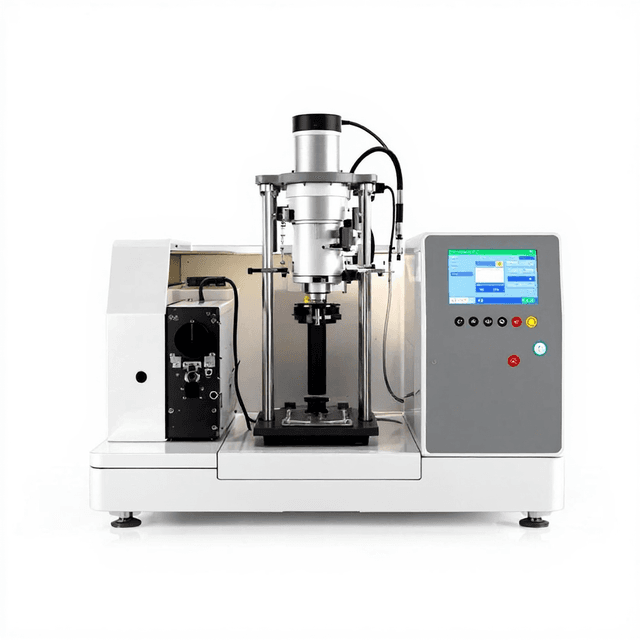
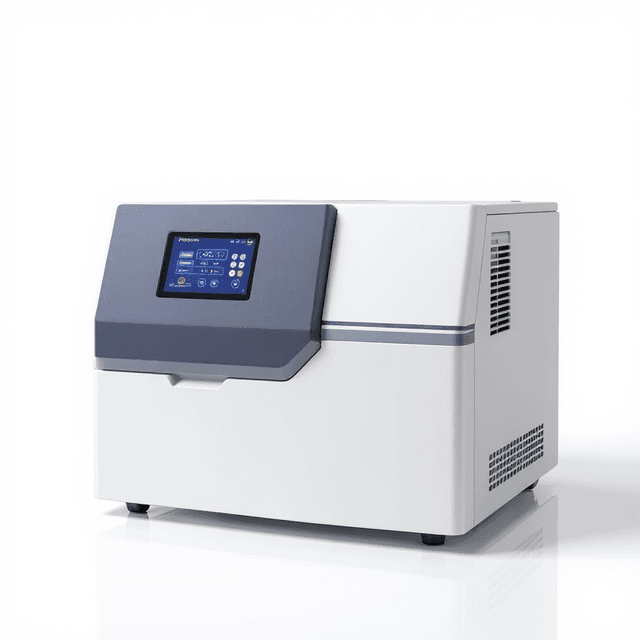
Rotary Evaporator
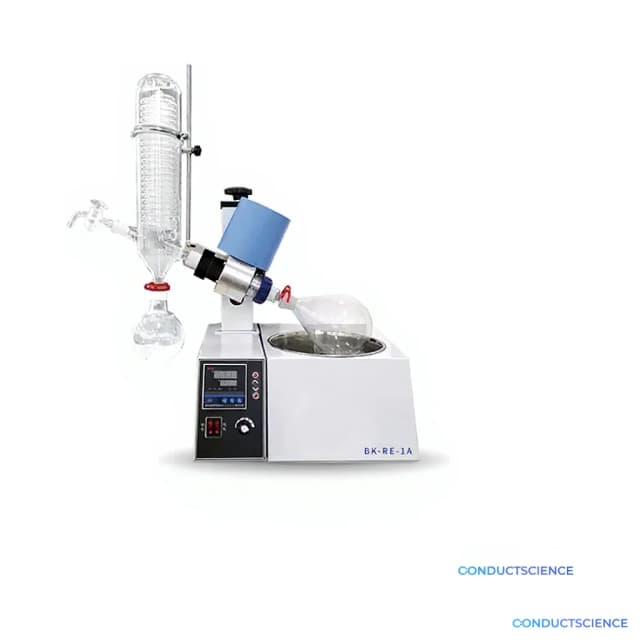
Benchtop vacuum rotary evaporator with temperature control (RT-180°C), variable rotation speed (0-120 rpm), and multiple flask configurations (1L-20L) for efficient solvent removal and sample concentration.

Louise Corscadden, PhD
Director of Science · ConductScience
Ask Louise about Rotary Evaporator fit, setup, configuration, or quote prep.
Already working with us? Sign in to connect this with My Scientist.
Key Specifications
Full details →- Model fit
- Configured during quote
- SKU family
- BIO-0920
- Shipping box
- 42.0 x 43.6 x 38.0 cm
- Ordering
- Online checkout and quote request available
- Category
- Benchtop Instruments
- Build notes
- Confirm accessories, station layout, and support needs before purchase
The Rotary Evaporator is a benchtop instrument designed for efficient solvent removal and concentration of samples through controlled vacuum distillation. This system operates by rotating the sample flask to increase surface area and heat transfer efficiency while applying vacuum to reduce solvent boiling points, enabling gentle concentration without thermal degradation of heat-sensitive compounds.
The system accommodates multiple flask configurations from 1L to 20L capacity with interchangeable standard mouth and flange connections. Operating parameters include variable rotary speed (0-120 rpm), vacuum capability to 0.098 MPa, and temperature control from room temperature to 180°C with ±1°C accuracy, providing precise control over evaporation conditions for diverse analytical and preparative workflows.
How It Works
Rotary evaporation operates on the principle of reduced pressure distillation combined with increased surface area heat transfer. The sample flask rotates continuously, creating a thin film of liquid that maximizes the liquid-vapor interface. This rotation also prevents superheating and bumping by ensuring uniform heat distribution and continuous mixing.
Vacuum application reduces the boiling point of solvents, enabling evaporation at temperatures well below normal atmospheric boiling points. The heating bath maintains precise temperature control while the condenser system captures and recovers evaporated solvent. The rotating motion enhances heat transfer efficiency and reduces evaporation time compared to static distillation methods.
The system maintains constant vacuum through the charging valve system, with collection bottles capturing the concentrated sample and recovered solvent separately. This design enables quantitative solvent recovery and precise volume reduction while protecting temperature-sensitive compounds from thermal degradation.
Features & Benefits
Shipping weight
- 21.0 lb
Shipping box
- L: 42.0 cm
- W: 43.6 cm
- H: 38.0 cm
| Feature | This Product | Typical Alternative | Advantage |
|---|---|---|---|
| Temperature Range | RT to 180°C with ±1°C accuracy | Many models limited to 150°C or have ±2-3°C accuracy | Higher temperature ceiling enables evaporation of high-boiling solvents while precise control protects heat-sensitive compounds. |
| Flask Size Range | 1L to 20L capacity with multiple connection types | Entry-level units often limited to 1-5L maximum capacity | Broad volume range supports both analytical and preparative scale work in a single instrument platform. |
| Rotation Speed Control | Variable 0-120 rpm | Fixed speed models or limited adjustment ranges | Precise speed control optimizes surface area and prevents splashing across diverse sample types and viscosities. |
| Vacuum Performance | 0.098 MPa vacuum capability | Lower-end models achieve 0.05-0.08 MPa maximum | Higher vacuum levels enable lower temperature operation and more efficient evaporation of difficult solvents. |
| Connection Flexibility | Standard mouth and flange connections across all sizes | Limited to single connection type or size restrictions | Accommodates diverse existing glassware and enables easy integration with established laboratory workflows. |
This rotary evaporator provides comprehensive temperature and vacuum control with exceptional flask size flexibility from analytical to preparative scales. The combination of high vacuum capability, precise temperature control, and variable rotation speed offers researchers optimal conditions for diverse solvent removal applications while maintaining compatibility with standard laboratory glassware systems.
Practical Tips
Verify temperature accuracy monthly using a NIST-traceable thermometer placed in the heating bath during operation.
Why: Temperature drift can affect evaporation efficiency and sample integrity over time.
Inspect and clean all ground glass joints weekly, applying thin vacuum grease to ensure proper sealing.
Why: Poor vacuum seals reduce evaporation efficiency and can cause solvent retention in samples.
Start rotation before applying vacuum and increase vacuum gradually while monitoring for bumping.
Why: This prevents violent boiling that can cause sample loss and contaminate the vacuum system.
Ensure adequate ventilation and use appropriate traps when evaporating potentially hazardous solvents.
Why: Solvent vapors can bypass the condenser system and create exposure risks or contaminate vacuum pumps.
Record initial and final volumes along with operating conditions for quantitative concentration calculations.
Why: Accurate volume measurements enable precise concentration determination and reproducible protocols.
If evaporation rate is too slow, check for vacuum leaks at joints and valve connections before increasing temperature.
Why: Poor vacuum is often the limiting factor rather than insufficient heating, and excessive temperature can degrade samples.
Use anti-bump granules or glass beads when processing aqueous solutions or samples prone to superheating.
Why: These provide nucleation sites that promote smooth boiling and prevent explosive vapor formation.
Replace heating bath fluid regularly and monitor for degradation signs like color change or reduced heat transfer.
Why: Degraded bath fluids have altered thermal properties that affect temperature control accuracy and heating efficiency.
Setup Guide
What’s in the Box
- Rotary evaporator main unit
- 1L standard mouth rotary flask (typical)
- 1L standard mouth collection bottle (typical)
- Vacuum connection assembly (typical)
- Temperature probe and controller (typical)
- Operating manual and safety guidelines (typical)
- Glassware connection adapters (typical)
Warranty
ConductScience provides a standard one-year manufacturer warranty covering parts and labor with comprehensive technical support for installation, operation, and maintenance procedures.
Compliance
References
Background reading relevant to this product:
What is the maximum vacuum level achievable and how does this affect solvent removal efficiency?
The system achieves vacuum levels up to 0.098 MPa, enabling significant reduction in solvent boiling points. This allows gentle evaporation of common organic solvents at temperatures 40-60°C below their atmospheric boiling points, preserving heat-sensitive compounds while maintaining efficient removal rates.
How do I select appropriate flask size and rotation speed for my application?
Flask selection depends on sample volume (fill no more than 50% capacity) and viscosity. Lower viscosity solvents work well with larger flasks and higher rotation speeds (80-120 rpm), while viscous solutions require smaller flasks and slower speeds (20-60 rpm) to prevent splashing.
What temperature accuracy can I expect and how is it calibrated?
Temperature control maintains ±1°C accuracy across the RT-180°C range. Regular calibration using NIST-traceable thermometers is recommended, particularly for critical applications requiring precise thermal conditions or when processing temperature-sensitive materials.
Can the system handle aqueous solutions and what are the limitations?
The system effectively concentrates aqueous solutions, though evaporation rates are slower due to water's high heat of vaporization. Higher vacuum levels and temperatures (80-100°C) are typically required, and anti-bumping measures become more critical with aqueous systems.
How do I prevent sample bumping and ensure smooth evaporation?
Start rotation before applying vacuum, use moderate temperature increases (10°C increments), and maintain appropriate vacuum levels. Anti-bump granules can be added for particularly problematic samples, and flask filling should not exceed 50% capacity.
What maintenance procedures are required for consistent performance?
Regular cleaning of glassware connections, vacuum line inspection for leaks, and heating bath fluid replacement ensure optimal performance. Temperature probe calibration and vacuum system maintenance should be performed according to usage intensity and manufacturer guidelines.
How does this compare to other concentration methods like nitrogen blow-down or freeze-drying?
Rotary evaporation offers faster processing than nitrogen blow-down with better solvent recovery, while being gentler than direct heating. Unlike freeze-drying, it operates at moderate temperatures and pressures, making it more suitable for routine organic solvent removal rather than water sublimation.
What types of solvents can be effectively removed and are there any restrictions?
Most organic solvents including alcohols, ethers, esters, and hydrocarbons are effectively removed. Highly volatile solvents may require reduced temperatures and slower vacuum application, while high-boiling solvents benefit from higher temperatures within the 180°C limit.
Have a question about this product?
Have a question? Just ask.
Send it over and we'll email you a personalized answer — no call, no scheduling.
Prefer to talk it through?
Upgrade Options