ConductVision
$1,490 per year for one computerA 5-year license is $3,990 in total.
Results export as CSV files.
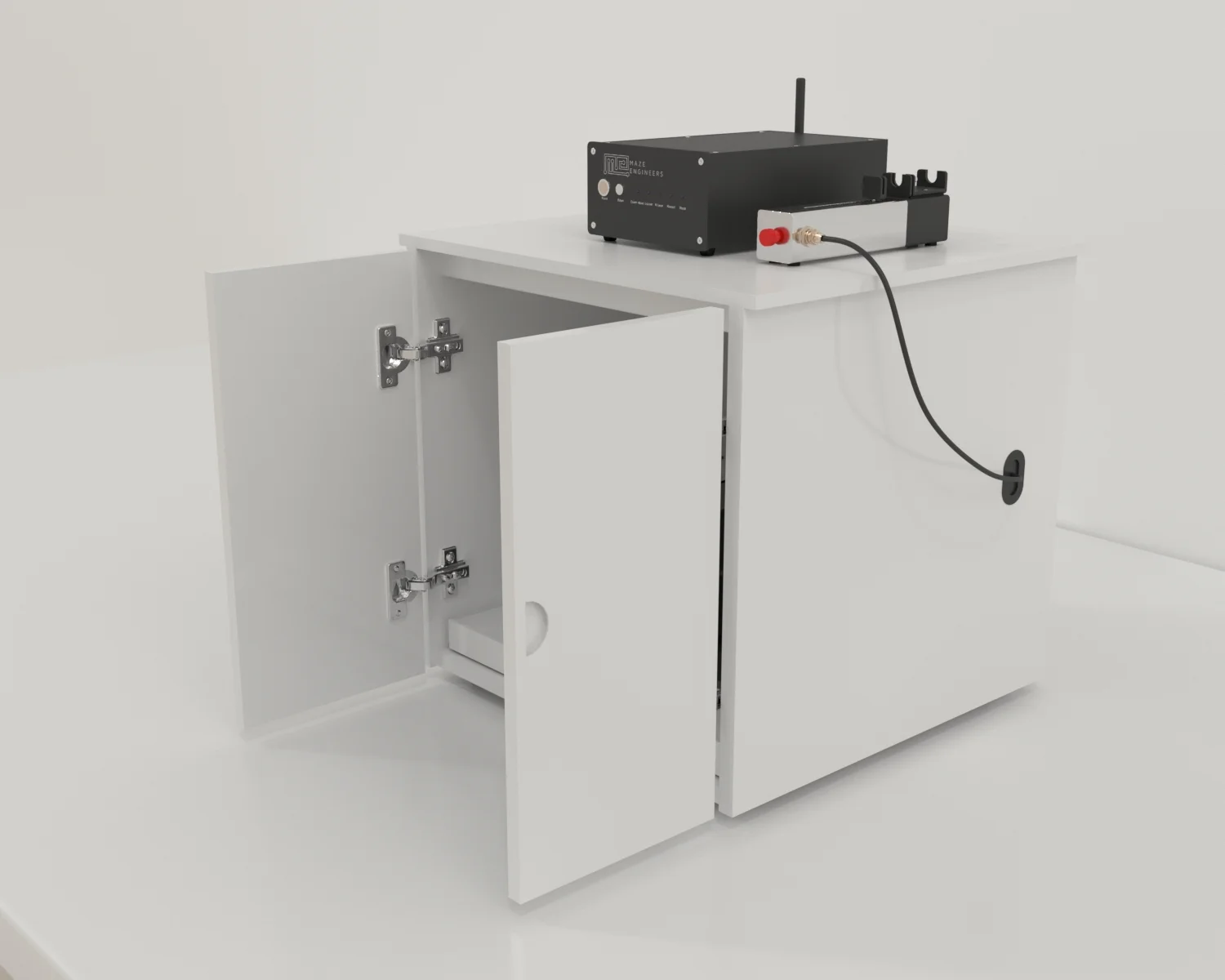
Operant conditioning chambers for behavioral pharmacology and reinforcement studies, featuring dual response mechanisms, floor grids, pellet dispensers, and integrated syringe pump systems.

Director of Science · ConductScience
Ask Louise about Self Administration Chamber fit, setup, configuration, or quote prep.
Already working with us? Sign in to connect this with My Scientist.
From 2021 to 2025, 1,325 animal research papers mentioned self-administration. The count covers the test on any apparatus, not only this one.
The Self Administration Chamber is a comprehensive operant conditioning system designed for controlled behavioral pharmacology and reinforcement studies. The system enables precise investigation of motivated behaviors, reward-seeking responses, and reinforcement schedules in mouse and rat models. Each chamber features dual operant response mechanisms (levers or nose pokes), dual LED visual stimuli, integrated floor grids for aversive conditioning, dual pellet dispensers for food reinforcement, and a syringe pump system for precise intravenous delivery.
The apparatus operates within sound-attenuating isolation cubicles equipped with speakers, house lights, circulation fans, and infrared illumination for behavioral monitoring. The modular design supports up to 16 chambers simultaneously, with wireless connectivity and standardized control interfaces. Chamber dimensions are optimized for species-specific behavioral requirements, with mouse chambers measuring 18 x 18 x 20 cm and rat chambers measuring 26 x 26 x 25 cm internally.
These IDs come from NCBI Taxonomy. Use them in data records and methods sections.
NCBITaxon:10090 NCBITaxon:10116 | Measurement | Mouse | Rat |
|---|---|---|
| Single chamber size | 18 cm | 26 cm |
Ready for RO-Crate, the open standard for sharing data.
| Feature | This Product | Typical Alternative | Advantage |
|---|---|---|---|
| Chamber Scalability | Up to 16 chambers supported simultaneously | Entry-level systems often support 2-4 chambers maximum | Enables high-throughput studies with larger sample sizes and multiple experimental conditions tested concurrently. |
| Response Mechanisms | Dual levers or nose pokes per chamber | Basic chambers typically include single lever configuration | Supports complex choice procedures and concurrent reinforcement schedules for sophisticated behavioral analysis. |
| Drug Delivery Integration | Integrated syringe pump system with 12mm interior diameter | Most operant chambers require separate drug delivery equipment | Streamlines self-administration protocols with coordinated behavioral and pharmacological control. |
| Shock Current Range | 0.1 to 4.0 mA in 0.1 mA steps | Standard systems often provide limited current adjustment options | Enables precise titration of aversive stimuli for individual animal sensitivity and experimental requirements. |
| Environmental Control | Sound-attenuating cubicles with circulation fans and IR lighting | Basic chambers may lack comprehensive environmental isolation | Reduces external variables and maintains consistent conditions across all testing chambers for reliable data collection. |
| Connectivity | Wireless connections between chambers and controller | Traditional systems rely on hardwired connections | Simplifies installation and reduces cable management complexity in multi-chamber configurations. |
This system integrates drug delivery capabilities with comprehensive operant conditioning features in a scalable multi-chamber configuration. The wireless connectivity, dual response mechanisms, and precise environmental control provide advantages for behavioral pharmacology research requiring simultaneous testing across multiple subjects.
| Model | Size | SKU | Listed price | Status | Shipping box |
|---|---|---|---|---|---|
| Mouse | Single chamber size 18 cm | ME-5841 | $6,990.00 | Available | 43.2 × 38.0 × 27.9 cm |
| Rat | Single chamber size 26 cm | ME-5842 | $7,450.00 | Available | 43.2 × 38.0 × 27.9 cm |
Calibrate syringe pumps weekly using known volumes to verify accurate infusion delivery rates.
Why: Pump accuracy directly affects dose-response relationships and experimental validity.
Clean grid floors daily with enzymatic cleaners to prevent biological buildup affecting stimulus delivery.
Why: Residue accumulation can create current shunts and inconsistent stimulus intensity.
Allow 30-minute chamber equilibration before sessions to stabilize temperature and air circulation.
Why: Environmental consistency reduces stress-related behavioral variability and improves data reliability.
Test LED stimulus visibility from animal eye level during initial setup verification.
Why: Proper cue visibility ensures discriminative stimuli effectively control behavioral responding.
Monitor inter-response intervals during initial training to identify equipment malfunctions or response detection issues.
Why: Unusual response patterns may indicate hardware problems rather than behavioral changes.
Verify floor grid current output with calibrated meter before introducing animals to new experimental protocols.
Why: Ensures stimulus intensity remains within approved IACUC protocol parameters.
Replace pellet dispensers quarterly or when jamming frequency increases to maintain consistent reinforcement delivery.
Why: Dispenser reliability directly affects reinforcement schedule integrity and behavioral learning patterns.
Record ambient temperature and humidity daily as these environmental factors can influence operant response rates.
Why: Environmental documentation supports data interpretation and helps identify potential confounding variables.
ConductScience provides a standard one-year manufacturer warranty covering defects in materials and workmanship, with comprehensive technical support for system setup, calibration, and troubleshooting throughout the warranty period.
Specifications, models, materials, and operating envelopes
What reinforcement schedules can be programmed with the Conduct Software?
The software supports standard operant schedules including fixed-ratio, variable-ratio, fixed-interval, variable-interval, and progressive-ratio schedules, with customizable parameters for session duration, timeout periods, and complex concurrent choice procedures.
How precise is the syringe pump system for infusion delivery?
The 12mm interior diameter syringe pump provides programmable infusion rates and volumes suitable for controlled intravenous compound administration, though specific flow rate ranges should be confirmed in the product datasheet.
Can the chambers accommodate chronic catheter implants for self-administration studies?
Yes, the system includes integrated syringe pump connections designed for use with chronically implanted intravenous catheters, with appropriate tethering systems to maintain catheter patency during behavioral sessions.
What data outputs are generated during experimental sessions?
The system records response timestamps, inter-response intervals, reinforcement deliveries, session duration, and behavioral event markers, with data exportable for statistical analysis software.
How effective is the sound attenuation in the isolation cubicles?
The isolation cubicles provide sound attenuation to minimize external auditory distractions, though specific decibel reduction values should be verified in the technical specifications.
Can multiple solution concentrations be tested simultaneously across chambers?
Each chamber has an independent syringe pump system, allowing different concentrations or compounds to be administered simultaneously across the 16-chamber configuration.
What maintenance is required for the floor grid system?
Regular cleaning of grid rods to remove biological residues and periodic calibration of current output across the 0.1-4.0 mA range ensures consistent stimulus delivery.
How does this system compare to other operant conditioning chambers?
The integrated syringe pump system, dual response mechanisms, and scalable 16-chamber capacity distinguish this system from basic operant chambers that typically lack infusion delivery capabilities and multi-chamber coordination.
Research data
1,325 animal research papers in PubMed from 2021 to 2025 mention self-administration
5% fewer than the 1,399 papers from 2011 to 2015
These counts are for the test, whoever made the apparatus, not for this product.
The lists below cover 2021 to 2025, the years in the band.
Hover over a bar to see its year. Click or tap a bar to show only that year in the lists below, or drag across the bars to show a span of years. On a keyboard, use the arrow keys on the chart to read each year, and the menus below it to pick the years.
A paper can mention more than one species, test or condition, so the percentages can add up to more than 100%.
To put a whole battery on one quote, open the test battery tool and start from self-administration. Pick the other tests your study will run, then add the apparatus we sell for each.
By papers from 2021 to 2025, self-administration ranks 13th of the 90 tests we track.
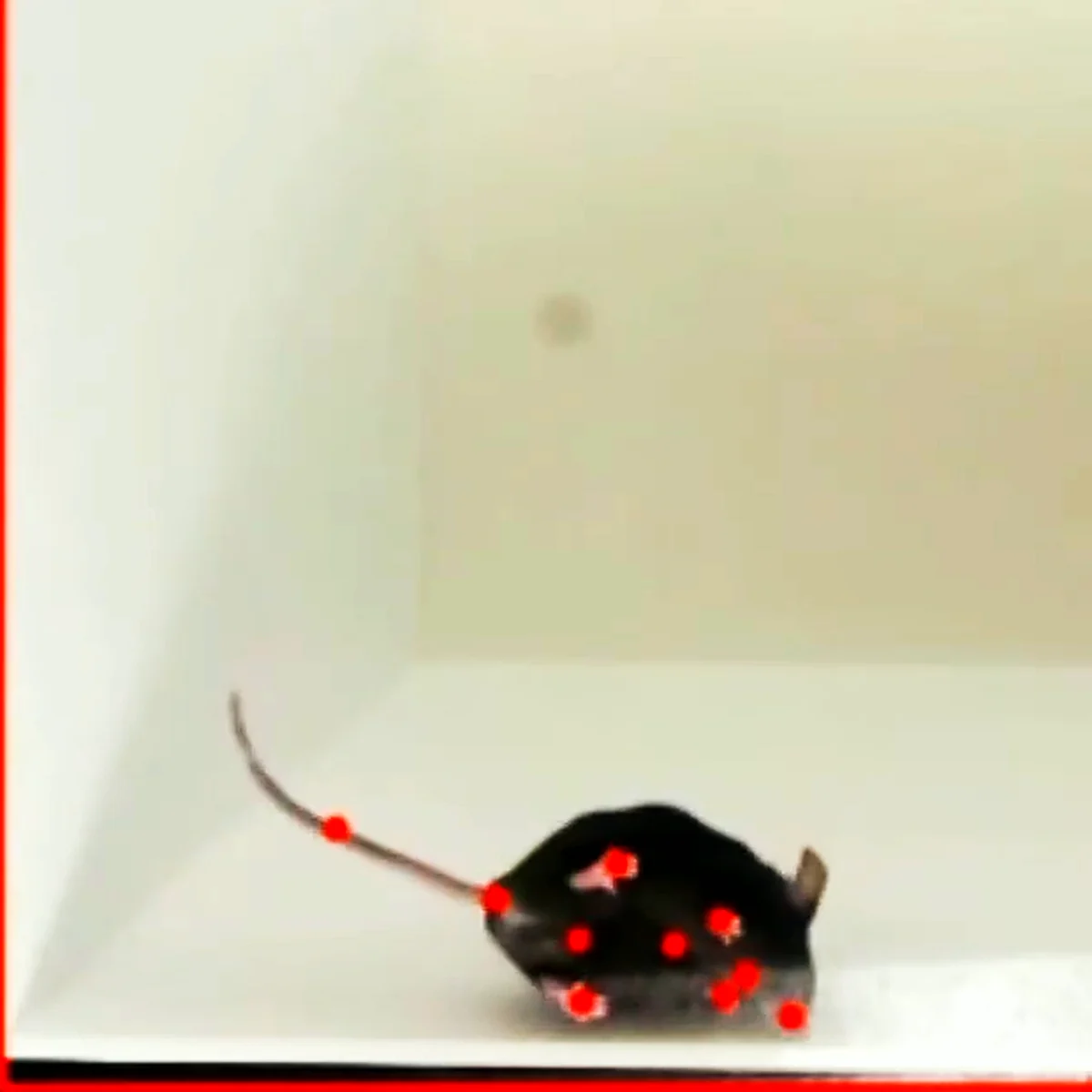
ConductVision is our video-tracking software. Record your sessions on video, and it scores standard rodent tests, such as those listed below.
To check whether ConductVision scores your protocol in this apparatus, ask in your quote request.
A 5-year license is $3,990 in total.
Results export as CSV files.
Send it over and we'll email you a personalized answer, with no call or scheduling.
Prefer to talk it through?
Enhance your setup with compatible accessories
Creator Insights
James R. Weeks was a pharmacologist at the Upjohn Company in Kalamazoo, Michigan. In 1962 he published a brief but landmark Science paper describing an apparatus that let unrestrained rats intravenously self-administer morphine by pressing a lever — the first controlled model of voluntary drug self-administration. His method showed that rats would reliably work to obtain opioids and maintain stable intake, providing a reproducible way to study the reinforcing properties of addictive drugs. Intravenous self-administration became the methodological foundation for decades of addiction neuroscience.
To view James R. Weeks’s publications, visit PubMed.
Did you work with James R. Weeks? to suggest corrections or share material for these Creator Insights.
ConductScience celebrates method creators: researchers who, through rigorous and often ingenious experiments, develop the tools that reveal how the brain and body work. These are real scientific discoveries that become everyday instruments for the labs that follow.
Use this apparatus with
§ 1
The Self-Administration Chamber measures operant reinforcer self-administration, recording how a rodent works for a reinforcer by pressing an active lever under a defined reinforcement schedule. Thomsen and Caine described the intravenous procedure that made reinforced responding a standard operant readout in rats and mice. 1
The core readouts are reinforced responses and infusions earned, paired with active versus inactive lever discrimination to confirm that responding is goal-directed rather than general activity. A progressive-ratio schedule adds a break point, the response requirement at which the animal stops working for the reinforcer, as a motivation measure. 1
Reinforcer dose or concentration, the reinforcement schedule, catheter patency, food and water state, and session length all change responding independent of any change in the reinforcer value. A defensible protocol fixes the schedule, verifies patency, controls deprivation state, and reports active versus inactive lever selectivity. 1
§ 2
Operant reinforcer self-administration with lever discrimination, schedule control, and break-point estimation.
Critical methodological constraints
Core self-administration endpoints for operant intake, discrimination, motivation, and intake regulation.
Reinforced Responses
Operant intake
Infusions Earned
Reinforcer delivery
Active vs Inactive Lever Ratio
Discrimination
Break Point (PR)
Motivation
Inter-Infusion Interval
Intake regulation
+ Additional metrics: reinforcer dose, schedule type, session length, deprivation state, catheter-patency checks, body weight, and per-chamber hardware notes.
A compact fraction of lever responses directed at the active rather than the inactive lever.
Estimate the N per group needed to detect a literature-anchored operant effect at the endpoint you plan to report. Override the defaults with your own pilot numbers.
§ 3
Representative output from a fixed-ratio session with active versus inactive lever logging.
§ 4
Limitations of the paradigm, methodological caveats, and current directions.
Variables that can shift Self-Administration Chamber results apart from the effect under study.
Responding follows an inverted-U with dose. Hold dose or concentration constant within a comparison so a shift is not read as a motivation change.
Fixed-ratio indexes intake and progressive-ratio indexes motivation. They answer different questions and should not be pooled.
A blocked or failed delivery line looks like low responding. Verify patency on a schedule and exclude unconfirmed sessions.
Deprivation changes operant effort.
Longer access raises total intake and changes pacing. Hold session length and the access window constant across groups.
The self-administration chamber is a research methods model of operant reinforcer responding in rodents; it is not a clinical measure and clinical interpretation is out of scope. It is strongest when the schedule, reinforcer dose, catheter patency, and access window are fixed before testing, with active versus inactive lever selectivity reported as a discrimination check. 1
Use a fixed-ratio schedule when the question is intake and a progressive-ratio schedule when the question is motivation. They yield different readouts, so choose by question and do not pool responses across schedule types.
Selectivity confirms that responding is goal-directed rather than general activity. Low selectivity means the discrimination has not formed, so reinforced-response counts cannot yet be interpreted.
Verify patency on a fixed schedule and exclude sessions where delivery cannot be confirmed. A blocked line looks identical to low responding and will bias the analysis if not screened.
Quarterly editorial review of emerging Self-Administration Chamber methodology. Q2 2026
Reporting fixed-ratio and progressive-ratio parameters explicitly improves comparability of intake and break-point estimates across labs and rigs.
Timestamped lever and infusion logs reduce observer burden and capture inter-infusion intervals and lever selectivity consistently.
Reporting catheter-patency checks and session exclusions is increasingly expected because undetected delivery failures masquerade as low responding.
Self-administration is paired with open-field and elevated-plus-maze measures to separate operant responding from general locomotion and exploratory activity.
§ 5
5 selected methods and validation studies of the Self-Administration Chamber, from any lab.