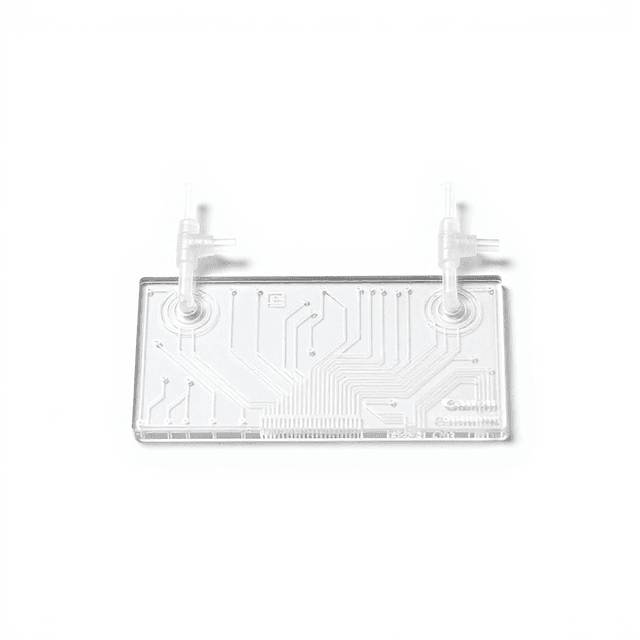
Silicon Carbide Microreactor
Silicon carbide microreactor platform for fluorination, nitration, and harsh chemical synthesis requiring extreme chemical resistance to HF and strong acids/bases.

Louise Corscadden, PhD
Director of Science · ConductScience
Ask Louise about Silicon Carbide Microreactor fit, setup, configuration, or quote prep.
Already working with us? Sign in to connect this with My Scientist.
Key Specifications
Full details →- Model fit
- Configured during quote
- SKU family
- WHM-0061
- Shipping box
- 300.0 x 200.0 x 150.0 cm
- Ordering
- Online checkout and quote request available
- Category
- Lab Equipment
- Build notes
- Silicon Carbide (SiC)
The Silicon Carbide Microreactor is a specialized chemical synthesis platform designed for harsh reaction conditions that would degrade conventional reactor materials. Constructed from silicon carbide (SiC), this microreactor withstands extreme chemical environments including hydrofluoric acid, concentrated strong acids, and caustic bases that rapidly corrode glass, metals, and polymer systems.
The compact 300×200×150 mm form factor enables benchtop operation while maintaining the chemical inertness required for fluorination, nitration, and other aggressive synthetic transformations. Silicon carbide's exceptional thermal conductivity and chemical resistance make it particularly suitable for reactions involving halogenating agents, oxidizing conditions, and high-temperature processes where precise reaction control is essential.
How It Works
Silicon carbide microreactors operate on the principle of controlled continuous flow synthesis within chemically inert channels. The SiC substrate provides exceptional chemical resistance through its covalent crystal structure, which remains stable even when exposed to hydrofluoric acid and other highly aggressive reagents that rapidly attack glass, metals, and polymers.
The microreactor design enables precise control of residence time, temperature, and mixing through engineered channel geometries. Reactants flow through micron-scale channels where reaction conditions can be maintained with high spatial and temporal precision. The high thermal conductivity of silicon carbide (120-200 W/m·K) allows rapid heat transfer for temperature-sensitive reactions.
The platform accommodates both batch and continuous flow operations, with the chemical inertness of SiC preventing catalytic side reactions or contamination that could occur with metal or glass reactor surfaces under harsh conditions.
Features & Benefits
Chemical Resistance
- Extreme (HF, strong acids/bases)
Automation Level
- semi-automated
Brand
- ConductScience
Material
- Silicon Carbide (SiC)
Research Domain
- Analytical Chemistry
- Environmental Monitoring
- Food Science
- Industrial Hygiene
- Materials Science
- Pharmaceutical QC
Shipping weight
- 10.0 lb
Shipping box
- L: 300.0 cm
- W: 200.0 cm
- H: 150.0 cm
| Feature | This Product | Typical Alternative | Advantage |
|---|---|---|---|
| Chemical Resistance | Extreme resistance to HF, strong acids, and caustic bases | Glass systems fail with HF, metal reactors corrode with strong acids | Enables synthetic chemistry that would rapidly destroy conventional reactor materials. |
| Material Construction | Silicon Carbide (SiC) substrate | Borosilicate glass or stainless steel construction | Provides chemical inertness and thermal stability for harsh reaction conditions. |
| Application Range | Fluorination, nitration, and harsh chemistry applications | Limited to mild organic synthesis conditions | Expands accessible synthetic chemistry to include aggressive reagent systems. |
| Thermal Properties | High thermal conductivity silicon carbide | Lower thermal conductivity materials | Enables better temperature control and heat management for exothermic reactions. |
| Operating Environment | Compatible with extreme chemical conditions | Restricted to compatible solvent systems | Allows researchers to perform previously inaccessible synthetic transformations safely. |
This silicon carbide microreactor enables chemical synthesis under extreme conditions where conventional materials fail, specifically designed for fluorination, nitration, and harsh chemistry applications. The SiC construction provides exceptional chemical resistance to HF and aggressive reagents while maintaining thermal management capabilities essential for controlled synthetic chemistry.
Practical Tips
Establish flow rate baselines using compatible non-reactive solvents before introducing aggressive reagents.
Why: Ensures accurate flow control and identifies any system issues before exposing the reactor to harsh chemicals.
Flush the system thoroughly with appropriate cleaning solvents immediately after each reaction cycle.
Why: Prevents buildup of reactive species that could cause blockages or unwanted side reactions in subsequent runs.
Always perform chemical compatibility testing with non-reactive analogs before introducing novel reagent combinations.
Why: Validates system performance and safety protocols without exposing personnel to unknown reaction hazards.
Implement appropriate HF safety protocols including calcium gluconate gel and specialized PPE when working with fluorinating agents.
Why: Silicon carbide resistance to HF enables these reactions, but proper safety measures remain essential for personnel protection.
Monitor pressure differentials across the reactor to detect potential channel blockages from precipitated products.
Why: Early detection prevents system damage and allows for corrective cleaning before complete channel obstruction occurs.
Record detailed temperature profiles during reactions to optimize heat transfer and identify hot spots.
Why: Thermal data helps optimize reaction conditions and ensures reproducible results across reaction runs.
Use gradient temperature control when transitioning between different reaction zones within the microreactor.
Why: Prevents thermal shock and allows for staged reaction progression in multi-step synthetic sequences.
Inspect seals and connection points regularly for signs of chemical attack or wear from harsh operating conditions.
Why: Early identification of seal degradation prevents system leaks and maintains reaction environment integrity.
Setup Guide
What’s in the Box
- Silicon Carbide Microreactor (main unit)
- Fluidic connection hardware (typical)
- User manual and chemical compatibility guide
- Safety documentation for harsh chemistry applications
- Installation hardware (typical)
- Quality certification documentation
Warranty
ConductScience provides a standard 1-year manufacturer warranty covering defects in materials and workmanship under normal laboratory use conditions. Technical support includes guidance on chemical compatibility and operational parameters for harsh chemistry applications.
Compliance
References
Background reading relevant to this product:
What chemicals are compatible with the silicon carbide construction?
The SiC construction provides extreme chemical resistance to HF, strong acids, and caustic bases. Consult the chemical compatibility guide for specific reagents and operating conditions.
What flow rates and pressures can the microreactor handle?
Operating parameters depend on channel geometry and specific application requirements. Consult product datasheet for pressure ratings and recommended flow ranges.
How does thermal management work for exothermic reactions?
Silicon carbide's high thermal conductivity enables rapid heat removal, but specific heat transfer coefficients depend on channel design and coolant systems used.
What maintenance is required for harsh chemistry applications?
Regular inspection of seals and connections, appropriate cleaning protocols between reactions, and periodic verification of channel integrity using compatible solvents.
Can this reactor handle both batch and continuous flow operations?
The platform accommodates both operating modes, with continuous flow providing better control over reaction conditions and heat removal for most applications.
How does this compare to glass microreactors for fluorination chemistry?
Glass reactors are rapidly etched and compromised by HF and fluorinating agents, while SiC maintains structural integrity and chemical inertness under these conditions.
What safety considerations apply when using this reactor?
Standard laboratory safety protocols for handling reactive chemicals apply, with particular attention to HF safety procedures and appropriate personal protective equipment.
What analytical methods can be coupled with this reactor system?
The system can be interfaced with online analytical techniques compatible with the specific chemistry being performed, including spectroscopic and chromatographic methods.
Have a question about this product?
Have a question? Just ask.
Send it over and we'll email you a personalized answer — no call, no scheduling.
Prefer to talk it through?
Upgrade Options