Small Molecule Detection Chip (80 um)
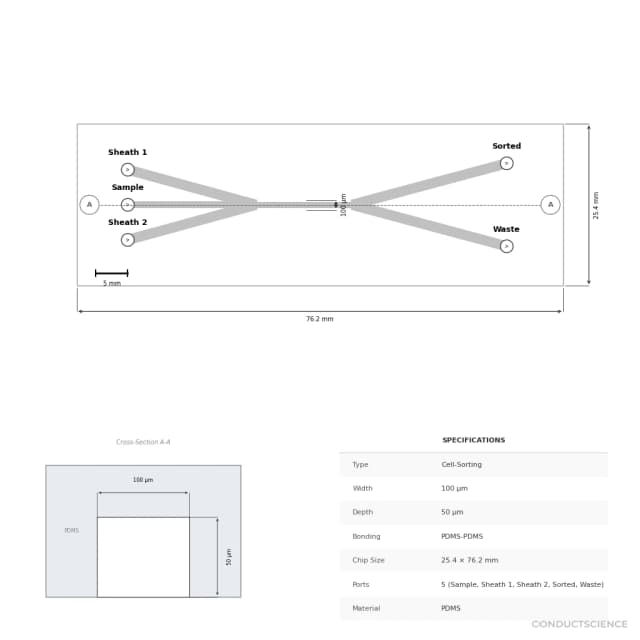
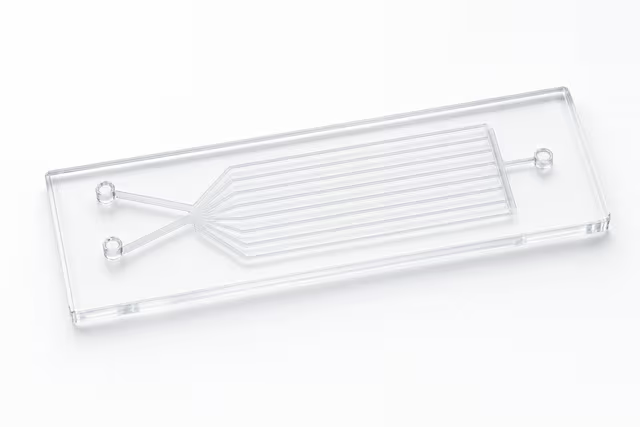
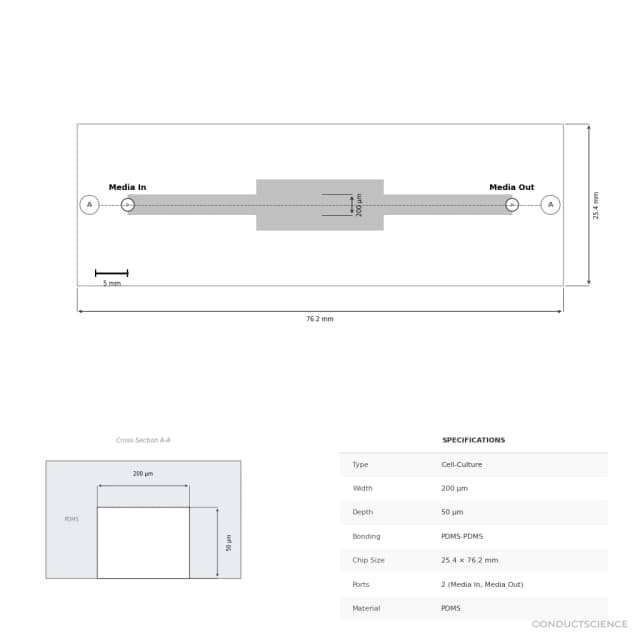
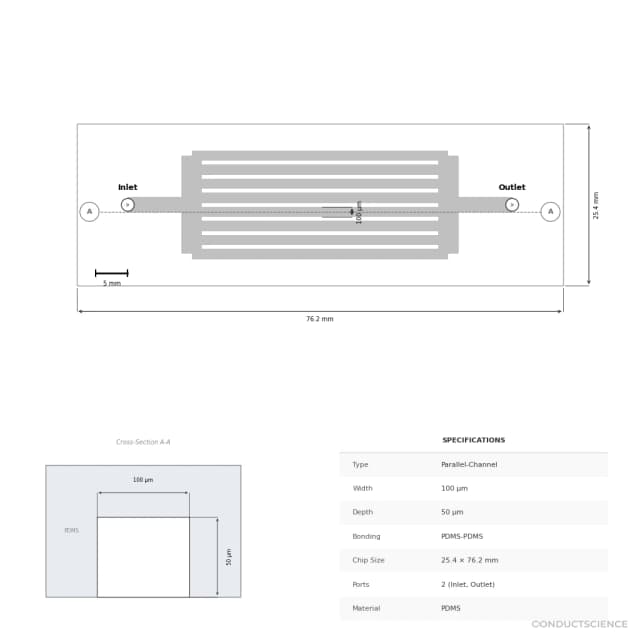
Microfluidic detection chip with 80 × 80 μm channels designed for small molecule and metabolite analysis in analytical research applications.
Reusable chip — designed for multiple experimental runs. Compatible with standard microfluidic tubing: steel pins (0.7 mm ID / 1.0 mm OD) and silicone tubing (0.8 mm ID / 1.9 mm OD). Available in bulk packs (5‑, 10‑, and 25‑unit) for lab-scale and consumable workflows.

Louise Corscadden, PhD
Director of Science · ConductScience
Ask Louise about Small Molecule Detection Chip (80 um) fit, setup, configuration, or quote prep.
Already working with us? Sign in to connect this with My Scientist.
Key Specifications
Full details →- Model fit
- 3 selectable configurations
- SKU family
- WHM-0139
- Shipping box
- 181.8 x 136.3 x 90.9 cm
- Ordering
- Online checkout and quote request available
- Category
- Environmental Detection Chips
- Build notes
- Confirm accessories, station layout, and support needs before purchase
The Small Molecule Detection Chip (80 μm) is a specialized microfluidic device designed for analytical detection and quantification of small molecules and metabolites in research applications. Featuring precisely engineered 80 × 80 μm channels, this microfluidic chip enables controlled sample processing and detection in a miniaturized format suitable for high-sensitivity analytical workflows.
The chip architecture supports various small molecule detection methodologies, making it applicable across environmental monitoring, pharmaceutical analysis, and metabolomics research. The standardized channel dimensions provide consistent fluid dynamics and detection performance, while the microfluidic format reduces sample and reagent consumption compared to conventional analytical methods.
How It Works
The microfluidic detection chip operates on the principle of controlled fluid flow through precisely fabricated microchannels. The 80 × 80 μm channel dimensions create laminar flow conditions that enable predictable sample transport and mixing characteristics essential for reproducible analytical measurements.
Sample processing occurs within the microchannel network, where small molecules interact with detection elements or undergo separation processes. The confined geometry enhances detection sensitivity by concentrating analytes and reducing sample volume requirements. Detection methodologies can include optical, electrochemical, or other analytical techniques depending on the specific experimental setup.
The chip design facilitates integration with various detection systems and allows for real-time monitoring of analytical processes. The microfluidic format provides advantages in terms of reduced reagent consumption, faster analysis times, and improved control over experimental conditions compared to traditional macro-scale analytical methods.
Features & Benefits
Shipping weight
- 3.3 lb
Shipping box
- L: 181.8 cm
- W: 136.3 cm
- H: 90.9 cm
| Feature | This Product | Typical Alternative | Advantage |
|---|---|---|---|
| Channel Dimensions | 80 × 80 μm | Varies by model, often 100-200 μm for general applications | Smaller channels provide better control over fluid dynamics and enhanced detection sensitivity for small molecules |
| Application Focus | Small molecule detection and metabolites | General microfluidic platforms often target multiple applications | Specialized design optimizes performance for analytical detection rather than general-purpose use |
| Detection Compatibility | Multiple detection methods supported | Limited to specific detection approaches | Flexibility to adapt detection method based on analytical requirements and available instrumentation |
| Sample Volume Requirements | Microfluidic format with reduced volumes | Larger sample volumes required for macro-scale systems | Reduces sample and reagent costs while enabling analysis of precious or limited samples |
This chip provides specialized capabilities for small molecule detection with optimized 80 μm channel dimensions. The design focuses on analytical applications requiring controlled fluid dynamics and compatibility with multiple detection systems.
| Model | SKU | Listed price | Status | Shipping box |
|---|---|---|---|---|
| 25-Pack | WHM-0139-25PK | Quote | Available | 181.8 x 136.3 x 90.9 cm |
| 10-Pack | WHM-0139-10PK | $1,490.00 | Available | 181.8 x 136.3 x 90.9 cm |
| 5-Pack | WHM-0139-5PK | Quote | Available | 181.8 x 136.3 x 90.9 cm |
Practical Tips
Establish flow rate calibration using standard solutions before each experimental session.
Why: Consistent flow conditions are critical for reproducible analytical results and proper detection performance.
Flush channels with appropriate cleaning solutions between samples and store properly to prevent contamination.
Why: Regular cleaning maintains channel integrity and prevents cross-contamination between analyses.
Filter all samples to remove particles larger than the channel dimensions before injection.
Why: Pre-filtration prevents channel blockage and ensures consistent sample flow throughout the analysis.
If flow stops, check connections first, then gently increase pressure while monitoring for leaks.
Why: Most flow issues result from loose connections or air bubbles rather than permanent blockages.
Run control standards regularly and monitor baseline stability during extended analysis sessions.
Why: Quality controls help identify system drift and ensure analytical performance remains within acceptable limits.
Use appropriate personal protective equipment when handling organic solvents or hazardous samples.
Why: Microfluidic systems may use concentrated samples or solvents requiring standard laboratory safety protocols.
Setup Guide
What’s in the Box
- Small Molecule Detection Chip (80 μm)
- User manual and handling instructions (typical)
- Certificate of analysis (typical)
Warranty
ConductScience provides standard manufacturer warranty coverage with technical support for proper device handling and application guidance.
Compliance
What detection methods are compatible with this microfluidic chip?
The chip can be integrated with various detection systems including optical (fluorescence, absorbance), electrochemical, and mass spectrometry interfaces. The specific detection method depends on your analytical requirements and available instrumentation.
What sample volumes are required for analysis?
The microfluidic format typically requires microliter sample volumes, significantly less than conventional analytical methods. Exact volumes depend on your specific protocol and detection system setup.
How do I prevent channel clogging during operation?
Proper sample filtration, appropriate flow rates, and regular cleaning protocols help prevent blockages. The 80 μm channel size accommodates most small molecule applications while minimizing clogging risks.
Can this chip be reused for multiple analyses?
Reusability depends on the sample type and detection method used. Consult product documentation for cleaning protocols and recommended usage guidelines for your specific application.
What flow rate range is recommended for optimal performance?
Flow rates should be optimized based on your analytical method and detection requirements. Start with low flow rates to establish stable conditions, then adjust based on sensitivity and throughput needs.
Is the chip compatible with organic solvents?
Chemical compatibility depends on the chip material composition. Consult the product datasheet for specific solvent compatibility information relevant to your analytical application.
How do I integrate this chip with my existing analytical system?
The chip requires appropriate fluidic connections and positioning within your detection system. Consider pump requirements, tubing compatibility, and optical alignment for your specific setup.
Have a question about this product?
Have a question? Just ask.
Send it over and we'll email you a personalized answer — no call, no scheduling.
Prefer to talk it through?