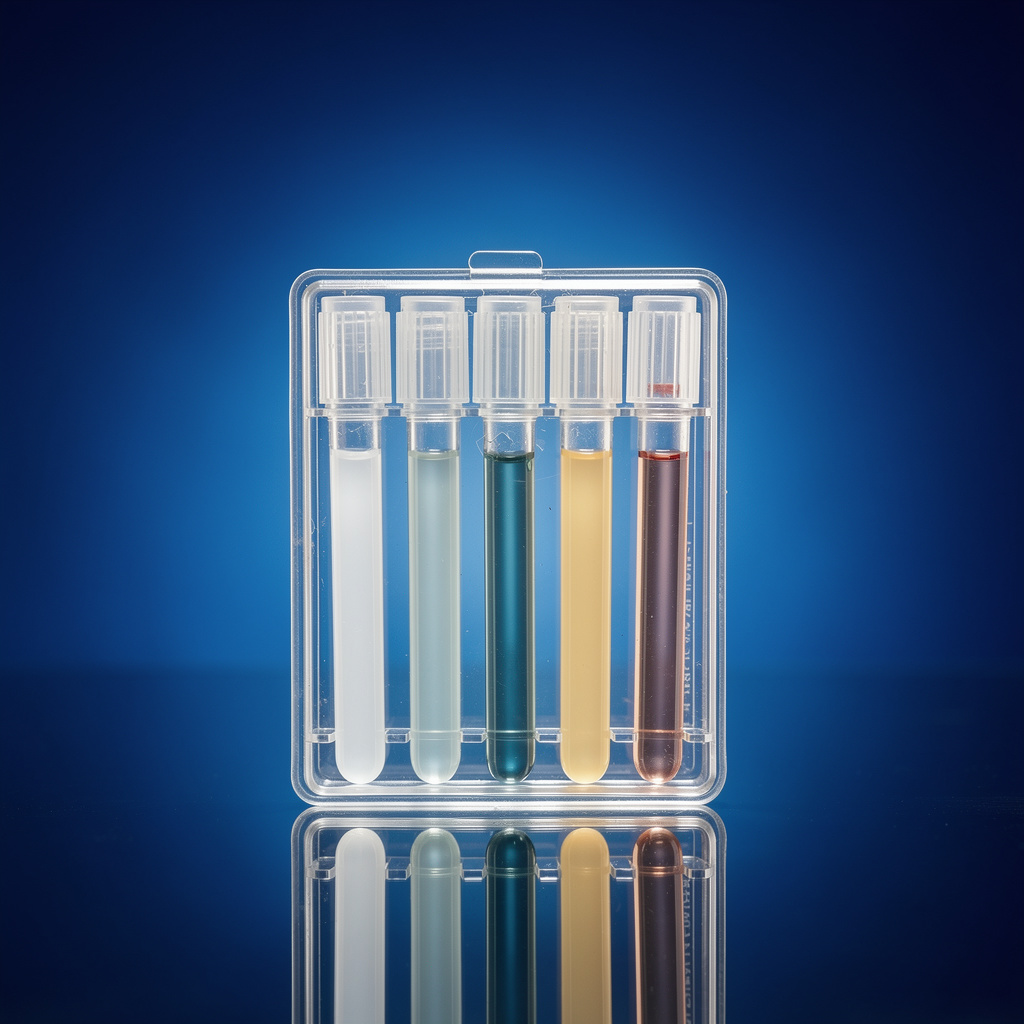
Total Nitrogen Test Tube
Laboratory digestion tube for total nitrogen determination in water and wastewater samples using standardized chemical digestion protocols.

Louise Corscadden, PhD
Director of Science · ConductScience
Ask Louise about Total Nitrogen Test Tube fit, setup, configuration, or quote prep.
Already working with us? Sign in to connect this with My Scientist.
Key Specifications
Full details →- Model fit
- 1 selectable configurations
- SKU family
- CS-LH-LAB013
- Shipping box
- 8.8 x 7.3 x 5.9 cm
- Ordering
- Online checkout and quote request available
- Category
- Water Test Kits
- Build notes
- Confirm accessories, station layout, and support needs before purchase
The Total Nitrogen Test Tube is a laboratory consumable designed for quantitative nitrogen determination in water and wastewater samples. This digestion vessel enables the conversion of organic and inorganic nitrogen compounds to measurable forms through standardized chemical digestion protocols. The test tube format provides a controlled environment for sample processing in environmental monitoring and industrial wastewater analysis applications.
The digestion tube supports persulfate oxidation and Kjeldahl digestion methods commonly employed in water quality laboratories. Following digestion, the processed samples are analyzed using spectrophotometric methods to quantify total nitrogen content. This consumable integrates with existing laboratory workflows for routine monitoring of nitrogen levels in environmental samples, industrial effluents, and aquaculture systems.
How It Works
Total nitrogen determination involves the chemical conversion of all nitrogen-containing compounds in a sample to measurable forms through controlled digestion processes. The test tube provides a reaction vessel for either persulfate oxidation or Kjeldahl digestion protocols. In persulfate digestion, potassium persulfate oxidizes organic nitrogen compounds to nitrate under alkaline conditions at elevated temperatures.
For Kjeldahl digestion, concentrated sulfuric acid and catalyst systems convert organic nitrogen to ammonium sulfate through controlled heating. The digestion process breaks down complex organic molecules, releasing nitrogen in forms amenable to spectrophotometric quantification. Following digestion, the processed sample undergoes colorimetric analysis using established analytical methods.
The resulting nitrogen concentration is determined by measuring absorbance at specific wavelengths corresponding to the nitrogen-containing reaction products. This approach enables quantification of total nitrogen content across diverse sample matrices with established accuracy and precision parameters.
Features & Benefits
Shipping weight
- 0.26 lb
Shipping box
- L: 8.8 cm
- W: 7.3 cm
- H: 5.9 cm
| Feature | This Product | Typical Alternative | Advantage |
|---|---|---|---|
| Digestion Method Compatibility | Supports both persulfate oxidation and Kjeldahl digestion protocols | Many consumables are optimized for single digestion methods | Provides analytical flexibility allowing laboratories to select the most appropriate method for their sample matrix and accuracy requirements. |
| Sample Matrix Range | Designed for water, wastewater, electroplating, and textile industry samples | Generic tubes may not be optimized for specific industrial matrices | Ensures reliable performance across diverse environmental and industrial sample types commonly encountered in water quality laboratories. |
| Construction Materials | Chemical-resistant materials for harsh digestion conditions | Standard laboratory glassware varies in chemical resistance | Maintains sample integrity during aggressive chemical digestion without contributing interference or suffering structural degradation. |
| Size and Format | Compact tube design for efficient laboratory use | Larger digestion vessels may require more reagents and heating capacity | Optimizes reagent consumption and heating equipment utilization while maintaining proper sample-to-reagent ratios for accurate results. |
The Total Nitrogen Test Tube offers dual-method compatibility and optimized construction for water quality analysis applications. The specialized design supports both persulfate and Kjeldahl protocols while providing chemical resistance for reliable sample processing across diverse environmental and industrial matrices.
Practical Tips
Maintain consistent sample-to-reagent ratios across all samples in a batch analysis.
Why: Ensures reproducible digestion efficiency and accurate nitrogen recovery for reliable quantitative results.
Include certified reference materials and method blanks with each analytical batch.
Why: Verifies digestion efficiency and identifies potential contamination or interference issues in the analytical process.
Inspect tubes for cracks or chemical damage before use in digestion protocols.
Why: Prevents sample loss and ensures complete containment of aggressive reagents during high-temperature processing.
Ensure adequate ventilation when performing acid digestion procedures.
Why: Prevents exposure to corrosive vapors generated during the chemical breakdown of organic nitrogen compounds.
Allow samples to reach room temperature before transferring for spectrophotometric analysis.
Why: Temperature variations can affect colorimetric reaction development and lead to measurement errors in final results.
If digestion appears incomplete, extend heating time or check reagent concentrations.
Why: Incomplete digestion leads to low nitrogen recovery and underestimation of total nitrogen content in samples.
Setup Guide
What’s in the Box
- Total nitrogen test tubes (typical)
- Product documentation (typical)
Warranty
ConductScience provides standard manufacturer warranty coverage for laboratory consumables. Technical support is available for application guidance and protocol optimization.
Compliance
What digestion methods are compatible with these test tubes?
The test tubes support both persulfate oxidation and Kjeldahl digestion protocols commonly used for total nitrogen determination. Material construction withstands the chemical and thermal conditions required for both methods.
What sample types can be analyzed using these digestion tubes?
The tubes are designed for water and wastewater samples including surface water, groundwater, industrial effluents, electroplating wastewater, textile printing wastewater, and aquaculture water samples.
How do I ensure consistent results across multiple samples?
Maintain consistent sample volumes, reagent ratios, and digestion conditions. Use standardized heating profiles and ensure complete cooling before analysis. Include quality control samples with each batch.
What analytical equipment is needed after digestion?
Following digestion, samples require spectrophotometric analysis using colorimetric methods. Standard laboratory UV-Vis spectrophotometers with appropriate wavelength capabilities are needed for nitrogen quantification.
Can these tubes be reused for multiple analyses?
Consult product specifications for reuse guidelines. Single-use consumables eliminate cross-contamination risks while reusable options may require thorough cleaning protocols between samples.
What safety precautions are required during digestion?
Standard laboratory safety protocols apply including proper ventilation, appropriate personal protective equipment, and safe handling of concentrated acids and elevated temperature conditions.
Have a question about this product?
Have a question? Just ask.
Send it over and we'll email you a personalized answer — no call, no scheduling.
Prefer to talk it through?