Toxic Chemical Storage Cabinet
Steel chemical storage cabinets available in capacities from 12 to 60 gallons, featuring adjustable shelving and secure containment for hazardous laboratory chemicals.

Louise Corscadden, PhD
Director of Science · ConductScience
Ask Louise about Toxic Chemical Storage Cabinet fit, setup, configuration, or quote prep.
Already working with us? Sign in to connect this with My Scientist.
Key Specifications
Full details →- Model fit
- Configured during quote
- SKU family
- BIO-0749
- Shipping box
- 42.0 x 43.6 x 38.0 cm
- Ordering
- Online checkout and quote request available
- Category
- Storage & Furniture
- Build notes
- Confirm accessories, station layout, and support needs before purchase
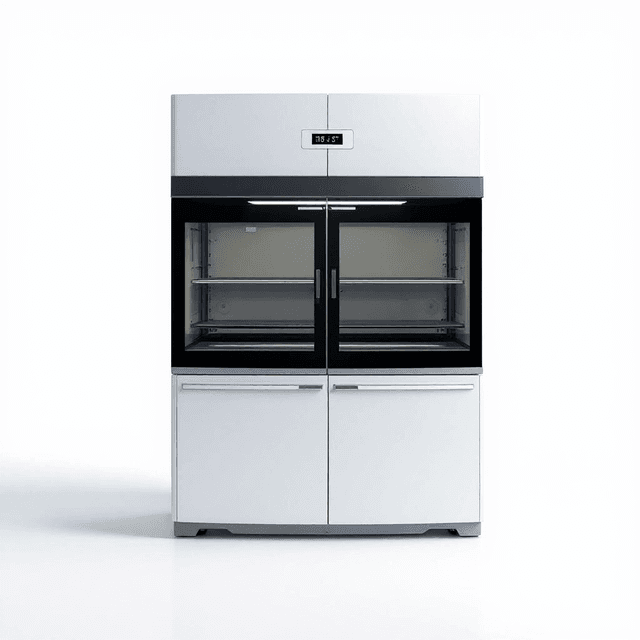
The Toxic Chemical Storage Cabinet provides secure containment for hazardous chemicals in laboratory environments. Available in multiple capacity configurations from 12 gallons (45L) to 60 gallons (227L), these cabinets feature steel construction with adjustable shelving systems to accommodate various container sizes and laboratory workflows.
Each cabinet incorporates safety features designed for chemical storage applications, including proper ventilation considerations and secure locking mechanisms. The modular shelf configuration allows researchers to customize internal storage layout based on specific chemical inventory requirements and container dimensions.
How It Works
Chemical storage cabinets provide passive containment through engineered steel construction with double-wall design and leak-resistant features. The cabinet structure creates a controlled microenvironment that isolates stored chemicals from laboratory ambient conditions while providing physical security.
Internal shelving systems distribute weight loads evenly across the cabinet structure while allowing proper air circulation around containers. Adjustable shelf configurations accommodate various container geometries from small reagent bottles to larger solvent containers, enabling efficient space utilization and proper chemical segregation practices.
Features & Benefits
CSC-22D
- CSC-30D
CSC-45D
- CSC-60D
22gallon(83L)
- 30gallon(114L)
45gallon(170L)
- 60gallon(227L)
Standard Shelf
- 1pc
3pcs
- 1pc
2pcs
- 2pcs
External Size(W*D*H)mm
- 590*460*890
600*460*1650
- 1090*460*1120
1090*460*1650
- 860*860*1650
Package Size(W*D*H)mm
- 665*535*915
680*540*1795
- 1170*540*1260
1170*540*1790
- 940*940*1790
Brand
- ConductScience
Research Domain
- Analytical Chemistry
- Environmental Monitoring
- Industrial Hygiene
- Materials Science
- Microbiology
- Pharmaceutical QC
Capacity
- 12gallon(45L)
Shipping weight
- 50.0 lb
Shipping box
- L: 42.0 cm
- W: 43.6 cm
- H: 38.0 cm
| Feature | This Product | Typical Alternative | Advantage |
|---|---|---|---|
| Capacity Range | 12 to 60 gallon capacity options | Many models offer limited size options or only large capacity units | Allows researchers to select appropriate storage volume based on actual chemical inventory and laboratory space |
| Shelf Configuration | 1-3 adjustable shelves depending on model | Fixed shelf arrangements are common in basic models | Customizes storage layout to accommodate different container sizes and chemical segregation requirements |
| Construction Material | Steel construction | Entry-level models often use plastic or composite materials | Provides superior chemical resistance and structural durability for long-term laboratory use |
| Size Options | Five distinct capacity models with different footprints | Many manufacturers offer fewer size variations | Enables optimal space utilization in laboratories with varying floor plan constraints |
This cabinet line offers comprehensive capacity options with steel construction and adjustable shelving systems. The range from 12 to 60 gallons accommodates different laboratory scales while maintaining consistent build quality and security features across all models.
Practical Tips
Never exceed the weight capacity of individual shelves and ensure proper distribution of heavy containers.
Why: Prevents shelf failure and maintains cabinet structural integrity.
Group chemicals by compatibility classes and use secondary containment within the cabinet for liquid chemicals.
Why: Minimizes risk of dangerous chemical interactions and contains spills.
Inspect door seals and hinges monthly for proper operation and chemical exposure damage.
Why: Ensures continued containment effectiveness and prevents vapor leakage.
Maintain an inventory log of stored chemicals with quantities and expiration dates posted on the cabinet.
Why: Enables proper chemical management and emergency response information.
If doors do not close properly, check cabinet leveling and adjust feet as needed.
Why: Proper cabinet leveling ensures door alignment and secure closure.
Position cabinets away from heat sources, direct sunlight, and high-traffic laboratory areas.
Why: Reduces risk of chemical degradation and accidental cabinet damage.
Use appropriate labels for hazard identification and ensure visibility from outside the cabinet.
Why: Provides critical safety information for laboratory personnel and emergency responders.
Setup Guide
What’s in the Box
- Chemical storage cabinet (assembled or requiring assembly) (typical)
- Adjustable shelves (quantity varies by model)
- Mounting hardware and fasteners (typical)
- Keys for locking mechanism (typical)
- Installation and safety instructions (typical)
Warranty
ConductScience provides standard manufacturer warranty coverage for defects in materials and workmanship. Technical support is available for installation guidance and proper use recommendations.
Compliance
What is the maximum container size that can be stored in each cabinet model?
Container size depends on shelf spacing configuration. Consult product datasheet for specific internal dimensions and maximum shelf loading recommendations for each capacity model.
Can incompatible chemicals be safely stored in the same cabinet?
Chemical compatibility depends on specific substances being stored. Use appropriate segregation methods and secondary containment within the cabinet based on chemical compatibility charts and institutional safety protocols.
What is the weight capacity per shelf?
Shelf loading capacity varies by cabinet size and shelf configuration. Consult product specifications for maximum distributed load per shelf to prevent structural damage.
Do these cabinets require ventilation connections?
Ventilation requirements depend on stored chemicals and local regulations. Some installations may require connection to laboratory exhaust systems based on chemical types and volumes.
How do I determine the appropriate cabinet size for my laboratory?
Calculate total chemical inventory volume, consider future growth, and account for proper spacing between containers for air circulation and emergency access.
What maintenance is required for long-term use?
Regular inspection of door seals, hinges, and locking mechanisms is recommended. Clean interior surfaces with appropriate solvents based on stored chemical residues.
Have a question about this product?
Have a question? Just ask.
Send it over and we'll email you a personalized answer — no call, no scheduling.
Prefer to talk it through?