Toxicology Testing Cell Culture Chip
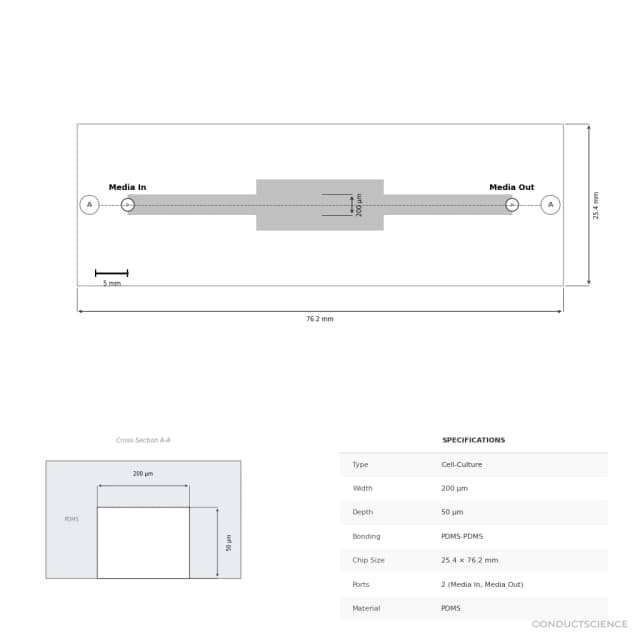
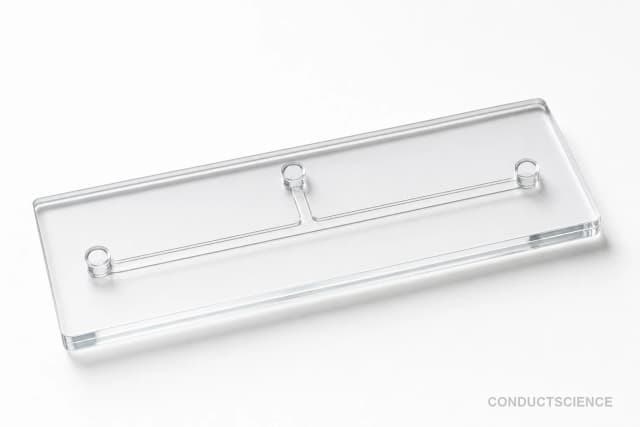
PMMA microfluidic chip with 200 x 200 μm channels designed for in vitro toxicology studies and cytotoxicity testing applications.
Reusable chip — designed for multiple experimental runs. Compatible with standard microfluidic tubing: steel pins (0.7 mm ID / 1.0 mm OD) and silicone tubing (0.8 mm ID / 1.9 mm OD). Available in bulk packs (5‑, 10‑, and 25‑unit) for lab-scale and consumable workflows.

Louise Corscadden, PhD
Director of Science · ConductScience
Ask Louise about Toxicology Testing Cell Culture Chip fit, setup, configuration, or quote prep.
Already working with us? Sign in to connect this with My Scientist.
Key Specifications
Full details →- Model fit
- 3 selectable configurations
- SKU family
- WHM-0076
- Shipping box
- 181.8 x 136.3 x 90.9 cm
- Ordering
- Online checkout and quote request available
- Category
- Cell Culture Chips
- Build notes
- Confirm accessories, station layout, and support needs before purchase
The Toxicology Testing Cell Culture Chip is a specialized microfluidic device designed for in vitro toxicology studies and cytotoxicity assessments. Fabricated from PMMA (polymethyl methacrylate), this chip features precisely engineered microchannels with 200 x 200 μm cross-sectional dimensions, providing controlled microenvironments for cell culture and compound exposure studies. The device enables researchers to conduct dose-response analyses and toxicity screening in a miniaturized, reproducible format that reduces reagent consumption while maintaining physiologically relevant conditions.
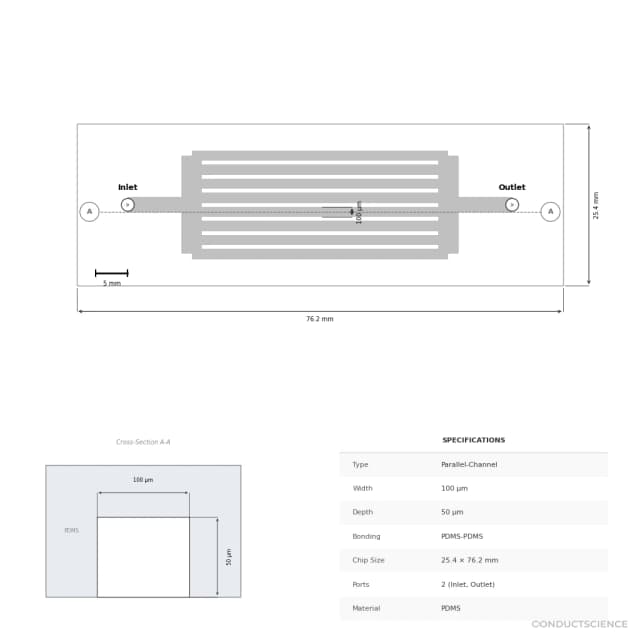
This microfluidic platform supports parallel testing configurations, allowing simultaneous evaluation of multiple concentrations or compounds within a single experimental run. The chip's design facilitates controlled fluid delivery, precise exposure timing, and real-time monitoring of cellular responses to toxic agents. The PMMA construction provides optical clarity for microscopic observation while maintaining chemical compatibility with standard cell culture media and test compounds used in toxicology research.
How It Works
The microfluidic chip operates on principles of controlled fluid dynamics within microscale channels. Cells are seeded into designated culture chambers where they adhere and grow under perfusion conditions. Test compounds are introduced through inlet channels and flow through the cell culture area at controlled rates, ensuring uniform exposure across the cell population. The 200 x 200 μm channel dimensions create laminar flow conditions that eliminate turbulence while maintaining adequate shear stress for healthy cell culture.
Cytotoxicity assessment relies on the chip's ability to maintain stable concentration gradients and exposure times while enabling real-time observation of cellular responses. The PMMA material provides excellent optical properties for fluorescence and brightfield microscopy, allowing researchers to monitor cell viability markers, morphological changes, and other toxicological endpoints. Multiple channels enable parallel testing of different concentrations or compounds within a single experiment, improving statistical power while reducing experimental variability.
The microfluidic format significantly reduces the volume of test compounds and reagents required compared to traditional well-plate assays, making it particularly suitable for expensive or limited-availability compounds. Waste products and metabolites are continuously removed through outlet channels, preventing accumulation that could interfere with toxicity measurements.
Features & Benefits
Shipping weight
- 3.3 lb
Shipping box
- L: 181.8 cm
- W: 136.3 cm
- H: 90.9 cm
| Feature | This Product | Typical Alternative | Advantage |
|---|---|---|---|
| Channel Dimensions | 200 x 200 μm cross-section | Many microfluidic devices use smaller channels (50-100 μm) or larger chambers (500+ μm) | Optimal size balances laminar flow control with adequate cell culture volume for reliable toxicity measurements |
| Material Construction | PMMA substrate | PDMS or glass substrates are common alternatives | PMMA provides better optical clarity than PDMS and lower cost than glass while maintaining chemical compatibility |
| Application Focus | Specifically designed for toxicology and cytotoxicity testing | General-purpose cell culture chips often lack toxicology-specific optimizations | Purpose-built design ensures appropriate channel geometry and material compatibility for toxicological endpoints |
| Flow Control Requirements | Designed for controlled perfusion systems | Some chips require complex pressure regulation or specialized pump systems | Compatible with standard syringe pumps and flow control equipment commonly available in research laboratories |
This chip offers a specialized solution for microfluidic toxicology studies with optimized channel dimensions and PMMA construction. The design balances optical clarity, chemical compatibility, and flow control requirements specific to cytotoxicity testing applications.
| Model | SKU | Listed price | Status | Shipping box |
|---|---|---|---|---|
| 25-Pack | WHM-0076-25PK | Quote | Available | 181.8 x 136.3 x 90.9 cm |
| 10-Pack | WHM-0076-10PK | $1,490.00 | Available | 181.8 x 136.3 x 90.9 cm |
| 5-Pack | WHM-0076-5PK | Quote | Available | 181.8 x 136.3 x 90.9 cm |
Practical Tips
Validate flow rates using fluorescent tracers before each experiment to ensure uniform distribution across all channels.
Why: Flow variations can create concentration gradients that confound dose-response relationships in toxicity studies.
Flush channels immediately after experiments with PBS followed by distilled water to prevent protein buildup and channel blockage.
Why: Residual biological material can alter flow characteristics and affect reproducibility in subsequent experiments.
Pre-condition chips with cell culture medium for at least 30 minutes before cell seeding to equilibrate surface properties.
Why: Equilibration improves cell adhesion uniformity and reduces variability in initial cell attachment patterns.
If cells appear to be lifting during flow experiments, reduce flow rate or increase surface coating density to improve adhesion.
Why: Insufficient adhesion leads to cell loss and compromises the validity of cytotoxicity measurements.
Include multiple replicates within each chip and across multiple chips to account for potential inter-device variability.
Why: Microfluidic devices can have slight manufacturing variations that affect flow patterns and cellular responses.
Ensure proper containment of outlets when working with toxic compounds, as continuous flow creates potential exposure routes.
Why: The perfusion design requires continuous waste collection, increasing the risk of exposure to harmful test compounds.
Monitor cell confluence and morphology before initiating compound exposure to ensure baseline culture health.
Why: Compromised cells at the start of experiments will show altered sensitivity to toxic agents and skew dose-response curves.
Use positive and negative control compounds with known cytotoxicity profiles to validate chip performance for each cell type.
Why: Control compounds provide reference standards to verify that the chip system produces expected dose-response relationships.
Setup Guide
What’s in the Box
- Toxicology Testing Cell Culture Chip
- User manual and protocol guidelines (typical)
- Protective packaging and storage container (typical)
Warranty
ConductScience provides a one-year manufacturer warranty covering defects in materials and workmanship, along with technical support for setup and application guidance.
Compliance
What cell types are compatible with this chip design?
The chip supports most adherent cell types including primary hepatocytes, HepG2 cells, kidney cells (HEK293, MDCK), and various cancer cell lines. Surface treatment may be required for optimal adhesion depending on the specific cell type.
How do I achieve stable flow rates for reproducible exposure studies?
Use syringe pumps or pressure-driven flow systems with flow rates typically ranging from 0.1-10 μL/min. Verify flow uniformity across channels using dye solutions before cell seeding and maintain constant temperature to prevent viscosity changes.
What is the recommended cell seeding density for toxicity assays?
Seeding densities typically range from 1-5 × 10^5 cells/mL depending on cell type and experimental timeline. Allow 24-48 hours for cell attachment and growth to confluence before compound exposure.
Can the chip be reused for multiple experiments?
The chip is designed for single-use applications to prevent cross-contamination and ensure experimental reproducibility. Cleaning and sterilization protocols for reuse are not recommended due to potential residual compound effects.
What imaging systems are compatible with this chip?
The PMMA construction is compatible with brightfield, fluorescence, and confocal microscopy systems. The chip thickness and optical properties support standard objective lenses with working distances up to several millimeters.
How do I validate compound delivery and concentration uniformity?
Use fluorescent tracers or colorimetric indicators to verify flow patterns and concentration distributions. Collect outlet samples for analytical verification of compound concentrations during exposure studies.
What are the recommended storage conditions?
Store chips in original packaging at room temperature in a dust-free environment. Avoid exposure to organic solvents or extreme temperatures that could affect PMMA properties before use.
Have a question about this product?
Have a question? Just ask.
Send it over and we'll email you a personalized answer — no call, no scheduling.
Prefer to talk it through?